
International Journal of
Reproductive Biomedicine
Thu, Oct 22, 2026
[Archive]
Volume 24, Issue 7 (July 2026)
IJRM 2026, 24(7): 585-604 |
Back to browse issues page




Download citation:
BibTeX | RIS | EndNote | Medlars | ProCite | Reference Manager | RefWorks
Send citation to:


BibTeX | RIS | EndNote | Medlars | ProCite | Reference Manager | RefWorks
Send citation to:
Hojati V. The role of gene polymorphisms in infertility, polyendocrine metabolic ovarian syndrome and recurrent miscarriage in the Iranian women population: A review study. IJRM 2026; 24 (7) :585-604
URL: http://ijrm.ir/article-1-3800-en.html
URL: http://ijrm.ir/article-1-3800-en.html


Department of Biology, Da.C., Islamic Azad University, Damghan, Iran. , vida.hojati@iau.ac.ir
Full-Text [PDF 458 kb]
(271 Downloads)
| Abstract (HTML) (362 Views)
According to the Hardy-Weinberg law, the frequency of the AA genotype in the patient and control groups was 19 (9.5%) and 5 (5.2%), respectively, the frequency of the GG genotype in the patient and control groups was 80 (40%) and 121 (60.5%), respectively, and the frequency of the AG genotype in the patient group was 101 (51%) and in the control group was 74 (37%). The A allele at the rs2275913 position was significantly associated with infertility. Patients with PMOS and fallopian tube problems showed a significant association with the rs2275913 polymorphism. The rs2275913 polymorphism of the IL-17A gene was found to be associated with female infertility (22).
4.2. Polymorphisms associated with recurrent miscarriage
4.2.6. 536C/T polymorphism in the tissue factor pathway inhibitor (TFPI) gene and Alu I/D in the tissue-type plasminogen activator (tPA) gene
4.2.7. rs 267601473 polymorphism in the homeobox D10 homeobox A10 (HOXA10) gene
4.2.8. rs121912765 polymorphism in the bone morphogenetic protein 4 (BMP4) gene
No significant cytogenetic abnormalities were observed that were influential in recurrent miscarriage. The frequency of the 4G allele in the case and control groups was 2.54 and 3.33%, respectively. The frequency of the 5G allele in the case and control groups was 8.45 and 6.66%, respectively. The frequency of the 5G/5G and 4G/5G genotypes was 25 and 6.41% in the case group; and 55 and 3.23% in the control group, respectively. The frequency of the 4G/4G genotype was 3.33 and 6.21% in the case and control groups, respectively. The results showed a significant association between the frequency of the 4G allele of the PAI-1 gene and the susceptibility to recurrent miscarriage (75).
6. Conclusion
This review article examined the polymorphisms involved in the occurrence of infertility, PMOS, and recurrent miscarriages, some of which were effective and some were ineffective. These studies help specialists choose the appropriate treatment method based on the type of disorder.
Acknowledgments
The author hereby thanks and appreciates all researchers who have worked in the field of gene polymorphisms in infertile women, women with PMOS, and recurrent miscarriages. No funding was allocated for this work and no artificial intelligence was used.
Conflict of Interest
The authors declare that there is no conflict of interest.
Full-Text: (24 Views)
1. Introduction
Hormonal and genetic changes and disorders are important factors in female infertility. Polyendocrine metabolic ovarian syndrome (PMOS) is a hormonal disorder and the most common cause of infertility due to lack of ovulation in women, in which the ovaries are large and contain many small cysts on their surface, causing irregular menstruation, increased male hormones, and fertility problems. Recurrent miscarriage is defined as the loss of at least 2-3 pregnancies below the 20th wk of pregnancy. Recurrent miscarriage is a multifactorial disorder that is responsible for 15% of pregnancy failures. Almost half of its causes remain unknown. Genetic polymorphism is the simultaneous occurrence of 2 or more discontinuous genotypes or alleles in a population. Polymorphisms provide a mechanism for marking a gene or segment of DNA through multiple alleles at single loci and are a powerful tool for a variety of research, including genotype identification and mapping of disease-causing genes in humans. Considering the author's research on infertility in recent years (1-9), the present review study aims to investigate the role and association of the studied gene polymorphisms with infertility, PMOS, and recurrent miscarriage in Iranian women.
For this study, a search was conducted using the keywords gene polymorphism, Iranian infertile women, recurrent miscarriage, PMOS in Persian and English using the databases of the Scientific Information Database, ScienceDirect, Scopus, and PubMed. From Persian and foreign articles available in the field of medical sciences for this topic, 80 articles were selected and reviewed between 2000 and 2026. The inclusion criteria for the study were one of the factors of infertility in Iranian women, with emphasis on PMOS and recurrent miscarriage. Exclusion criteria from the study were infertility in non-Iranian women or other factors of infertility in Iranian women. Exclusion criteria from the study were infertility in non-Iranian women or other factors of infertility in Iranian women.
2. Polymorphisms and infertility
2.1. Polymorphisms not associated with infertility in women
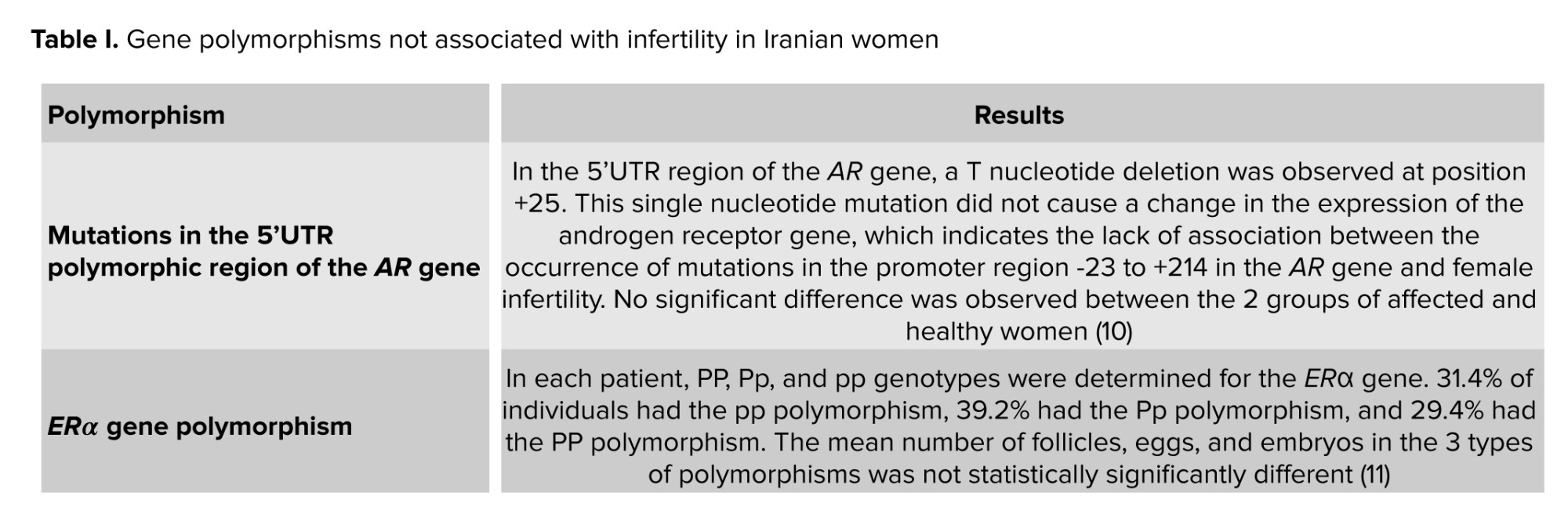
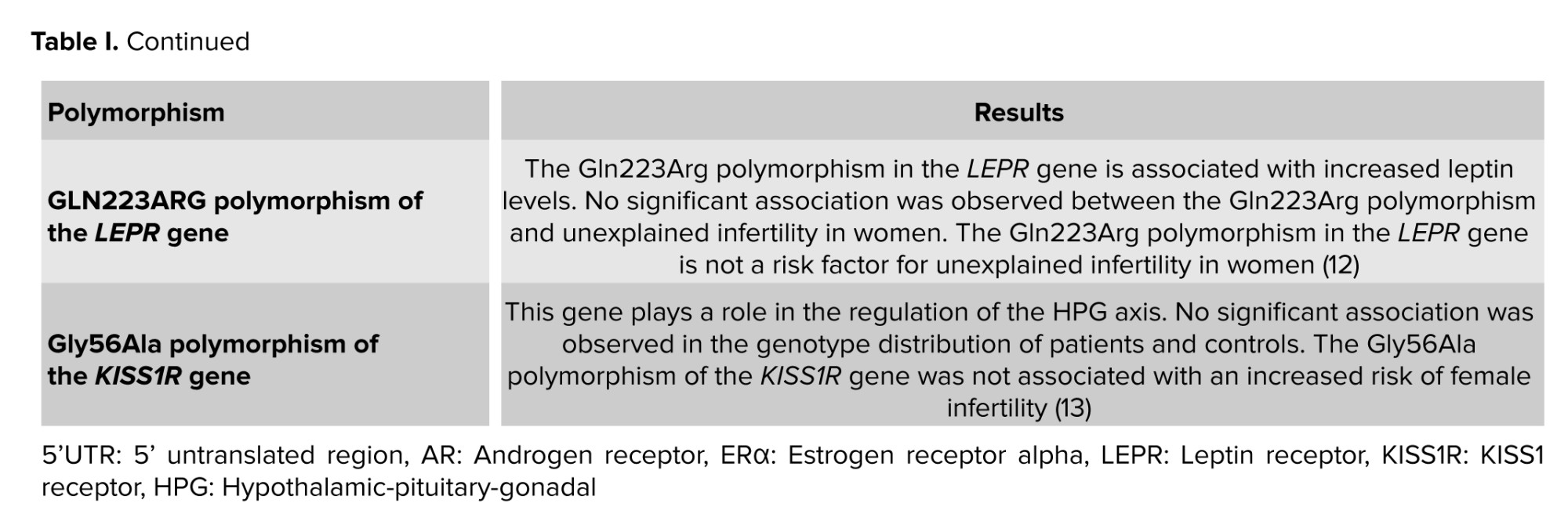
Table I shows some of the studied gene polymorphisms that have not been associated with female infertility.
2.2. Polymorphisms associated with women infertility
2.2.1. The C2531T polymorphism of MutL homolog 3 (MLH3) gene
The frequencies of the MLH3 2531C and T alleles were 43.33 and 56.67% among infertile patients, respectively, and 61.5 and 38.5% among healthy controls. In patients and controls, the frequencies of the CC (Pro 844 Pro) MLH3 C2531T genotype were 4.76 and 25%, respectively, the CT (Pro 844 Leu) genotype was 77.15 and 73%, respectively, and the TT (Leu 844 Leu) genotype was 19 and 2%, respectively. The presence of the T polymorphism leads to a 2.09-fold increase in the risk of infertility compared to the control group. The MLH3 C2531T polymorphism can be associated with the risk of unexplained infertility in Iranian women (14).
2.2.2. The rs9340799 and rs2234693 variants of estrogen receptor 1 (ESR1) gene and rs243865 of matrix metallopeptidase 2 (MMP2) gene
The frequency of genotypes rs243865 TT, CC in MMP2 gene and rs2234693 CC, TT and rs9340799 GG, AA in ESR1 gene was higher in the case group compared to the control group. The genotypes rs2234693 and rs9340799 in ESR1 showed a significant association with the disease. Among the 4 haplotypes for 2 polymorphisms in ESR1 gene, haplotype rs2234693T/rs9340799A was associated with an increased risk of infertility. The rs2234693 and rs9340799 polymorphisms in ESR1 were strongly associated with premature ovarian failure (POF) in the population (15).
2.2.3. Thrombophilic gene variations
There was an association between the factor V leiden (G1691A) mutation and poor ovarian response, and a significant association between heterozygous factor V leiden (FVL) mutation and poor ovarian response. FVL polymorphism screening can be suggested as a predictive test for ovarian stimulation response in infertile women undergoing assisted reproductive therapy (16).
2.2.4. Tubulin beta 8B (TUBB8) gene mutations
2 putative pathogenic variants [c.713C>T (pThr238Met), c.1054G>T (pAla352Ser)] were identified in patients with oocyte maturation arrest and one putative pathogenic variant [cG763A, (pVal255Met)] in disease with division arrest. These mutations were not present in the control group. In total, 3 deleterious variants in the TUBB8 gene associated with oocyte maturation arrest or division arrest and infertility were identified (17).
2.2.5. His447His polymorphism of peroxisome proliferator-activated receptor gamma (PPARγ) gene
A significant inverse relationship was observed between women's age and the number of mature eggs and the rate of fertilized eggs. The ratio of the number of mature eggs to fertilized eggs showed a significant increase in carriers of the rare allele compared to the normal homozygous genotype. The His447His polymorphism of the PPARγ gene, as an independent factor, plays an important role in the rate of ectopic fertilization and possibly female fertility (18).
2.2.6. C677T polymorphism of the methylene tetrahydrofolate reductase (MTHFR) gene
The C677T polymorphism of the MTHFR gene caused a significant increase in homocysteine levels and a decrease in folic acid and vitamin B12 levels in homozygous individuals. However, no significant relationship was observed between heterozygous individuals and changes in homocysteine, folic acid, and vitamin B12 levels. The presence of the C677T polymorphism of the MTHFR gene can cause recurrent miscarriage syndrome by increasing homocysteine levels and decreasing folic acid and vitamin B12 levels (19).
2.2.7. Polymorphisms in exon 2 of the Bone morphogenetic protein 15 (BMP15) gene and exon 9 of the Bone morphogenetic protein receptor type-1B (BMPR1B) gene
Ovarian agenesis before the age of 40 or POF is associated with low levels of sex hormones and high levels of gonadotropins. 4 variants in exon 2 of the BMP15 gene and 2 variants in exon 9 of the BMPR1B gene were investigated as candidate variants in Iranian infertile women with POF. The results of neither of the variants showed any change in the genome sequence of patients compared to controls. BMP15 is probably effective in the occurrence of POF. The lack of observation of single nucleotide polymorphisms (SNPs) in patients could be due to the small sample size and genetic differences of individuals (20).
2.2.8. rs587777844 polymorphism in the KISS1R gene
One of the important potential causes of infertility is the mutation in the KISS1R gene (which leads to the replacement of the amino acid tyrosine with histidine in the receptor protein) because KISS1R plays an important role in the hypothalamic-pituitary-gonadal pathway. A significant association was observed in the genotypic distribution as well as in the allelic distribution between patients and controls. There is a possibility of the association of the codon 313 polymorphism of the KISS1R gene as a leading risk factor for infertility in women (21).
2.2.9. Polymorphism (rs2275913G/A) of the interleukin (IL)-17A gene
Hormonal and genetic changes and disorders are important factors in female infertility. Polyendocrine metabolic ovarian syndrome (PMOS) is a hormonal disorder and the most common cause of infertility due to lack of ovulation in women, in which the ovaries are large and contain many small cysts on their surface, causing irregular menstruation, increased male hormones, and fertility problems. Recurrent miscarriage is defined as the loss of at least 2-3 pregnancies below the 20th wk of pregnancy. Recurrent miscarriage is a multifactorial disorder that is responsible for 15% of pregnancy failures. Almost half of its causes remain unknown. Genetic polymorphism is the simultaneous occurrence of 2 or more discontinuous genotypes or alleles in a population. Polymorphisms provide a mechanism for marking a gene or segment of DNA through multiple alleles at single loci and are a powerful tool for a variety of research, including genotype identification and mapping of disease-causing genes in humans. Considering the author's research on infertility in recent years (1-9), the present review study aims to investigate the role and association of the studied gene polymorphisms with infertility, PMOS, and recurrent miscarriage in Iranian women.
For this study, a search was conducted using the keywords gene polymorphism, Iranian infertile women, recurrent miscarriage, PMOS in Persian and English using the databases of the Scientific Information Database, ScienceDirect, Scopus, and PubMed. From Persian and foreign articles available in the field of medical sciences for this topic, 80 articles were selected and reviewed between 2000 and 2026. The inclusion criteria for the study were one of the factors of infertility in Iranian women, with emphasis on PMOS and recurrent miscarriage. Exclusion criteria from the study were infertility in non-Iranian women or other factors of infertility in Iranian women. Exclusion criteria from the study were infertility in non-Iranian women or other factors of infertility in Iranian women.
2. Polymorphisms and infertility
2.1. Polymorphisms not associated with infertility in women
Table I shows some of the studied gene polymorphisms that have not been associated with female infertility.
2.2. Polymorphisms associated with women infertility
2.2.1. The C2531T polymorphism of MutL homolog 3 (MLH3) gene
The frequencies of the MLH3 2531C and T alleles were 43.33 and 56.67% among infertile patients, respectively, and 61.5 and 38.5% among healthy controls. In patients and controls, the frequencies of the CC (Pro 844 Pro) MLH3 C2531T genotype were 4.76 and 25%, respectively, the CT (Pro 844 Leu) genotype was 77.15 and 73%, respectively, and the TT (Leu 844 Leu) genotype was 19 and 2%, respectively. The presence of the T polymorphism leads to a 2.09-fold increase in the risk of infertility compared to the control group. The MLH3 C2531T polymorphism can be associated with the risk of unexplained infertility in Iranian women (14).
2.2.2. The rs9340799 and rs2234693 variants of estrogen receptor 1 (ESR1) gene and rs243865 of matrix metallopeptidase 2 (MMP2) gene
The frequency of genotypes rs243865 TT, CC in MMP2 gene and rs2234693 CC, TT and rs9340799 GG, AA in ESR1 gene was higher in the case group compared to the control group. The genotypes rs2234693 and rs9340799 in ESR1 showed a significant association with the disease. Among the 4 haplotypes for 2 polymorphisms in ESR1 gene, haplotype rs2234693T/rs9340799A was associated with an increased risk of infertility. The rs2234693 and rs9340799 polymorphisms in ESR1 were strongly associated with premature ovarian failure (POF) in the population (15).
2.2.3. Thrombophilic gene variations
There was an association between the factor V leiden (G1691A) mutation and poor ovarian response, and a significant association between heterozygous factor V leiden (FVL) mutation and poor ovarian response. FVL polymorphism screening can be suggested as a predictive test for ovarian stimulation response in infertile women undergoing assisted reproductive therapy (16).
2.2.4. Tubulin beta 8B (TUBB8) gene mutations
2 putative pathogenic variants [c.713C>T (pThr238Met), c.1054G>T (pAla352Ser)] were identified in patients with oocyte maturation arrest and one putative pathogenic variant [cG763A, (pVal255Met)] in disease with division arrest. These mutations were not present in the control group. In total, 3 deleterious variants in the TUBB8 gene associated with oocyte maturation arrest or division arrest and infertility were identified (17).
2.2.5. His447His polymorphism of peroxisome proliferator-activated receptor gamma (PPARγ) gene
A significant inverse relationship was observed between women's age and the number of mature eggs and the rate of fertilized eggs. The ratio of the number of mature eggs to fertilized eggs showed a significant increase in carriers of the rare allele compared to the normal homozygous genotype. The His447His polymorphism of the PPARγ gene, as an independent factor, plays an important role in the rate of ectopic fertilization and possibly female fertility (18).
2.2.6. C677T polymorphism of the methylene tetrahydrofolate reductase (MTHFR) gene
The C677T polymorphism of the MTHFR gene caused a significant increase in homocysteine levels and a decrease in folic acid and vitamin B12 levels in homozygous individuals. However, no significant relationship was observed between heterozygous individuals and changes in homocysteine, folic acid, and vitamin B12 levels. The presence of the C677T polymorphism of the MTHFR gene can cause recurrent miscarriage syndrome by increasing homocysteine levels and decreasing folic acid and vitamin B12 levels (19).
2.2.7. Polymorphisms in exon 2 of the Bone morphogenetic protein 15 (BMP15) gene and exon 9 of the Bone morphogenetic protein receptor type-1B (BMPR1B) gene
Ovarian agenesis before the age of 40 or POF is associated with low levels of sex hormones and high levels of gonadotropins. 4 variants in exon 2 of the BMP15 gene and 2 variants in exon 9 of the BMPR1B gene were investigated as candidate variants in Iranian infertile women with POF. The results of neither of the variants showed any change in the genome sequence of patients compared to controls. BMP15 is probably effective in the occurrence of POF. The lack of observation of single nucleotide polymorphisms (SNPs) in patients could be due to the small sample size and genetic differences of individuals (20).
2.2.8. rs587777844 polymorphism in the KISS1R gene
One of the important potential causes of infertility is the mutation in the KISS1R gene (which leads to the replacement of the amino acid tyrosine with histidine in the receptor protein) because KISS1R plays an important role in the hypothalamic-pituitary-gonadal pathway. A significant association was observed in the genotypic distribution as well as in the allelic distribution between patients and controls. There is a possibility of the association of the codon 313 polymorphism of the KISS1R gene as a leading risk factor for infertility in women (21).
2.2.9. Polymorphism (rs2275913G/A) of the interleukin (IL)-17A gene
According to the Hardy-Weinberg law, the frequency of the AA genotype in the patient and control groups was 19 (9.5%) and 5 (5.2%), respectively, the frequency of the GG genotype in the patient and control groups was 80 (40%) and 121 (60.5%), respectively, and the frequency of the AG genotype in the patient group was 101 (51%) and in the control group was 74 (37%). The A allele at the rs2275913 position was significantly associated with infertility. Patients with PMOS and fallopian tube problems showed a significant association with the rs2275913 polymorphism. The rs2275913 polymorphism of the IL-17A gene was found to be associated with female infertility (22).
2.2.10. rs4636297 polymorphism of the microRNA 126 (miR-126) gene
Mir-126 is a miRNA that participates in many vital processes such as invasion and angiogenesis. A significant association was observed between the A allele in the rs4636297 polymorphism of the mir-126 gene and endometriosis. In the dominant genetic model for the A allele comparing AA+AG vs. GG, the AA+AG genotypes had a protective effect on the development of endometriosis. A significant association between the rs4636297 polymorphism of the miR-126 gene and the susceptibility to endometriosis (23).
2.2.11. Serum paraoxonase 1 (PON1) activity and L55M polymorphism
Women with the MM genotype were more likely to be infertile than women with the LM genotype. Women with endometriosis had significantly lower PON enzyme activity compared with controls. No significant differences were observed in women with PMOS for PONase and AREase activity compared with controls. PON1 activity was highest in the LL genotype, followed by LM and then MM genotype (MMPON1 gene may be associated with serum PON1 activity and the risk of female infertility (24).
2.2.12. Estrogen receptor beta (ESR-β) gene polymorphism
No significant difference was found in the frequency of A and G alleles between infertile and healthy individuals. Infertile individuals with the frequency of AA and GG genotypes did not show a significant association with the disease, but patients with the heterozygous AG genotype showed a significant increase with the disease. There was evidence of an association of ESR-β gene polymorphism in individuals with the AG genotype and infertility (25).
2.2.13. 1255G>A polymorphism of follicle-stimulating hormone receptor gene
The percentage of genotype frequencies of Ala/Ala, Ala/Thr, and Thr/Thr in the control group were 10.81, 42.10, and 45.94, respectively, and in the patient group were 15.58, 63.15 and 22.36, respectively. A significant difference was observed in genotype frequencies between the control and patient groups. The Ala/Ala and Ala/Thr genotypes were more frequent in patients than in controls. The 1255G>A polymorphism could be a risk factor in female infertility (26).
2.2.14. rs104893956 polymorphism of ESR1
The frequency of the T allele in the patient group (58%) was higher than in the control group (44%). The TT genotype of the mentioned polymorphism had a higher frequency in the patient group (33.18%) than in the control group (1.81%). The probability of infertility in people with the TT genotype increased significantly. The rs104893956 polymorphism of the ESR1 gene played a role in increasing the incidence of female infertility (27).
3. Polymorphisms and PMOS
PMOS is one of the causes of infertility in women and is a heterogeneous endocrine disorder with typical symptoms of oligomenorrhoea, hyperandrogenism, hirsutism, obesity, insulin resistance, and increased risk of type 2 diabetes mellitus. Extensive evidence indicates that PMOS is a genetic disease. Several candidate genes in PMOS development have been clarified, including genes associated with steroid biosynthesis and action, gonadotropic secretion and action, folliculogenesis, weight and energy regulation, and insulin action (28).
The genetic polymorphisms associated with PMOS were classified by Chen and Fang: steroidogenic acute regulatory gene polymorphisms, gonadotropin-releasing hormone receptor gene polymorphisms, follicle-stimulating hormone receptor (FSHR) gene polymorphisms, fat mass and obesity-associated gene polymorphisms, insulin receptor (IR) and IR substrate polymorphisms, vitamin D receptor polymorphisms, MTHFR C677T polymorphism, PPAR-γ polymorphism and IL-1β/IL-1Ra gene polymorphisms (29). Among them, steroidogenic acute regulatory (rs104894086, rs104894089, rs104894090, rs137852689, rs10489487, rs104894085), IR (rs1799817), vitamin D receptor (rs7975232, rs10735810, rs1544410, rs731236, rs757343), MTFHR (C677T, A1298C) polymorphisms have been reported from Iranian women.
3.1. Non-PMOS-associated-polymorphisms
3.1.1. Insulin resistin (RETN) gene polymorphism
2 SNPs of the RETN gene, 420(C/G) (rs1862513) and 299(G/A) (rs3745367), were studied. No significant association was observed between RETN gene polymorphisms and PMOS (30).
3.1.2. Cytokine variants: IL-6-174 G/C (rs1800795) and IL-1A-889 C/T (rs1800587)
A significant correlation was observed between the C/G and G/G genotypes of rs1800795 and fasting blood sugar levels. rs1800587 showed a significant association between the CC and CT genotypes with LH levels in infertile women and fasting blood sugar levels in recurrent miscarriages. No significant difference was observed between the frequencies of the rs1800795 and rs1800587 genotypes in the 3 study groups. The studied variants were in Hardy-Weinberg equilibrium. rs1800795 and rs1800587 were not directly associated with PMOS in Iranian patients, but the SNPs showed indirect associations with some factors affecting the disease (31).
3.2. PCOS-associated-polymorphisms
3.2.1. rs1800682 polymorphism in the Fas cell surface death receptor (Fas) gene
A significant association was observed between the A allele and susceptibility to PMOS. In the recessive genetic model for the A allele, the AA genotype increased the risk of PMOS after considering the effects of age and body mass index. The rs1800682 polymorphism of the Fas gene is associated with the risk of PMOS, and the A allele can increase the risk of PMOS as a recessive allele (32).
3.2.2. rs7895833 polymorphism in the sirtuin 1 (SIRT-1) gene
In the dominant model for the G allele (comparison of AG+GG vs. AA), the AG+GG genotypes of the rs7895833 polymorphism in the SIRT-1 gene were associated with an increased risk of PMOS. A significant association was observed between the G allele and PMOS. A possible association was observed between the rs7895833 polymorphism in the SIRT-1 gene and susceptibility to PMOS (33).
3.2.3. rs.2414096 SNP of the cytochrome P450 family 19 (CYP19) gene
The genotypic frequencies of SNP rs.2414096 in women with PMOS were as follows: AA (14.4%), AG (44.3%), and GG (41.4%), while in the normal group, the genotypes were 24.3%, 52.8%, and 22.9%, respectively. The allele frequencies in the PMOS group were 49.3% for A and 50.7% for G, while the normal group had different percentages of A (36.4%) and G (63.6%). Calculations for genotypic and allelic frequencies showed a statistically significant difference. The variants of SNP rs.2414096 in CYP19 could play a role in the development of PMOS in Iranian women (34).
3.2.4. G238A polymorphism (rs361525) of the tumor necrosis factor alpha (TNF-α) gene
Serum TNF-α levels were higher in women with PMOS compared to controls and were significantly correlated with the homeostasis model assessment (HOMA) factor. No significant differences in genotype and allele frequency were observed between the 2 groups. Higher levels and significant differences were observed for HOMA factor, LH/FSH hormones, testosterone, and body mass index in the PMOS group compared to controls. Despite the lack of significant differences between the rs361525 polymorphism of the TNF-α gene and PMOS, serum TNF-α levels were increased in PMOS patients and were positively correlated with HOMA factor (35).
3.2.5. Polymorphism of beta2 and beta3-adrenergic receptors (β2- and β3-ADRs) genes
Occurs only in codon 164 of the β2-ADR polymorphism (44.4%), which was significant between the 2 groups of patients and controls. The ratio of homozygotes and heterozygotes also showed a significant difference in the 2 groups. The polymorphism of exon 1 in codon 64, which codes for the amino acid tryptophan, showed that the nucleotide T was changed to C. Only the polymorphism of codon 164 (Thr164Ile) of the β2-ADR gene and the polymorphism of β3-ADR gene (rs4994) Thr164Ile 64 were associated with PMOS. Therefore, the 2 mentioned codons of the 2 β2-adrenergic receptors can increase the risk of polycystic ovary in women (36).
3.2.6. IL-32 and IL-17A SNPs
Significant differences were observed between women with PMOS and healthy controls in terms of alleles of rs2275913 of the IL-17A gene, genotype frequencies, and allelic distribution of SNP rs9927163 of the IL-32 gene. Significant differences were observed between the 2 groups in terms of AG genotype vs. AA+GG genotypes and GG genotype vs. AA+AG genotypes in SNP rs2275913 of the IL-17A gene. Regarding SNPs of the IL-32 gene, the frequency of haplotype GC was significantly different between patients and controls. Serum IL-32 levels were not significantly different between the 2 groups, and serum IL-17A levels were undetectable. SNPs of IL-17A and IL-32 are likely to be associated with susceptibility to PMOS (37).
3.2.7. H19 imprinted (H19) gene polymorphisms
The A allele of rs2067051G>A was associated with an increased risk of PMOS. The AG and AA genotypes resulted in a 3.64- and (approximately) 5-fold increase in the risk of PMOS, respectively. These variants significantly increased the risk of disorder in all genotype models except the recessive model. No association was found between rs3741219T>C and increased risk of PMOS in allele and genotype models. The rs2067051G>A polymorphism is associated with an increased risk of PMOS (38).
3.2.8. Glutathione S-transferase omega 1, 2 (GSTO1 A140D and GSTO2 N142D) polymorphisms
In the GSTO1 gene, the DD genotype and the D allele resulted in a 2.17-fold and 1.5-fold increase in the odds ratio of developing PMOS, respectively. No significant differences were observed between the control and patient groups for the genotype or frequency of the GSTO2 N142D allele. Individuals with the AD or DD genotypes of the GSTO1 gene and the NN or DN genotypes of the GSTO2 gene had a 1.53-fold increase in the risk of developing PMOS compared to individuals with GSTO1 AA and GSTO2 DD (39).
3.2.9. Leptin (LEP) G2548A and soluble leptin receptor (sOB-R) Q223R polymorphisms
Plasma LEP levels were significantly higher in the PMOS, PMOS-infertile, and PMOS-recurrent miscarriage groups, and sOB-R levels were significantly lower. The frequency of the GG genotype of the rs7799039 and rs1137101 polymorphisms was significantly different between infertile PMOS women and non-PMOS individuals. Increased LEP levels were associated with the risk of PMOS and recurrent miscarriage in women with PMOS. The rs7799039 and rs1137101 polymorphisms and the levels of soluble LEP and LEP receptor in the blood were associated with infertility in women with PMOS (40).
3.2.10. Polymorphisms of the FSHR, cytochrome P450 family 11 subfamily A member 1 (CYP11), and insulin receptor (INSR) genes
There are 2 polymorphisms in the INSR genes that do not alter the protein sequence. These changes can also be considered as SNPs. No exonic variants were identified in CYP11B1. 2 missense mutations were identified in the FSHR gene, including p.Ala307Thr and p.Asn680Ser. FSHR gene polymorphisms affect the hormonal response in the ovaries. The frequency of FSHR mutations in patients with PMOS was significantly higher than in controls. FSHR polymorphisms are significantly associated with PMOS in Iranian infertile women (41).
3.2.11. rs13429458 and rs12478601 polymorphisms in the thyroid adenoma associated (THADA) gene
The rs13429458 polymorphism was not associated with the risk of PMOS. The rs12478601 genotype significantly increased the risk of PMOS in the case group compared to the control group. The T allele of rs12478601 in the THADA gene is significantly associated with PMOS. The TT and CT genotypes of rs12478601 THADA are associated with a high risk of PMOS (42).
3.2.12. Polymorphisms in the cell cycle regulator gene named tumor protein p53 (TP53) gene
A positive association was observed between the SNP rs1042522 of the TP53 gene and the risk of PMOS under both homozygous and hyperdominant heterozygous genetic patterns. A negative association was observed between the SNPs (rs1625895 and rs17880604) of TP53 and the susceptibility to PMOS. Different genotype and haplotype combinations of rs17880604, rs1042522, and rs1625895 reduced the risk of PMOS. A missense substitution at position 17p13.1 (rs1042522) can alter the properties and secondary structure of the p53 protein. As hereditary risk factors, TP53 alterations may play a pivotal role in the pathogenesis of PMOS (43).
3.2.13. Polymorphisms of the forkhead box O1 (Foxo1) and forkhead box O3 (Foxo3) genes
The T allele at rs17592236 and the C allele at rs12585277 reduced the risk of PMOS by 29 and 28%, respectively. In contrast, the C allele at rs2253310 and the G allele at rs2802292 increased the risk of PMOS by 1.39 and 1.63 times, respectively. Matrix metallopeptidase 9 (MMP-9), phosphoinositide kinase-3 regulatory subunit 224, PPARγ and glycogen synthase 225 kinase-3 beta have significant interactions with FoxO1, suggesting that FoxO1 may have critical roles in regulating ovarian cell signaling pathways. FoxO1 rs17592236C > T and rs12585277C > T were protective against PMOS, whereas FoxO3 rs2253310C > G and rs2802292G > T increased the risk of this metabolic disorder (44).
3.2.14. rs4588 polymorphism in the vitamin D binding protein gene
Statistically significant differences were shown in the distribution of genotypes and alleles of the rs4588 polymorphism among the 3 groups. The AC genotype and the A allele were associated with an increased risk of PMOS and infertility. No association was found between the genotypes and alleles of the rs4588 polymorphism and the risk of recurrent miscarriage in women with PMOS. Individuals with the AA or AC genotype had significantly higher Low-density lipoprotein levels compared with those with the CC genotype (45).
3.2.15. rs7041 polymorphism in the vitamin D binding protein gene
The GT genotype and the T allele of the rs7041 polymorphism are associated with an increased risk of PMOS. The GT genotype and the T allele of the rs7041 polymorphism were associated with an increased risk of infertility in women with PMOS. No significant association was observed between the genotypes and recurrent miscarriage in women with PMOS. Luteinizing hormone (LH) levels were significantly higher in individuals with the T allele compared to those with the G allele (46).
3.2.16. rs1484215 and rs6495096 in cytochrome P450 family 11 subfamily A member 1 (CYP11A1) gene
A significant association was observed between the C and G alleles in rs6495096 polymorphism and susceptibility to PMOS, but no significant relation was found between C and T alleles in rs1484215 polymorphism and susceptibility to PMOS. GG genotype of rs6495096 was significantly associated with infertility duration compared to CG and CC. rs1484215 showed no association with these variables. The rs6495096 polymorphism of CYP11A1 gene is related to PMOS risk in Iranians women (47).
4. Polymorphisms and recurrent miscarriage
Various factors cause recurrent miscarriage (recurrent pregnancy loss or RPL), including environmental, pathological, and genetic factors. A large number of these miscarriages still have no clear cause, although studies in molecular fields have shown that this type of recurrent miscarriage is associated with maternal genetic disorders. The function of these genes shows that they are associated with the process of formation, implantation, maintenance, growth, and development of the fetus (48).
4.1. Polymorphisms not associated with recurrent miscarriage
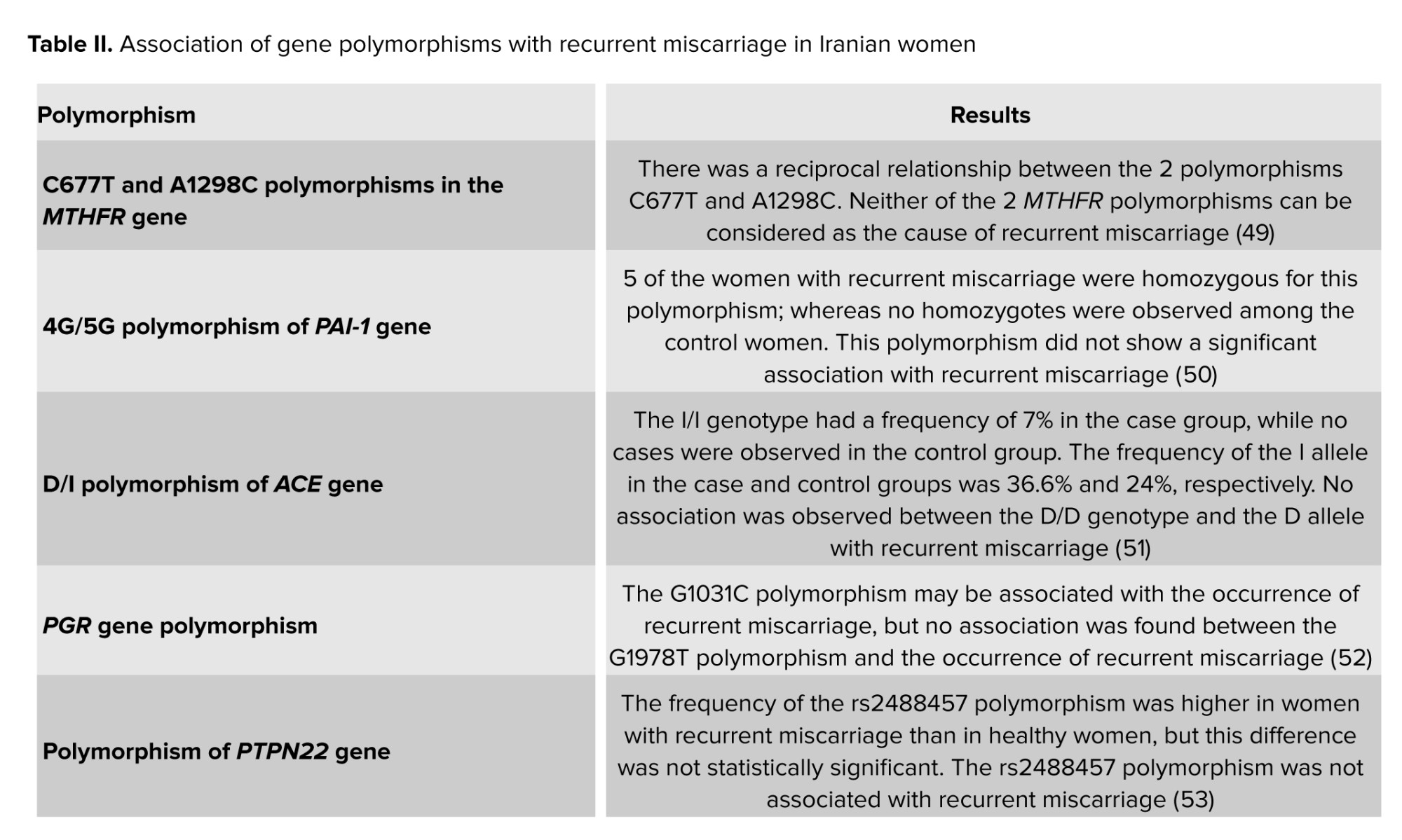
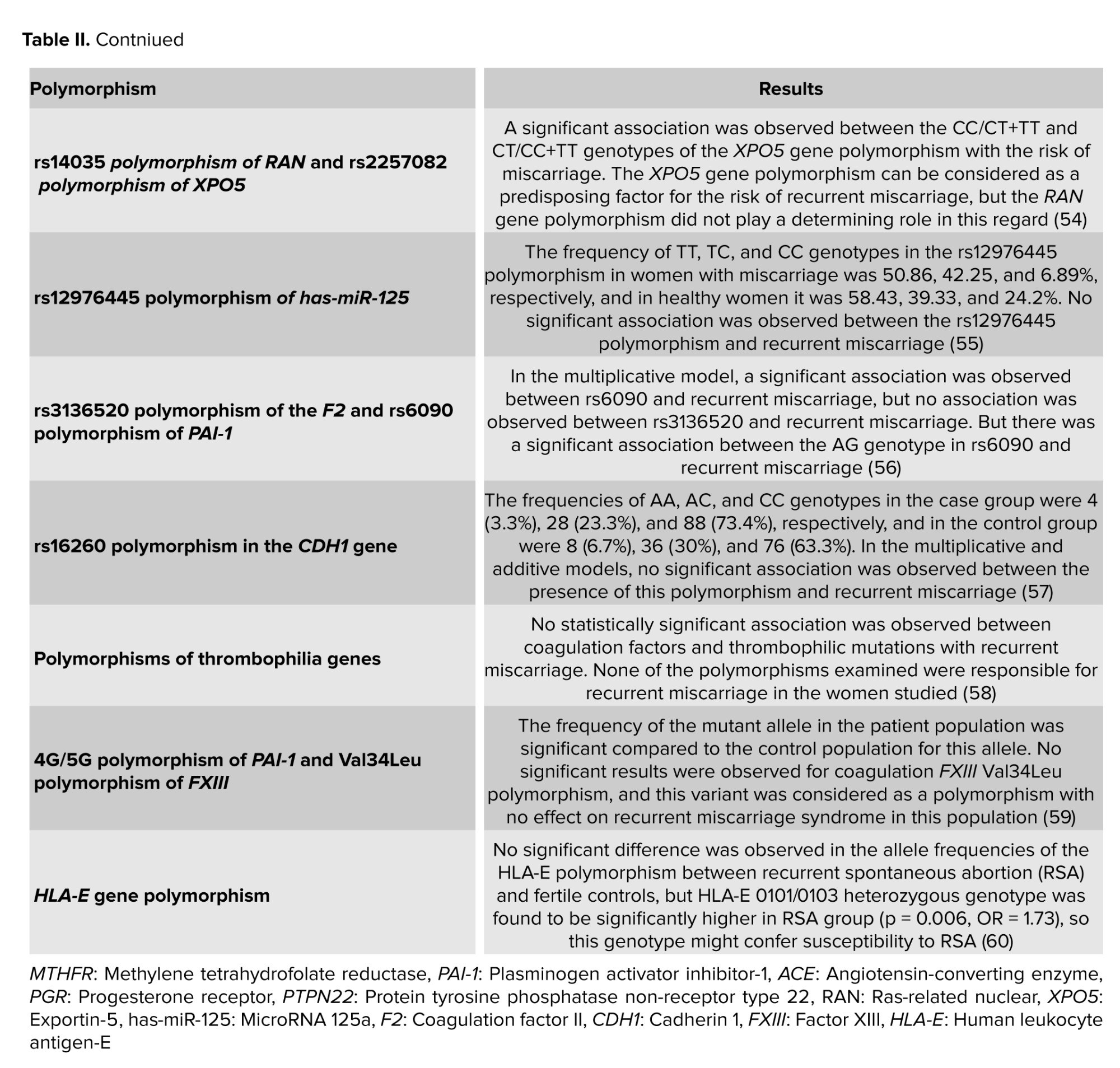
Table II shows some studies conducted on the gene polymorphisms that are not associated with recurrent miscarriage in Iranian women.
4.2. Polymorphisms associated with recurrent miscarriage
4.2.1. 1082G/A polymorphism in the estrogen receptor (ER) gene
The frequency of rs1256049 polymorphism among women with recurrent miscarriage and control women was 80% and 62.5%, respectively. The frequency of genotypes in the control and patient groups in the study population was significantly different. A statistically significant relationship was observed between the ER gene polymorphism (rs1256049 G/A) and recurrent miscarriage. The ER gene polymorphism can be introduced as a candidate gene effective in recurrent miscarriage (61).
4.2.2. rs11614913 polymorphism in the miR196a2 gene
A significant difference in the genotype distribution of miR-196a2 rs11614913 was observed in women with recurrent miscarriage compared to healthy individuals. The results provide evidence for the association of the miR-196a2 genetic variant and recurrent miscarriage (62).
4.2.3. G22A polymorphism in the ADA*2 allele of adenosine deaminase (ADA) gene
The G22A polymorphism of the ADA*2 allele increased adenosine levels. The frequency of homozygotes (AA) in the control group was 2%, while no homozygotes (AA) were seen in the patient group. The frequency of heterozygotes (AG) was reported to be 20% in the control group and 8% in the patient group. The frequency of homozygotes (GG) was reported to be 78% in the control group and 92% in the patient group. The G22A polymorphism of the (ADA*2) allele and the (ADA*1/ADA*2) AG genotype have a protective role against recurrent spontaneous abortions by reducing ADA activity (63).
4.2.4. 2578C/A polymorphism in the vascular endothelial growth factor (VEGF) and Q472H polymorphism in its receptor named kinase insert domain receptor (KDR)
The 2578C/A polymorphism for the VEGF gene and the Q724H polymorphism for the KDR gene were genotyped by tetra-primer-ARMS-PCR and PCR-RFLP methods, respectively. The frequencies of AC, CC, and AA genotypes in the VEGF polymorphism in the control and case groups were calculated to be 56, 20, and 24% and 26, 46, and 28%, respectively, and in the KDR polymorphism, the values of AA, AT, and TT genotypes in the control group were 42, 16, and 42% and in the case group, respectively, 30, 68, and 2%. It seems that the 2578C/A and Q472H polymorphisms in the VEGF gene and its receptor KDR are associated with recurrent spontaneous abortion in Iranian women (64).
4.2.5. rs10954213 polymorphism in the IRF-5 gene
The frequency of the G allele in the patient group was lower than in the control group. This difference was statistically significant and supported the protective role of this allele against the risk of miscarriage. The frequency of genotypes carrying the G allele (GG+GA) in women with miscarriage was lower than in women in the control group, and these genotypes showed a protective role against the occurrence of miscarriage. The presence of the G allele in association with the rs10954213 polymorphism of the IRF-5 gene is a protective factor against recurrent miscarriage in Iranian women (65).
The frequency of the G allele in the patient group was lower than in the control group. This difference was statistically significant and supported the protective role of this allele against the risk of miscarriage. The frequency of genotypes carrying the G allele (GG+GA) in women with miscarriage was lower than in women in the control group, and these genotypes showed a protective role against the occurrence of miscarriage. The presence of the G allele in association with the rs10954213 polymorphism of the IRF-5 gene is a protective factor against recurrent miscarriage in Iranian women (65).
4.2.6. 536C/T polymorphism in the tissue factor pathway inhibitor (TFPI) gene and Alu I/D in the tissue-type plasminogen activator (tPA) gene
Polymorphisms associated with thrombosis included TFPI and tPA, and of the 2 loci studied, only the tPA polymorphism was significantly associated with an increased risk of recurrent miscarriage. The I allele of this locus was associated with more than twice the risk of recurrent miscarriage compared to the D allele. Women aged between 25 and 35 yr had a significantly higher risk of recurrent miscarriage. The AluI/D polymorphism of the tPA gene was associated with an increased risk of recurrent miscarriage, but the 536C/T polymorphism of the TFPI gene did not associate (66).
4.2.7. rs 267601473 polymorphism in the homeobox D10 homeobox A10 (HOXA10) gene
A significant association was observed between the rs267601473 polymorphism of the HOXA10 gene and recurrent miscarriage. A significant association was observed between the T allele and recurrent miscarriage. A significant association was found between the rs267601473 polymorphism in the HOXA10 gene and recurrent miscarriage (67).
4.2.8. rs121912765 polymorphism in the bone morphogenetic protein 4 (BMP4) gene
A significant association between rs121912765 polymorphism and recurrent spontaneous abortion. The frequencies of alleles varied, with the A allele being more prevalent in the studied samples. This polymorphism may be a useful genetic marker for diagnosing female infertility in the context of recurrent spontaneous abortion (68).
4.2.9. Polymorphism in the factor XI (FXI) gene
The frequency of different genotypes in wild-type patients was 59.7% TT, 36.1% CT heterozygote, and 4.2% CC homozygote, and in the control group, 45.3% TT homozygote, 49.4% CT heterozygote, and 5.3% CC homozygote. Therefore, TT genotype is more common in the patient group than in the control group, and CT heterozygote is more common in the control group than in the patient group. Homozygote genotype (TT) can be a risk factor for recurrent miscarriage. In the heterozygote genotype, the C allele (CT) can have a protective role (69).
4.2.10. rs4648551 polymorphism in the tumor protein p73 (p73) gene
Considering the effective role of the p73 gene in the process of early blastocyst division and protection of germ cells, it seems that the rs4648551 polymorphism in this p73 gene is associated with the occurrence of symptoms of recurrent spontaneous abortion. In the polymorphism (rs4648551 Ap), the amount of allelic difference between the patient and control groups was not significant, and a dominant inheritance model was proposed. A significant association was observed between rs4648551 polymorphism and recurrent idiopathic abortion (70).
4.2.11. rs1736933 polymorphism in the human leukocyte antigen G (HLA-G) gene
The frequencies of AA, CA, and CC genotypes in the patient group were 55, 37, and 8%, respectively, and in the control group 37.75, 41.25, and 20%. Comparison of genotype frequencies between the 2 groups showed that the homozygous CC genotype is associated with recurrent miscarriage. The results indicated a significant difference in allelic frequencies between the 2 groups. The rs1736933 polymorphism located upstream of the HLA-G gene was found to be associated with recurrent miscarriage in the female population (71).
4.2.12. Polymorphisms of thrombophilia genes
Homozygosity of prothrombin (AA), Leiden (AA), and HPA-1 (TT) genes were not detected. Among the genotypes, the occurrence of wild-type alleles (96.3%) and heterozygous FII (7.3%) had the highest and lowest prevalence, respectively. MTHFR 1298 A>C gene had the highest frequency among 296 patients compared to other genes. The heterozygosity frequencies of PAI-1, MTHFR1298, MTHFR677, factor XIII, HPA-1, β-Fibrinogen (FGB), FVL, and prothrombin genotypes were 72.6, 70, 40.5, 29.4, 70, 25.5, 20, 4.4, and 3.7%, respectively. Heterozygosity of MTHFR 677, MTHFR 1298, and PAI-I genes had a significant prevalence (72).
4.2.13. rs2249863 and rs1233334 polymorphisms upstream of the HLA-G gene
The frequencies of the G allele and the GG genotype of the rs2249863 polymorphism locus showed a statistically significant difference between the 2 patient and control groups. In the case of the rs1233334 polymorphism locus, the frequencies of the C allele and the CC genotype, although different between the patient and control groups, were not statistically significant. The most common haplotype was the CG haplotype, the frequency of which was statistically significant between the patient and control groups. The rs2249863 polymorphism and the CG haplotype of the rs2249863 and rs1233334 loci were associated with recurrent spontaneous abortion disorder and can be considered as a potential risk factor (73).
4.2.14. rs1632943 and rs1736932 polymorphisms in the HLA-G gene
In rs1632943 polymorphism, the frequency of CC, CA, and AA genotypes in the patient group was 8, 33, and 59%, respectively, and in the control group 16.25, 43.75, and 40%. The AA genotype was associated with recurrent spontaneous abortion, and in the rs1736932 polymorphism, the frequency of CC, CG, and GG genotypes was 8, 32, and 60%, respectively, in the patient group and 17.5, 41.25, and 41.25% in the control group. The GG genotype was associated with recurrent abortion. Haplotype H1 (GA) showed an association with the disease. The rs1632943 and rs1736932 polymorphisms can be considered as a risk factor for recurrent abortion (74).
4.2.15. 4G/5G polymorphism in the PAI-1 gene
No significant cytogenetic abnormalities were observed that were influential in recurrent miscarriage. The frequency of the 4G allele in the case and control groups was 2.54 and 3.33%, respectively. The frequency of the 5G allele in the case and control groups was 8.45 and 6.66%, respectively. The frequency of the 5G/5G and 4G/5G genotypes was 25 and 6.41% in the case group; and 55 and 3.23% in the control group, respectively. The frequency of the 4G/4G genotype was 3.33 and 6.21% in the case and control groups, respectively. The results showed a significant association between the frequency of the 4G allele of the PAI-1 gene and the susceptibility to recurrent miscarriage (75).
4.2.16. CX3CR1 gene polymorphisms
Out of 244 missense mutations in the dbSNP database, 2 variants (rs3732378 and rs3732379) have been reported in association with RPL related to the CX3CR1 gene. The results of bioinformatics analyses showed that both variants were predicted as pathogenic mutations and changed the stability of the protein structure and played a key role in interaction with the ligand. 2 missense mutations in the CX3CR1 gene are an important candidate for recurrent miscarriage, and their identification in patients with recurrent miscarriage can be regarded as a risk factor (76).
4.2.17. -455G/A (rs1800790) polymorphism in the FGB gene
The genotype frequencies of AA, GA, and GG of the FGB gene were 65, 30, and 6% in the patient group and 48, 50, and 2% in the control group, respectively. The allele frequencies of G and A were 79 and 21% in the patient group and 73 and 27% in the control group, respectively. Evidence showed that the natural homozygote GG has a protective effect compared to the heterozygote GA and also compared to the total GA + AA. In addition, being heterozygous shows a 2-fold increase in the risk of recurrent miscarriage compared to being homozygous. The rs1800790 polymorphism of the FGB gene is probably associated with the incidence of recurrent miscarriage in terms of genotyping (77).
4.2.18. rs17144343 G>A polymorphism in the hepatocellular carcinoma up-regulated long (HULC) non-coding RNA gene
The genotypic distribution of rs17144343 for GA and GG genotypes was 24.7 and 75.3% in the patient group and 2 and 98% in the control group, respectively. The frequency of A allele in patients was 12.4% and 1% in the control group. A significant relationship was observed between the susceptibility to recurrent miscarriage and the G>A polymorphism of rs17144343 of the HULC gene. A significant relationship was observed between the genotypes of this locus and the consanguinity of the parents of the couple. A significant relationship was observed between the polymorphism of rs17144343 of the HULC gene and the susceptibility to recurrent spontaneous miscarriage (78).
4.2.19. MTHFR gene polymorphisms
Of the 50 women with recurrent miscarriage, 15 (30%) were negative for both mutations and 11 (22%) were heterozygous for both mutations for A>C 1298 and C>T677. 8 (16%) were heterozygous and 3 (6%) were homozygous for C>T 677, and 12 (24%) were heterozygous and 1 (2%) was homozygous for A>C 1298. The C677T and A1298C mutations of the MTHFR gene played an important role in thrombophilia, indicating a relatively high frequency of the above mutations in women with miscarriage (79).
4.2.20. CYP1A1, CYP2D6, and NOS3 gene polymorphisms
Among these polymorphisms, only rs1048943 of CYP1A1 showed a statistically significant association with RPL and might be associated with a reduced risk of RPL in the studied Iranian women (80).
5. Limitations
This review research had some limitations. In most studies, there was no information about the women’s family history of infertility, PMOS, and miscarriage. Also, there was no detailed follow-up on smoking, alcohol, and drug consumption that may have affected the results. The study was limited to only some populations within a country, and no other infertile, PMOS or RPL cases, and healthy populations from other ethnic groups or countries were assessed. In most studies, case and control groups were relatively small. Therefore, in future studies, it would be beneficial to use larger groups from various nations, with awareness of the family history of related diseases and lifestyle practices, and also to investigate other SNPs from these genes.
6. Conclusion
This review article examined the polymorphisms involved in the occurrence of infertility, PMOS, and recurrent miscarriages, some of which were effective and some were ineffective. These studies help specialists choose the appropriate treatment method based on the type of disorder.
Acknowledgments
The author hereby thanks and appreciates all researchers who have worked in the field of gene polymorphisms in infertile women, women with PMOS, and recurrent miscarriages. No funding was allocated for this work and no artificial intelligence was used.
Conflict of Interest
The authors declare that there is no conflict of interest.
Type of Study: Review Article |
Subject:
Reproductive Genetics
Send email to the article author
| Rights and permissions | |
 |
This work is licensed under a Creative Commons Attribution-NonCommercial 4.0 International License. |