International Journal of
Reproductive Biomedicine
Mon, Oct 19, 2026
[Archive]
Volume 24, Issue 8 (August 2026)
IJRM 2026, 24(8): 739-744 |
Back to browse issues page




Download citation:
BibTeX | RIS | EndNote | Medlars | ProCite | Reference Manager | RefWorks
Send citation to:


BibTeX | RIS | EndNote | Medlars | ProCite | Reference Manager | RefWorks
Send citation to:
Raeisi A, Farzamnia F, Bozorgian L. Pemphigoid gestationis: A case report on maternal and neonatal outcomes. IJRM 2026; 24 (8) :739-744
URL: http://ijrm.ir/article-1-3836-en.html
URL: http://ijrm.ir/article-1-3836-en.html


1- Medicinal Plant Research Center, Yasuj University of Medical Sciences, Yasuj, Iran.
2- Faculty of Medicine, Ahvaz Jundishapur University of Medical Sciences, Ahvaz, Iran.
3- Social Determinants of Health Research Center, Yasuj University of Medical Sciences, Yasuj, Iran. ,Liela.bozorgian1@gmail.com; bozorgi.L@ajums.ac.ir
2- Faculty of Medicine, Ahvaz Jundishapur University of Medical Sciences, Ahvaz, Iran.
3- Social Determinants of Health Research Center, Yasuj University of Medical Sciences, Yasuj, Iran. ,
Full-Text [PDF 1322 kb]
(220 Downloads)
| Abstract (HTML) (240 Views)
Full-Text: (40 Views)
1. Introduction
Pemphigoid gestationis (PG) is an autoimmune disease specific to pregnancy, a subset of the dermatoses of pregnancy (1). Symptoms of PG are often accompanied by severe itching and an erythematous papular rash (2). The incidence of this rare disease is estimated to be 1 in 50,000 pregnancies (3). Although it can occur at any age during pregnancy and even postpartum, the highest incidence is in the second and third trimesters of pregnancy. In some studies, it has also been observed in women with trophoblastic tumors (4).
Pathogenesis involves abnormal expression of major histocompatibility complex class II molecules on placental tissue, triggering an immune response. This leads to the production of IgG1 autoantibodies directed against BP180 (type XVII collagen), a hemidesmosomal protein in the basement membrane zone. Complement activation via the classical pathway results in the formation of subepidermal blisters and characteristic vesicles. Genetic predisposition has been associated with the HLA-DRB1 03:01 and HLA-DRB1 04:01 alleles. Diagnosis is established through clinical history, physical examination, skin biopsy showing a subepidermal blister with eosinophilic infiltrate, and/or enzyme‑linked immunosorbent assay for anti‑BP180 antibodies (2). Prompt and accurate diagnosis is critical to prevent potential complications, including preterm delivery, fetal growth restriction, and adverse neonatal outcomes (5). The purpose of this case report is to raise clinical awareness, enhance differential diagnostic accuracy, and improve overall management of affected patients.
2. Case Presentation
The case of a 19-yr-old Iranian primiparous woman admitted to the Imam Dermatology Clinic, Ahvaz, Iran, at 35 wk and 1 day of pregnancy with complaints of severe itching of the body (abdomen, arms, legs, forearm, and thighs) and was admitted. The woman reported that the rash first appeared around the umbilicus a week ago and then spread to other parts of the body over the course of a few days. She had been married 9 months ago and stated that she had no history of any medical, autoimmune, surgical, or allergic diseases. She also did not mention any history of skin or autoimmune diseases in her family. She had a primary education and came from a lower-middle-income family. She did not mention a history of smoking, drug use, or alcohol use. The primipara stated that she had had an uneventful pregnancy until then, and that the rash had developed suddenly.
On examination, there were erythematous and edematous lesions with central erosions and isolated vesicles, mainly on the trunk, limbs, hands, and feet. Tests requested during hospitalization included: (complete blood count, blood urea nitrogen, creatinine, sodium, potassium, aspartate aminotransferase, alanine aminotransferase, bilirubin, triglyceride, C-reactive protein, cholesterol, U/A, U/C, B/C, systemic lupus erythematosus, solute carrier, and viral marker). Except for CRP (3+), all results were within normal limits. The rest of the tests were normal.
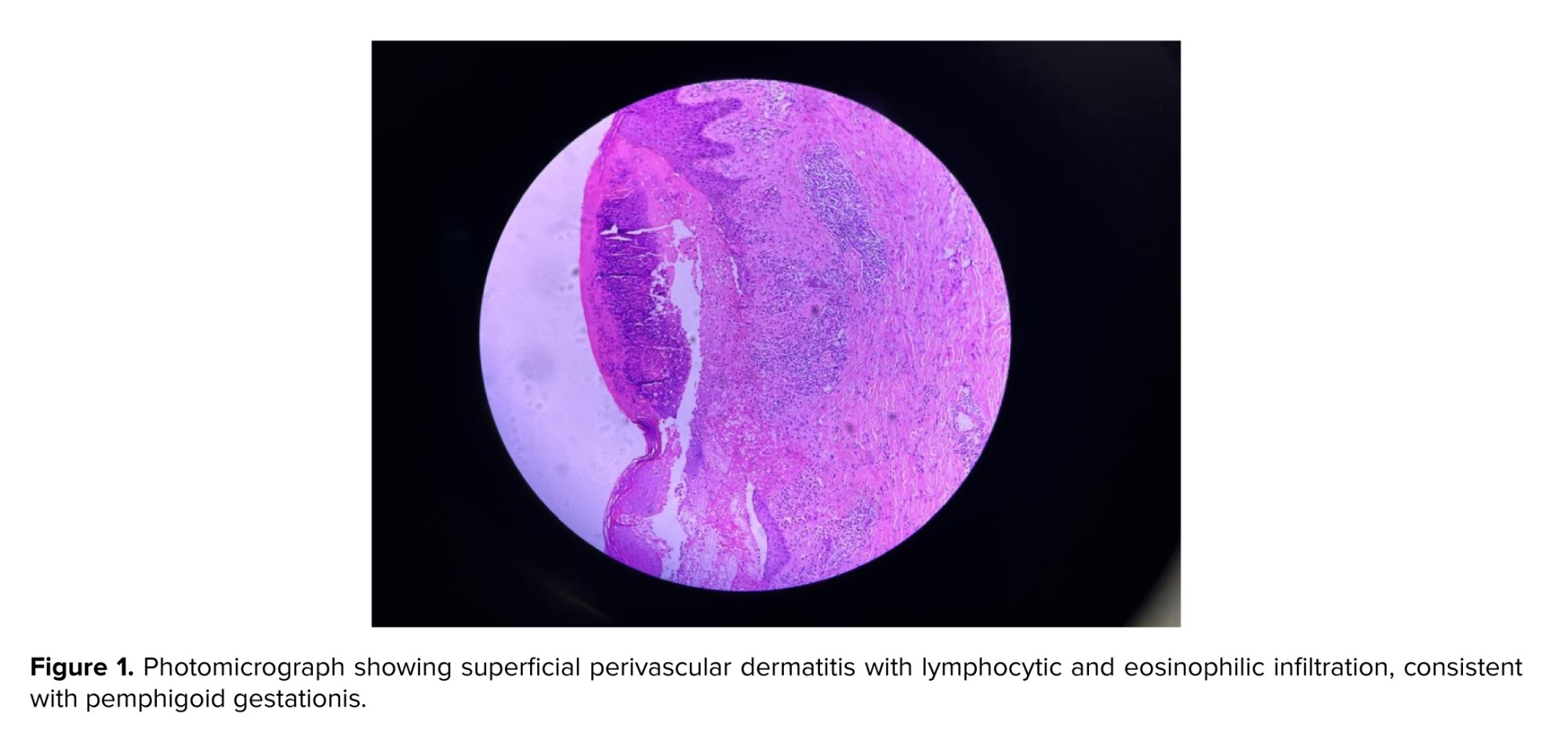
Biopsy findingsrevealed superficial perivascular dermatitis with lymphocytic and eosinophilic infiltration, consistent with PG (Figure 1). The mother received prednisolone 5 mg tablets (3 in the morning and 1 in the afternoon for 5 days), Chlorpheniramine 4 mg every night for 5 nights, Topical Megacort ointment every 3 hr, and Eucerin ointment two times a day (BID) during her 5-day stay in the dermatology clinic:
On the 3rd day of hospitalization, the patient's blood sugar was 280. The woman received a single dose of insulin as per protocol. In subsequent follow-ups, the blood sugar returned to normal. Her itching also decreased, and the rash progressed toward healing. During the hospitalization period, she was visited by a gynecologist. The non-stress test and biophysical profile ultrasound were satisfactory.
The woman was discharged on the 5th day of hospitalization with good general condition, stable vital signs, and improvement of skin lesions. Medication instructions included: 5 mg prednisolone tablets, 3 in the morning and 1 in the afternoon, 4 mg chlorpheniramine QHS, topical Megacort ointment BID, and topical Eucerin ointment BID. The patient was instructed on their prescription and how to use it. The patient was advised to refer to the gynecology clinic to monitor her pregnancy.
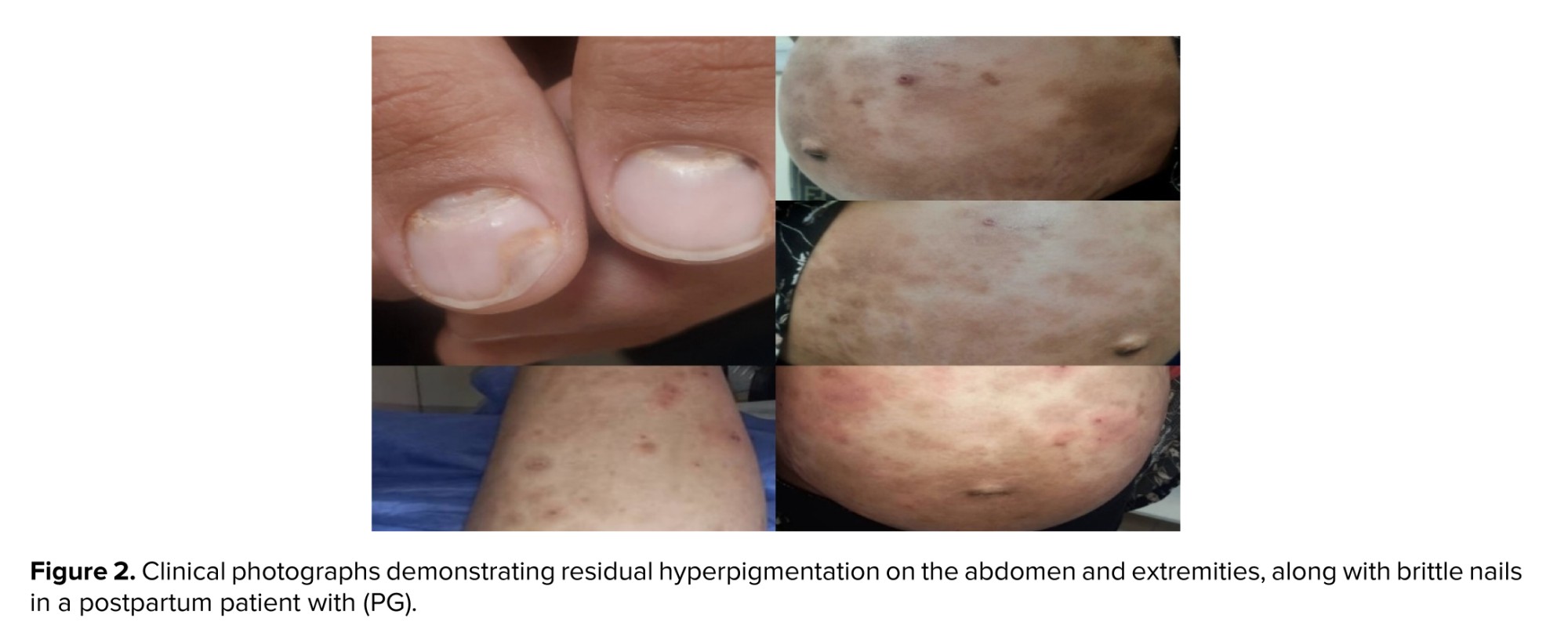
She returned to the gynecology clinic 2 days after discharge with a gestational age of 36 wk and 1 day, in good general condition. A non-stress test was obtained, which was normal. At this time, no active blisters were visible on the patient's body; however, residual hyperpigmentation was present in previously affected areas, and her nails were brittle (Figure 2).
The primiparous woman was followed up daily by the researcher. A week after discharge, her medication course was completed. 2 days later, symptoms including rash and itching recurred. She was advised to return to the physician, and the previous medication was restarted at the same dose.
The mother presented to the maternity ward at 38 wk and 1 day of gestation with uterine contractions and watery discharge. Examination revealed meconium‑stained, thickened amniotic fluid with a Bishop score of 4. Consequently, cesarean section was performed. An apparently healthy baby girl was born with Apgar scores of 8 at 1 min and 9 at 5 min, weighing 2700 gr. The infant had no skin rash, clear throat, and mouth discharge, and was breastfed. Both mother and baby were discharged in good condition one day postpartum.
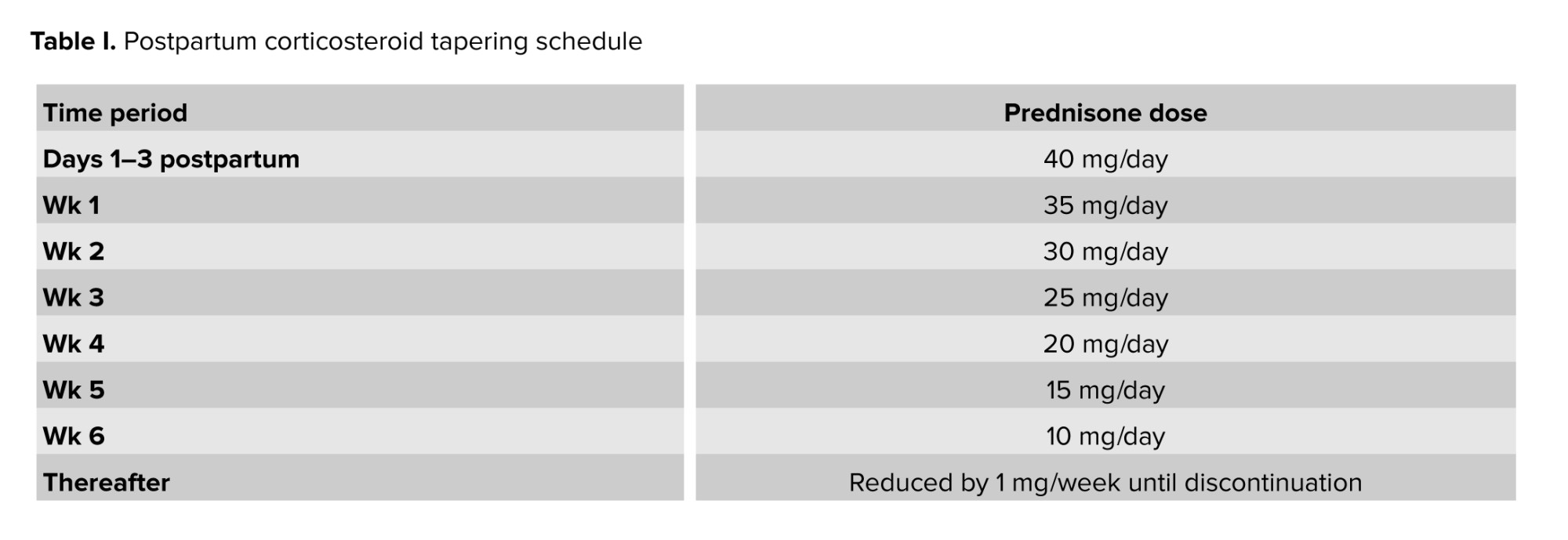
Postpartum, prednisolone was tapered to 10 mg/day. The mother received necessary education upon discharge and was followed up by telephone. 3 days after delivery, a flare occurred, with new lesions appearing all over the body. She was referred to a dermatologist, and treatment was resumed with topical corticosteroids and prednisone 40 mg/day, tapered gradually by 5 mg weekly until reaching 10 mg, then by 1 mg weekly thereafter. The tapering schedule is detailed in table I. Skin symptoms decreased progressively, and the case moved toward remission. Currently (6 wk postpartum), hyperpigmentation is fading without scarring, and pruritus is limited to new lesions.
2.1. Ethical Considerations
Written informed consent was obtained from the participant to publish this case report. The patient was assured that all of her information would remain confidential.
3. Discussion
This study reports an Iranian case of PG with emphasis on follow‑up, treatment, and evaluation of maternal and neonatal outcomes. PG is a rare autoimmune bullous disease specific to pregnancy (6). No accurate prevalence data are available for Iran; globally, incidence is estimated at 1 in 50,000 pregnancies (7). The disease most commonly presents in the second and third trimesters, with postpartum cases also reported (8). Studies show conflicting results regarding primiparous vs. multiparous predominance (9, 10). Clinically, PG closely mimics pruritic urticarial papules and plaques of pregnancy (11). Therefore, accurate diagnosis is essential for appropriate treatment and prevention of adverse fetal and neonatal outcomes. A meta‑analysis confirmed that PG is associated with several adverse neonatal outcomes, highlighting the importance of prompt diagnosis (5). In our case, diagnosis was confirmed by biopsy, and treatment effectively controlled skin symptoms and pruritus.
Treatment strategy: therapeutic approaches vary according to disease severity and aim to relieve pruritus and prevent new blister formation. First‑line therapy includes high‑potency topical corticosteroids and antihistamines. Systemic corticosteroids are reserved for moderate‑to‑severe cases (7, 12). However, corticosteroid use may impair glucose metabolism, occasionally requiring insulin therapy. Herman et al. reported similar hyperglycemia in a severe PG case (13). Our case also experienced a transient hyperglycemic episode that was controlled with insulin.
Multidisciplinary approach: our case was co‑managed by a dermatologist and gynecologist. With careful monitoring, a full‑term, apparently healthy infant was delivered with no skin involvement. The mother continued medication until delivery, which was tapered postpartum. At 6‑wk follow‑up, no signs of recurrence were observed, a finding consistent with literature indicating that timely diagnosis and treatment generally lead to favorable neonatal outcomes (14).
Possible association between fetal meconium passage and PG: a hypothesis or coincidence?
A notable observation in our case was the passage of meconium‑stained amniotic fluid at 38 wk of gestation. To our knowledge, no direct causal relationship between PG and fetal meconium passage has been established in the literature. This finding may be coincidental; however, it raises the question of whether subtle placental insufficiency or fetal distress could occur in PG‑affected pregnancies. We suggest that future case series and prospective studies investigate this potential association.
4. Conclusion
This study underscores that pregnant women who present with similar symptoms should be promptly identified and treated with reliable tests and biopsies. Proper diagnosis, treatment, and follow‑up require a multidisciplinary team to prevent adverse maternal and fetal outcomes. Moreover, given the potential for postpartum flares, comprehensive patient education regarding self‑care and early recognition of recurrence is essential.
Data Availability
All data related to this study are available in the text of this file.
Author Contributions
A. Raeisi: Writing the initial draft, final editing. F. Farzamnia: Patient follow‑up, collaboration in writing. L. Bozorgian: Writing the article, patient follow‑up. All authors approved the final version of the manuscript.
Acknowledgements
The authors thank the enrolled case for her cooperation and permission to report. The 2025 version of Grammarly was used for the manuscript’s language editing.
Conflict of Interest
The authors declare that there is no conflict of interest.
Pathogenesis involves abnormal expression of major histocompatibility complex class II molecules on placental tissue, triggering an immune response. This leads to the production of IgG1 autoantibodies directed against BP180 (type XVII collagen), a hemidesmosomal protein in the basement membrane zone. Complement activation via the classical pathway results in the formation of subepidermal blisters and characteristic vesicles. Genetic predisposition has been associated with the HLA-DRB1 03:01 and HLA-DRB1 04:01 alleles. Diagnosis is established through clinical history, physical examination, skin biopsy showing a subepidermal blister with eosinophilic infiltrate, and/or enzyme‑linked immunosorbent assay for anti‑BP180 antibodies (2). Prompt and accurate diagnosis is critical to prevent potential complications, including preterm delivery, fetal growth restriction, and adverse neonatal outcomes (5). The purpose of this case report is to raise clinical awareness, enhance differential diagnostic accuracy, and improve overall management of affected patients.
2. Case Presentation
The case of a 19-yr-old Iranian primiparous woman admitted to the Imam Dermatology Clinic, Ahvaz, Iran, at 35 wk and 1 day of pregnancy with complaints of severe itching of the body (abdomen, arms, legs, forearm, and thighs) and was admitted. The woman reported that the rash first appeared around the umbilicus a week ago and then spread to other parts of the body over the course of a few days. She had been married 9 months ago and stated that she had no history of any medical, autoimmune, surgical, or allergic diseases. She also did not mention any history of skin or autoimmune diseases in her family. She had a primary education and came from a lower-middle-income family. She did not mention a history of smoking, drug use, or alcohol use. The primipara stated that she had had an uneventful pregnancy until then, and that the rash had developed suddenly.
On examination, there were erythematous and edematous lesions with central erosions and isolated vesicles, mainly on the trunk, limbs, hands, and feet. Tests requested during hospitalization included: (complete blood count, blood urea nitrogen, creatinine, sodium, potassium, aspartate aminotransferase, alanine aminotransferase, bilirubin, triglyceride, C-reactive protein, cholesterol, U/A, U/C, B/C, systemic lupus erythematosus, solute carrier, and viral marker). Except for CRP (3+), all results were within normal limits. The rest of the tests were normal.
Biopsy findingsrevealed superficial perivascular dermatitis with lymphocytic and eosinophilic infiltration, consistent with PG (Figure 1). The mother received prednisolone 5 mg tablets (3 in the morning and 1 in the afternoon for 5 days), Chlorpheniramine 4 mg every night for 5 nights, Topical Megacort ointment every 3 hr, and Eucerin ointment two times a day (BID) during her 5-day stay in the dermatology clinic:
On the 3rd day of hospitalization, the patient's blood sugar was 280. The woman received a single dose of insulin as per protocol. In subsequent follow-ups, the blood sugar returned to normal. Her itching also decreased, and the rash progressed toward healing. During the hospitalization period, she was visited by a gynecologist. The non-stress test and biophysical profile ultrasound were satisfactory.
The woman was discharged on the 5th day of hospitalization with good general condition, stable vital signs, and improvement of skin lesions. Medication instructions included: 5 mg prednisolone tablets, 3 in the morning and 1 in the afternoon, 4 mg chlorpheniramine QHS, topical Megacort ointment BID, and topical Eucerin ointment BID. The patient was instructed on their prescription and how to use it. The patient was advised to refer to the gynecology clinic to monitor her pregnancy.
She returned to the gynecology clinic 2 days after discharge with a gestational age of 36 wk and 1 day, in good general condition. A non-stress test was obtained, which was normal. At this time, no active blisters were visible on the patient's body; however, residual hyperpigmentation was present in previously affected areas, and her nails were brittle (Figure 2).
The primiparous woman was followed up daily by the researcher. A week after discharge, her medication course was completed. 2 days later, symptoms including rash and itching recurred. She was advised to return to the physician, and the previous medication was restarted at the same dose.
The mother presented to the maternity ward at 38 wk and 1 day of gestation with uterine contractions and watery discharge. Examination revealed meconium‑stained, thickened amniotic fluid with a Bishop score of 4. Consequently, cesarean section was performed. An apparently healthy baby girl was born with Apgar scores of 8 at 1 min and 9 at 5 min, weighing 2700 gr. The infant had no skin rash, clear throat, and mouth discharge, and was breastfed. Both mother and baby were discharged in good condition one day postpartum.
Postpartum, prednisolone was tapered to 10 mg/day. The mother received necessary education upon discharge and was followed up by telephone. 3 days after delivery, a flare occurred, with new lesions appearing all over the body. She was referred to a dermatologist, and treatment was resumed with topical corticosteroids and prednisone 40 mg/day, tapered gradually by 5 mg weekly until reaching 10 mg, then by 1 mg weekly thereafter. The tapering schedule is detailed in table I. Skin symptoms decreased progressively, and the case moved toward remission. Currently (6 wk postpartum), hyperpigmentation is fading without scarring, and pruritus is limited to new lesions.
2.1. Ethical Considerations
Written informed consent was obtained from the participant to publish this case report. The patient was assured that all of her information would remain confidential.
3. Discussion
This study reports an Iranian case of PG with emphasis on follow‑up, treatment, and evaluation of maternal and neonatal outcomes. PG is a rare autoimmune bullous disease specific to pregnancy (6). No accurate prevalence data are available for Iran; globally, incidence is estimated at 1 in 50,000 pregnancies (7). The disease most commonly presents in the second and third trimesters, with postpartum cases also reported (8). Studies show conflicting results regarding primiparous vs. multiparous predominance (9, 10). Clinically, PG closely mimics pruritic urticarial papules and plaques of pregnancy (11). Therefore, accurate diagnosis is essential for appropriate treatment and prevention of adverse fetal and neonatal outcomes. A meta‑analysis confirmed that PG is associated with several adverse neonatal outcomes, highlighting the importance of prompt diagnosis (5). In our case, diagnosis was confirmed by biopsy, and treatment effectively controlled skin symptoms and pruritus.
Treatment strategy: therapeutic approaches vary according to disease severity and aim to relieve pruritus and prevent new blister formation. First‑line therapy includes high‑potency topical corticosteroids and antihistamines. Systemic corticosteroids are reserved for moderate‑to‑severe cases (7, 12). However, corticosteroid use may impair glucose metabolism, occasionally requiring insulin therapy. Herman et al. reported similar hyperglycemia in a severe PG case (13). Our case also experienced a transient hyperglycemic episode that was controlled with insulin.
Multidisciplinary approach: our case was co‑managed by a dermatologist and gynecologist. With careful monitoring, a full‑term, apparently healthy infant was delivered with no skin involvement. The mother continued medication until delivery, which was tapered postpartum. At 6‑wk follow‑up, no signs of recurrence were observed, a finding consistent with literature indicating that timely diagnosis and treatment generally lead to favorable neonatal outcomes (14).
Possible association between fetal meconium passage and PG: a hypothesis or coincidence?
A notable observation in our case was the passage of meconium‑stained amniotic fluid at 38 wk of gestation. To our knowledge, no direct causal relationship between PG and fetal meconium passage has been established in the literature. This finding may be coincidental; however, it raises the question of whether subtle placental insufficiency or fetal distress could occur in PG‑affected pregnancies. We suggest that future case series and prospective studies investigate this potential association.
4. Conclusion
This study underscores that pregnant women who present with similar symptoms should be promptly identified and treated with reliable tests and biopsies. Proper diagnosis, treatment, and follow‑up require a multidisciplinary team to prevent adverse maternal and fetal outcomes. Moreover, given the potential for postpartum flares, comprehensive patient education regarding self‑care and early recognition of recurrence is essential.
Data Availability
All data related to this study are available in the text of this file.
Author Contributions
A. Raeisi: Writing the initial draft, final editing. F. Farzamnia: Patient follow‑up, collaboration in writing. L. Bozorgian: Writing the article, patient follow‑up. All authors approved the final version of the manuscript.
Acknowledgements
The authors thank the enrolled case for her cooperation and permission to report. The 2025 version of Grammarly was used for the manuscript’s language editing.
Conflict of Interest
The authors declare that there is no conflict of interest.
Type of Study: Case Report |
Subject:
Pregnancy Health
Send email to the article author
| Rights and permissions | |
 |
This work is licensed under a Creative Commons Attribution-NonCommercial 4.0 International License. |