International Journal of
Reproductive Biomedicine
Fri, Oct 2, 2026
[Archive]
Volume 24, Issue 2 (February 2026)
IJRM 2026, 24(2): 145-156 |
Back to browse issues page

Ethics code: IR.MUBABOL.REC.1403.091


Download citation:
BibTeX | RIS | EndNote | Medlars | ProCite | Reference Manager | RefWorks
Send citation to:


BibTeX | RIS | EndNote | Medlars | ProCite | Reference Manager | RefWorks
Send citation to:
Rezaei Z, Sharif-Nia H, Gholamnia-Shirvani Z, Behmanesh F, Ahmadzadeh Tori N. Personal, social, and economic determinants of voluntary single-childedness and childlessness among urban couples in Babol, Iran: A cross‐sectional study. IJRM 2026; 24 (2) :145-156
URL: http://ijrm.ir/article-1-3642-en.html
URL: http://ijrm.ir/article-1-3642-en.html
Zahed Rezaei1 

 , Hamid Sharif-Nia2 , Zeinab Gholamnia-Shirvani3 , Fereshteh Behmanesh3 , Neda Ahmadzadeh Tori *4
, Hamid Sharif-Nia2 , Zeinab Gholamnia-Shirvani3 , Fereshteh Behmanesh3 , Neda Ahmadzadeh Tori *4
1- Social Determinants of Health Research Center, Institute of Health Sciences and Technology, Hamadan University of Medical Sciences, Hamadan, Iran.
2- Psychosomatic Research Center, Mazandaran University of Medical Sciences, Sari, Iran. & Department of Nursing, Amol Faculty of Nursing and Midwifery, Mazandaran University of Medical Sciences, Sari, Iran.
3- Infertility and Reproductive Health Research Center, Health Research Institute, Babol University of Medical Sciences, Babol, Iran.
4- Infertility and Reproductive Health Research Center, Health Research Institute, Babol University of Medical Sciences, Babol, Iran. ,N.ahmadzadeh@mubabol.ac.ir
2- Psychosomatic Research Center, Mazandaran University of Medical Sciences, Sari, Iran. & Department of Nursing, Amol Faculty of Nursing and Midwifery, Mazandaran University of Medical Sciences, Sari, Iran.
3- Infertility and Reproductive Health Research Center, Health Research Institute, Babol University of Medical Sciences, Babol, Iran.
4- Infertility and Reproductive Health Research Center, Health Research Institute, Babol University of Medical Sciences, Babol, Iran. ,
Full-Text [PDF 407 kb]
(552 Downloads)
| Abstract (HTML) (984 Views)
Full-Text: (120 Views)
1. Introduction
In recent decades, global fertility patterns have shifted, with total fertility rates (TFRs) declining and single-child and childless families becoming increasingly common (1). This demographic transition spans diverse regions and carries far-reaching societal implications. Current research indicate that by the mid-21st century, most countries will record TFRs below the replacement threshold required to sustain population size, a trend expected to intensify toward the end of the century (2). Since the 1950s, the global TFR has more than halved, and today, over half of all nations register rates below the replacement level (1). While advances in contraception and expanded opportunities for women have contributed to these declines, a growing body of research has demonstrated that many individuals and couples consciously opt for fewer children or none at all (3). The concept of “unfulfilled fertility desires” in low fertility contexts further highlights the extent to which these patterns reflect deliberate choice rather than external constraints (4). A nuanced understanding of the personal, social, and economic motivations driving voluntary single-childedness and childlessness (VSCC) is therefore critical to inform reproductive health policy and family planning services.
Consistent with global trends, Iran has experienced a pronounced fertility decline, accompanied by a growing prevalence of VSCC (5). National survey data provide convincing evidence that a substantial proportion of newly married individuals intend to remain childless or limit their families to one child (6, 7). Urban-focused research in centers such as Tehran corroborates this pattern, revealing that many married couples report ideal and intended family sizes of zero or one child (8). Furthermore, intended family sizes often fall below these ideals, underscoring the role of socioeconomic pressures in shaping reproductive decisions. Although voluntary childlessness rates in Iran resemble international figures, the shift toward smaller families necessitates locally grounded studies to elucidate context-specific determinants (9).
A considerable amount of research has focused on economic, social, and personal determinants shaping family size decisions in Iran. Economically, perceived financial burdens and concerns about economic instability deter couples from having larger families (5, 6). However, several studies have reported paradoxical associations, such as higher household incomes correlating with preferences for single-child families (7). Socially, evolving gender roles, delayed marriage, and declining religiosity have been linked to smaller family norms (5, 6, 10). At the individual level, prioritization of personal autonomy and career aspirations further motivates VSCC (5, 6, 11).
While a considerable body of research has addressed economic and social determinants of fertility in Iran, regionally focused studies on VSCC in Babol remain scarce. To address this research gap, the present study examines how individual aspirations, community norms, and economic constraints intersect to shape married couples’ decisions to limit their families to one child or none in northern Iran. By contextualizing our analysis within Babol’s socioeconomic context, this study seeks to shed light on localized drivers of VSCC, aiming to inform targeted interventions and policies to support reproductive autonomy. Ultimately, these insights will strengthen the evidence base for tailoring family planning programs in urban settings undergoing rapid demographic transition.
2. Materials and Methods
2.1. Study design and participants
In this cross‐sectional study, a total of 452 married individuals (women aged 18-49 yr, men aged 18-55 yr) from urban areas of Babol, Iran were recruited using convenience and snowball sampling methods, from August-October 2024.
Participants completed the validated 22-item questionnaire on the contributing factors of tendency toward VSCC (QFT-VSCC) distributed via 2 social media platforms (WhatsApp and Telegram).
2.2. Eligibility criteria
Inclusion criteria included self-reported VSCC, despite being biologically capable of reproduction and not actively seeking pregnancy.
Proficiency in Persian sufficient to comprehend and complete the questionnaire; voluntary provision of informed consent; continuous residence in Babol for at least 1 yr; and age within the reproductive range, specifically 18-49 yr for women and 18-55 yr for men.
Couples were excluded if they had been diagnosed with infertility or any medical condition preventing pregnancy; if their VSCC status was involuntary; if they refused informed consent; or if they were currently pregnant.
2.3. Questionnaire
The tendency toward VSCC was assessed using the QFT-VSCC, a validated instrument developed by Sharif-Nia et al. (12). The QFT-VSCC comprises 2 sections: the 1st section collects socio-demographic characteristics (age, gender, employment status, and education level); the 2nd section includes the 22-item QFT-VSCC scale, organized into 5 subscales: threatened priorities; inappropriate familial context for childbearing; sense of occupational and social insecurity for the child; social modeling of childlessness; and tendency toward change or stability in marital life. These subscales collectively explain 52.6% of the total variance.
Items were rated on a 5-point Likert scale (1 = strongly disagree to 5 = strongly agree), yielding a total raw score between 22 and 110, with higher scores indicating a stronger tendency toward VSCC. To standardize comparisons, raw subscale and total scores were transformed to a 0-100 scale using the formula: transformed score = [(original score-minimum score)/(maximum possible score-minimum score)] × 100.
Psychometric evaluation of the QFT-VSCC demonstrated construct validity (factor loadings > 0.50; average variance extracted > 0.50), excellent internal consistency (Cronbach’s alpha > 0.80), and high test-retest reliability (> 0.86) (12). The questionnaire was first pilot-tested with 20 couples prior to administration. Data were collected online via Google forms. The survey link was shared with participants via WhatsApp and Telegram with reminders sent every 2 wk; all data were stored on a password-protected system.
2.4. Sample size
Participants were recruited using non-probability convenience sampling, with a snowball sampling component to extend outreach. A priori sample size calculation was performed using G*Power software, based on the module for comparing mean questionnaire scores across demographic groups. Assuming a small effect size (d = 0.17), significance level (α = 0.05), and power (1-β = 0.80), the required sample size was determined to be 452 participants.
2.5. Ethical Considerations
This study was approved by the Ethics Committee of Babol University of Medical Sciences, Babol, Iran (Code: IR.MUBABOL.REC.1403.091). Participants received a detailed study overview, provided electronic informed consent, and were assured confidentiality.
2.6. Statistical Analysis
Descriptive statistics (means, standard deviations, frequencies, and percentages) were used to summarize QFT-VSCC scores and participant characteristics. Kolmogorov-Smirnov statistics showed normal distribution of all variables; therefore, parametric statistical tests were used. Comparisons between demographic groups (2 categories) were conducted using independent-samples t tests; variables with 3 or more categories were analyzed via one-way ANOVA. Independent t tests were used to compare between 2-category variables (e.g., gender, employment status), and one-way analysis of variance was used for variables with 3 or more categories (e.g., age groups and education level). All statistical analyses were performed using Statistical Package for the Social Sciences, version 17.0, SPSS Inc., Chicago, Illinois, USA (SPSS). Statistical significance was defined as p < 0.05 (2-tailed).
3. Results
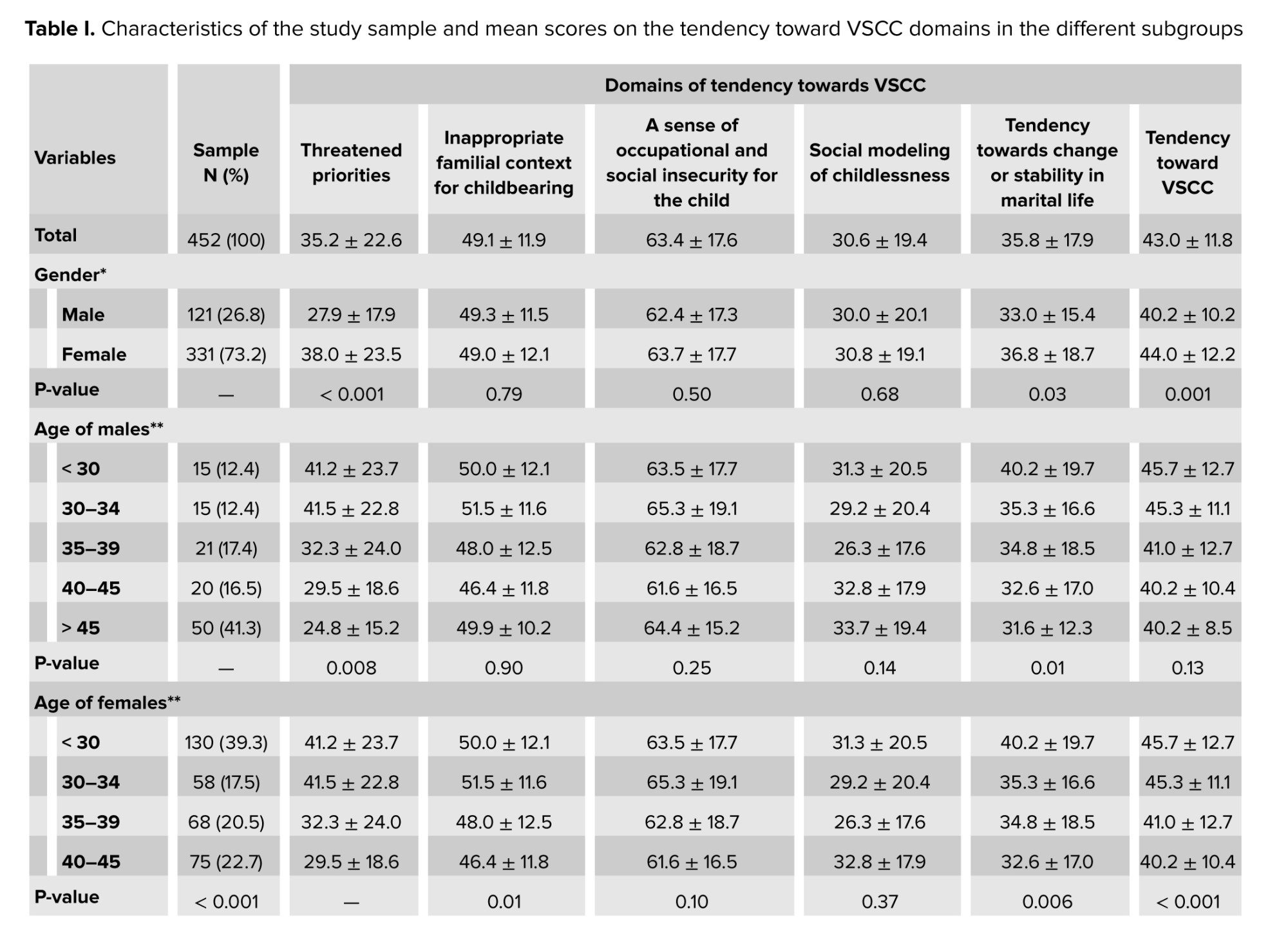
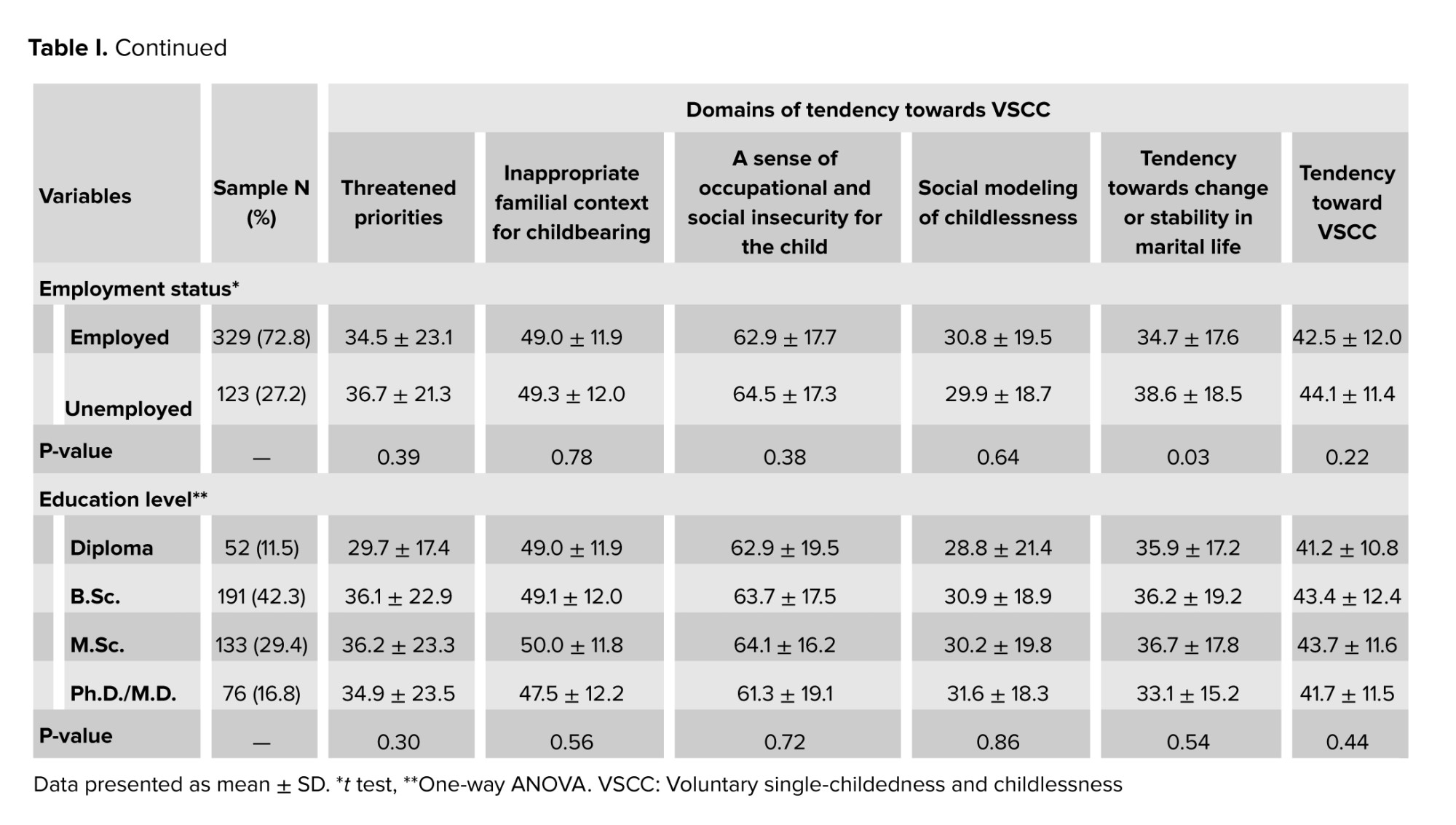
The demographic characteristics of the 452 participants and the comparison of VSCC domain scores across subgroups are presented in table I. The majority of participants were female, employed, and held university degrees.
Regarding the tendency toward VSCC, the "occupational and social insecurity for the child" domain demonstrated the highest mean score among the 5 subscales, followed by "inappropriate familial context for childbearing". Conversely, "social modeling of childlessness" received the lowest mean score (Table I).
Gender analysis revealed statistically significant differences. Women scored significantly higher than men in the “threatened priorities” (p < 0.001) and “tendency toward change or stability in marital life” domains (p = 0.03). Overall, female participants exhibited a significantly stronger total tendency toward VSCC compared to males (p = 0.001) (Table I).
Regarding employment status, unemployed participants showed a significantly higher tendency in the "tendency toward change or stability in marital life" domain compared to employed individuals (p = 0.03). Age-based comparisons indicated that younger participants (under 30 yr), both male and female, generally reported higher scores in specific domains compared to older age groups. Specifically, females under 30 showed the strongest inclination toward VSCC across most domains (p < 0.001). Educational level did not show significant associations with any VSCC domain or the total score (Table I).
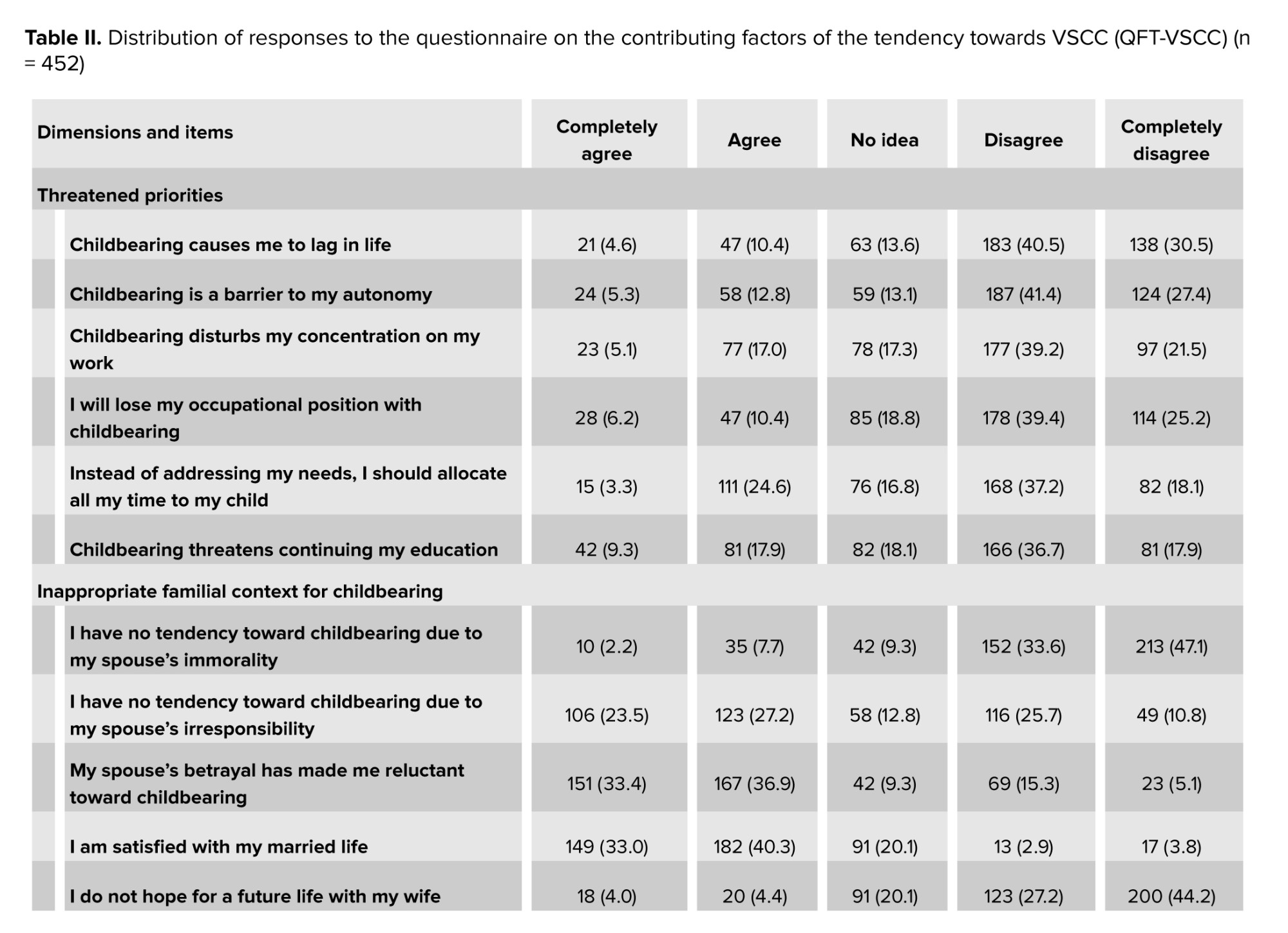
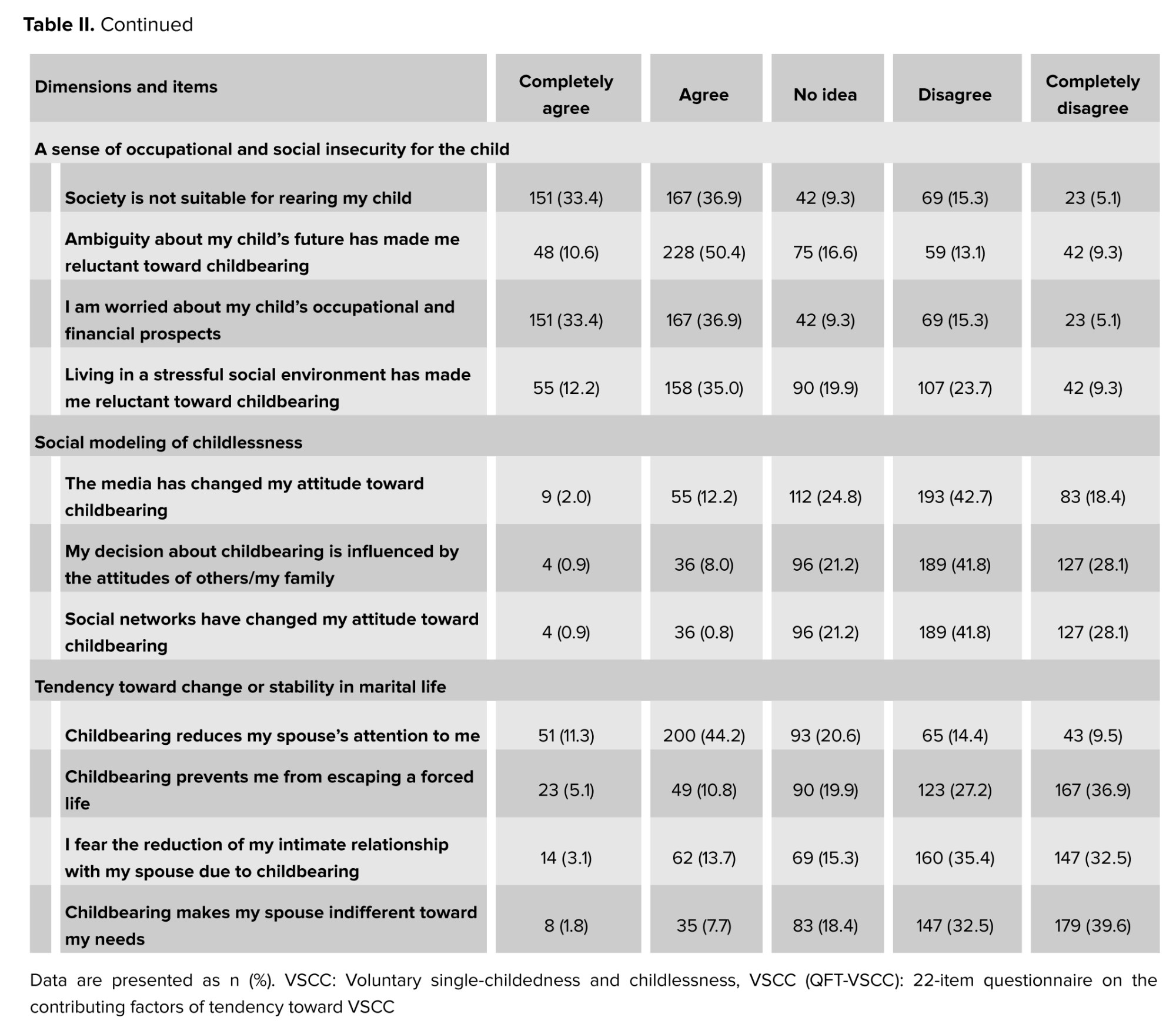
Table II presents the item-level analysis of responses. In the "threatened priorities" dimension, participants expressed concerns regarding the impact of childbearing on continuing education and work concentration. In the "inappropriate familial context" dimension, despite high reported marital satisfaction, a notable proportion indicated that perceived spousal betrayal influenced their childbearing decisions.
The "occupational and social insecurity" domain reflected widespread apprehension, with the majority of respondents expressing uncertainty about their future children’s occupational and financial prospects. In contrast, the "social modeling" dimension exerted minimal influence, with few participants citing media or social networks as determining factors. Finally, in the "marital stability" domain, concerns that childbearing would reduce spousal attention were prevalent (Table II).
4. Discussion
This study investigated the personal, social, and economic determinants influencing couples' decisions regarding VSCC in Babol, Iran. Our findings revealed 3 key dimensions: "threatened priorities", "occupational and social insecurity for the child", and "inappropriate familial context for childbearing", as the most influential factors shaping reproductive decision-making.
By situating these dimensions within a multidimensional framework specific to an urban Iranian context, we provide a nuanced portrait of fertility behavior amid Iran’s ongoing demographic transition. Overall, these insights illustrate how socio‐economic pressures intersect with evolving cultural norms to shape couples' family‐size choices, thereby laying the groundwork for further investigation into the drivers of fertility decline.
A notable gender difference emerged, with women scoring markedly higher on VSCC dimensions than men, underscoring the pivotal role of gender in shaping reproductive attitudes within the studied population. Previous research in Iran has demonstrated that women’s reproductive decisions are shaped by structural, cultural, and psychological factors (13-15), as well as adverse childbearing experiences (5). Key determinants include rising educational attainment, labor-market participation, and the resulting tension between professional and familial roles. Furthermore, pervasive economic insecurity and risk aversion in uncertain futures reinforce these patterns (16, 17). International evidence similarly suggests that voluntary childlessness is more prevalent among women facing work-family conflicts, a trend observed across many European countries (18). These findings underscore persistent structural and gender-based inequalities in fertility decision-making. To address these challenges, gender-sensitive policies, such as expanded parental leave, affordable childcare services, and workplace flexibility, could mitigate structural barriers influencing women’s reproductive choices.
One of the main findings was the importance of the "threatened priorities" dimension: women and younger participants viewed childbearing as a barrier to educational and career advancement. This finding highlights how gender and age shape fertility attitudes toward VSCC within the current sociocultural context. Consistent with previous Iranian (19, 20) and international studies (21, 22), our results suggest that tensions between women’s aspirations and traditional maternal roles contribute to declining fertility intentions. These findings underscore the need for policies that reduce such conflicts by supporting equitable parenting roles, affordable childcare, and flexible educational and career pathways for young parents, particularly women.
Findings from the inappropriate familial context for childbearing dimension indicate that perceptions of spousal infidelity or irresponsibility hindered childbearing decisions and reinforced tendencies toward single‐childhood and childlessness, even among couples reporting otherwise satisfactory marital relationships. This finding emphasizes the centrality of trust and mutual responsibility in fertility decision-making and factors often overlooked in broader assessments of marital satisfaction. National evidence supports these insights: prior studies have linked relational insecurity to voluntary childlessness in Tehran (8), demonstrated the influence of social capital on fertility behaviors in Mazandaran (23), and identified a positive correlation between marital satisfaction and family size in Qazvin (24). International research similarly highlights the role of psychosocial factors, such as stability, emotional security, and reciprocal trust, in shaping childbearing intentions (25). Notably, elevated scores among women aged between 30 and 34 reflected heightened concerns about their partner’s parenting competence as they approached declining fertility thresholds. To address these challenges, couples approaching fertility decisions may benefit from counseling interventions aimed at fostering trust, shared responsibility, and alignment of parental expectations. This section focuses on the "inappropriate familial context for childbearing" dimension, emphasizing how concerns about spousal trust and responsibility influence reproductive choices. It draws on national and international evidence to underscore the importance of psychosocial factors and recommends couple-based counseling interventions.
The "occupational and social insecurity for the child" dimension revealed that couples' anxieties about their children’s future economic and social well-being constituted a stronger determinant of VSCC preferences than concerns about marital relationship quality. This pattern reflects broader structural and macro‐level uncertainties. These results align with earlier Iranian research: for example, a qualitative study identified "undesirable society" and "economic hardships" as principal barriers to childbearing among Iranian women (13), and a systematic review recognized economic challenges as a key determinant of fertility decisions (26). The convergence of these findings with our study confirms the significant impact of socio‐economic insecurities on reproductive choices. Accordingly, fertility interventions should encompass policy measures aimed at mitigating structural uncertainties at the societal level, rather than focusing solely on individual couples. This section discusses the "occupational and social insecurity for the child" dimension, showing that macro-level anxieties about the child’s future outweigh relational concerns. It calls for structural policy reforms to address economic and societal insecurities affecting fertility decisions.
Contrary to global trends (27, 28), the "social modeling" dimension demonstrated limited influence of media exposure and social norms on VSCC preferences in the present context. This contrasts with international literature, which emphasizes the role of media and networks in shaping reproductive choices through cultural and normative channels. Domestic studies also suggest that digital media may negatively influence parenting attitudes (29), yet our findings imply that intrinsic and structural factors dominate decision-making in this context.
Regarding the "marital stability and change" dimension, data indicate that fears of marital deterioration, particularly reduced spousal attentiveness, contribute to conservative fertility patterns. This aligns with prior Iranian research (30, 31) and international evidence (32), which associates parenthood with declining marital satisfaction, especially among women post-childbirth (33). Additionally, Ahmadi and Saadat found that prolonged child dependency in Iran’s collectivist culture may erode long-term marital satisfaction (34). Thus, fertility decisions likely arise from an interplay of cultural norms, relational quality, and confidence in managing future challenges. These insights highlight the need for couple-centered counseling to address fears of marital strain, particularly for women and young couples within similar sociocultural settings.
4.1. Limitations
This study has several limitations. First, the use of convenience and snowball sampling methods may limit the generalizability of the findings, as the sample may not fully represent the broader population of urban Iranian couples. Second, cross-sectional design restricts causal interpretations of the observed associations. Third, self-reported data on sensitive topics such as reproductive intentions and marital dynamics may be subject to social desirability bias. Finally, the study focused exclusively on urban areas, and future research should incorporate rural populations to capture a more comprehensive picture of fertility attitudes across different socio-cultural settings.
5. Conclusion
This study revealed a pronounced tendency among couples in Babol, Iran, particularly women and younger individuals, to favor VSCC. This pattern was closely linked to concerns about conflicts between parenthood and personal priorities, such as educational advancement and career progression, as well as anxieties regarding the future occupational and social well-being of potential children. Furthermore, perceptions of an inappropriate familial context, particularly diminished spousal trust and responsibility, were associated with reduced childbearing intentions, even among couples reporting satisfactory marital relationships. Pervasive economic and social uncertainties, coupled with fears of diminished marital intimacy post-childbirth, further reinforced cautious fertility preferences. In contrast, media influence and social modeling exerted limited influence on these attitudes.
These findings underscore the need for gender-sensitive fertility policies that address both structural and relational determinants. Key recommendations include developing affordable, high‐quality childcare services; enhancing flexibility in educational and career pathways for young parents; and promoting equitable parenting roles. Providing targeted couple‐based counseling may also bolster confidence in reproductive decision‐making. Future research should explore these dynamics across diverse regions and social contexts to inform effective, locally adapted interventions.
Data Availability
Data supporting the findings of this study are available upon reasonable request from the corresponding author.
Author Contributions
N. Ahmadzadeh Tori: Writing of original draft, review, and editing, visualization, validation, software, resources, project administration, methodology, investigation, formal analysis, data curation, conceptualization. Z. Rezaei, Z. Gholamnia-Shirvani, F. Behmanesh, and H. Sharif-Nia: Writing, review, and editing, visualization, validation, software, resources, project administration, methodology, investigation, formal analysis, data curation, and conceptualization.
Acknowledgments
The authors would like to express their sincere gratitude to all couples who participated in this study for their time and cooperation. Artificial intelligence-based tools, including ChatGPT and Grammarly, were used exclusively for English language editing and proofreading during manuscript preparation. These tools had no role in study design, data analysis, data interpretation, or scientific decision-making. The authors take full responsibility for the content of the manuscript.
Conflict of Interest
The authors declare that there is no conflict of interest.
Consistent with global trends, Iran has experienced a pronounced fertility decline, accompanied by a growing prevalence of VSCC (5). National survey data provide convincing evidence that a substantial proportion of newly married individuals intend to remain childless or limit their families to one child (6, 7). Urban-focused research in centers such as Tehran corroborates this pattern, revealing that many married couples report ideal and intended family sizes of zero or one child (8). Furthermore, intended family sizes often fall below these ideals, underscoring the role of socioeconomic pressures in shaping reproductive decisions. Although voluntary childlessness rates in Iran resemble international figures, the shift toward smaller families necessitates locally grounded studies to elucidate context-specific determinants (9).
A considerable amount of research has focused on economic, social, and personal determinants shaping family size decisions in Iran. Economically, perceived financial burdens and concerns about economic instability deter couples from having larger families (5, 6). However, several studies have reported paradoxical associations, such as higher household incomes correlating with preferences for single-child families (7). Socially, evolving gender roles, delayed marriage, and declining religiosity have been linked to smaller family norms (5, 6, 10). At the individual level, prioritization of personal autonomy and career aspirations further motivates VSCC (5, 6, 11).
While a considerable body of research has addressed economic and social determinants of fertility in Iran, regionally focused studies on VSCC in Babol remain scarce. To address this research gap, the present study examines how individual aspirations, community norms, and economic constraints intersect to shape married couples’ decisions to limit their families to one child or none in northern Iran. By contextualizing our analysis within Babol’s socioeconomic context, this study seeks to shed light on localized drivers of VSCC, aiming to inform targeted interventions and policies to support reproductive autonomy. Ultimately, these insights will strengthen the evidence base for tailoring family planning programs in urban settings undergoing rapid demographic transition.
2. Materials and Methods
2.1. Study design and participants
In this cross‐sectional study, a total of 452 married individuals (women aged 18-49 yr, men aged 18-55 yr) from urban areas of Babol, Iran were recruited using convenience and snowball sampling methods, from August-October 2024.
Participants completed the validated 22-item questionnaire on the contributing factors of tendency toward VSCC (QFT-VSCC) distributed via 2 social media platforms (WhatsApp and Telegram).
2.2. Eligibility criteria
Inclusion criteria included self-reported VSCC, despite being biologically capable of reproduction and not actively seeking pregnancy.
Proficiency in Persian sufficient to comprehend and complete the questionnaire; voluntary provision of informed consent; continuous residence in Babol for at least 1 yr; and age within the reproductive range, specifically 18-49 yr for women and 18-55 yr for men.
Couples were excluded if they had been diagnosed with infertility or any medical condition preventing pregnancy; if their VSCC status was involuntary; if they refused informed consent; or if they were currently pregnant.
2.3. Questionnaire
The tendency toward VSCC was assessed using the QFT-VSCC, a validated instrument developed by Sharif-Nia et al. (12). The QFT-VSCC comprises 2 sections: the 1st section collects socio-demographic characteristics (age, gender, employment status, and education level); the 2nd section includes the 22-item QFT-VSCC scale, organized into 5 subscales: threatened priorities; inappropriate familial context for childbearing; sense of occupational and social insecurity for the child; social modeling of childlessness; and tendency toward change or stability in marital life. These subscales collectively explain 52.6% of the total variance.
Items were rated on a 5-point Likert scale (1 = strongly disagree to 5 = strongly agree), yielding a total raw score between 22 and 110, with higher scores indicating a stronger tendency toward VSCC. To standardize comparisons, raw subscale and total scores were transformed to a 0-100 scale using the formula: transformed score = [(original score-minimum score)/(maximum possible score-minimum score)] × 100.
Psychometric evaluation of the QFT-VSCC demonstrated construct validity (factor loadings > 0.50; average variance extracted > 0.50), excellent internal consistency (Cronbach’s alpha > 0.80), and high test-retest reliability (> 0.86) (12). The questionnaire was first pilot-tested with 20 couples prior to administration. Data were collected online via Google forms. The survey link was shared with participants via WhatsApp and Telegram with reminders sent every 2 wk; all data were stored on a password-protected system.
2.4. Sample size
Participants were recruited using non-probability convenience sampling, with a snowball sampling component to extend outreach. A priori sample size calculation was performed using G*Power software, based on the module for comparing mean questionnaire scores across demographic groups. Assuming a small effect size (d = 0.17), significance level (α = 0.05), and power (1-β = 0.80), the required sample size was determined to be 452 participants.
2.5. Ethical Considerations
This study was approved by the Ethics Committee of Babol University of Medical Sciences, Babol, Iran (Code: IR.MUBABOL.REC.1403.091). Participants received a detailed study overview, provided electronic informed consent, and were assured confidentiality.
2.6. Statistical Analysis
Descriptive statistics (means, standard deviations, frequencies, and percentages) were used to summarize QFT-VSCC scores and participant characteristics. Kolmogorov-Smirnov statistics showed normal distribution of all variables; therefore, parametric statistical tests were used. Comparisons between demographic groups (2 categories) were conducted using independent-samples t tests; variables with 3 or more categories were analyzed via one-way ANOVA. Independent t tests were used to compare between 2-category variables (e.g., gender, employment status), and one-way analysis of variance was used for variables with 3 or more categories (e.g., age groups and education level). All statistical analyses were performed using Statistical Package for the Social Sciences, version 17.0, SPSS Inc., Chicago, Illinois, USA (SPSS). Statistical significance was defined as p < 0.05 (2-tailed).
3. Results
The demographic characteristics of the 452 participants and the comparison of VSCC domain scores across subgroups are presented in table I. The majority of participants were female, employed, and held university degrees.
Regarding the tendency toward VSCC, the "occupational and social insecurity for the child" domain demonstrated the highest mean score among the 5 subscales, followed by "inappropriate familial context for childbearing". Conversely, "social modeling of childlessness" received the lowest mean score (Table I).
Gender analysis revealed statistically significant differences. Women scored significantly higher than men in the “threatened priorities” (p < 0.001) and “tendency toward change or stability in marital life” domains (p = 0.03). Overall, female participants exhibited a significantly stronger total tendency toward VSCC compared to males (p = 0.001) (Table I).
Regarding employment status, unemployed participants showed a significantly higher tendency in the "tendency toward change or stability in marital life" domain compared to employed individuals (p = 0.03). Age-based comparisons indicated that younger participants (under 30 yr), both male and female, generally reported higher scores in specific domains compared to older age groups. Specifically, females under 30 showed the strongest inclination toward VSCC across most domains (p < 0.001). Educational level did not show significant associations with any VSCC domain or the total score (Table I).
Table II presents the item-level analysis of responses. In the "threatened priorities" dimension, participants expressed concerns regarding the impact of childbearing on continuing education and work concentration. In the "inappropriate familial context" dimension, despite high reported marital satisfaction, a notable proportion indicated that perceived spousal betrayal influenced their childbearing decisions.
The "occupational and social insecurity" domain reflected widespread apprehension, with the majority of respondents expressing uncertainty about their future children’s occupational and financial prospects. In contrast, the "social modeling" dimension exerted minimal influence, with few participants citing media or social networks as determining factors. Finally, in the "marital stability" domain, concerns that childbearing would reduce spousal attention were prevalent (Table II).
4. Discussion
This study investigated the personal, social, and economic determinants influencing couples' decisions regarding VSCC in Babol, Iran. Our findings revealed 3 key dimensions: "threatened priorities", "occupational and social insecurity for the child", and "inappropriate familial context for childbearing", as the most influential factors shaping reproductive decision-making.
By situating these dimensions within a multidimensional framework specific to an urban Iranian context, we provide a nuanced portrait of fertility behavior amid Iran’s ongoing demographic transition. Overall, these insights illustrate how socio‐economic pressures intersect with evolving cultural norms to shape couples' family‐size choices, thereby laying the groundwork for further investigation into the drivers of fertility decline.
A notable gender difference emerged, with women scoring markedly higher on VSCC dimensions than men, underscoring the pivotal role of gender in shaping reproductive attitudes within the studied population. Previous research in Iran has demonstrated that women’s reproductive decisions are shaped by structural, cultural, and psychological factors (13-15), as well as adverse childbearing experiences (5). Key determinants include rising educational attainment, labor-market participation, and the resulting tension between professional and familial roles. Furthermore, pervasive economic insecurity and risk aversion in uncertain futures reinforce these patterns (16, 17). International evidence similarly suggests that voluntary childlessness is more prevalent among women facing work-family conflicts, a trend observed across many European countries (18). These findings underscore persistent structural and gender-based inequalities in fertility decision-making. To address these challenges, gender-sensitive policies, such as expanded parental leave, affordable childcare services, and workplace flexibility, could mitigate structural barriers influencing women’s reproductive choices.
One of the main findings was the importance of the "threatened priorities" dimension: women and younger participants viewed childbearing as a barrier to educational and career advancement. This finding highlights how gender and age shape fertility attitudes toward VSCC within the current sociocultural context. Consistent with previous Iranian (19, 20) and international studies (21, 22), our results suggest that tensions between women’s aspirations and traditional maternal roles contribute to declining fertility intentions. These findings underscore the need for policies that reduce such conflicts by supporting equitable parenting roles, affordable childcare, and flexible educational and career pathways for young parents, particularly women.
Findings from the inappropriate familial context for childbearing dimension indicate that perceptions of spousal infidelity or irresponsibility hindered childbearing decisions and reinforced tendencies toward single‐childhood and childlessness, even among couples reporting otherwise satisfactory marital relationships. This finding emphasizes the centrality of trust and mutual responsibility in fertility decision-making and factors often overlooked in broader assessments of marital satisfaction. National evidence supports these insights: prior studies have linked relational insecurity to voluntary childlessness in Tehran (8), demonstrated the influence of social capital on fertility behaviors in Mazandaran (23), and identified a positive correlation between marital satisfaction and family size in Qazvin (24). International research similarly highlights the role of psychosocial factors, such as stability, emotional security, and reciprocal trust, in shaping childbearing intentions (25). Notably, elevated scores among women aged between 30 and 34 reflected heightened concerns about their partner’s parenting competence as they approached declining fertility thresholds. To address these challenges, couples approaching fertility decisions may benefit from counseling interventions aimed at fostering trust, shared responsibility, and alignment of parental expectations. This section focuses on the "inappropriate familial context for childbearing" dimension, emphasizing how concerns about spousal trust and responsibility influence reproductive choices. It draws on national and international evidence to underscore the importance of psychosocial factors and recommends couple-based counseling interventions.
The "occupational and social insecurity for the child" dimension revealed that couples' anxieties about their children’s future economic and social well-being constituted a stronger determinant of VSCC preferences than concerns about marital relationship quality. This pattern reflects broader structural and macro‐level uncertainties. These results align with earlier Iranian research: for example, a qualitative study identified "undesirable society" and "economic hardships" as principal barriers to childbearing among Iranian women (13), and a systematic review recognized economic challenges as a key determinant of fertility decisions (26). The convergence of these findings with our study confirms the significant impact of socio‐economic insecurities on reproductive choices. Accordingly, fertility interventions should encompass policy measures aimed at mitigating structural uncertainties at the societal level, rather than focusing solely on individual couples. This section discusses the "occupational and social insecurity for the child" dimension, showing that macro-level anxieties about the child’s future outweigh relational concerns. It calls for structural policy reforms to address economic and societal insecurities affecting fertility decisions.
Contrary to global trends (27, 28), the "social modeling" dimension demonstrated limited influence of media exposure and social norms on VSCC preferences in the present context. This contrasts with international literature, which emphasizes the role of media and networks in shaping reproductive choices through cultural and normative channels. Domestic studies also suggest that digital media may negatively influence parenting attitudes (29), yet our findings imply that intrinsic and structural factors dominate decision-making in this context.
Regarding the "marital stability and change" dimension, data indicate that fears of marital deterioration, particularly reduced spousal attentiveness, contribute to conservative fertility patterns. This aligns with prior Iranian research (30, 31) and international evidence (32), which associates parenthood with declining marital satisfaction, especially among women post-childbirth (33). Additionally, Ahmadi and Saadat found that prolonged child dependency in Iran’s collectivist culture may erode long-term marital satisfaction (34). Thus, fertility decisions likely arise from an interplay of cultural norms, relational quality, and confidence in managing future challenges. These insights highlight the need for couple-centered counseling to address fears of marital strain, particularly for women and young couples within similar sociocultural settings.
4.1. Limitations
This study has several limitations. First, the use of convenience and snowball sampling methods may limit the generalizability of the findings, as the sample may not fully represent the broader population of urban Iranian couples. Second, cross-sectional design restricts causal interpretations of the observed associations. Third, self-reported data on sensitive topics such as reproductive intentions and marital dynamics may be subject to social desirability bias. Finally, the study focused exclusively on urban areas, and future research should incorporate rural populations to capture a more comprehensive picture of fertility attitudes across different socio-cultural settings.
5. Conclusion
This study revealed a pronounced tendency among couples in Babol, Iran, particularly women and younger individuals, to favor VSCC. This pattern was closely linked to concerns about conflicts between parenthood and personal priorities, such as educational advancement and career progression, as well as anxieties regarding the future occupational and social well-being of potential children. Furthermore, perceptions of an inappropriate familial context, particularly diminished spousal trust and responsibility, were associated with reduced childbearing intentions, even among couples reporting satisfactory marital relationships. Pervasive economic and social uncertainties, coupled with fears of diminished marital intimacy post-childbirth, further reinforced cautious fertility preferences. In contrast, media influence and social modeling exerted limited influence on these attitudes.
These findings underscore the need for gender-sensitive fertility policies that address both structural and relational determinants. Key recommendations include developing affordable, high‐quality childcare services; enhancing flexibility in educational and career pathways for young parents; and promoting equitable parenting roles. Providing targeted couple‐based counseling may also bolster confidence in reproductive decision‐making. Future research should explore these dynamics across diverse regions and social contexts to inform effective, locally adapted interventions.
Data Availability
Data supporting the findings of this study are available upon reasonable request from the corresponding author.
Author Contributions
N. Ahmadzadeh Tori: Writing of original draft, review, and editing, visualization, validation, software, resources, project administration, methodology, investigation, formal analysis, data curation, conceptualization. Z. Rezaei, Z. Gholamnia-Shirvani, F. Behmanesh, and H. Sharif-Nia: Writing, review, and editing, visualization, validation, software, resources, project administration, methodology, investigation, formal analysis, data curation, and conceptualization.
Acknowledgments
The authors would like to express their sincere gratitude to all couples who participated in this study for their time and cooperation. Artificial intelligence-based tools, including ChatGPT and Grammarly, were used exclusively for English language editing and proofreading during manuscript preparation. These tools had no role in study design, data analysis, data interpretation, or scientific decision-making. The authors take full responsibility for the content of the manuscript.
Conflict of Interest
The authors declare that there is no conflict of interest.
Type of Study: Original Article |
Subject:
Fertility & Infertility
Send email to the article author
| Rights and permissions | |
 |
This work is licensed under a Creative Commons Attribution-NonCommercial 4.0 International License. |