
International Journal of
Reproductive Biomedicine
Sun, Oct 18, 2026
[Archive]
Volume 24, Issue 7 (July 2026)
IJRM 2026, 24(7): 557-570 |
Back to browse issues page




Download citation:
BibTeX | RIS | EndNote | Medlars | ProCite | Reference Manager | RefWorks
Send citation to:


BibTeX | RIS | EndNote | Medlars | ProCite | Reference Manager | RefWorks
Send citation to:
Fallahi S, Dastsouz F, Salehpour Z, Gholami F. The role of date palm pollen in women's health and fertility: A narrative review. IJRM 2026; 24 (7) :557-570
URL: http://ijrm.ir/article-1-3686-en.html
URL: http://ijrm.ir/article-1-3686-en.html


1- Fertility and Infertility Research Center, Hormozgan University of Medical Sciences, Bandar Abbas, Iran.
2- Student Research Committee, Hormozgan University of Medical Sciences, Bandar Abbas, Iran.
3- Medicinal Plants Research Center, Yaasuj University of Medical Sciences, Yasuj, Iran.
4- Cardiovascular Research Center, Hormozgan University of Medical Sciences, Bandar Abbas, Iran. ,F.gholami@hums.ac.ir
2- Student Research Committee, Hormozgan University of Medical Sciences, Bandar Abbas, Iran.
3- Medicinal Plants Research Center, Yaasuj University of Medical Sciences, Yasuj, Iran.
4- Cardiovascular Research Center, Hormozgan University of Medical Sciences, Bandar Abbas, Iran. ,
Full-Text [PDF 421 kb]
(384 Downloads)
| Abstract (HTML) (434 Views)
Full-Text: (23 Views)
1. Introduction
One of the fundamental challenges faced by the modern industrialized world is infertility, which affects millions of individuals globally for various reasons (1). Approximately 15% of couples of reproductive age encounter this issue after 1 yr of regular, unprotected intercourse, with about 10% of these cases remaining unexplained (2). The causes of natural infertility are varied, including genetic predisposition, hormonal imbalances, infections, and environmental factors. Incorporating antioxidants, phytohormones, and essential micronutrients into a healthy diet can effectively reduce oxidative stress, improve ovulation, and preserve sperm DNA integrity (3).
Since ancient times, medicinal plants have been a cornerstone of primary healthcare. According to the World Health Organization, around 85% of people rely on traditional medicine to meet their essential health needs (4). Among these, date palm pollen (DPP) (Phoenix dactylifera L.) has been recognized in traditional medicine for its potential role in enhancing fertility. The date palm, a member of the Arecaceae family, is one of the oldest cultivated plants, with a history spanning over 6000 yr. It typically grows up to 15 m tall and thrives in hot, dry regions with low humidity and well-drained sandy soils (5, 6). The date palm is one of the oldest cultivated fruit crops in the arid regions of the Arabian Peninsula, North Africa, and the Middle East, likely originating near present-day Iraq. Over the past 3 centuries, date palm cultivation has expanded to various regions worldwide. The date palm exhibits unique biological and growth characteristics that necessitate specialized propagation, cultivation, and management practices (7).
Recent studies have identified DPP as a potential dietary supplement, particularly beneficial for fertility and reproductive health (8, 9). Research indicatzes that palm pollen is rich in vitamins, minerals, antioxidants, and phytochemicals that may enhance egg quality and help regulate sex hormones (10-13). In traditional medicine, it has been extensively used to address fertility issues (14, 15). A phytochemical analysis of DPP reveals the presence of flavonoids, phenolics, sterols, polysaccharides, amino acids, fatty acids, and vitamins, all of which can influence fertility (2). Animal studies suggest that these bioactive compounds in DPP may act as antioxidants, modulate hormonal activity, and regulate metabolism, potentially enhancing fertility (16).
Initial animal research indicated that palm pollen has gonadotropic effects, as aqueous extracts were found to increase testicular weight, stimulate spermatogenesis, and enlarge accessory reproductive organs in young rodents (17, 18). More recent studies suggest that supplementation with DPP may improve sperm concentration, motility, morphology, and DNA integrity by elevating levels of testosterone, estradiol, luteinizing hormone (LH), and follicle-stimulating hormone (FSH) (19, 20). Additional findings indicate modulation of dopaminergic pathways, increased libido, and enhanced sexual function (21, 22). Animal model studies have also demonstrated DPP's ability to influence female reproductive physiology, with phytogenic activity observed that led to increased vaginal receptivity, improved ovarian mass, enhanced folliculogenesis, and higher levels of estrogen and progesterone (23-25). In assessments of rabbit ovarian tissue, DPP was shown to increase pregnancy rates, enhance embryo quality, and improve litter viability by strengthening antioxidant defenses and boosting systemic immunity (26). These results highlight DPP's potential as a holistic regulator of reproduction, integrating endocrine control with various metabolic benefits. Both animal and human studies support the multifunctional role of DPP as a fertility-enhancing agent.
This study aims to review the evidence regarding the phytochemical composition of palm pollen, the biological mechanisms underlying its fertility effects, and its potential to enhance fertility, providing a clear framework for a more accurate evaluation.
2. Overview of the composition and properties of DPP
Over 2000 yr ago, Hippocrates famously stated, "Let food be your medicine and medicine be your food" (27). Among various natural substances, DPP from the plant P. dactylifera L. is notable for its medicinal and nutritional benefits. While its primary role is as a pollinator, surplus pollen has long been used as a traditional preventive and therapeutic agent for reproductive disorders in both men and women, which has contributed to its cultural significance and economic value. Current evidence indicates that DPP may enhance oocyte quality, regulate hormone levels, and reduce oxidative stress, thanks to its rich content of vitamins, minerals, proteins, and antioxidant compounds (28).
2.1. Phenolic compounds in DPP
DPP activity likely functions through a complex, interconnected network that influences fertility. The proposed mechanisms include changes in hormonal balance, enhanced antioxidant defenses, nitric oxide (NO)-driven vasodilation, stimulation of the dopaminergic system, gonadotropic activation, and suppression of inflammatory processes (29-31). Palm pollen contains a rich array of phenolic compounds, such as caffeic acid, gallic acid, p-coumaric acid, catechins, chlorogenic acid, quercetin, and rutin, along with flavonoids like isorhamnetin, apigenin, and lutein (11, 27, 32). Among these, pyrogallol and catechins are identified as the predominant phenolics in DPP extracts (33). Numerous experimental studies have investigated the effects of these phenolics on sexual and reproductive functions in laboratory animals. Daily administration of DPP aqueous and ethanolic extracts at doses ranging 120-240 mg/kg body weight has shown beneficial effects on testicular health, hormonal profiles, and sexual behavior (27). Notably, improvements have been observed in mating frequency, testosterone levels, sperm count, motility, and morphology, along with histological and physiological changes in reproductive organs. Additionally, the extracts have demonstrated positive effects on body weight and antioxidant status (20, 34, 35). The unique solubility characteristics of these extracts suggest the presence of polar bioactive constituents, including phenolic acids and flavonoids, which are associated with significant biological activities. These compounds interact with cellular components such as enzymes and receptors, modulating signaling pathways essential for reproductive function. While the precise mechanisms by which phenolic compounds and flavonoids enhance reproductive parameters in DPP are not fully understood, several hypotheses merit further investigation. Molecular evidence suggests that DPP modulates testosterone and estrogen biosynthesis by influencing steroidogenic enzymes CYP11A1 and CYP19A1, both critical to reproductive function. Additionally, mechanistic studies indicate that these compounds activate key signaling cascades, including the antioxidant pathways PI3K/Akt, MAPK, and Nrf2/ARE, thereby linking phytochemicals to tangible reproductive outcomes (36-38). Many phenolic compounds exhibit both hydrophilic and lipophilic properties, making them amphiphilic (39). This characteristic enables them to associate with cell membranes, potentially forming lipid bilayers and interacting with hydrophobic lipid chains. Through these interactions, polyphenols such as gallic acid, p-coumaric acid, and ellagic acid can scavenge free radicals by donating hydrogen atoms generated during lipid peroxidation, protecting membrane integrity from oxidative damage (40). Recent findings suggest that these polyphenols activate key molecular messengers, including the antioxidant pathways PI3K/Akt, MAPK, and Nrf2/ARE, which modulate extracellular signaling and the ERK/Nrf2 axis to enhance antioxidant defenses. This activation increases the expression of antioxidant enzymes, contributing to the observed antioxidant activity of certain phenolics (41).
2.2. Proteins in DPP
DPP is a significant source of high-quality proteins that supply essential amino acids required for hormone production and tissue development (Table I). The protein content in DPP varies considerably, ranging from 15.81-38.18%, influenced by factors such as genotype, geographical location, soil type, and climatic conditions. For instance, a study by Bacha et al. analyzed 13 different date palm cultivars in Riyadh, Saudi Arabia, revealing protein content between 15.81% and 18.02% (42). In another study conducted in Iraq, 2 DPP cultivars showed distinct protein levels: red sorghum pollen had a higher crude protein content of 27.24%, while Samasmi pollen contained a lower level of 23.42% (43).
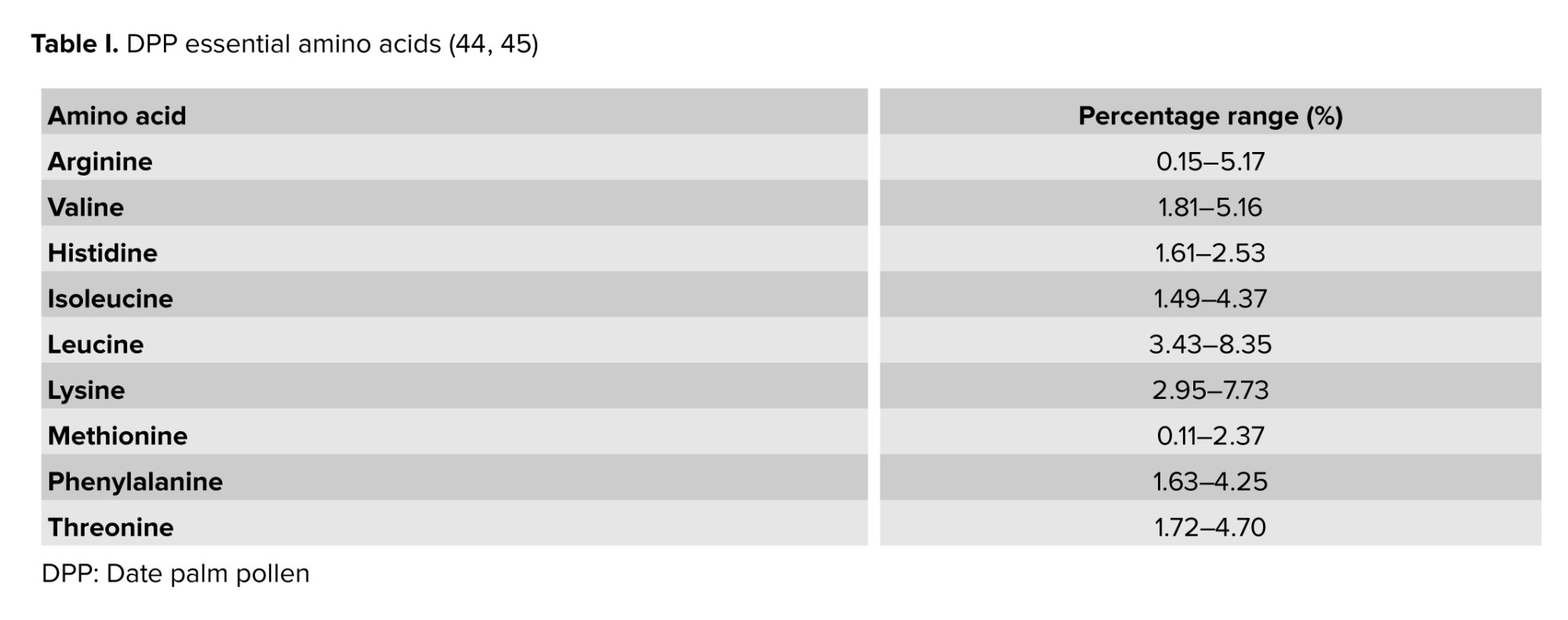
The amino acids present in DPP serve as the building blocks of proteins and play a vital role in fertility. They are essential for synthesizing sex hormones and converting hormone precursors into their active forms. Hormones such as testosterone and estrogen bind to carrier proteins for transport to their target tissues (36, 46). Upon reaching these tissues, hormones interact with specific receptor proteins within cells, altering gene expression and initiating various cellular responses. Among the amino acids, arginine is particularly noteworthy for its beneficial effects on sperm quality and function. Research indicates that arginine can reduce oxidative stress and heat-related damage to sperm cells, enhancing their viability without adverse effects (47-49). Additionally, the antioxidant properties of amino acids contribute to maintaining the structural and functional health of reproductive tissues.
2.3. Carbohydrates in DPP
Research consistently shows variations in the carbohydrate content of DPP powder across different cultivars and geographic regions. For example, one study found that Moroccan DPP had the highest carbohydrate content at 26.51% (50). Similarly, the Iraqi Ghanami Ahmar cultivar exhibited a slightly lower carbohydrate content of 26.25% (51). Carbohydrates serve as a primary energy source for reproductive tissues, supplying energy through the breakdown of carbon-hydrogen bonds in their molecular structure. This energy is essential for various physiological processes related to reproduction, including hormone synthesis and cellular division within reproductive organs (52).
2.4. Fatty acids in DPP
Fatty acids are a crucial component of the dietary profile of DPP and play an indirect role in reproductive processes. They are essential for the structure and function of cell membranes, ensuring cellular integrity and efficient signaling. Essential fatty acids, particularly omega-3 and omega-6, are vital for numerous physiological functions that significantly impact reproductive health. These fatty acids assist in the synthesis and regulation of hormones, including prostaglandins, which are critical for processes such as ovulation and implantation. This highlights the importance of fatty acids in supporting overall reproductive health (53).
Moreover, omega-3 fatty acids, especially eicosapentaenoic acid and docosahexaenoic acid, have been shown to directly influence the synthesis of prostaglandins, which are crucial for regulating the menstrual cycle and initiating labor. These fatty acids also reduce inflammation and facilitate cellular communication within reproductive tissues, thereby enhancing fertility potential (54).
2.5. Minerals and vitamins in DPP
DPP is abundant in essential vitamins and minerals that play significant roles in health and well-being. It is particularly rich in B-complex vitamins (B1, B2, B3, and B6), vitamin C, and vitamin E, all of which are crucial for energy metabolism, cellular protection against damage, and immune system support. Additionally, DPP provides several important minerals vital for overall health and normal bodily functions, including zinc, selenium, iron, calcium, potassium, copper, and magnesium. Zinc is especially noteworthy for its positive effects on hormone production and its role in improving egg quality. Research indicates that zinc is essential for regulating testosterone and estrogen levels and enhancing the structural integrity of sperm and egg cells (55, 56). Calcium is essential for uterine contractions and the ovulation process, while magnesium helps regulate hormones and reduce oxidative stress, both critical for maintaining egg and sperm quality (57). The antioxidant properties of vitamin C, vitamin E, zinc, and selenium work synergistically to protect reproductive cells from oxidative damage, which is often linked to infertility (58).
Although DPP is a rich source of these nutrients, their concentrations can vary significantly depending on factors such as cultivar, collection location, and soil conditions. For example, studies have shown that Moroccan DPP tends to have higher mineral concentrations compared to Middle Eastern varieties (59).
2.6. Hormones
Gonadotropic components were first extracted from DPP by Solomon and Solomon, revealing the presence of FSH and LH that elicited reproductive responses in rats (18). Subsequent investigations isolated a steroidal saponin glycoside and a glycoprotein with gonadotropic activity (17, 31, 60). Thin-layer chromatography also confirmed the presence of estrone. However, no study to date has achieved complete purification and conclusive identification of gonadotropic hormones derived from DPP. Evidence has been reported of DPP's modulation of the hypothalamic-pituitary-gonadal axis, contributing to enhanced fertility (61). In males, components such as flavonoids, steroids, proteins, amino acids, zinc, vitamins, carbohydrates, and polyunsaturated fatty acids can stimulate the release of gonadotropins (LH and FSH), which subsequently increases testosterone production by Leydig cells and supports spermatogenesis (19, 62, 63).
In females, phytoestrogens like estriol and estradiol, often referred to as endogenous estrogens, regulate LH and FSH levels, ultimately enhancing folliculogenesis and ovulation (18). Additional compounds such as magnesium and zinc further support and enhance ovarian endocrine pathways, while phytoestrogens help maintain the estrogen-progesterone balance, crucial for endometrial receptivity and implantation (64, 65). Endocrine function is maintained by vitamins A, C, and E, which protect hormone-producing tissues from oxidative stress (66). Carbohydrates provide the energy required for hormone biosynthesis, while polyunsaturated fatty acids increase membrane fluidity and facilitate hormone-receptor interactions (52). Recent molecular findings indicate that DPP modulates key steroidogenic enzymes, including CYP11A1 and CYP19A1, which govern the biosynthesis of testosterone and estrogen. This underscores DPP's broad potential to optimize endocrine function in both sexes (67).
3. Enhancing sexual function and alleviating menopausal symptoms
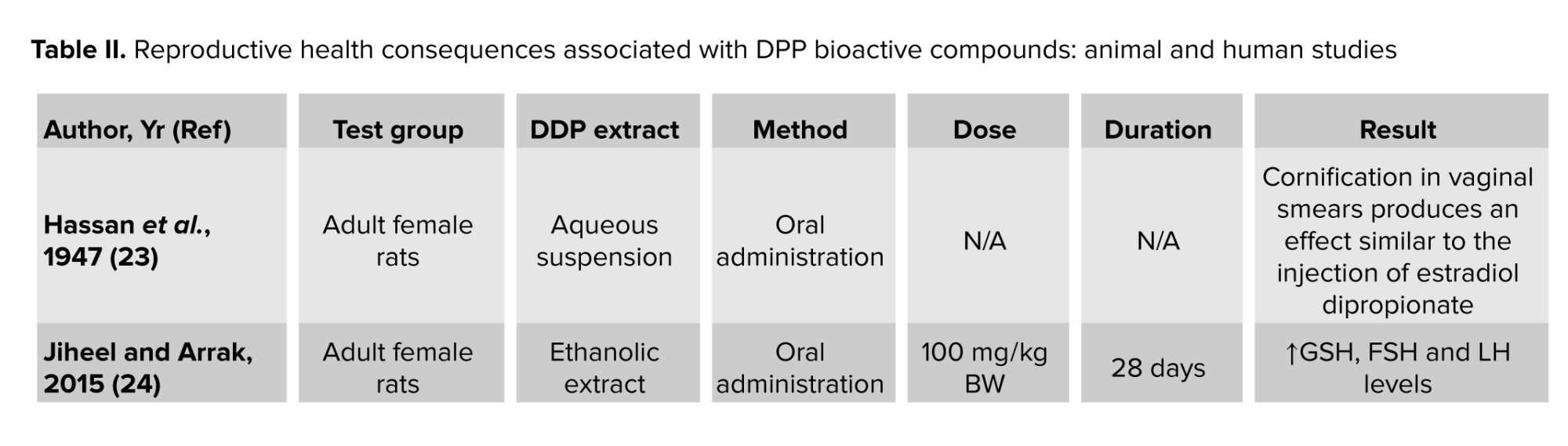
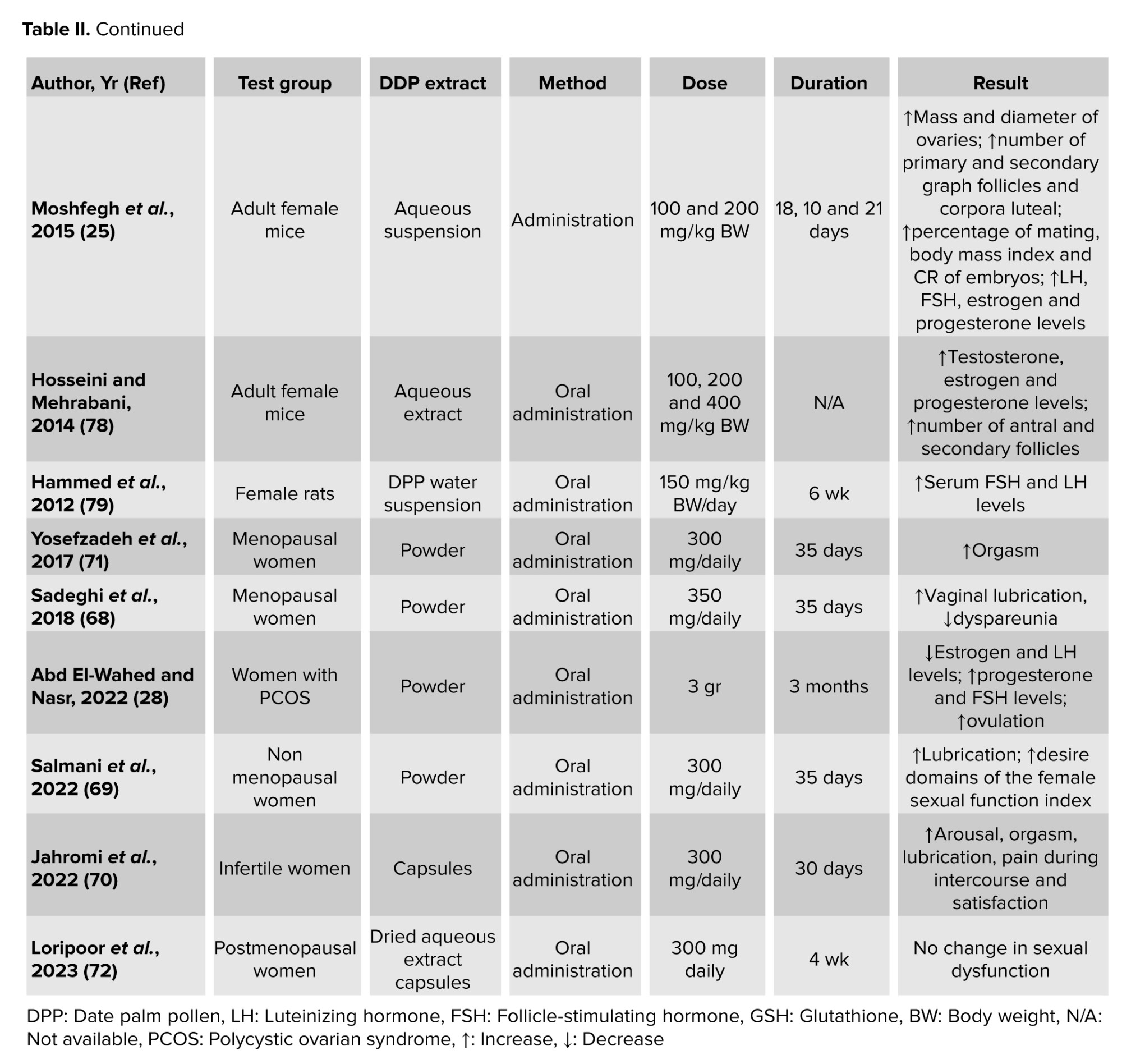
Due to the limited research on the impact of DPP on female fertility (Table II), several clinical trials have been conducted since early 2017. One notable study, the Sadeghi clinical trial, found that a daily dose of 350 mg of palm pollen capsules for 35 days significantly improved vaginal lubrication and reduced menopausal dyspareunia in postmenopausal women compared to a control group that received a starch placebo (68). Another investigation revealed that administering 300 mg of DPP daily for 35 days to postmenopausal women led to increased vaginal lubrication and enhancements in the desire domain of the female sexual function index, although it did not show significant effects on arousal, orgasm, satisfaction, or pain compared to a control group receiving 300 mg of starch capsules (69). A parallel study indicated that the same dosage improved arousal, orgasm, vaginal lubrication, dyspareunia (pain during intercourse), and overall satisfaction in women (70).
In contrast, Yousefzadeh et al. (71) reported improvements in orgasm with the same pollen dosage in postmenopausal women, while Loripour and colleagues (72) found that a daily intake of 300 mg of DPP aqueous extract for 4 wk did not lead to significant reductions in sexual dysfunction scores in this population. The differing outcomes across these studies may be attributed to variations in the genotypes of date palm sources and differences in the amino acid profiles of the raw pollen used, despite consistent dosages and durations (73).
Other clinical trials suggest that a daily intake of 3 gr of DPP for 3 months in women with polycystic ovary syndrome can modulate sex hormone profiles by reducing estrogen and LH levels, increasing progesterone and FSH, and promoting ovulation (28). While evidence supports that palm pollen can elevate sex hormone levels, enhance lubrication, and reduce dyspareunia, the exact mechanisms through which it improves fertility remain unclear, and other factors may also play a role. Given that palm pollen contains sterols and phytoestrogens, it may help modulate hormonal balance and influence libido (28). Additionally, vitamins and amino acids present in DPP could indirectly enhance libido by boosting energy levels and overall physical health (32). L-arginine, a naturally occurring amino acid in DPP, contributes to cardiovascular health and sexual function by serving as a precursor to NO, which is produced via NO synthase. This process increases NO bioavailability and stimulates the production of cyclic guanosine monophosphate, thereby modulating vascular tone and sexual function. Serine, another amino acid found in DPP, may participate in serotonin synthesis, a neurotransmitter involved in regulating sexual desire (74-76). Furthermore, the carbohydrates in DPP might increase sexual desire by providing a rapid energy boost. The alkaloids present in DPP could promote vasodilation, enhancing vaginal perfusion and contributing to greater lubrication and comfort. Lastly, psychological factors and interactions with the vaginal microbiota, along with the traditional use of DPP as an aphrodisiac, may also influence these outcomes (77).
4. Nutritional components and their impact
The enhancements in lubrication and libido may stem from several factors inherent in DPP. It contains sterols and phytoestrogens that assist in regulating hormonal balance and potentially boost libido. Additionally, the vitamins and amino acids present in DPP can indirectly support sexual desire by promoting overall health and increasing energy levels. One significant amino acid in DPP is L-arginine, which is vital for blood circulation and sexual function. L-arginine enhances blood flow through its conversion into NO via NOS, playing a crucial role in improving circulation. This process raises levels of cyclic guanosine monophosphate, which are directly associated with improved vascular function and sexual performance (74, 75). Another amino acid found in DPP, serine, is involved in the synthesis of serotonin, a neurotransmitter that significantly influences sexual desire. Additionally, the carbohydrates present in DPP can provide quick energy, potentially enhancing interest in sexual activity (76). Research by Gautaman and Ganesan has shown that alkaloids in DPP exhibit vasodilator properties, promoting the dilation of blood vessels. This effect may improve vaginal blood circulation, resulting in enhanced lubrication and greater comfort during sexual activity (77). Moreover, DPP may act as a dopamine agonist, stimulating the release of dopamine and thereby enhancing various aspects of the sexual experience, including desire, arousal, and orgasm. Overall, these findings highlight the potential of DPP to support reproductive health and improve sexual well-being through its rich nutritional profile and diverse physiological effects (69).
5. History and traditional uses of DPP
5.1. Nutritional role
In various cultures, DPP is recognized as nutritious food source rich in protein, vitamins, and minerals. It is typically consumed fresh or dried, and is often incorporated into traditional recipes, desserts, and beverages, highlighting its adaptability as a functional food. Its nutritional density, including the presence of essential amino acids, antioxidants, and trace elements, makes it a valuable dietary supplement for enhancing overall health (80, 81).
5.2. Traditional medicine
In traditional Arabic medicine and other cultural practices, DPP is valued as a natural remedy for fertility issues. Recent studies support its potential to enhance egg quality, boost fertility hormone levels, and address infertility challenges. For men, it has been shown to improve sperm count and motility, while for women, it supports ovarian function and balances hormonal levels. Historically, palm pollen has been used as a fertility enhancer for both men and women in primitive societies, often mixed with honey or milk to amplify its effects (3).
5.3. Use in religious ceremonies
DPP also holds symbolic significance in various religious and cultural ceremonies. In many traditions, particularly within Islamic cultures, the palm tree and its products symbolize success, blessings, and new life. This symbolism is rooted in Quranic references and the role of the date palm in sustaining life in arid regions. The cultural reverence for the palm tree reflects its importance as both a practical and spiritual resource (3, 82, 83).
6. Toxicological implications and future research directions for DPP in fertility enhancement
Given the findings of previous studies and the potential of DPP to enhance fertility, it is crucial to conduct thorough toxicological evaluations. These evaluations will help identify possible side effects and establish safe dosage levels for medical use. In animal studies, particularly those involving rats, a dose of 140 mg/kg of aqueous DPP extract has shown a greater positive impact on reproductive parameters, including sexual behavior, compared to a higher dose of 350 mg/kg, which resulted in side effects like diarrhea (22). Other research has indicated that doses of 120 and 240 mg/kg of edible DPP significantly improved reproductive indices, while doses of 360 mg/kg and above did not yield notable differences compared to control groups (20).
Despite the concentration of human studies on the effects of single doses of DPP on fertility, significant knowledge gaps persist. Therefore, research aimed at elucidating the toxicological characteristics of DPP (including acute and chronic toxicity, mutagenicity, reproductive toxicity, and potential drug-drug interactions) will be invaluable. Additionally, implementing standardized production methods, robust quality control measures, and clear labeling is essential for ensuring safety, efficacy, and transparency for consumers.
Future research should prioritize well-designed, long-term safety evaluations, larger clinical trials, and epidemiological studies across diverse populations to accurately uncover the mechanisms by which DPP influences the reproductive system. Conducting these toxicological assessments will clarify the specific actions of palm pollen and help alleviate consumer concerns regarding its use in enhancing fertility (34, 84, 85).
7. Conclusion and future perspective
This study identifies DPP as a promising natural candidate for enhancing fertility in the future. The bioactive constituents of palm pollen, including flavonoids, phytoestrogens, fatty acids, proteins, vitamins, and essential minerals, may positively influence female reproductive function. DPP could enhance female fertility through various mechanisms, such as modulating the hypothalamic-pituitary-gonadal axis, reducing oxidative stress, enhancing NO signaling, exerting anti-inflammatory effects, stabilizing hormonal balance, promoting ovarian folliculogenesis, and improving embryo implantation rates. Given the side effects associated with artificial fertility treatments and the findings from existing studies, DPP may serve as a promising alternative to these artificial agents. Large-scale randomized trials are recommended to calibrate dosing, assess long-term safety, and verify effectiveness across diverse populations. On the industrial side, aligning pre-purification and extraction processes, establishing regulatory standards, and integrating DPP into sustainable food and pharmaceutical supply chains will be vital for global adoption. Thus, DPP emerges as a bioactive, multifunctional natural resource that bridges traditional medicinal wisdom with modern biomedical advancements. Its integration into reproductive health treatments and functional foods could revolutionize fertility management by offering safe, effective, and widely accessible options. By combining cutting-edge technology with rigorous clinical validation, DPP has the potential to evolve from a conventional nutrient into a foundational component of next-generation fertility therapies and functional food innovations.
Data Availability
This study is a narrative review based on previously published literature. All sources referenced are publicly available through academic databases and publications.
Author Contributions
S. Fallahi and F. Gholami developed main idea and were responsible for the article writing. The manuscript was written and reviewed by F. Dastsouz, and Z. Salehpour. All authors read and approved the final manuscript.
Acknowledgments
The authors would like to thank the Vice President for Research and Technology at Hormozgan University of Medical Sciences, Bandar Abbas, Iran for their support and for providing the resources necessary to conduct this research. The authors declare that no artificial intelligence tools were used in the preparation, writing, revision, or editing of this manuscript.
Conflict of Interest
The authors declare that there is no conflict of interest.
One of the fundamental challenges faced by the modern industrialized world is infertility, which affects millions of individuals globally for various reasons (1). Approximately 15% of couples of reproductive age encounter this issue after 1 yr of regular, unprotected intercourse, with about 10% of these cases remaining unexplained (2). The causes of natural infertility are varied, including genetic predisposition, hormonal imbalances, infections, and environmental factors. Incorporating antioxidants, phytohormones, and essential micronutrients into a healthy diet can effectively reduce oxidative stress, improve ovulation, and preserve sperm DNA integrity (3).
Since ancient times, medicinal plants have been a cornerstone of primary healthcare. According to the World Health Organization, around 85% of people rely on traditional medicine to meet their essential health needs (4). Among these, date palm pollen (DPP) (Phoenix dactylifera L.) has been recognized in traditional medicine for its potential role in enhancing fertility. The date palm, a member of the Arecaceae family, is one of the oldest cultivated plants, with a history spanning over 6000 yr. It typically grows up to 15 m tall and thrives in hot, dry regions with low humidity and well-drained sandy soils (5, 6). The date palm is one of the oldest cultivated fruit crops in the arid regions of the Arabian Peninsula, North Africa, and the Middle East, likely originating near present-day Iraq. Over the past 3 centuries, date palm cultivation has expanded to various regions worldwide. The date palm exhibits unique biological and growth characteristics that necessitate specialized propagation, cultivation, and management practices (7).
Recent studies have identified DPP as a potential dietary supplement, particularly beneficial for fertility and reproductive health (8, 9). Research indicatzes that palm pollen is rich in vitamins, minerals, antioxidants, and phytochemicals that may enhance egg quality and help regulate sex hormones (10-13). In traditional medicine, it has been extensively used to address fertility issues (14, 15). A phytochemical analysis of DPP reveals the presence of flavonoids, phenolics, sterols, polysaccharides, amino acids, fatty acids, and vitamins, all of which can influence fertility (2). Animal studies suggest that these bioactive compounds in DPP may act as antioxidants, modulate hormonal activity, and regulate metabolism, potentially enhancing fertility (16).
Initial animal research indicated that palm pollen has gonadotropic effects, as aqueous extracts were found to increase testicular weight, stimulate spermatogenesis, and enlarge accessory reproductive organs in young rodents (17, 18). More recent studies suggest that supplementation with DPP may improve sperm concentration, motility, morphology, and DNA integrity by elevating levels of testosterone, estradiol, luteinizing hormone (LH), and follicle-stimulating hormone (FSH) (19, 20). Additional findings indicate modulation of dopaminergic pathways, increased libido, and enhanced sexual function (21, 22). Animal model studies have also demonstrated DPP's ability to influence female reproductive physiology, with phytogenic activity observed that led to increased vaginal receptivity, improved ovarian mass, enhanced folliculogenesis, and higher levels of estrogen and progesterone (23-25). In assessments of rabbit ovarian tissue, DPP was shown to increase pregnancy rates, enhance embryo quality, and improve litter viability by strengthening antioxidant defenses and boosting systemic immunity (26). These results highlight DPP's potential as a holistic regulator of reproduction, integrating endocrine control with various metabolic benefits. Both animal and human studies support the multifunctional role of DPP as a fertility-enhancing agent.
This study aims to review the evidence regarding the phytochemical composition of palm pollen, the biological mechanisms underlying its fertility effects, and its potential to enhance fertility, providing a clear framework for a more accurate evaluation.
2. Overview of the composition and properties of DPP
Over 2000 yr ago, Hippocrates famously stated, "Let food be your medicine and medicine be your food" (27). Among various natural substances, DPP from the plant P. dactylifera L. is notable for its medicinal and nutritional benefits. While its primary role is as a pollinator, surplus pollen has long been used as a traditional preventive and therapeutic agent for reproductive disorders in both men and women, which has contributed to its cultural significance and economic value. Current evidence indicates that DPP may enhance oocyte quality, regulate hormone levels, and reduce oxidative stress, thanks to its rich content of vitamins, minerals, proteins, and antioxidant compounds (28).
2.1. Phenolic compounds in DPP
DPP activity likely functions through a complex, interconnected network that influences fertility. The proposed mechanisms include changes in hormonal balance, enhanced antioxidant defenses, nitric oxide (NO)-driven vasodilation, stimulation of the dopaminergic system, gonadotropic activation, and suppression of inflammatory processes (29-31). Palm pollen contains a rich array of phenolic compounds, such as caffeic acid, gallic acid, p-coumaric acid, catechins, chlorogenic acid, quercetin, and rutin, along with flavonoids like isorhamnetin, apigenin, and lutein (11, 27, 32). Among these, pyrogallol and catechins are identified as the predominant phenolics in DPP extracts (33). Numerous experimental studies have investigated the effects of these phenolics on sexual and reproductive functions in laboratory animals. Daily administration of DPP aqueous and ethanolic extracts at doses ranging 120-240 mg/kg body weight has shown beneficial effects on testicular health, hormonal profiles, and sexual behavior (27). Notably, improvements have been observed in mating frequency, testosterone levels, sperm count, motility, and morphology, along with histological and physiological changes in reproductive organs. Additionally, the extracts have demonstrated positive effects on body weight and antioxidant status (20, 34, 35). The unique solubility characteristics of these extracts suggest the presence of polar bioactive constituents, including phenolic acids and flavonoids, which are associated with significant biological activities. These compounds interact with cellular components such as enzymes and receptors, modulating signaling pathways essential for reproductive function. While the precise mechanisms by which phenolic compounds and flavonoids enhance reproductive parameters in DPP are not fully understood, several hypotheses merit further investigation. Molecular evidence suggests that DPP modulates testosterone and estrogen biosynthesis by influencing steroidogenic enzymes CYP11A1 and CYP19A1, both critical to reproductive function. Additionally, mechanistic studies indicate that these compounds activate key signaling cascades, including the antioxidant pathways PI3K/Akt, MAPK, and Nrf2/ARE, thereby linking phytochemicals to tangible reproductive outcomes (36-38). Many phenolic compounds exhibit both hydrophilic and lipophilic properties, making them amphiphilic (39). This characteristic enables them to associate with cell membranes, potentially forming lipid bilayers and interacting with hydrophobic lipid chains. Through these interactions, polyphenols such as gallic acid, p-coumaric acid, and ellagic acid can scavenge free radicals by donating hydrogen atoms generated during lipid peroxidation, protecting membrane integrity from oxidative damage (40). Recent findings suggest that these polyphenols activate key molecular messengers, including the antioxidant pathways PI3K/Akt, MAPK, and Nrf2/ARE, which modulate extracellular signaling and the ERK/Nrf2 axis to enhance antioxidant defenses. This activation increases the expression of antioxidant enzymes, contributing to the observed antioxidant activity of certain phenolics (41).
2.2. Proteins in DPP
DPP is a significant source of high-quality proteins that supply essential amino acids required for hormone production and tissue development (Table I). The protein content in DPP varies considerably, ranging from 15.81-38.18%, influenced by factors such as genotype, geographical location, soil type, and climatic conditions. For instance, a study by Bacha et al. analyzed 13 different date palm cultivars in Riyadh, Saudi Arabia, revealing protein content between 15.81% and 18.02% (42). In another study conducted in Iraq, 2 DPP cultivars showed distinct protein levels: red sorghum pollen had a higher crude protein content of 27.24%, while Samasmi pollen contained a lower level of 23.42% (43).
The amino acids present in DPP serve as the building blocks of proteins and play a vital role in fertility. They are essential for synthesizing sex hormones and converting hormone precursors into their active forms. Hormones such as testosterone and estrogen bind to carrier proteins for transport to their target tissues (36, 46). Upon reaching these tissues, hormones interact with specific receptor proteins within cells, altering gene expression and initiating various cellular responses. Among the amino acids, arginine is particularly noteworthy for its beneficial effects on sperm quality and function. Research indicates that arginine can reduce oxidative stress and heat-related damage to sperm cells, enhancing their viability without adverse effects (47-49). Additionally, the antioxidant properties of amino acids contribute to maintaining the structural and functional health of reproductive tissues.
2.3. Carbohydrates in DPP
Research consistently shows variations in the carbohydrate content of DPP powder across different cultivars and geographic regions. For example, one study found that Moroccan DPP had the highest carbohydrate content at 26.51% (50). Similarly, the Iraqi Ghanami Ahmar cultivar exhibited a slightly lower carbohydrate content of 26.25% (51). Carbohydrates serve as a primary energy source for reproductive tissues, supplying energy through the breakdown of carbon-hydrogen bonds in their molecular structure. This energy is essential for various physiological processes related to reproduction, including hormone synthesis and cellular division within reproductive organs (52).
2.4. Fatty acids in DPP
Fatty acids are a crucial component of the dietary profile of DPP and play an indirect role in reproductive processes. They are essential for the structure and function of cell membranes, ensuring cellular integrity and efficient signaling. Essential fatty acids, particularly omega-3 and omega-6, are vital for numerous physiological functions that significantly impact reproductive health. These fatty acids assist in the synthesis and regulation of hormones, including prostaglandins, which are critical for processes such as ovulation and implantation. This highlights the importance of fatty acids in supporting overall reproductive health (53).
Moreover, omega-3 fatty acids, especially eicosapentaenoic acid and docosahexaenoic acid, have been shown to directly influence the synthesis of prostaglandins, which are crucial for regulating the menstrual cycle and initiating labor. These fatty acids also reduce inflammation and facilitate cellular communication within reproductive tissues, thereby enhancing fertility potential (54).
2.5. Minerals and vitamins in DPP
DPP is abundant in essential vitamins and minerals that play significant roles in health and well-being. It is particularly rich in B-complex vitamins (B1, B2, B3, and B6), vitamin C, and vitamin E, all of which are crucial for energy metabolism, cellular protection against damage, and immune system support. Additionally, DPP provides several important minerals vital for overall health and normal bodily functions, including zinc, selenium, iron, calcium, potassium, copper, and magnesium. Zinc is especially noteworthy for its positive effects on hormone production and its role in improving egg quality. Research indicates that zinc is essential for regulating testosterone and estrogen levels and enhancing the structural integrity of sperm and egg cells (55, 56). Calcium is essential for uterine contractions and the ovulation process, while magnesium helps regulate hormones and reduce oxidative stress, both critical for maintaining egg and sperm quality (57). The antioxidant properties of vitamin C, vitamin E, zinc, and selenium work synergistically to protect reproductive cells from oxidative damage, which is often linked to infertility (58).
Although DPP is a rich source of these nutrients, their concentrations can vary significantly depending on factors such as cultivar, collection location, and soil conditions. For example, studies have shown that Moroccan DPP tends to have higher mineral concentrations compared to Middle Eastern varieties (59).
2.6. Hormones
Gonadotropic components were first extracted from DPP by Solomon and Solomon, revealing the presence of FSH and LH that elicited reproductive responses in rats (18). Subsequent investigations isolated a steroidal saponin glycoside and a glycoprotein with gonadotropic activity (17, 31, 60). Thin-layer chromatography also confirmed the presence of estrone. However, no study to date has achieved complete purification and conclusive identification of gonadotropic hormones derived from DPP. Evidence has been reported of DPP's modulation of the hypothalamic-pituitary-gonadal axis, contributing to enhanced fertility (61). In males, components such as flavonoids, steroids, proteins, amino acids, zinc, vitamins, carbohydrates, and polyunsaturated fatty acids can stimulate the release of gonadotropins (LH and FSH), which subsequently increases testosterone production by Leydig cells and supports spermatogenesis (19, 62, 63).
In females, phytoestrogens like estriol and estradiol, often referred to as endogenous estrogens, regulate LH and FSH levels, ultimately enhancing folliculogenesis and ovulation (18). Additional compounds such as magnesium and zinc further support and enhance ovarian endocrine pathways, while phytoestrogens help maintain the estrogen-progesterone balance, crucial for endometrial receptivity and implantation (64, 65). Endocrine function is maintained by vitamins A, C, and E, which protect hormone-producing tissues from oxidative stress (66). Carbohydrates provide the energy required for hormone biosynthesis, while polyunsaturated fatty acids increase membrane fluidity and facilitate hormone-receptor interactions (52). Recent molecular findings indicate that DPP modulates key steroidogenic enzymes, including CYP11A1 and CYP19A1, which govern the biosynthesis of testosterone and estrogen. This underscores DPP's broad potential to optimize endocrine function in both sexes (67).
3. Enhancing sexual function and alleviating menopausal symptoms
Due to the limited research on the impact of DPP on female fertility (Table II), several clinical trials have been conducted since early 2017. One notable study, the Sadeghi clinical trial, found that a daily dose of 350 mg of palm pollen capsules for 35 days significantly improved vaginal lubrication and reduced menopausal dyspareunia in postmenopausal women compared to a control group that received a starch placebo (68). Another investigation revealed that administering 300 mg of DPP daily for 35 days to postmenopausal women led to increased vaginal lubrication and enhancements in the desire domain of the female sexual function index, although it did not show significant effects on arousal, orgasm, satisfaction, or pain compared to a control group receiving 300 mg of starch capsules (69). A parallel study indicated that the same dosage improved arousal, orgasm, vaginal lubrication, dyspareunia (pain during intercourse), and overall satisfaction in women (70).
In contrast, Yousefzadeh et al. (71) reported improvements in orgasm with the same pollen dosage in postmenopausal women, while Loripour and colleagues (72) found that a daily intake of 300 mg of DPP aqueous extract for 4 wk did not lead to significant reductions in sexual dysfunction scores in this population. The differing outcomes across these studies may be attributed to variations in the genotypes of date palm sources and differences in the amino acid profiles of the raw pollen used, despite consistent dosages and durations (73).
Other clinical trials suggest that a daily intake of 3 gr of DPP for 3 months in women with polycystic ovary syndrome can modulate sex hormone profiles by reducing estrogen and LH levels, increasing progesterone and FSH, and promoting ovulation (28). While evidence supports that palm pollen can elevate sex hormone levels, enhance lubrication, and reduce dyspareunia, the exact mechanisms through which it improves fertility remain unclear, and other factors may also play a role. Given that palm pollen contains sterols and phytoestrogens, it may help modulate hormonal balance and influence libido (28). Additionally, vitamins and amino acids present in DPP could indirectly enhance libido by boosting energy levels and overall physical health (32). L-arginine, a naturally occurring amino acid in DPP, contributes to cardiovascular health and sexual function by serving as a precursor to NO, which is produced via NO synthase. This process increases NO bioavailability and stimulates the production of cyclic guanosine monophosphate, thereby modulating vascular tone and sexual function. Serine, another amino acid found in DPP, may participate in serotonin synthesis, a neurotransmitter involved in regulating sexual desire (74-76). Furthermore, the carbohydrates in DPP might increase sexual desire by providing a rapid energy boost. The alkaloids present in DPP could promote vasodilation, enhancing vaginal perfusion and contributing to greater lubrication and comfort. Lastly, psychological factors and interactions with the vaginal microbiota, along with the traditional use of DPP as an aphrodisiac, may also influence these outcomes (77).
4. Nutritional components and their impact
The enhancements in lubrication and libido may stem from several factors inherent in DPP. It contains sterols and phytoestrogens that assist in regulating hormonal balance and potentially boost libido. Additionally, the vitamins and amino acids present in DPP can indirectly support sexual desire by promoting overall health and increasing energy levels. One significant amino acid in DPP is L-arginine, which is vital for blood circulation and sexual function. L-arginine enhances blood flow through its conversion into NO via NOS, playing a crucial role in improving circulation. This process raises levels of cyclic guanosine monophosphate, which are directly associated with improved vascular function and sexual performance (74, 75). Another amino acid found in DPP, serine, is involved in the synthesis of serotonin, a neurotransmitter that significantly influences sexual desire. Additionally, the carbohydrates present in DPP can provide quick energy, potentially enhancing interest in sexual activity (76). Research by Gautaman and Ganesan has shown that alkaloids in DPP exhibit vasodilator properties, promoting the dilation of blood vessels. This effect may improve vaginal blood circulation, resulting in enhanced lubrication and greater comfort during sexual activity (77). Moreover, DPP may act as a dopamine agonist, stimulating the release of dopamine and thereby enhancing various aspects of the sexual experience, including desire, arousal, and orgasm. Overall, these findings highlight the potential of DPP to support reproductive health and improve sexual well-being through its rich nutritional profile and diverse physiological effects (69).
5. History and traditional uses of DPP
5.1. Nutritional role
In various cultures, DPP is recognized as nutritious food source rich in protein, vitamins, and minerals. It is typically consumed fresh or dried, and is often incorporated into traditional recipes, desserts, and beverages, highlighting its adaptability as a functional food. Its nutritional density, including the presence of essential amino acids, antioxidants, and trace elements, makes it a valuable dietary supplement for enhancing overall health (80, 81).
5.2. Traditional medicine
In traditional Arabic medicine and other cultural practices, DPP is valued as a natural remedy for fertility issues. Recent studies support its potential to enhance egg quality, boost fertility hormone levels, and address infertility challenges. For men, it has been shown to improve sperm count and motility, while for women, it supports ovarian function and balances hormonal levels. Historically, palm pollen has been used as a fertility enhancer for both men and women in primitive societies, often mixed with honey or milk to amplify its effects (3).
5.3. Use in religious ceremonies
DPP also holds symbolic significance in various religious and cultural ceremonies. In many traditions, particularly within Islamic cultures, the palm tree and its products symbolize success, blessings, and new life. This symbolism is rooted in Quranic references and the role of the date palm in sustaining life in arid regions. The cultural reverence for the palm tree reflects its importance as both a practical and spiritual resource (3, 82, 83).
6. Toxicological implications and future research directions for DPP in fertility enhancement
Given the findings of previous studies and the potential of DPP to enhance fertility, it is crucial to conduct thorough toxicological evaluations. These evaluations will help identify possible side effects and establish safe dosage levels for medical use. In animal studies, particularly those involving rats, a dose of 140 mg/kg of aqueous DPP extract has shown a greater positive impact on reproductive parameters, including sexual behavior, compared to a higher dose of 350 mg/kg, which resulted in side effects like diarrhea (22). Other research has indicated that doses of 120 and 240 mg/kg of edible DPP significantly improved reproductive indices, while doses of 360 mg/kg and above did not yield notable differences compared to control groups (20).
Despite the concentration of human studies on the effects of single doses of DPP on fertility, significant knowledge gaps persist. Therefore, research aimed at elucidating the toxicological characteristics of DPP (including acute and chronic toxicity, mutagenicity, reproductive toxicity, and potential drug-drug interactions) will be invaluable. Additionally, implementing standardized production methods, robust quality control measures, and clear labeling is essential for ensuring safety, efficacy, and transparency for consumers.
Future research should prioritize well-designed, long-term safety evaluations, larger clinical trials, and epidemiological studies across diverse populations to accurately uncover the mechanisms by which DPP influences the reproductive system. Conducting these toxicological assessments will clarify the specific actions of palm pollen and help alleviate consumer concerns regarding its use in enhancing fertility (34, 84, 85).
7. Conclusion and future perspective
This study identifies DPP as a promising natural candidate for enhancing fertility in the future. The bioactive constituents of palm pollen, including flavonoids, phytoestrogens, fatty acids, proteins, vitamins, and essential minerals, may positively influence female reproductive function. DPP could enhance female fertility through various mechanisms, such as modulating the hypothalamic-pituitary-gonadal axis, reducing oxidative stress, enhancing NO signaling, exerting anti-inflammatory effects, stabilizing hormonal balance, promoting ovarian folliculogenesis, and improving embryo implantation rates. Given the side effects associated with artificial fertility treatments and the findings from existing studies, DPP may serve as a promising alternative to these artificial agents. Large-scale randomized trials are recommended to calibrate dosing, assess long-term safety, and verify effectiveness across diverse populations. On the industrial side, aligning pre-purification and extraction processes, establishing regulatory standards, and integrating DPP into sustainable food and pharmaceutical supply chains will be vital for global adoption. Thus, DPP emerges as a bioactive, multifunctional natural resource that bridges traditional medicinal wisdom with modern biomedical advancements. Its integration into reproductive health treatments and functional foods could revolutionize fertility management by offering safe, effective, and widely accessible options. By combining cutting-edge technology with rigorous clinical validation, DPP has the potential to evolve from a conventional nutrient into a foundational component of next-generation fertility therapies and functional food innovations.
Data Availability
This study is a narrative review based on previously published literature. All sources referenced are publicly available through academic databases and publications.
Author Contributions
S. Fallahi and F. Gholami developed main idea and were responsible for the article writing. The manuscript was written and reviewed by F. Dastsouz, and Z. Salehpour. All authors read and approved the final manuscript.
Acknowledgments
The authors would like to thank the Vice President for Research and Technology at Hormozgan University of Medical Sciences, Bandar Abbas, Iran for their support and for providing the resources necessary to conduct this research. The authors declare that no artificial intelligence tools were used in the preparation, writing, revision, or editing of this manuscript.
Conflict of Interest
The authors declare that there is no conflict of interest.
Type of Study: Review Article |
Subject:
Fertility & Infertility
Send email to the article author
| Rights and permissions | |
 |
This work is licensed under a Creative Commons Attribution-NonCommercial 4.0 International License. |