
International Journal of
Reproductive Biomedicine
Mon, Oct 19, 2026
[Archive]
Volume 24, Issue 8 (August 2026)
IJRM 2026, 24(8): 697-706 |
Back to browse issues page



Ethics code: IR.TUMS.SPH.REC.1398.215


Download citation:
BibTeX | RIS | EndNote | Medlars | ProCite | Reference Manager | RefWorks
Send citation to:


BibTeX | RIS | EndNote | Medlars | ProCite | Reference Manager | RefWorks
Send citation to:
Dehghan A, Pourmand M R. The impact of Staphylococcus aureus and Escherichia coli loads on semen quality in asymptomatic men: A cross-sectional study. IJRM 2026; 24 (8) :697-706
URL: http://ijrm.ir/article-1-3695-en.html
URL: http://ijrm.ir/article-1-3695-en.html


1- Microbial Biotechnology Research Center, Iran University of Medical Sciences, Tehran, Iran. & Department of Microbiology, School of Medicine, Iran University of Medical Sciences, Tehran, Iran.
2- Department of Pathobiology, School of Public Health, Tehran University of Medical Sciences, Tehran, Iran. & Biotechnology Research Center, Tehran University of Medical Sciences, Tehran, Iran. ,mpourmand@tums.ac.ir
2- Department of Pathobiology, School of Public Health, Tehran University of Medical Sciences, Tehran, Iran. & Biotechnology Research Center, Tehran University of Medical Sciences, Tehran, Iran. ,
Full-Text [PDF 393 kb]
(300 Downloads)
| Abstract (HTML) (259 Views)
Full-Text: (61 Views)
1. Introduction
Infertility is defined as the continuous sexual intercourse of a couple without the use of contraceptives for a year and the woman not getting pregnant (1). Infertility affects one out of 5 couples worldwide (2, 3). Almost half of the couples' infertility cases are related to men (1, 4). Inflammatory responses and genitourinary tract infections are 2 major causes that can lead to infertility. Staphylococcus aureus (S. aureus) and Escherichia coli (E. coli) are the most commonly considered causes of infection in the genitourinary system (1, 2). These infections can destroy the prostate, seminal vesicles, and epididymis (5). Products derived from microorganisms can affect sperm, and nowadays, they can be used to prevent pregnancy and as an alternative to vasectomy and condoms (6). S. aureus produces a protein molecule weighing 20 kDa called sperm immobilization factor, which causes sperm immobility and affects sperm viability in high concentrations (7). It has also recently been shown that this factor can affect sperm morphology and Mg2+-ATPase activity (3).
E. coli is associated with the effect on mitochondrial membrane potential, changes in membrane permeability, and DNA fragmentation. There is a relationship between the mitochondrial membrane potential and the level of reactive oxygen species in the semen of infertile men (8). Lipopolysaccharide and outer membrane porins of this pathogen may contribute to DNA fragmentation, which can ultimately result in sperm cell injury or death (9). Sperm aggregation factor in E. coli also affects different parameters of semen, including sperm motility, morphology, and viability. It also causes apoptosis by affecting Mg2+-ATPase activity (8). E. coli can also indirectly affect sperm and cause an increase in leukocytes in semen; as a result, reactive oxygen species affects the plasma membrane of sperm and causes apoptosis (10).
Asymptomatic bacteriospermia is a potential cause of infertility due to a lack of prompt diagnosis. Semen cultivation in individuals who have infertility problems and low-quality semen can help to identify the cause of infertility and treatment (4). It is necessary to consider the quantity of pathogens that can lead to changes in the quality of the semen (11).
Whereas bacteriospermia has been associated with low semen quality, there have been very few studies examining the quantitative number of bacteria instead of the qualitative one. This limits interpretation because bacterial concentration may be more relevant than simple detection for understanding semen changes. Therefore, the present study aimed to evaluate whether the loads of S. aureus and E. coli are associated with semen quality in asymptomatic men referred for infertility evaluation.
2. Materials and Methods
2.1. Study subjects
In this prospective cross-sectional study, a total of 130 men who referred for infertility evaluation to Yas Complex hospital in vitro fertilization (IVF) center, Tehran, Iran, were included from November 2020-April 2021. Eligibility of all the possible participants was ascertained by a structured interview aimed at obtaining an entire medical history. Infertility history, past genitourinary tract infections, sexually transmitted diseases, pertinent surgical history, including sterilization, treatment currently in progress, and lifestyle factors, such as smoking, alcoholism, and occupational exposure to chemicals, were all asked for in particular during the interview. The major instrument to utilize the inclusion and exclusion criteria was this interview. To make it accurate, participants' details were checked, if needed, by reviewing their medical records.
2.2. Eligibility criteria
The inclusion criteria were men ≥ 18 yr referred to the IVF center for infertility evaluation. Eligible individuals with no genitourinary tract infection symptoms, including pain, dysuria, urethral discharge, or testicular/epididymal swelling, were permitted to participate. Enrolled participants disclosed no exclusions. Eligibility was determined through a structured interview and, where necessary, through a review of the medical records. The exclusion criteria were people with radiation or chemotherapy treatment, genital abnormalities, genitourinary diseases, a history of sterilization, antibiotic use in the last month, or sexually transmitted infections in earlier years, all of which cause a severe decrease in fertility. People who smoked, consumed alcohol, or worked in jobs that exposed them to hazardous physical and chemical factors.
2.3. Semen collection and analysis
All semen samples were collected prospectively and directly from study participants during the study period. Participants were asked to provide semen samples by masturbation. The samples were collected in special sterile containers after at least 2-7 days of sexual abstinence from masturbation. Pre-sampling procedures should include urinating and washing hands and genitals with soap and water to prevent contamination. Microscopic and macroscopic examinations were conducted using a computer-aided sperm analysis system and World Health Organization (WHO) Laboratory Manual for the Examination and Processing of Human Semen, 5th Ed (12). For comparative analysis, subjects were classified into 2 different groups based on the results of their semen microbiological cultures alone: the positive semen culture group (n = 30), which included subjects whose samples on culture showed bacterial growth of S. aureus or E. coli, and the negative semen culture group (n = 100), which included subjects whose samples on culture did not show any bacterial growth of the tested pathogens.
2.4. Semen culture and leukocyte analysis
According to WHO recommendations, leukocytes were assessed using a peroxidase staining histochemical technique (12).
To count colonies of S. aureus and E. coli, 2 semen samples were inoculated on blood agar and McConkey agar with a standard loop of 0.01 ml, respectively. The colonies' growth was tracked after 18-24 hr of incubation at 35°C. Gram staining was also used to examine microscopic morphology. To identify S. aureus, investigations were conducted involving the production of catalase, coagulase, urease, and DNase enzymes, as well as growth and fermentation in mannitol salt agar media. E. coli was identified through the use of biochemical tests. Triple sugar iron medium was utilized to investigate the fermentation of glucose, lactose, and sucrose sugars, as well as the production of H2S and gas. Sulfide indole motility medium was employed to assess motility and the ability to produce indole from tryptophan. Simon citrate medium was used to examine the ability to utilize sodium citrate as the sole carbon source and inorganic ammonium salts as the sole nitrogen source. The Methyl red-voges-proskauer test was conducted to determine the presence of stable or neutral acidic end products, and urea agar was used to evaluate the ability to produce the urease enzyme. Colonies were counted and documented in positive cultures.
2.5. Ethical Considerations
This study was approved by the ethics committee of Tehran University of Medical Sciences, Tehran, Iran (Code: IR.TUMS.SPH.REC.1398.215), ensuring compliance with ethical standards for research involving human subjects. All methods in this study were performed in accordance with relevant guidelines and regulations. Informed consent was obtained from all study participants before their inclusion in the research.
2.6. Statistical Analysis
The data consisted of categorical variables (presented as number and percentage) and numerical variables (presented as mean ± standard deviation). The normality of numerical data was assessed using the Shapiro-Wilk test. Because the study compared 2 independent groups, the independent samples t test was used for normally distributed variables; the Chi-square test and Fisher’s exact test were used for categorical variables; and Spearman’s rank-order correlation test was used to assess associations between bacterial load and semen parameters. A 2-sided p < 0.05 was considered statistically significant. Statistical analyses were performed using SPSS software version 24.0 (IBM Corp., Armonk, NY, USA).
3. Results
3.1. Study subjects
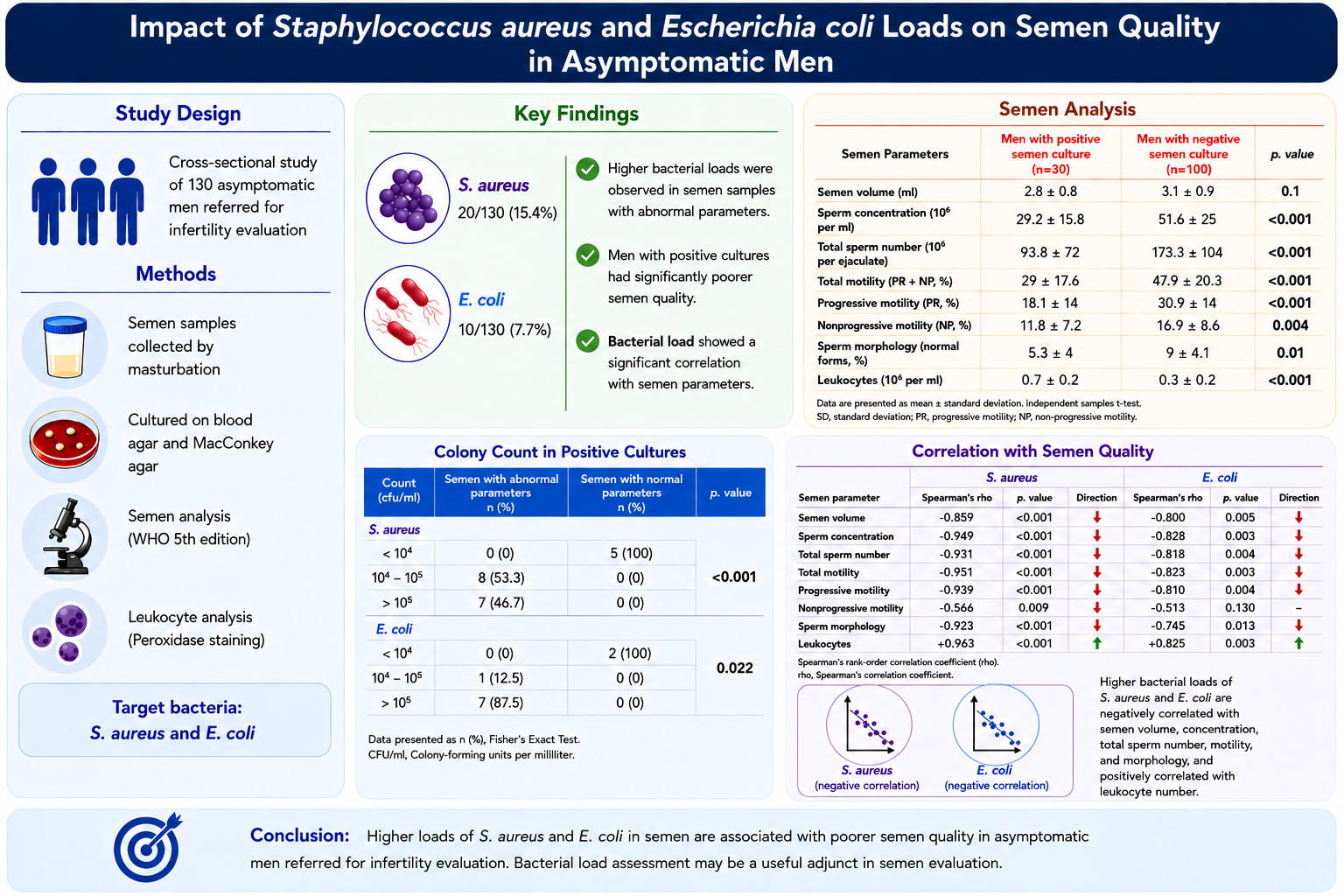
A total of 151 men were initially assessed for eligibility in this study. After applying the exclusion criteria, 21 individuals were excluded due to factors such as recent antibiotic use, history of genitourinary infections, or other exclusion conditions. Consequently, 130 asymptomatic men aged between 21 and 56 yr (35.2 ± 6.8) who met the inclusion criteria were evaluated.
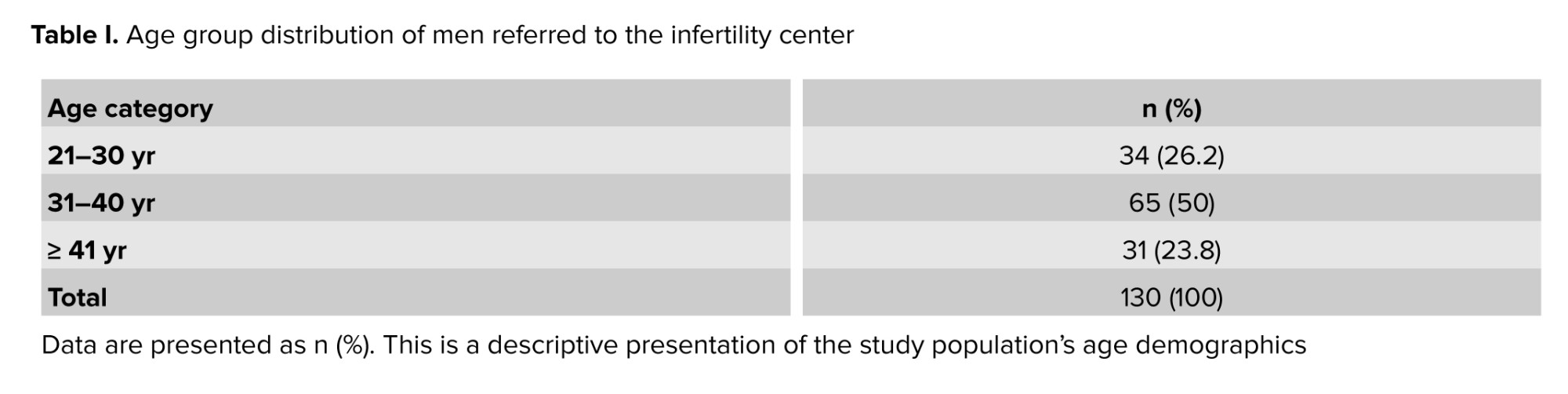
All participants were referred to the IVF center for infertility evaluation. 50% of the participants referring to the infertility center were in the age group of 31-40 yr (Table I).
3.2. Semen analysis
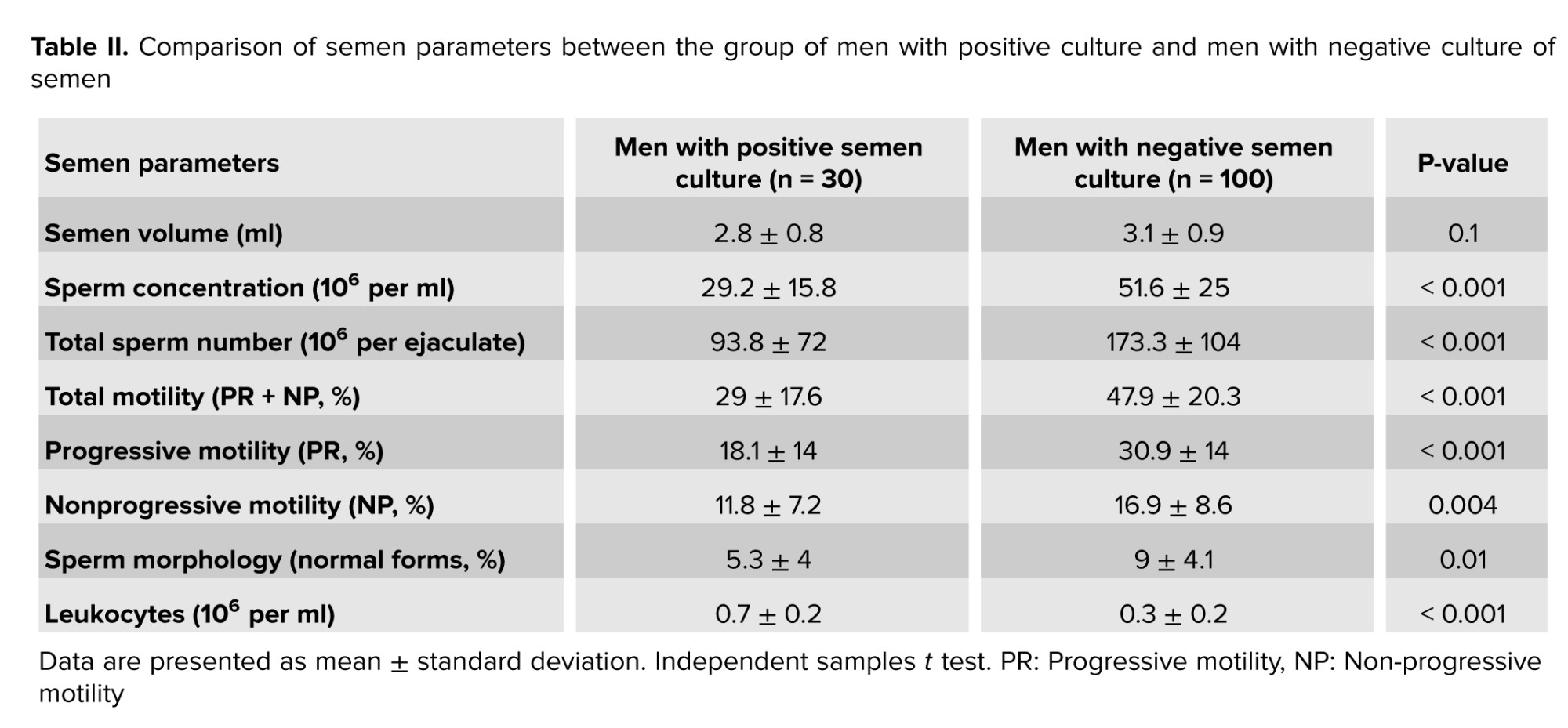
Microscopic tests, including motility, concentration, and morphology analysis, were performed for 130 semen samples by computer-aided sperm analysis system. Table II compares the findings of semen analysis in 2 groups of men with positive semen culture and men with negative semen culture. A significant difference was observed between the 2 groups in all parameters except volume. Sperm with abnormal motility and morphology were found in 76.7% and 60% of semen samples with positive culture, respectively.
3.3. Frequency of S. aureus and E. coli
Colonies grown on blood agar and McConkey agar, and suspected of S. aureus and E. coli, were identified by performing differential biochemical tests. The frequency of S. aureus and E. coli in the semen of men referred to the IVF center was 20 (15.4%) and 10 (7.7%), respectively. Also, no significant difference was observed in the frequency of S. aureus in the semen samples of men with and without leukocytospermia (23.1% vs. 14.5%). For E. coli, the corresponding frequencies were 30.8% vs. 5.1%, and this difference was significant.
3.4. Colony count and correlation of bacterial load with semen parameters
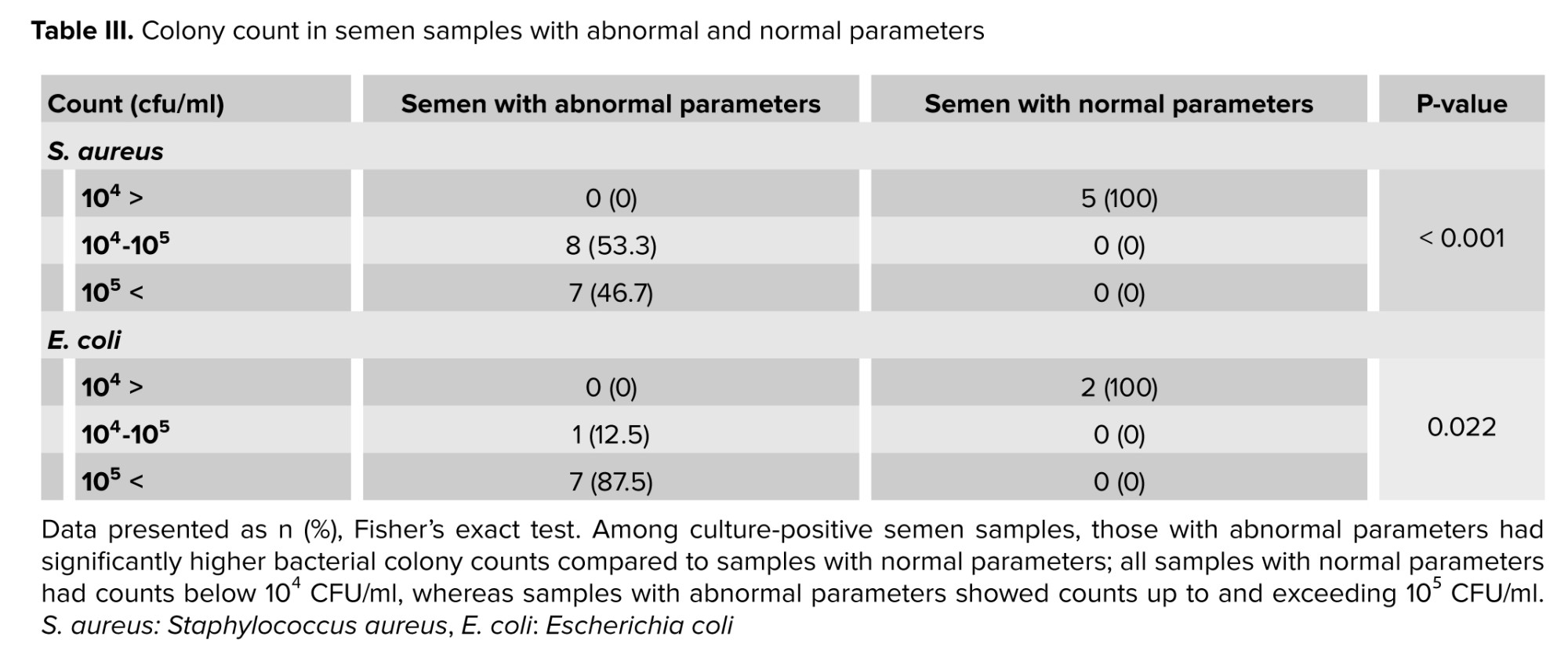
To conduct a quantitative analysis on each of the bacteria, the number of colonies in positive cultures was counted and documented. The criteria for positivity in the culture were growth at ≥ 10³ CFU/mL. This criterion is not mentioned by the WHO semen analysis manual; however, many clinical publications in the field of andrology and microbiology have used this criterion as a point of detection of bacteria (13). The cultures in all the study semen samples having abnormal parameters and normal parameters were divided into one of the following 3 classes: < 10⁴ CFU/mL indicating either contamination or very low bacterial count; 10⁴-10⁵ CFU/mL, a range that is considered as suspected infection or critical for some microbes; and > 10⁵ CFU/mL, which was considered the standard threshold for an infection (similar to ≥ 10⁵ CFU/mL for significant bacteriuria). These categories were used for within-study comparison rather than as absolute clinical diagnostic thresholds. Colony counts of S. aureus and E. coli in positive cultures of semen samples with abnormal parameters were significantly higher than those of samples with normal parameters (Table III).
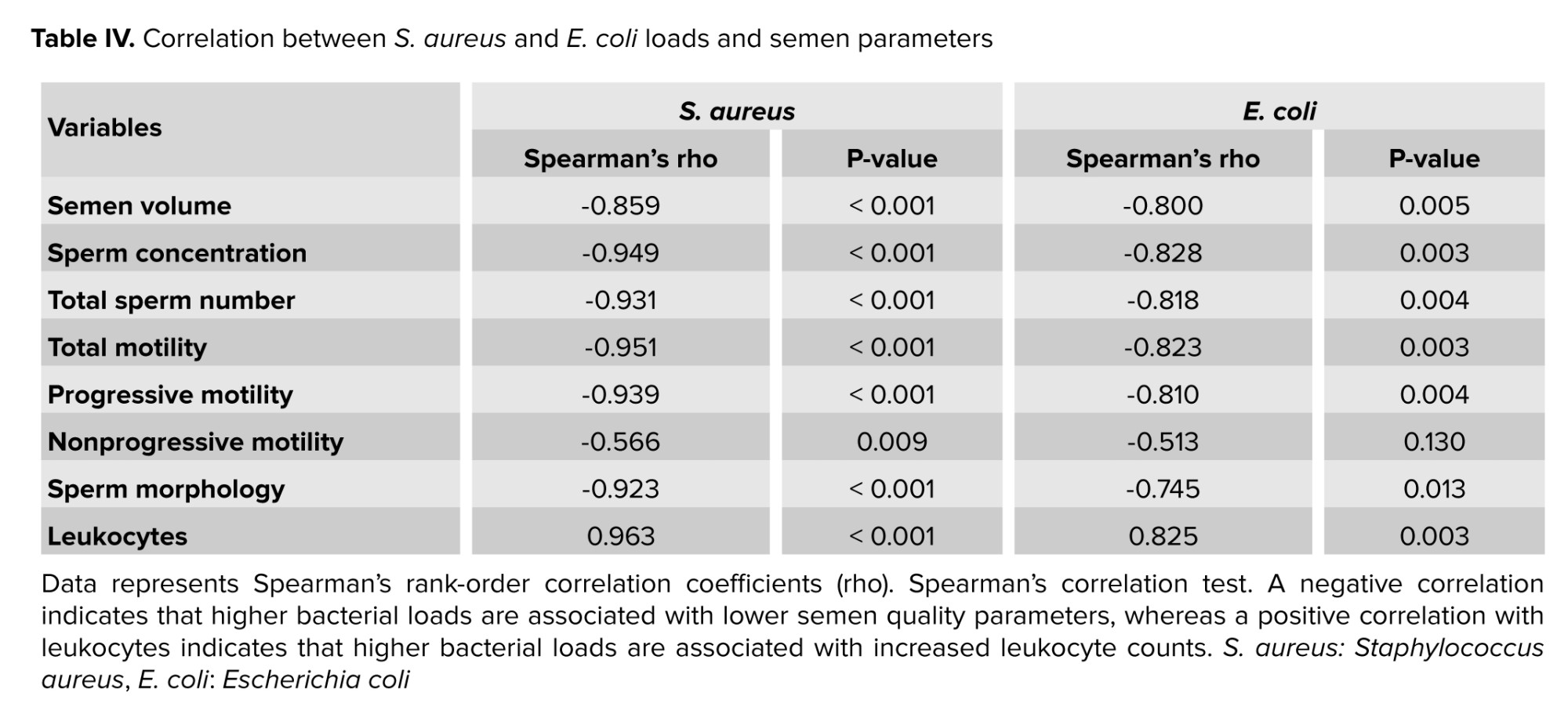
The results demonstrated a significant correlation between S. aureus and E. coli loads and semen quality parameters, including volume, sperm concentration, total sperm number, motility, morphology, and leukocyte number (Table IV).
4. Discussion
This prospective cross-sectional study found that high bacterial loads of S. aureus and E. coli (> 10,000 cfu/ml) in semen were significantly associated with negative impacts on semen quality parameters such as concentration, motility, and morphology among asymptomatic men. The bacterial loads of these microbes also had a significant negative association with all the relevant parameters of semen quality. Our results confirm the hypothesis that asymptomatic bacteriospermia, due to its high undiagnosed incidence induced by its asymptomatic nature, may be one of the principal causes of male infertility. However, because fertility outcomes were not measured, these findings should be interpreted as associations with semen quality rather than predictors of fertility success. Various studies that evaluated the impact of microorganisms on sperm have also depicted various pathophysiological theories and immunological realities.
Different research about the effect of bacteria on sperm has revealed various pathophysiological concepts and immunological events (14). Bacteriospermia can affect different sperm parameters, including motility and morphology (11, 15). It can also induce sperm DNA damage, an increase in reactive oxygen species, and the production of anti-sperm autoantibody (15, 16). The asymptomatic nature of some bacteriospermia causes failure to recognize and treat them on time, and as a result, decreases the quality of semen and infertility. Bacteriospermia is considered to be more common in asymptomatic infertile men than in asymptomatic fertile men. Although the effect of bacteriospermia on infertility has been reported, some have raised the issue that it does not have the same effect on fertility (10). S. aureus and E. coli are among the most prevalent bacteria isolated from semen (2).
S. aureus and E. coli were found in the semen of 20 (15.4%) and 10 (7.7%) men sent to the IVF center, respectively. The results of other studies show that these organisms are common bacteria isolated from semen samples. For instance, a study from Egypt reported S. aureus and E. coli as the most common bacteria (67.6% and 14.7% of cases, respectively) in infertile men. In this particular study, bacteriospermia has been significantly correlated with poor sperm motility and morphology, thereby confirming current study result that semen quality is negatively affected by colonization with these microorganisms (15). Similarly, another investigation found S. aureus and E. coli colonization at 8.3% and 16.7%, respectively, among subfertile men (17).
Since it is expected that the destruction caused by bacteria will increase with the rise of load, colony counting was done in positive cultures of semen samples with abnormal and normal parameters. The results of the present study showed that a significant difference was observed in colony count of S. aureus and E. coli between the 2 groups. The colony count in the semen samples with normal parameters was very low and therefore did not harm the semen quality. According to the findings, the presence of bacteria alone cannot be the cause of infertility, and quantitative investigation is very important.
The findings showed a significant correlation between S. aureus and E. coli loads and semen quality parameters such as volume, sperm concentration, total sperm number, motility, morphology, and leukocyte number. Except for leukocytes, the association between bacterial load and semen parameters was negative or inverse, implying that the quality of the semen parameters declined as the number of bacteria increased. The frequency of E. coli in the semen samples of men with and without leukocytospermia (30.8% vs. 5.1%) had a significant difference, while in the case of S. aureus (23.1% vs. 14.5%), despite being higher in semen samples of men with leukocytospermia, the difference was not significant. Nonetheless, the findings revealed a significant positive correlation between S. aureus and E. coli loads and the number of leukocytes, and as the bacterial load increases, it consequently raises the number of leukocytes. These results align with previous research demonstrating an association between bacterial infection and seminal inflammation, characterized by a markedly higher presence of leukocytes in bacteriospermic specimens (p < 0.01) and an approximate 4-fold increased risk of developing leukocytospermia (17). Based on our observations, this suggests that a higher bacterial load leads to leukocyte recruitment in semen.
4.1. Strengths and Limitations
However, there are various important limitations to consider. Causal inferences cannot be made as the study was performed using a cross-sectional design. Generalization is constrained by the fact that only one IVF center was chosen as a recruitment site. Another limitation is the absence of a fertile control group, which restricts our ability to compare findings between infertile and fertile asymptomatic men. Additionally, the small size of subgroups, particularly the E. coli-positive group (n = 10), may have reduced statistical power and the robustness of our analyses. Age, body mass index, duration of abstinence, duration of infertility, hormonal factors, and cause of infertility could act as potential confounders and were not multivariable controlled for. Even though the cleaning process before collection was recommended, contamination cannot be excluded unless the cultures or urine samples are repeated.
5. Conclusion
The study points out that bacterial genitourinary tract infection among infertile men may be asymptomatic. Notably, the compromised semen quality is correlated with a rise in cfu/mL of E. coli and S. aureus pathogens in semen. Thus, bacterial load assessment may be a useful adjunct in the evaluation of semen quality in asymptomatic men referred for infertility work-up.
Diagnosis is improved by examination of bacteriospermia via the leukocytospermia test in combination with sperm culture and bacterial load. Lack of consideration of bacterial infections as causes of infertility among asymptomatic men leads to delayed diagnosis, elevated medical costs, and prolonged treatment. Future studies should mainly include larger series of studies to statistically analyze the contribution of bacterial load to fertility outcomes and investigate effective antimicrobial treatment for enhancing seminal quality in infected men. To optimize clinical management and treatment planning, it is suggested that semen culture and bacterial load tests be included in infertility testing.
Data Availability
The datasets used and/or analyzed during the current study are available from the corresponding author on reasonable request.
Author Contributions
A. Dehghan: Article writing and data analysis, methodology MR. Pourmand: Monitored, supervised, evaluated, and edited the manuscript. All authors approved the final manuscript and take responsibility for the integrity of the data.
Acknowledgments
This work was financially supported by the research committee of Tehran University of Medical Sciences, Tehran, Iran (Grant no.: 43816). The authors declare that no generative AI technologies were used in the creation of this manuscript.
Conflict of Interest
The authors declare that there is no conflict of interest.
Infertility is defined as the continuous sexual intercourse of a couple without the use of contraceptives for a year and the woman not getting pregnant (1). Infertility affects one out of 5 couples worldwide (2, 3). Almost half of the couples' infertility cases are related to men (1, 4). Inflammatory responses and genitourinary tract infections are 2 major causes that can lead to infertility. Staphylococcus aureus (S. aureus) and Escherichia coli (E. coli) are the most commonly considered causes of infection in the genitourinary system (1, 2). These infections can destroy the prostate, seminal vesicles, and epididymis (5). Products derived from microorganisms can affect sperm, and nowadays, they can be used to prevent pregnancy and as an alternative to vasectomy and condoms (6). S. aureus produces a protein molecule weighing 20 kDa called sperm immobilization factor, which causes sperm immobility and affects sperm viability in high concentrations (7). It has also recently been shown that this factor can affect sperm morphology and Mg2+-ATPase activity (3).
E. coli is associated with the effect on mitochondrial membrane potential, changes in membrane permeability, and DNA fragmentation. There is a relationship between the mitochondrial membrane potential and the level of reactive oxygen species in the semen of infertile men (8). Lipopolysaccharide and outer membrane porins of this pathogen may contribute to DNA fragmentation, which can ultimately result in sperm cell injury or death (9). Sperm aggregation factor in E. coli also affects different parameters of semen, including sperm motility, morphology, and viability. It also causes apoptosis by affecting Mg2+-ATPase activity (8). E. coli can also indirectly affect sperm and cause an increase in leukocytes in semen; as a result, reactive oxygen species affects the plasma membrane of sperm and causes apoptosis (10).
Asymptomatic bacteriospermia is a potential cause of infertility due to a lack of prompt diagnosis. Semen cultivation in individuals who have infertility problems and low-quality semen can help to identify the cause of infertility and treatment (4). It is necessary to consider the quantity of pathogens that can lead to changes in the quality of the semen (11).
Whereas bacteriospermia has been associated with low semen quality, there have been very few studies examining the quantitative number of bacteria instead of the qualitative one. This limits interpretation because bacterial concentration may be more relevant than simple detection for understanding semen changes. Therefore, the present study aimed to evaluate whether the loads of S. aureus and E. coli are associated with semen quality in asymptomatic men referred for infertility evaluation.
2. Materials and Methods
2.1. Study subjects
In this prospective cross-sectional study, a total of 130 men who referred for infertility evaluation to Yas Complex hospital in vitro fertilization (IVF) center, Tehran, Iran, were included from November 2020-April 2021. Eligibility of all the possible participants was ascertained by a structured interview aimed at obtaining an entire medical history. Infertility history, past genitourinary tract infections, sexually transmitted diseases, pertinent surgical history, including sterilization, treatment currently in progress, and lifestyle factors, such as smoking, alcoholism, and occupational exposure to chemicals, were all asked for in particular during the interview. The major instrument to utilize the inclusion and exclusion criteria was this interview. To make it accurate, participants' details were checked, if needed, by reviewing their medical records.
2.2. Eligibility criteria
The inclusion criteria were men ≥ 18 yr referred to the IVF center for infertility evaluation. Eligible individuals with no genitourinary tract infection symptoms, including pain, dysuria, urethral discharge, or testicular/epididymal swelling, were permitted to participate. Enrolled participants disclosed no exclusions. Eligibility was determined through a structured interview and, where necessary, through a review of the medical records. The exclusion criteria were people with radiation or chemotherapy treatment, genital abnormalities, genitourinary diseases, a history of sterilization, antibiotic use in the last month, or sexually transmitted infections in earlier years, all of which cause a severe decrease in fertility. People who smoked, consumed alcohol, or worked in jobs that exposed them to hazardous physical and chemical factors.
2.3. Semen collection and analysis
All semen samples were collected prospectively and directly from study participants during the study period. Participants were asked to provide semen samples by masturbation. The samples were collected in special sterile containers after at least 2-7 days of sexual abstinence from masturbation. Pre-sampling procedures should include urinating and washing hands and genitals with soap and water to prevent contamination. Microscopic and macroscopic examinations were conducted using a computer-aided sperm analysis system and World Health Organization (WHO) Laboratory Manual for the Examination and Processing of Human Semen, 5th Ed (12). For comparative analysis, subjects were classified into 2 different groups based on the results of their semen microbiological cultures alone: the positive semen culture group (n = 30), which included subjects whose samples on culture showed bacterial growth of S. aureus or E. coli, and the negative semen culture group (n = 100), which included subjects whose samples on culture did not show any bacterial growth of the tested pathogens.
2.4. Semen culture and leukocyte analysis
According to WHO recommendations, leukocytes were assessed using a peroxidase staining histochemical technique (12).
To count colonies of S. aureus and E. coli, 2 semen samples were inoculated on blood agar and McConkey agar with a standard loop of 0.01 ml, respectively. The colonies' growth was tracked after 18-24 hr of incubation at 35°C. Gram staining was also used to examine microscopic morphology. To identify S. aureus, investigations were conducted involving the production of catalase, coagulase, urease, and DNase enzymes, as well as growth and fermentation in mannitol salt agar media. E. coli was identified through the use of biochemical tests. Triple sugar iron medium was utilized to investigate the fermentation of glucose, lactose, and sucrose sugars, as well as the production of H2S and gas. Sulfide indole motility medium was employed to assess motility and the ability to produce indole from tryptophan. Simon citrate medium was used to examine the ability to utilize sodium citrate as the sole carbon source and inorganic ammonium salts as the sole nitrogen source. The Methyl red-voges-proskauer test was conducted to determine the presence of stable or neutral acidic end products, and urea agar was used to evaluate the ability to produce the urease enzyme. Colonies were counted and documented in positive cultures.
2.5. Ethical Considerations
This study was approved by the ethics committee of Tehran University of Medical Sciences, Tehran, Iran (Code: IR.TUMS.SPH.REC.1398.215), ensuring compliance with ethical standards for research involving human subjects. All methods in this study were performed in accordance with relevant guidelines and regulations. Informed consent was obtained from all study participants before their inclusion in the research.
2.6. Statistical Analysis
The data consisted of categorical variables (presented as number and percentage) and numerical variables (presented as mean ± standard deviation). The normality of numerical data was assessed using the Shapiro-Wilk test. Because the study compared 2 independent groups, the independent samples t test was used for normally distributed variables; the Chi-square test and Fisher’s exact test were used for categorical variables; and Spearman’s rank-order correlation test was used to assess associations between bacterial load and semen parameters. A 2-sided p < 0.05 was considered statistically significant. Statistical analyses were performed using SPSS software version 24.0 (IBM Corp., Armonk, NY, USA).
3. Results
3.1. Study subjects
A total of 151 men were initially assessed for eligibility in this study. After applying the exclusion criteria, 21 individuals were excluded due to factors such as recent antibiotic use, history of genitourinary infections, or other exclusion conditions. Consequently, 130 asymptomatic men aged between 21 and 56 yr (35.2 ± 6.8) who met the inclusion criteria were evaluated.
All participants were referred to the IVF center for infertility evaluation. 50% of the participants referring to the infertility center were in the age group of 31-40 yr (Table I).
3.2. Semen analysis
Microscopic tests, including motility, concentration, and morphology analysis, were performed for 130 semen samples by computer-aided sperm analysis system. Table II compares the findings of semen analysis in 2 groups of men with positive semen culture and men with negative semen culture. A significant difference was observed between the 2 groups in all parameters except volume. Sperm with abnormal motility and morphology were found in 76.7% and 60% of semen samples with positive culture, respectively.
3.3. Frequency of S. aureus and E. coli
Colonies grown on blood agar and McConkey agar, and suspected of S. aureus and E. coli, were identified by performing differential biochemical tests. The frequency of S. aureus and E. coli in the semen of men referred to the IVF center was 20 (15.4%) and 10 (7.7%), respectively. Also, no significant difference was observed in the frequency of S. aureus in the semen samples of men with and without leukocytospermia (23.1% vs. 14.5%). For E. coli, the corresponding frequencies were 30.8% vs. 5.1%, and this difference was significant.
3.4. Colony count and correlation of bacterial load with semen parameters
To conduct a quantitative analysis on each of the bacteria, the number of colonies in positive cultures was counted and documented. The criteria for positivity in the culture were growth at ≥ 10³ CFU/mL. This criterion is not mentioned by the WHO semen analysis manual; however, many clinical publications in the field of andrology and microbiology have used this criterion as a point of detection of bacteria (13). The cultures in all the study semen samples having abnormal parameters and normal parameters were divided into one of the following 3 classes: < 10⁴ CFU/mL indicating either contamination or very low bacterial count; 10⁴-10⁵ CFU/mL, a range that is considered as suspected infection or critical for some microbes; and > 10⁵ CFU/mL, which was considered the standard threshold for an infection (similar to ≥ 10⁵ CFU/mL for significant bacteriuria). These categories were used for within-study comparison rather than as absolute clinical diagnostic thresholds. Colony counts of S. aureus and E. coli in positive cultures of semen samples with abnormal parameters were significantly higher than those of samples with normal parameters (Table III).
The results demonstrated a significant correlation between S. aureus and E. coli loads and semen quality parameters, including volume, sperm concentration, total sperm number, motility, morphology, and leukocyte number (Table IV).
4. Discussion
This prospective cross-sectional study found that high bacterial loads of S. aureus and E. coli (> 10,000 cfu/ml) in semen were significantly associated with negative impacts on semen quality parameters such as concentration, motility, and morphology among asymptomatic men. The bacterial loads of these microbes also had a significant negative association with all the relevant parameters of semen quality. Our results confirm the hypothesis that asymptomatic bacteriospermia, due to its high undiagnosed incidence induced by its asymptomatic nature, may be one of the principal causes of male infertility. However, because fertility outcomes were not measured, these findings should be interpreted as associations with semen quality rather than predictors of fertility success. Various studies that evaluated the impact of microorganisms on sperm have also depicted various pathophysiological theories and immunological realities.
Different research about the effect of bacteria on sperm has revealed various pathophysiological concepts and immunological events (14). Bacteriospermia can affect different sperm parameters, including motility and morphology (11, 15). It can also induce sperm DNA damage, an increase in reactive oxygen species, and the production of anti-sperm autoantibody (15, 16). The asymptomatic nature of some bacteriospermia causes failure to recognize and treat them on time, and as a result, decreases the quality of semen and infertility. Bacteriospermia is considered to be more common in asymptomatic infertile men than in asymptomatic fertile men. Although the effect of bacteriospermia on infertility has been reported, some have raised the issue that it does not have the same effect on fertility (10). S. aureus and E. coli are among the most prevalent bacteria isolated from semen (2).
S. aureus and E. coli were found in the semen of 20 (15.4%) and 10 (7.7%) men sent to the IVF center, respectively. The results of other studies show that these organisms are common bacteria isolated from semen samples. For instance, a study from Egypt reported S. aureus and E. coli as the most common bacteria (67.6% and 14.7% of cases, respectively) in infertile men. In this particular study, bacteriospermia has been significantly correlated with poor sperm motility and morphology, thereby confirming current study result that semen quality is negatively affected by colonization with these microorganisms (15). Similarly, another investigation found S. aureus and E. coli colonization at 8.3% and 16.7%, respectively, among subfertile men (17).
Since it is expected that the destruction caused by bacteria will increase with the rise of load, colony counting was done in positive cultures of semen samples with abnormal and normal parameters. The results of the present study showed that a significant difference was observed in colony count of S. aureus and E. coli between the 2 groups. The colony count in the semen samples with normal parameters was very low and therefore did not harm the semen quality. According to the findings, the presence of bacteria alone cannot be the cause of infertility, and quantitative investigation is very important.
The findings showed a significant correlation between S. aureus and E. coli loads and semen quality parameters such as volume, sperm concentration, total sperm number, motility, morphology, and leukocyte number. Except for leukocytes, the association between bacterial load and semen parameters was negative or inverse, implying that the quality of the semen parameters declined as the number of bacteria increased. The frequency of E. coli in the semen samples of men with and without leukocytospermia (30.8% vs. 5.1%) had a significant difference, while in the case of S. aureus (23.1% vs. 14.5%), despite being higher in semen samples of men with leukocytospermia, the difference was not significant. Nonetheless, the findings revealed a significant positive correlation between S. aureus and E. coli loads and the number of leukocytes, and as the bacterial load increases, it consequently raises the number of leukocytes. These results align with previous research demonstrating an association between bacterial infection and seminal inflammation, characterized by a markedly higher presence of leukocytes in bacteriospermic specimens (p < 0.01) and an approximate 4-fold increased risk of developing leukocytospermia (17). Based on our observations, this suggests that a higher bacterial load leads to leukocyte recruitment in semen.
4.1. Strengths and Limitations
However, there are various important limitations to consider. Causal inferences cannot be made as the study was performed using a cross-sectional design. Generalization is constrained by the fact that only one IVF center was chosen as a recruitment site. Another limitation is the absence of a fertile control group, which restricts our ability to compare findings between infertile and fertile asymptomatic men. Additionally, the small size of subgroups, particularly the E. coli-positive group (n = 10), may have reduced statistical power and the robustness of our analyses. Age, body mass index, duration of abstinence, duration of infertility, hormonal factors, and cause of infertility could act as potential confounders and were not multivariable controlled for. Even though the cleaning process before collection was recommended, contamination cannot be excluded unless the cultures or urine samples are repeated.
5. Conclusion
The study points out that bacterial genitourinary tract infection among infertile men may be asymptomatic. Notably, the compromised semen quality is correlated with a rise in cfu/mL of E. coli and S. aureus pathogens in semen. Thus, bacterial load assessment may be a useful adjunct in the evaluation of semen quality in asymptomatic men referred for infertility work-up.
Diagnosis is improved by examination of bacteriospermia via the leukocytospermia test in combination with sperm culture and bacterial load. Lack of consideration of bacterial infections as causes of infertility among asymptomatic men leads to delayed diagnosis, elevated medical costs, and prolonged treatment. Future studies should mainly include larger series of studies to statistically analyze the contribution of bacterial load to fertility outcomes and investigate effective antimicrobial treatment for enhancing seminal quality in infected men. To optimize clinical management and treatment planning, it is suggested that semen culture and bacterial load tests be included in infertility testing.
Data Availability
The datasets used and/or analyzed during the current study are available from the corresponding author on reasonable request.
Author Contributions
A. Dehghan: Article writing and data analysis, methodology MR. Pourmand: Monitored, supervised, evaluated, and edited the manuscript. All authors approved the final manuscript and take responsibility for the integrity of the data.
Acknowledgments
This work was financially supported by the research committee of Tehran University of Medical Sciences, Tehran, Iran (Grant no.: 43816). The authors declare that no generative AI technologies were used in the creation of this manuscript.
Conflict of Interest
The authors declare that there is no conflict of interest.
Type of Study: Original Article |
Subject:
Cellular and Molecular Biology of Reproduction
Send email to the article author
| Rights and permissions | |
 |
This work is licensed under a Creative Commons Attribution-NonCommercial 4.0 International License. |