International Journal of
Reproductive Biomedicine
Wed, Sep 30, 2026
[Archive]
Volume 24, Issue 5 (May 2026)
IJRM 2026, 24(5): 369-382 |
Back to browse issues page



Ethics code: IR.MUMS.NURSE.REC.1402.061


Download citation:
BibTeX | RIS | EndNote | Medlars | ProCite | Reference Manager | RefWorks
Send citation to:


BibTeX | RIS | EndNote | Medlars | ProCite | Reference Manager | RefWorks
Send citation to:
Soltani N S, Heshmat F, Bakhshi Ghalibaf M, Mahmoudinia M, Latifnejad Roudsari R. Association of spiritual health with mental health status, and quality of life among women with infertility: A systematic review. IJRM 2026; 24 (5) :369-382
URL: http://ijrm.ir/article-1-3756-en.html
URL: http://ijrm.ir/article-1-3756-en.html
Narges Sadat Soltani1 

 , Farahnaz Heshmat2 , Mohadese Bakhshi Ghalibaf3 , Malihe Mahmoudinia4 , Robab Latifnejad Roudsari *5
, Farahnaz Heshmat2 , Mohadese Bakhshi Ghalibaf3 , Malihe Mahmoudinia4 , Robab Latifnejad Roudsari *5
1- Student Research Committee, Mashhad University of Medical Sciences, Mashhad, Iran. & Department of Midwifery, School of Nursing and Midwifery, Birjand University of Medical Sciences, Birjand, Iran.
2- Nursing and Midwifery Care Research Center, Mashhad University of Medical Sciences, Mashhad, Iran.
3- Student Research Committee, Mashhad University of Medical Sciences, Mashhad, Iran.
4- Department of Obstetrics and Gynecology, School of Medicine, Mashhad University of Medical Sciences, Mashhad, Iran.
5- Nursing and Midwifery Care Research Center, Mashhad University of Medical Sciences, Mashhad, Iran. & Department of Midwifery, School of Nursing and Midwifery, Mashhad University of Medical Sciences, Mashhad, Iran. ,rlatifnejad@yahoo.com; latifnejadr@mums.ac.ir
2- Nursing and Midwifery Care Research Center, Mashhad University of Medical Sciences, Mashhad, Iran.
3- Student Research Committee, Mashhad University of Medical Sciences, Mashhad, Iran.
4- Department of Obstetrics and Gynecology, School of Medicine, Mashhad University of Medical Sciences, Mashhad, Iran.
5- Nursing and Midwifery Care Research Center, Mashhad University of Medical Sciences, Mashhad, Iran. & Department of Midwifery, School of Nursing and Midwifery, Mashhad University of Medical Sciences, Mashhad, Iran. ,
Full-Text [PDF 450 kb]
(524 Downloads)
| Abstract (HTML) (580 Views)
Full-Text: (68 Views)
1. Introduction
In many cultures, family formation and parenting are highly valued, yet numerous couples confront infertility, a globally recognized public health and social issue (1, 2). The World Health Organization has officially recognized infertility as a global reproductive health issue (3-6). Infertility is defined as 1 yr of unprotected intercourse without pregnancy (7, 8).
Globally, infertility affects approximately 9% of couples, with a higher prevalence of 10.9% reported in Iran (2, 9). This condition often triggers psychological distress, including depression and anxiety (10, 11), which can impair marital satisfaction and overall quality of life (QoL) (10, 12). Infertility is widely regarded as a crisis that induces stress and psychological vulnerability (12), with substantial adverse effects on QoL confirmed in multiple studies (13-15). Its consequences span personal (e.g., physical and mental health, and life satisfaction), marital (e.g., sexual pleasure and relationship quality), social (e.g., interactions with family and friends), psychological, emotional, and medical domains (2, 3, 16, 17).
In contrast, mental disorders stemming from psychological distress and existential bitterness are less prevalent among religious/individuals. Religious/spiritual beliefs can reduce pro-inflammatory cytokines and aberrant DNA methylation while enhancing immune function (18). They also foster positive emotions by improving physical health through immune system support (19-21).
Spirituality is understood as a system of beliefs and values that imparts meaning and purpose to life and fosters a sense of connection with oneself and the environment. It often involves relating to a higher power, offering infertile couples a framework to navigate existential struggles, psychological distress, and social stigma, thereby achieving comfort and relief (3). Spirituality is now a central focus in health care; compromised spiritual well-being (SWB) may lead to depression and a loss of life meaning (4, 22, 23).
Spiritual health is a core dimension of human health, alongside physical, mental, and social aspects. It enhances overall health, integrates other health dimensions, and boosts psychological adaptation and functioning (22, 24). Women with infertility and couples frequently rely on spirituality to manage the chronic stress of infertility (2, 25, 26). Studies show that in infertile women, greater spirituality correlates with lower infertility-related stress and depressive symptoms, higher life satisfaction (2, 27, 28), better emotional adjustment to assisted reproductive technologies (2, 29), improved mental health (3), and enhanced QoL (2, 3). Indeed, spirituality serves as a meaning-centered coping strategy that buffers the negative impact of infertility on QoL (2).
Systematic reviews consistently report that religion and spirituality positively influence mental health across diverse populations (30-33). However, existing evidence is fragmented. While some studies report strong associations, others show weak or non-significant relationships, particularly regarding QoL (2, 3, 10, 24, 34). This inconsistency, coupled with the absence of a systematic synthesis focused exclusively on spiritual health in women with infertility, highlights a critical gap in the literature.
Therefore, this systematic review aims to summarize and integrate epidemiologic evidence on the association between spiritual health and mental health status and QoL in infertile women.
2. Materials and Methods
The preferred reporting items for systematic reviews and meta-analyses (PRISMA) 2020, as well as the meta-analysis of observational studies in epidemiology (MOOSE) guidelines, were adopted for conducting and reporting the present systematic review of observational studies (35).
2.1. Data sources and search strategy
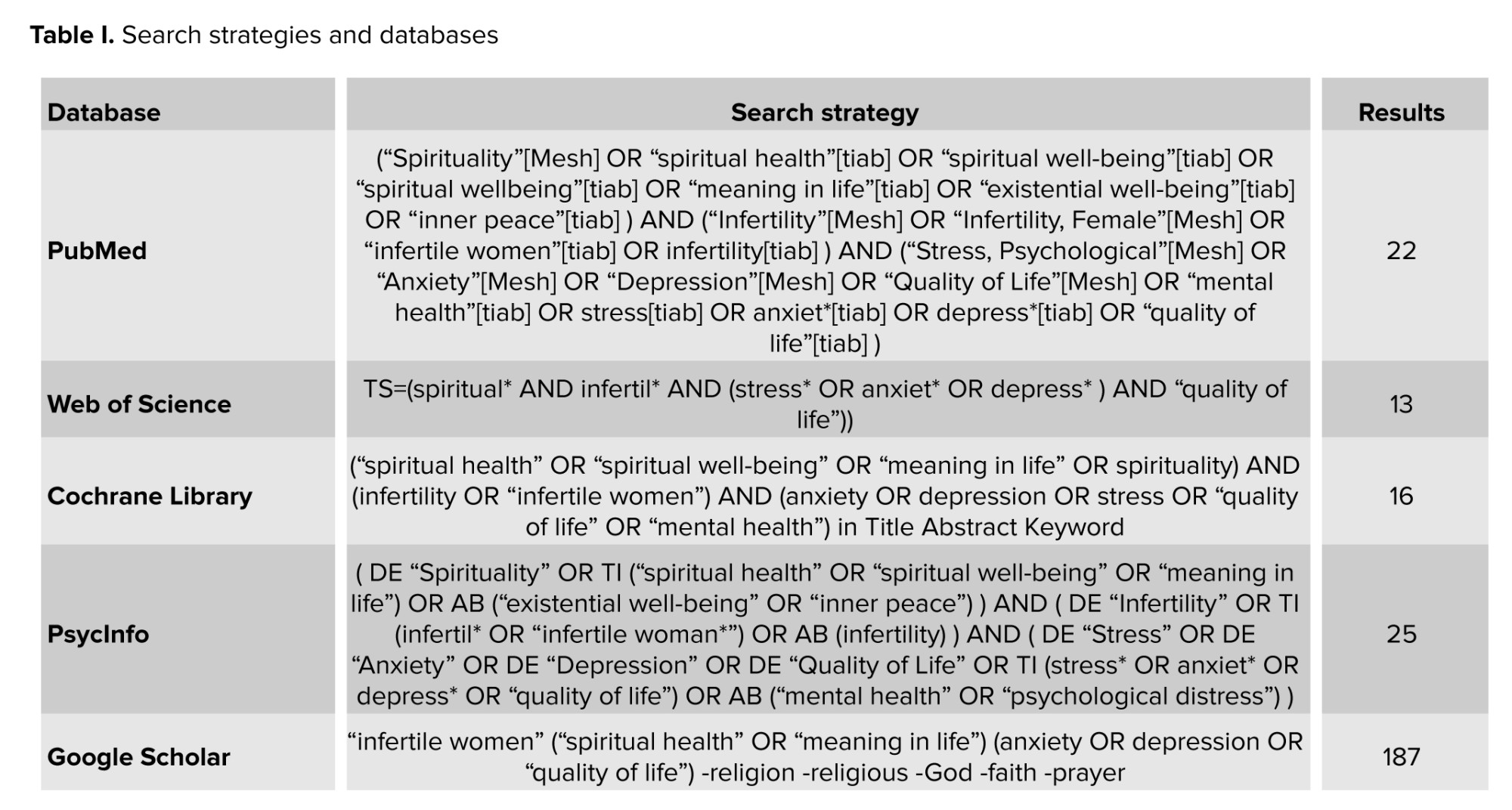
A comprehensive search of online literature databases including PubMed, Cochrane Library, Web of Science (ISI), PsycInfo as well as, Google Scholar search engine, was carried out until July 2025, using the medical subject keywords of ‘spiritual health’ or ‘spiritual wellbeing’ or ‘spirituality’ AND ‘mental health’ or ‘stress, psychological’ or ‘stress’ AND ‘Anxiety’ AND ‘depression’ AND ‘quality of life’ AND ‘infertility’ (Table I). No restrictions were applied regarding the publication date or language. After eliminating duplicate records, 2 authors (N.S. and M.B.) independently assessed the studies by examining titles and abstracts. The full texts of studies considered potentially suitable were then obtained and independently evaluated by the same 2 authors. Any disagreements between them were settled either through discussion or by involving a third reviewer. The search results were organized and managed using EndNote reference management software, version X8.
2.2. Eligibility criteria
All analytical cross-sectional studies, a type of quantitative research design, were included in this systematic review if they assessed spiritual health/well-being or spirituality as the main independent variable and stress, anxiety, depression, and QoL as the dependent variables, and were conducted among women with infertility. Interventional studies, case reports, letters to the editor, articles presented at conferences, and studies with insufficient data were excluded.
2.3. Outcome measures
Outcome measures in this review included mental health status (stress, anxiety, and depression) and QoL.
2.4. Data extraction
For each study, the following data and key characteristics were collected: the author's name, publication year, country where the study population was based, the age of participants, number of participants, tools for spiritual health measurement, outcome measures and their measurement tool, the results of the study, and quality assessment score.
2.5. Quality assessment
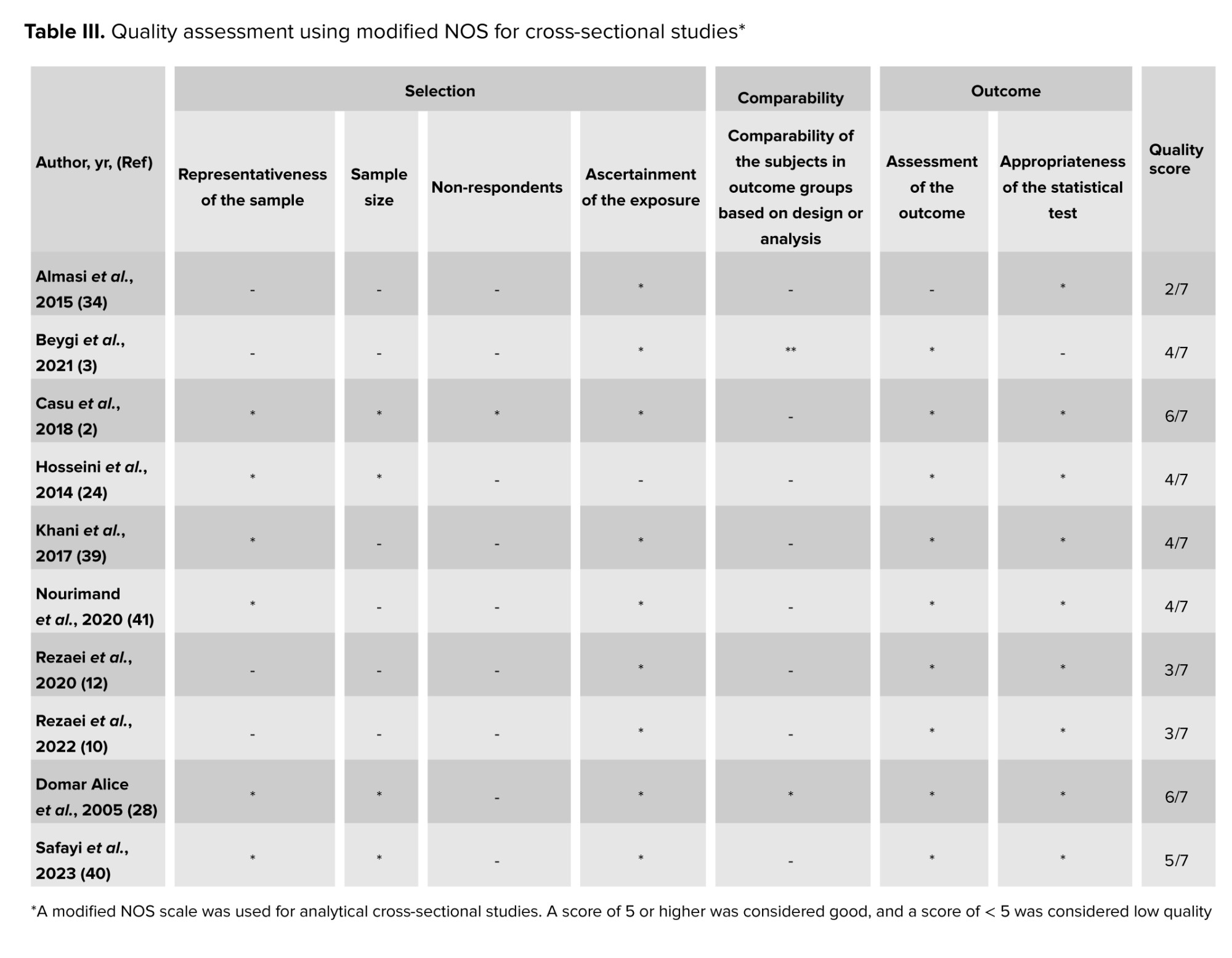
To assess the quality of the studies incorporated in this review, an adapted form of the newcastle-ottawa scale (NOS), modified specifically for cross-sectional research, was employed (36, 37). A maximum score of 7 points was assigned across 3 domains: selection (2 points), comparability (2 points), and outcome/exposure assessment (3 points). Studies scoring below 5 were considered low quality, while those scoring above 5 were deemed high quality. 2 independent reviewers (N.S. and F.H.) assessed all studies, and a third senior reviewer (R.L.R.) verified the evaluations. Any discrepancies in scoring were resolved through consensus.
2.6. Ethical Considerations
This study was approved by the Vice-Chancellor for Research, Mashhad University of Medical Sciences, Mashhad, Iran (Code: IR.MUMS.NURSE.REC.1402.061). All ethical considerations, including honesty and trustworthiness in the text analysis, were considered when conducting this review and presenting its results. The protocol is registered on the international prospective register of systematic reviews (PROSPERO) under the code of CRD42023485177.
2.7. Statistical Analysis
Data analysis was conducted based on the extracted data from the included studies. The data were collected and synthesized narratively from the data presented in the reviewed studies. Usually, due to study heterogeneity, most systematic reviews do not actually undertake a formal meta-analysis alone. Instead, they often integrate the included studies in a manner that appears most practical or suitable and refer to the resulting synthesis as a ‘narrative synthesis’a key feature of which is the use of a narrative (rather than statistical) summary of the studies’ findings during the synthesis process (38). There was heterogeneity in outcome and tools of outcome measurement in the reviewed studies, leading to a lack of data suitable for meta-analysis.
3. Results
3.1. Search results
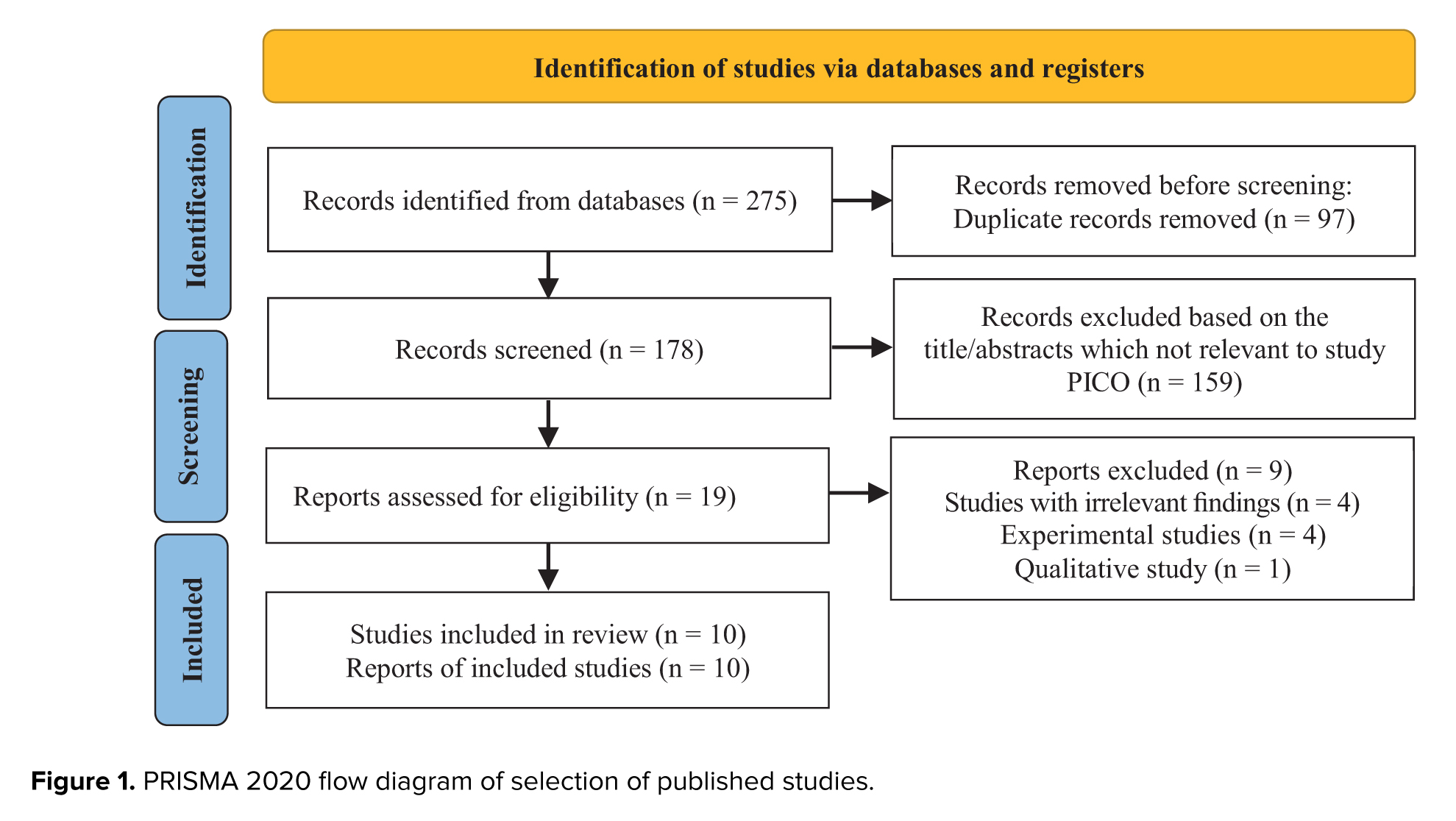
In total, 275 studies were identified by searching the databases. After removal of duplicates, 178 articles remained, while 97 duplicates were removed. The next step was reviewing the titles and abstracts, including the methodologies. After screening the titles and abstracts, 19 articles remained, and 159 articles were removed. Then, 19 full-text studies were assessed, of which 9 were excluded because 4 studies had irrelevant outcomes, 4 were clinical trials, and 1 was a descriptive cross-sectional study. Finally, 10 studies were included in the systematic review. Figure 1 presents the flow diagram for the selection of published studies.
3.2. Study characteristics
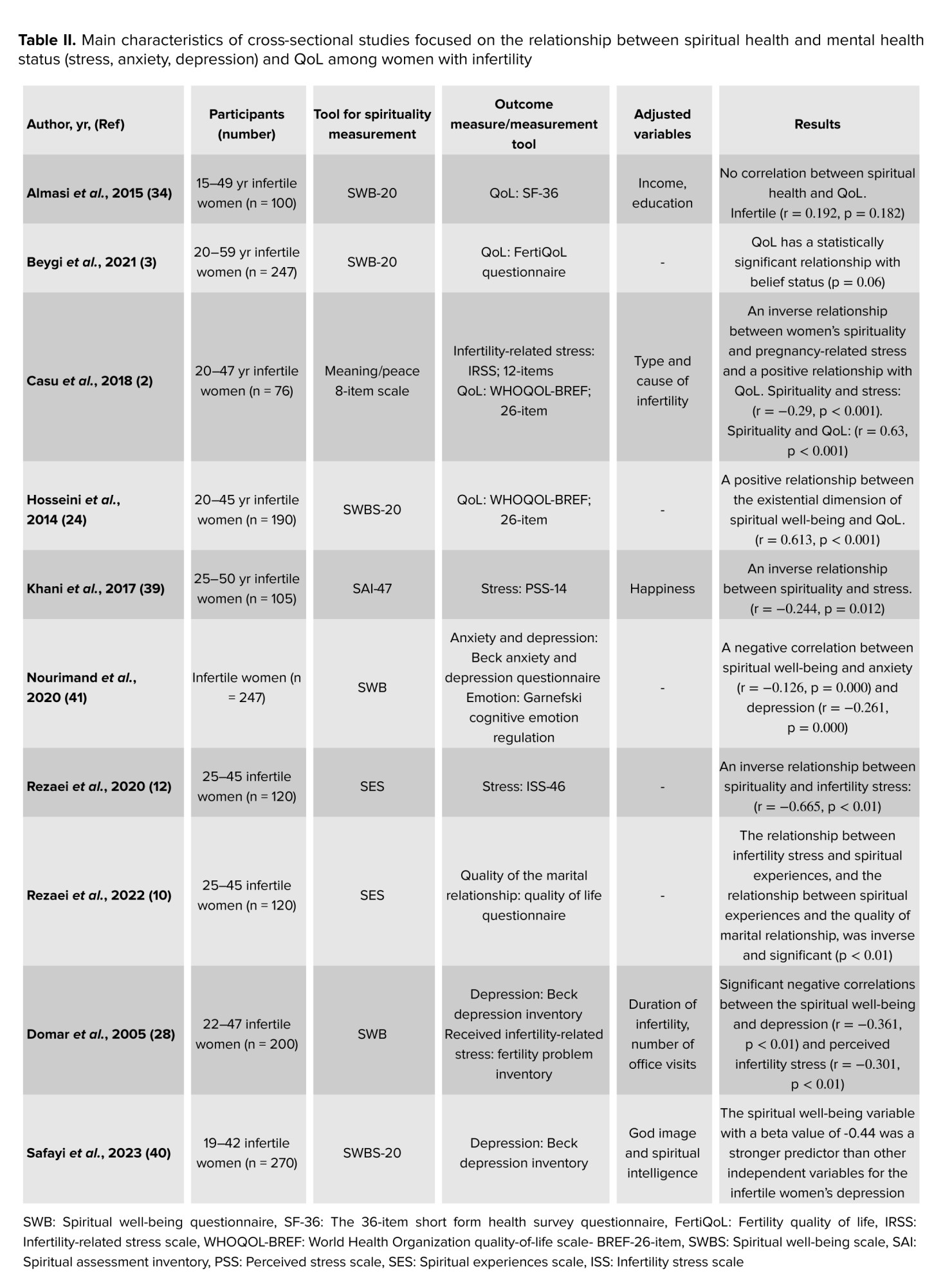
The main characteristics of the 10 cross-sectional studies that met the inclusion criteria for this systematic review are shown in table II. Among these 10 studies, 8 were conducted in Iran, 1 in Brazil, and 1 in Israel. Also, 6 of the articles were in English and 4 in Farsi. The reviewed studies were conducted between 2005 and 2022. 4 studies assessed the relationship between spiritual health and stress (2, 12, 28, 39). 3 studies measured the relationship between spiritual health, anxiety, and depression (28, 40, 41). 5 studies measured the relationship between spiritual health and QoL (2, 3, 10, 24, 34). The tools used to measure spiritual health or SWB were reported differently across the studies. They included the Paloutzian and Ellison 20-question SWB questionnaire (SWB -20) (3, 24, 28, 34, 40, 41), the 8-question meaning/peace scale (2), the spiritual assessment inventory (39), and the 16-question spiritual experience scale (10, 12).
Tools for measuring stress in studies also include the following: infertility-related stress scale (12 items) (2), perceived stress scale (14 items) (39), the 46-item infertility stress scale (12), and the fertility problems questionnaire (28). The instruments used to measure anxiety and depression were the Beck questionnaire (28, 40, 41). QoL was measured with the World Health Organization QoL- BREF-26-item (2, 24), The 36-item short form health survey questionnaire (34), the ertility QoL (FertiQoL) questionnaire (3), and the QoL questionnaire (10).
For the quality assessment, a modified version of the NOS for cross-sectional studies was used. 7 studies (70%) were considered as low quality (NOS < 5) (3, 10, 12, 24, 34, 39, 41), and 3 studies (30%) were of good quality (NOS ≥ 5) (2, 28, 40). However, due to the small number of articles, all studies were included in the systematic review. All the studies achieved a full score in the “ascertainment of the exposure” and did not get any marks from the “representativeness of the sample” section (Table III).
3.3. Spiritual health/wellbeing and stress
4 studies assessed the relationship between spiritual health and stress (2, 12, 28, 39). The results of all 4 studies indicated that spiritual health reduces stress levels, but this relationship was significant in 3 studies (2, 12, 28). The tools used to measure spiritual health and stress were different in all 4 studies. The correlation coefficient ranged from -0.665 to -0.29. A meta-analysis was not performed due to heterogeneity in the outcome measurement tools.
3.4. Spiritual health/wellbeing, anxiety, and depression
3 studies measured the relationship between spiritual health, anxiety, and depression, and in all 3 studies, spiritual well-being was measured with the questionnaire of SWB. In a study, anxiety, depression, and some aspects of emotion were negatively correlated with spiritual well-being (41). In another study, depression had a significant negative correlation with spiritual well-being (28). In another study, the spiritual well-being was a strong predictor of infertile women’s depression, with a beta value of -0.44 (40). The depression correlation coefficient ranged from -0.126 to -0.361. Anxiety was also investigated in only one study (r = -0.261). Therefore, a meta-analysis was not performed due to the small number of studies.
3.5. Spiritual health/wellbeing and the QoL
5 studies measured the relationship between spiritual health and QoL (2, 3, 10, 24, 34). The tools used to measure spiritual health and QoL across studies were not the same. The results of 3 studies showed that spiritual health has a positive relationship with QoL (2, 24, 34), which was significant in 2 studies (2, 24). In one study, a significant relationship was observed, but the correlation coefficient (r) was not reported (3). In another study, spiritual experience had a negative and significant relationship with QoL (10). The correlation coefficient ranged from 0.192-0.613. Meta-analysis was not performed due to heterogeneity in outcome measurement tools and incomplete data.
4. Discussion
This systematic review found that higher spiritual health/wellbeing was associated with lower levels of stress, anxiety, and depression among women with infertility. However, because all studies included were cross-sectional, these findings reflect associations, not causal relationships. Regarding QoL, results were inconsistent. However, given the limited number and generally low quality of available studies, it is acknowledged that low quality scores limit confidence in results. Thus, the findings should be interpreted with caution, underscoring the need for further research with more robust designs.
Daily spiritual experiences help women with infertility adapt and reduce mental stress, as these experiences involve a connection with divine power, a sense of peace through God’s support, and a feeling of closeness to God-enabling women to perceive God’s presence throughout the day and better manage life’s tensions and challenges (10). Belief in a divine being or eternal life may enhance resilience in the face of trials, disappointments, and major life changes (42). Trust in God’s will and viewing infertility as divinely ordained can foster acceptance and gratitude for what has been granted (43). Those with higher levels of spiritual health often cultivate more harmonious relationships with their environment and may interpret challenges, such as infertility, as part of a divine plan or providence. In Islamic teachings, despair is discouraged, encouraging individuals to nurture hope, which can, in turn, alleviate emotional distress (44). The reduction in anxiety and depression among women with infertility may stem from the meaning and purpose that religion and spirituality impart to life, which diminishes feelings of inferiority, despair, hopelessness, and failure, while enhancing motivation, happiness, and a desire to contribute to oneself and society (12). Spiritual well-being acts as a unifying force across physical, psychological, and social dimensions of the self and is vital for human adaptation. When spiritual well-being is impaired, individuals may experience loneliness, depression, anxiety, and a loss of life meaning (27). Enhancing spiritual health may not directly cure illness, but can significantly improve QoL, help prevent certain health issues, and support adaptation to disease or acceptance of mortality (44).
The findings align with previous reviews (30-33), though the study populations differ. A systematic review and meta-analysis reported that higher religiosity and spirituality correlate with better mental health in older adults, including lower anxiety and depression, greater life satisfaction, stronger social ties, and a clearer sense of meaning (30).
Another study in Iran found a significant association between religion/spirituality and reduced depression and anxiety in cancer patients, highlighting their positive impact on mood (31). A review of 152 prospective studies indicated that religiosity/spirituality modestly but significantly predicted reduced depression over time in about half of the studies (32). Similarly, a meta-analysis focusing on youth concluded that spiritual health has a protective effect against depression (33). Regarding the relationship between spiritual health and QoL, the present review yielded contradictory results. Spiritual health may positively influence the psychological dimension of QoL in women with infertility by alleviating psychological distress (34).
However, inconsistencies across studies may reflect cultural differences, as perceived QoL is shaped by cultural values and perspectives (2). Cultural values are believed to mediate quality-of-life assessments (45), leading to varying interpretations across societies (46). Culture influences all QoL domains: physical (through local health beliefs and disease patterns), psychological (e.g., culturally specific concepts of self-esteem), social (through differing valuations of relationships), and spiritual (via dominant religious frameworks that shape meaning in life) (47). Additionally, differences in measurement tools may contribute to inconsistent findings. While FertiQoL-a validated, infertility-specific quality-of-life instrument-exists (48), it was used in only one included study. Other factors, such as the cause of infertility, also affect QoL but were not addressed in this review. Women report a higher QoL when infertility is attributed to the male partner, likely due to reduced blame, stigma, and guilt; conversely, female-factor or unexplained infertility correlates with lower QoL (42).
Notably, 80% of the included studies were conducted in Iran, reflecting the strong influence of religious and cultural norms in this context. Iran ranks highly in global scientific output on spirituality and health, particularly in studies published between 1999 and 2013 (49, 50). Given that infertility often involves prolonged or incurable treatment, enhancing spiritual health may serve as a valuable strategy to support psychological well-being in affected couples. Health professionals' awareness of this finding can aid in promoting emotional integrity in infertile women.
It is important to recognize that spirituality in the context of infertility does not necessarily involve religious beliefs. It has been reported in the literature that many women find solace in non-religious sources of spirituality, such as a sense of meaning in life, a sense of peace, or a sense of nature and community (25, 26). According to the reported evidence in the literature, spiritual support of infertile patients' needs to be addressed in the context of existential questions and values instead of religious rituals and teachings (25). It has been found in the studies conducted on spirituality that women turn to spirituality as a means of making sense of infertility, irrespective of their religious affiliations (26).
A key strength of this review is that, to the best of our knowledge, it is the first systematic review focusing specifically on the link between spiritual health and mental health outcomes in infertile patients. However, limitations include the small number and methodological quality of included studies and their methodological quality. Of course, it is notable that the purpose of a systematic review is not just to synthesize the strongest evidence, but to provide the best available evidence while clearly and transparently assessing its limitations. Indeed, the core of a systematic review is its systematic approach to searching, appraising, and synthesizing evidence. Excluding all low-quality studies would leave a “gap” that fails to tell the full story of what is known (or unknown) about the topic. A synthesis of low-quality evidence can still be informative. To manage this issue, we took the following approaches to clearly and transparently mention the limitations:
In many cultures, family formation and parenting are highly valued, yet numerous couples confront infertility, a globally recognized public health and social issue (1, 2). The World Health Organization has officially recognized infertility as a global reproductive health issue (3-6). Infertility is defined as 1 yr of unprotected intercourse without pregnancy (7, 8).
Globally, infertility affects approximately 9% of couples, with a higher prevalence of 10.9% reported in Iran (2, 9). This condition often triggers psychological distress, including depression and anxiety (10, 11), which can impair marital satisfaction and overall quality of life (QoL) (10, 12). Infertility is widely regarded as a crisis that induces stress and psychological vulnerability (12), with substantial adverse effects on QoL confirmed in multiple studies (13-15). Its consequences span personal (e.g., physical and mental health, and life satisfaction), marital (e.g., sexual pleasure and relationship quality), social (e.g., interactions with family and friends), psychological, emotional, and medical domains (2, 3, 16, 17).
In contrast, mental disorders stemming from psychological distress and existential bitterness are less prevalent among religious/individuals. Religious/spiritual beliefs can reduce pro-inflammatory cytokines and aberrant DNA methylation while enhancing immune function (18). They also foster positive emotions by improving physical health through immune system support (19-21).
Spirituality is understood as a system of beliefs and values that imparts meaning and purpose to life and fosters a sense of connection with oneself and the environment. It often involves relating to a higher power, offering infertile couples a framework to navigate existential struggles, psychological distress, and social stigma, thereby achieving comfort and relief (3). Spirituality is now a central focus in health care; compromised spiritual well-being (SWB) may lead to depression and a loss of life meaning (4, 22, 23).
Spiritual health is a core dimension of human health, alongside physical, mental, and social aspects. It enhances overall health, integrates other health dimensions, and boosts psychological adaptation and functioning (22, 24). Women with infertility and couples frequently rely on spirituality to manage the chronic stress of infertility (2, 25, 26). Studies show that in infertile women, greater spirituality correlates with lower infertility-related stress and depressive symptoms, higher life satisfaction (2, 27, 28), better emotional adjustment to assisted reproductive technologies (2, 29), improved mental health (3), and enhanced QoL (2, 3). Indeed, spirituality serves as a meaning-centered coping strategy that buffers the negative impact of infertility on QoL (2).
Systematic reviews consistently report that religion and spirituality positively influence mental health across diverse populations (30-33). However, existing evidence is fragmented. While some studies report strong associations, others show weak or non-significant relationships, particularly regarding QoL (2, 3, 10, 24, 34). This inconsistency, coupled with the absence of a systematic synthesis focused exclusively on spiritual health in women with infertility, highlights a critical gap in the literature.
Therefore, this systematic review aims to summarize and integrate epidemiologic evidence on the association between spiritual health and mental health status and QoL in infertile women.
2. Materials and Methods
The preferred reporting items for systematic reviews and meta-analyses (PRISMA) 2020, as well as the meta-analysis of observational studies in epidemiology (MOOSE) guidelines, were adopted for conducting and reporting the present systematic review of observational studies (35).
2.1. Data sources and search strategy
A comprehensive search of online literature databases including PubMed, Cochrane Library, Web of Science (ISI), PsycInfo as well as, Google Scholar search engine, was carried out until July 2025, using the medical subject keywords of ‘spiritual health’ or ‘spiritual wellbeing’ or ‘spirituality’ AND ‘mental health’ or ‘stress, psychological’ or ‘stress’ AND ‘Anxiety’ AND ‘depression’ AND ‘quality of life’ AND ‘infertility’ (Table I). No restrictions were applied regarding the publication date or language. After eliminating duplicate records, 2 authors (N.S. and M.B.) independently assessed the studies by examining titles and abstracts. The full texts of studies considered potentially suitable were then obtained and independently evaluated by the same 2 authors. Any disagreements between them were settled either through discussion or by involving a third reviewer. The search results were organized and managed using EndNote reference management software, version X8.
2.2. Eligibility criteria
All analytical cross-sectional studies, a type of quantitative research design, were included in this systematic review if they assessed spiritual health/well-being or spirituality as the main independent variable and stress, anxiety, depression, and QoL as the dependent variables, and were conducted among women with infertility. Interventional studies, case reports, letters to the editor, articles presented at conferences, and studies with insufficient data were excluded.
2.3. Outcome measures
Outcome measures in this review included mental health status (stress, anxiety, and depression) and QoL.
2.4. Data extraction
For each study, the following data and key characteristics were collected: the author's name, publication year, country where the study population was based, the age of participants, number of participants, tools for spiritual health measurement, outcome measures and their measurement tool, the results of the study, and quality assessment score.
2.5. Quality assessment
To assess the quality of the studies incorporated in this review, an adapted form of the newcastle-ottawa scale (NOS), modified specifically for cross-sectional research, was employed (36, 37). A maximum score of 7 points was assigned across 3 domains: selection (2 points), comparability (2 points), and outcome/exposure assessment (3 points). Studies scoring below 5 were considered low quality, while those scoring above 5 were deemed high quality. 2 independent reviewers (N.S. and F.H.) assessed all studies, and a third senior reviewer (R.L.R.) verified the evaluations. Any discrepancies in scoring were resolved through consensus.
2.6. Ethical Considerations
This study was approved by the Vice-Chancellor for Research, Mashhad University of Medical Sciences, Mashhad, Iran (Code: IR.MUMS.NURSE.REC.1402.061). All ethical considerations, including honesty and trustworthiness in the text analysis, were considered when conducting this review and presenting its results. The protocol is registered on the international prospective register of systematic reviews (PROSPERO) under the code of CRD42023485177.
2.7. Statistical Analysis
Data analysis was conducted based on the extracted data from the included studies. The data were collected and synthesized narratively from the data presented in the reviewed studies. Usually, due to study heterogeneity, most systematic reviews do not actually undertake a formal meta-analysis alone. Instead, they often integrate the included studies in a manner that appears most practical or suitable and refer to the resulting synthesis as a ‘narrative synthesis’a key feature of which is the use of a narrative (rather than statistical) summary of the studies’ findings during the synthesis process (38). There was heterogeneity in outcome and tools of outcome measurement in the reviewed studies, leading to a lack of data suitable for meta-analysis.
3. Results
3.1. Search results
In total, 275 studies were identified by searching the databases. After removal of duplicates, 178 articles remained, while 97 duplicates were removed. The next step was reviewing the titles and abstracts, including the methodologies. After screening the titles and abstracts, 19 articles remained, and 159 articles were removed. Then, 19 full-text studies were assessed, of which 9 were excluded because 4 studies had irrelevant outcomes, 4 were clinical trials, and 1 was a descriptive cross-sectional study. Finally, 10 studies were included in the systematic review. Figure 1 presents the flow diagram for the selection of published studies.
3.2. Study characteristics
The main characteristics of the 10 cross-sectional studies that met the inclusion criteria for this systematic review are shown in table II. Among these 10 studies, 8 were conducted in Iran, 1 in Brazil, and 1 in Israel. Also, 6 of the articles were in English and 4 in Farsi. The reviewed studies were conducted between 2005 and 2022. 4 studies assessed the relationship between spiritual health and stress (2, 12, 28, 39). 3 studies measured the relationship between spiritual health, anxiety, and depression (28, 40, 41). 5 studies measured the relationship between spiritual health and QoL (2, 3, 10, 24, 34). The tools used to measure spiritual health or SWB were reported differently across the studies. They included the Paloutzian and Ellison 20-question SWB questionnaire (SWB -20) (3, 24, 28, 34, 40, 41), the 8-question meaning/peace scale (2), the spiritual assessment inventory (39), and the 16-question spiritual experience scale (10, 12).
Tools for measuring stress in studies also include the following: infertility-related stress scale (12 items) (2), perceived stress scale (14 items) (39), the 46-item infertility stress scale (12), and the fertility problems questionnaire (28). The instruments used to measure anxiety and depression were the Beck questionnaire (28, 40, 41). QoL was measured with the World Health Organization QoL- BREF-26-item (2, 24), The 36-item short form health survey questionnaire (34), the ertility QoL (FertiQoL) questionnaire (3), and the QoL questionnaire (10).
For the quality assessment, a modified version of the NOS for cross-sectional studies was used. 7 studies (70%) were considered as low quality (NOS < 5) (3, 10, 12, 24, 34, 39, 41), and 3 studies (30%) were of good quality (NOS ≥ 5) (2, 28, 40). However, due to the small number of articles, all studies were included in the systematic review. All the studies achieved a full score in the “ascertainment of the exposure” and did not get any marks from the “representativeness of the sample” section (Table III).
3.3. Spiritual health/wellbeing and stress
4 studies assessed the relationship between spiritual health and stress (2, 12, 28, 39). The results of all 4 studies indicated that spiritual health reduces stress levels, but this relationship was significant in 3 studies (2, 12, 28). The tools used to measure spiritual health and stress were different in all 4 studies. The correlation coefficient ranged from -0.665 to -0.29. A meta-analysis was not performed due to heterogeneity in the outcome measurement tools.
3.4. Spiritual health/wellbeing, anxiety, and depression
3 studies measured the relationship between spiritual health, anxiety, and depression, and in all 3 studies, spiritual well-being was measured with the questionnaire of SWB. In a study, anxiety, depression, and some aspects of emotion were negatively correlated with spiritual well-being (41). In another study, depression had a significant negative correlation with spiritual well-being (28). In another study, the spiritual well-being was a strong predictor of infertile women’s depression, with a beta value of -0.44 (40). The depression correlation coefficient ranged from -0.126 to -0.361. Anxiety was also investigated in only one study (r = -0.261). Therefore, a meta-analysis was not performed due to the small number of studies.
3.5. Spiritual health/wellbeing and the QoL
5 studies measured the relationship between spiritual health and QoL (2, 3, 10, 24, 34). The tools used to measure spiritual health and QoL across studies were not the same. The results of 3 studies showed that spiritual health has a positive relationship with QoL (2, 24, 34), which was significant in 2 studies (2, 24). In one study, a significant relationship was observed, but the correlation coefficient (r) was not reported (3). In another study, spiritual experience had a negative and significant relationship with QoL (10). The correlation coefficient ranged from 0.192-0.613. Meta-analysis was not performed due to heterogeneity in outcome measurement tools and incomplete data.
4. Discussion
This systematic review found that higher spiritual health/wellbeing was associated with lower levels of stress, anxiety, and depression among women with infertility. However, because all studies included were cross-sectional, these findings reflect associations, not causal relationships. Regarding QoL, results were inconsistent. However, given the limited number and generally low quality of available studies, it is acknowledged that low quality scores limit confidence in results. Thus, the findings should be interpreted with caution, underscoring the need for further research with more robust designs.
Daily spiritual experiences help women with infertility adapt and reduce mental stress, as these experiences involve a connection with divine power, a sense of peace through God’s support, and a feeling of closeness to God-enabling women to perceive God’s presence throughout the day and better manage life’s tensions and challenges (10). Belief in a divine being or eternal life may enhance resilience in the face of trials, disappointments, and major life changes (42). Trust in God’s will and viewing infertility as divinely ordained can foster acceptance and gratitude for what has been granted (43). Those with higher levels of spiritual health often cultivate more harmonious relationships with their environment and may interpret challenges, such as infertility, as part of a divine plan or providence. In Islamic teachings, despair is discouraged, encouraging individuals to nurture hope, which can, in turn, alleviate emotional distress (44). The reduction in anxiety and depression among women with infertility may stem from the meaning and purpose that religion and spirituality impart to life, which diminishes feelings of inferiority, despair, hopelessness, and failure, while enhancing motivation, happiness, and a desire to contribute to oneself and society (12). Spiritual well-being acts as a unifying force across physical, psychological, and social dimensions of the self and is vital for human adaptation. When spiritual well-being is impaired, individuals may experience loneliness, depression, anxiety, and a loss of life meaning (27). Enhancing spiritual health may not directly cure illness, but can significantly improve QoL, help prevent certain health issues, and support adaptation to disease or acceptance of mortality (44).
The findings align with previous reviews (30-33), though the study populations differ. A systematic review and meta-analysis reported that higher religiosity and spirituality correlate with better mental health in older adults, including lower anxiety and depression, greater life satisfaction, stronger social ties, and a clearer sense of meaning (30).
Another study in Iran found a significant association between religion/spirituality and reduced depression and anxiety in cancer patients, highlighting their positive impact on mood (31). A review of 152 prospective studies indicated that religiosity/spirituality modestly but significantly predicted reduced depression over time in about half of the studies (32). Similarly, a meta-analysis focusing on youth concluded that spiritual health has a protective effect against depression (33). Regarding the relationship between spiritual health and QoL, the present review yielded contradictory results. Spiritual health may positively influence the psychological dimension of QoL in women with infertility by alleviating psychological distress (34).
However, inconsistencies across studies may reflect cultural differences, as perceived QoL is shaped by cultural values and perspectives (2). Cultural values are believed to mediate quality-of-life assessments (45), leading to varying interpretations across societies (46). Culture influences all QoL domains: physical (through local health beliefs and disease patterns), psychological (e.g., culturally specific concepts of self-esteem), social (through differing valuations of relationships), and spiritual (via dominant religious frameworks that shape meaning in life) (47). Additionally, differences in measurement tools may contribute to inconsistent findings. While FertiQoL-a validated, infertility-specific quality-of-life instrument-exists (48), it was used in only one included study. Other factors, such as the cause of infertility, also affect QoL but were not addressed in this review. Women report a higher QoL when infertility is attributed to the male partner, likely due to reduced blame, stigma, and guilt; conversely, female-factor or unexplained infertility correlates with lower QoL (42).
Notably, 80% of the included studies were conducted in Iran, reflecting the strong influence of religious and cultural norms in this context. Iran ranks highly in global scientific output on spirituality and health, particularly in studies published between 1999 and 2013 (49, 50). Given that infertility often involves prolonged or incurable treatment, enhancing spiritual health may serve as a valuable strategy to support psychological well-being in affected couples. Health professionals' awareness of this finding can aid in promoting emotional integrity in infertile women.
It is important to recognize that spirituality in the context of infertility does not necessarily involve religious beliefs. It has been reported in the literature that many women find solace in non-religious sources of spirituality, such as a sense of meaning in life, a sense of peace, or a sense of nature and community (25, 26). According to the reported evidence in the literature, spiritual support of infertile patients' needs to be addressed in the context of existential questions and values instead of religious rituals and teachings (25). It has been found in the studies conducted on spirituality that women turn to spirituality as a means of making sense of infertility, irrespective of their religious affiliations (26).
A key strength of this review is that, to the best of our knowledge, it is the first systematic review focusing specifically on the link between spiritual health and mental health outcomes in infertile patients. However, limitations include the small number and methodological quality of included studies and their methodological quality. Of course, it is notable that the purpose of a systematic review is not just to synthesize the strongest evidence, but to provide the best available evidence while clearly and transparently assessing its limitations. Indeed, the core of a systematic review is its systematic approach to searching, appraising, and synthesizing evidence. Excluding all low-quality studies would leave a “gap” that fails to tell the full story of what is known (or unknown) about the topic. A synthesis of low-quality evidence can still be informative. To manage this issue, we took the following approaches to clearly and transparently mention the limitations:
- To mitigate this, searches were conducted in both Persian and English, though this may introduce language bias.
- Stated in the abstract that most studies were of low quality.
- Expanded the results section with a dedicated table summarizing the quality scores, clearly showing that most studies fell below the threshold of 5.
- Substantially revised the discussion to explicitly state that the overall low quality of evidence is the principal limitation of our review. We discuss how this affects the strength of our conclusions and explicitly call for more high-quality primary research in this area.
Furthermore, the predominance of Iranian studies limits the generalizability of findings to other cultural settings. Given the deep entanglement of spirituality with Iranian culture, results should be interpreted cautiously.
5. Conclusion
The findings of this systematic review indicate that spiritual health is associated with reduced levels of stress, anxiety, and depression among women with infertility. However, due to the cross-sectional nature of all included studies, no causal conclusions can be drawn. Also, the overall low quality of evidence could affect the strength and interpretation of our synthesized findings and explicitly call for more high-quality primary research in this area.
The findings highlight the potential protective and supportive role of spirituality in coping with the psychological burden of infertility. Therefore, raising awareness among health professionals about how religious and spiritual beliefs can help women with infertility to manage their emotional distress is essential for providing holistic, patient-centered care.
To build on this work, future research should include more high-quality, culturally diverse studies, particularly from non-Iranian contexts, and employ standardized, condition-specific instruments such as the FertiQoL to assess QoL. Additionally, exploring the interplay between the cause of infertility, spiritual coping mechanisms, and mental health outcomes could offer deeper insights. Such efforts would enhance the generalizability of findings and strengthen the evidence base for integrating spiritual care into infertility treatment and counseling programs.
Data Availability
The datasets used and/or analyzed during the current study are available from the corresponding author on reasonable request.
Author Contributions
NS. Soltani: Screening the studies, extracting information, drafting the manuscript. F. Heshmat: Extracting information. M. Bakhshi Ghalibaf: Screening the studies. M. Mahmoudinia: Critical review of the manuscript. R. Latifnejad Roudsari: Contribution in conception and design of the study, supervision in cases of disagreement between authors regarding quality assessment and data extraction, as well as critical review of the manuscript. All authors read and approved the final manuscript and agreed to be accountable for all aspects of the published work, ensuring that issues related to the accuracy or completeness of any part of the work are properly investigated and resolved.
Acknowledgments
This study was financially supported by the Vice-Chancellor for Research, Mashhad University of Medical Sciences, Mashhad, Iran (grant number: 4012117). We acknowledge the use of Qwen, a large language model developed by Alibaba Cloud, for assistance in English language editing, summarizing, formatting, and structural refinement of the manuscript in accordance with journal guidelines. All scientific interpretations, data analyses, and final editorial decisions remain the sole responsibility of the authors.
Conflict of Interest
The authors declare that there is no conflict of interest.
5. Conclusion
The findings of this systematic review indicate that spiritual health is associated with reduced levels of stress, anxiety, and depression among women with infertility. However, due to the cross-sectional nature of all included studies, no causal conclusions can be drawn. Also, the overall low quality of evidence could affect the strength and interpretation of our synthesized findings and explicitly call for more high-quality primary research in this area.
The findings highlight the potential protective and supportive role of spirituality in coping with the psychological burden of infertility. Therefore, raising awareness among health professionals about how religious and spiritual beliefs can help women with infertility to manage their emotional distress is essential for providing holistic, patient-centered care.
To build on this work, future research should include more high-quality, culturally diverse studies, particularly from non-Iranian contexts, and employ standardized, condition-specific instruments such as the FertiQoL to assess QoL. Additionally, exploring the interplay between the cause of infertility, spiritual coping mechanisms, and mental health outcomes could offer deeper insights. Such efforts would enhance the generalizability of findings and strengthen the evidence base for integrating spiritual care into infertility treatment and counseling programs.
Data Availability
The datasets used and/or analyzed during the current study are available from the corresponding author on reasonable request.
Author Contributions
NS. Soltani: Screening the studies, extracting information, drafting the manuscript. F. Heshmat: Extracting information. M. Bakhshi Ghalibaf: Screening the studies. M. Mahmoudinia: Critical review of the manuscript. R. Latifnejad Roudsari: Contribution in conception and design of the study, supervision in cases of disagreement between authors regarding quality assessment and data extraction, as well as critical review of the manuscript. All authors read and approved the final manuscript and agreed to be accountable for all aspects of the published work, ensuring that issues related to the accuracy or completeness of any part of the work are properly investigated and resolved.
Acknowledgments
This study was financially supported by the Vice-Chancellor for Research, Mashhad University of Medical Sciences, Mashhad, Iran (grant number: 4012117). We acknowledge the use of Qwen, a large language model developed by Alibaba Cloud, for assistance in English language editing, summarizing, formatting, and structural refinement of the manuscript in accordance with journal guidelines. All scientific interpretations, data analyses, and final editorial decisions remain the sole responsibility of the authors.
Conflict of Interest
The authors declare that there is no conflict of interest.
Type of Study: Review Article |
Subject:
Pregnancy Health
Send email to the article author
| Rights and permissions | |
 |
This work is licensed under a Creative Commons Attribution-NonCommercial 4.0 International License. |