International Journal of
Reproductive Biomedicine
Fri, Oct 23, 2026
[Archive]
Volume 23, Issue 12 (December 2025)
IJRM 2025, 23(12): 971-984 |
Back to browse issues page




Download citation:
BibTeX | RIS | EndNote | Medlars | ProCite | Reference Manager | RefWorks
Send citation to:


BibTeX | RIS | EndNote | Medlars | ProCite | Reference Manager | RefWorks
Send citation to:
Vasiee M, Agha-Rahimi A. Complex in vitro fertilization laboratory factors affecting sperm DNA integrity: A narrative review. IJRM 2025; 23 (12) :971-984
URL: http://ijrm.ir/article-1-3743-en.html
URL: http://ijrm.ir/article-1-3743-en.html


1- Abortion Research Center, Yazd Reproductive Sciences Institute, Shahid Sadoughi University of Medical Sciences, Yazd, Iran.
2- Research and Clinical Center for Infertility, Yazd Reproductive Sciences Institute, Shahid Sadoughi University of Medical Sciences, Yazd, Iran. ,a.agharahimi@ssu.ac.ir; 63rahimi@gmail.com
2- Research and Clinical Center for Infertility, Yazd Reproductive Sciences Institute, Shahid Sadoughi University of Medical Sciences, Yazd, Iran. ,
Abstract: (986 Views)
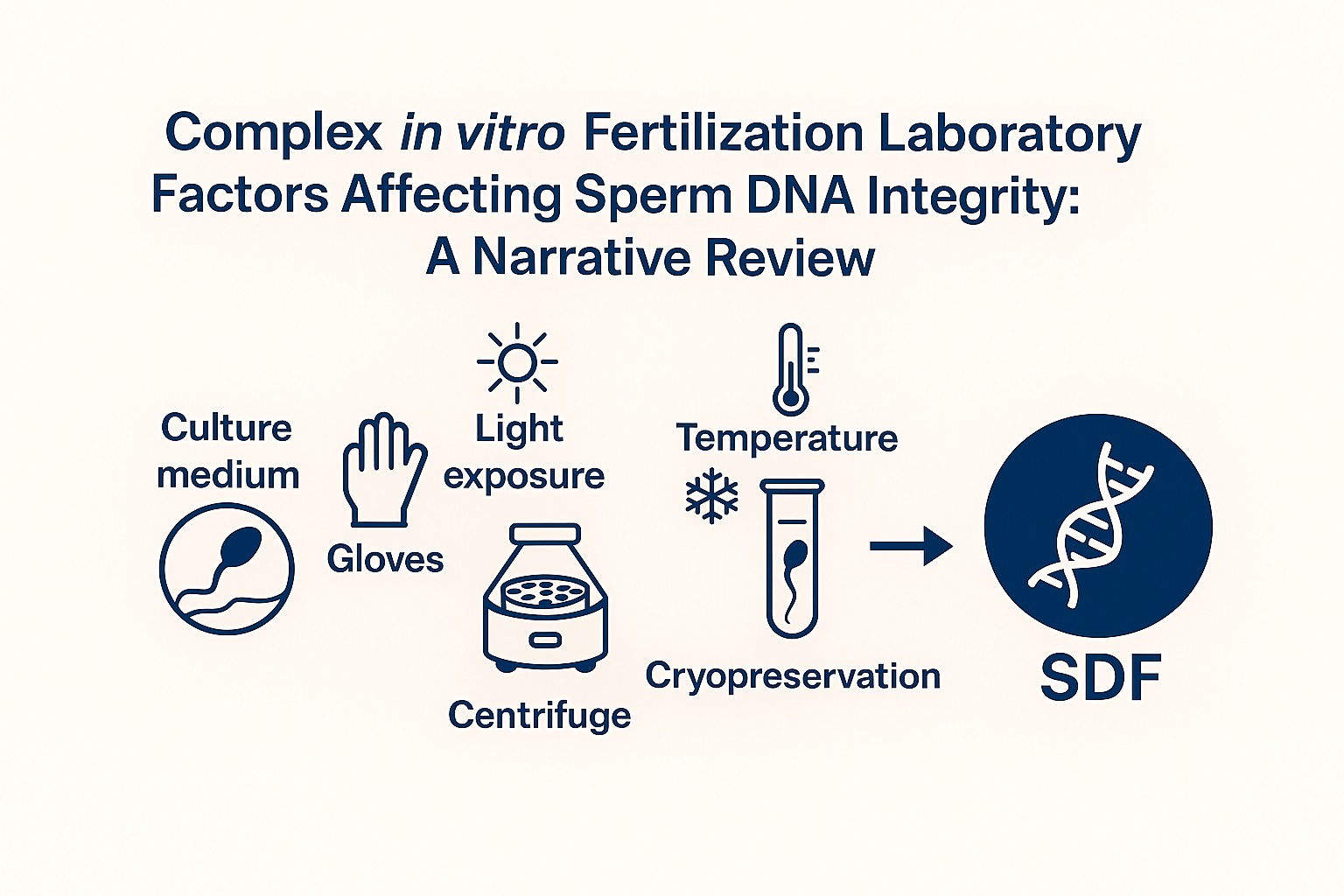
Sperm DNA fragmentation (SDF) is increasingly recognized as a key biomarker of male fertility, influencing natural conception and assisted reproduction clinical outcomes. Unlike conventional semen parameters, SDF directly reflects chromatin integrity and the sperm’s genetic potential. Mechanistically, oxidative stress and abortive apoptosis represent the main pathways leading to DNA damage. Laboratory practice, such as centrifugation, prolonged incubation, cryopreservation, and inappropriate temperature or light exposure can elevate reactive oxygen species and compromise DNA stability. Similarly, materials used in in vitro fertilization laboratories, including gloves, media additives, and storage containers may release toxic compounds that harm sperm DNA. While, certain surgical procedures, such as varicocelectomy, can improve sperm quality, others, including testicular sperm retrieval, pose risks of oxidative injury. This narrative review was conducted through a comprehensive literature search in PubMed, Scopus, and Google Scholar databases for studies published between 2000 and 2025. The keywords related to SDF, oxidative stress, and iatrogenic factors in assisted reproductive technologies were used for English-language studies. They were screened, and data were extracted based on methodological relevance and clinical significance. To mitigate iatrogenic DNA damage, best practices emphasize optimized handling protocols, antioxidant-enriched media, air quality control, and advanced sperm selection methods, such as microfluidics. This review focuses on complex factors and laboratory interventions that may inadvertently increase SDF, highlighting preventive strategies to preserve sperm DNA integrity and improve assisted reproductive technologies outcomes.
Keywords: Sperm, DNA fragmentation, Male infertility, Oxidative stress, Assisted reproductive technologies.
Type of Study: Review Article |
Subject:
Assisted Reproductive Technologies
Send email to the article author
| Rights and permissions | |
 |
This work is licensed under a Creative Commons Attribution-NonCommercial 4.0 International License. |