
International Journal of
Reproductive Biomedicine
Thu, Oct 22, 2026
[Archive]
Volume 24, Issue 7 (July 2026)
IJRM 2026, 24(7): 605-616 |
Back to browse issues page



Ethics code: CTRI/2024/02/063174


Download citation:
BibTeX | RIS | EndNote | Medlars | ProCite | Reference Manager | RefWorks
Send citation to:


BibTeX | RIS | EndNote | Medlars | ProCite | Reference Manager | RefWorks
Send citation to:
Kriplani A, Taneja A, Shankar Kamilya G, Ramani Devi T, Pawar A, Gupta T, et al . Oral dydrogesterone versus oral micronized progesterone: Interim analysis of a randomized controlled trial in pregnant women with threatened miscarriage. IJRM 2026; 24 (7) :605-616
URL: http://ijrm.ir/article-1-3775-en.html
URL: http://ijrm.ir/article-1-3775-en.html
Alka Kriplani1 

 , Ashima Taneja2 , Gouri Shankar Kamilya3 , Thirunavukkarasu Ramani Devi4 , Amol Pawar5 , Tanusree Gupta6 , Gayathri Karthik Nagesh7 , Shilpa Choudhary8 , Tapan Pattanaik9 , Monjori Mitra *10
1- Department of Obstetrics and Gynecology, Paras Hospitals, Gurugram, Haryana, India.
2- Department of Obstetrics and Gynecology, Dayanand Medical College & Hospital, Ludhiana, Punjab, India.
3- Department of Obstetrics and Gynecology, IPGME&R and SSKM Hospital, Kolkata, West Bengal, India.
4- Department of Obstetrics and Gynecology, Ramakrishna Medical Center LLP, Tiruchirappalli, Tamil Nadu, India.
5- Department of Obstetrics and Gynecology, Nowrosjee Wadia Maternity Hospital, Mumbai, Maharashtra, India.
6- Department of Gynecology and Obstetrics, Udyan Health Care Pvt. Ltd., Lucknow, Uttar Pradesh, India.
7- Department of Obstetrics and Gynecology, Manipal Hospital, Bengaluru, Karnataka, India.
8- Lifeline Medicare Hospital, Mumbai, Maharashtra, India.
9- Department of Obstetrics and Gynecology, Sum Ultimate Medicare Hospital, Bhubaneswar, Odisha, India.
10- Department of Pediatrics, Institute of Child Health, Kolkata, West Bengal, India. ,monjorimr@gmail.com
2- Department of Obstetrics and Gynecology, Dayanand Medical College & Hospital, Ludhiana, Punjab, India.
3- Department of Obstetrics and Gynecology, IPGME&R and SSKM Hospital, Kolkata, West Bengal, India.
4- Department of Obstetrics and Gynecology, Ramakrishna Medical Center LLP, Tiruchirappalli, Tamil Nadu, India.
5- Department of Obstetrics and Gynecology, Nowrosjee Wadia Maternity Hospital, Mumbai, Maharashtra, India.
6- Department of Gynecology and Obstetrics, Udyan Health Care Pvt. Ltd., Lucknow, Uttar Pradesh, India.
7- Department of Obstetrics and Gynecology, Manipal Hospital, Bengaluru, Karnataka, India.
8- Lifeline Medicare Hospital, Mumbai, Maharashtra, India.
9- Department of Obstetrics and Gynecology, Sum Ultimate Medicare Hospital, Bhubaneswar, Odisha, India.
10- Department of Pediatrics, Institute of Child Health, Kolkata, West Bengal, India. ,
Keywords: Threatened miscarriage, Dydrogesterone, Progesterone, Pregnancy complications, Randomized controlled trial.
Full-Text [PDF 439 kb]
(307 Downloads)
| Abstract (HTML) (419 Views)
Full-Text: (29 Views)
1. Introduction
Miscarriage or spontaneous loss of pregnancy before 24 wk of gestation might be experienced by one-fourth of women. In the absence of proper and timely intervention, about 15-20% of pregnancies might be terminated due to miscarriage (1). Symptoms of threatened abortion include vaginal bleeding with or without abdominal pain. Medical management of threatened miscarriage often includes supplementation with progestogens/progestins; however, the type and route of administration remain a subject of discussion (1, 2). A few progestogens/progestins studied in early pregnancy include micronized progesterone (MP; vaginal or oral), and oral dydrogesterone (DYD).
DYD (6-dehydro-9β, 10α-progesterone), a progestin, has unique structural features that facilitate high oral bioavailability and high selectivity, facilitating its use at comparatively lower doses than oral MP. Absence of androgenic or estrogenic effects on the fetus and lack of hindrance to endometrial secretions or placental progesterone formation are other salient attributes (3).
As discussed below, multiple systematic reviews and meta-analyses have provided comparative results to aid the choice of treatment for threatened miscarriage. It was shown that DYD resulted in a lower risk of miscarriage than natural progesterone (4). That the benefit of progestogens might be restricted to those with prior miscarriages has also been demonstrated (5). Comparative analysis among progestogens/progestins revealed that oral DYD had the lowest risk of miscarriage, followed by vaginal and oral MP (2). "In alignment with international guidelines, the Federation of Obstetric and Gynecological Societies of India stated that oral DYD is effective in reducing the incidence of miscarriages (3). Despite the above evidences, uncertainty prevails over the effectiveness and safety of alternative progestogens for threatened miscarriage (1). Earlier studies support vaginal MP or progestogens in women with a history of miscarriage (1, 5); however, there is a dearth of convincing results in primiparous women. A recent network meta-analysis concluded that ‘oral DYD was safe and better at reducing miscarriage than vaginal progesterone and placebo for women with first threatened miscarriage (6)". Our study aims to explore clinical outcomes, including immunomodulatory effects, upon treatment with oral DYD vs. oral MP in women with no history of recurrent miscarriage. To our knowledge, differences in immunomodulation between these treatment modalities have not been reported, although existing evidence supports a shift in maternal cytokine balance by these immunomodulators from pro-inflammatory toward anti-inflammatory bias to aid healthy pregnancy with successful parturition (7, 8).
The primary objective of our ongoing study is to compare miscarriage rate between oral DYD vs. oral MP in threatened miscarriage. Other objectives include comparison of ongoing pregnancy rate at 24 wk, live birth rate, incidence of treatment-emergent adverse events (TEAEs), treatment-induced change in levels of immunomodulation markers, time to symptom resolution, and delivery outcomes. A few of these have been addressed in this interim report.
2. Materials and Methods
2.1. Study design and settings
This investigator-initiated study is an open-label, randomized controlled trial that is being conducted from May 04, 2024, at 9 sites across India, namely, Paras hospitals (Gurugram, Haryana), IPGME&R and SSKM hospital (Kolkata, West Bengal), Ramakrishna Medical Center (Tiruchirappalli, Tamil Nadu), Dayanand Medical College & hospital (Ludhiana, Punjab), Nowrosjee Wadia Maternity hospital (Mumbai, Maharashtra), Manipal hospital (Bengaluru, Karnataka), Sum Ultimate Medicare hospital (Bhubaneswar, Odisha), Udyan Health Care Pvt. Ltd. (Lucknow, Uttar Pradesh), and Lifeline Medicare hospital (Mumbai, Maharashtra).
2.2. Participants
Pregnant women aged 20-39 yr with gestational age between 5 and 12 wk were eligible to participate if they were diagnosed with threatened miscarriage (vaginal bleeding and/or abdominal pain) in the first trimester, if viable pregnancy was confirmed, if body mass index (BMI) was ≥ 18 kg/m2 and ≤ 30 kg/m2, if medical history revealed euthyroidism or controlled hypothyroidism, and if presence of intrauterine gestational sac was evident on ultrasonography in case urine pregnancy test was first positive within 2 wk preceding enrollment.
Participants were excluded if they met any of the following criteria: an inevitable abortion; a history of recurrent pregnancy loss, defined as 2 or more consecutive spontaneous miscarriages; significant vaginal bleeding or severe abdominal pain requiring surgical management; ultrasonographic evidence of an intrauterine pregnancy with a crown-rump length inconsistent with the expected gestational age; absence of detectable fetal cardiac activity; a mean gestational sac diameter of 25 mm or greater without a visible fetal pole on ultrasound; or confirmation of an ectopic pregnancy or multiple pregnancy identified by the investigator, or the fetus was conceived with gonadotrophins or assisted reproductive technologies.
Other exclusion criteria, as mentioned in the published protocol of this study (9), are as follows:
Women were excluded if they had congenital or acquired abnormalities of the uterus, previous cervical amputation, or other clinically important anomalies of the reproductive tract. Participants with clinically significant submucosal uterine fibroids, as determined by the investigator, were also considered ineligible. Cases in which prior pregnancy loss was attributable to established fetal causes, including anembryonic pregnancy or confirmed fetal structural abnormalities, were excluded. In addition, women with recognized medical conditions associated with miscarriage, such as pre-existing diabetes mellitus, inadequately controlled thyroid disease before conception, current or previous malignancy, or significant psychiatric disorders, were not eligible for enrolment.
Further exclusion criteria included diagnosed sexually transmitted infections, treatment with enzyme-inducing medications (including selected anticonvulsants, antipsychotics, antidepressants, and anxiolytics), or the use of psychoactive substances before or during pregnancy. Women with endocervical polyps, active systemic infections (e.g., pneumonia, pyelonephritis, or septicemia), autoimmune disorders such as systemic lupus erythematosus, systemic sclerosis, or rheumatoid arthritis, coagulation disorders, or severe dysfunction of major organs including the heart, liver, lungs, or kidneys were also excluded. Additional reasons for exclusion comprised ongoing alcohol, tobacco, or other substance misuse, a previous history of chemotherapy or radiotherapy, hypersensitivity to DYD or oral MP, and the use of human chorionic gonadotropin, DYD, or MP within one month before study enrolment. Women who had participated in another clinical trial within the preceding 30 days or intended to enrol in another study during the trial period were also considered ineligible. Participants unwilling or unable to adhere to study procedures, including scheduled clinic visits and laboratory assessments, were excluded. Finally, the investigator could exclude or withdraw any participant whose clinical condition was considered incompatible with the study eligibility criteria, likely to compromise participant safety, interfere with protocol compliance, or hinder accurate interpretation of the study findings.
2.3. Treatment
Participants in the test arm are treated with oral DYD (Dydroboon® from Mankind Pharma Ltd., India) at an initial dose of 40 mg (stat) and subsequent doses of 10 mg 3 times a day. Participants in the reference arm are treated with oral MP at a dose of 200 mg 2 times a day. Participants who experienced miscarriage before 14 wk of gestation discontinued the treatment at the time of pregnancy loss. All other participants continued therapy until 1 wk after vaginal bleeding had completely resolved. If bleeding persisted, treatment was maintained until a maximum gestational age of 14 wk. In cases where bleeding recurred after treatment had been stopped, the attending physician could resume or extend therapy based on clinical judgment, with all treatment decisions and relevant clinical information documented accordingly.
2.4. Endpoints
The primary outcome of the study was the incidence of miscarriage < 20 weeks of gestation. Secondary outcomes included the ongoing pregnancy rate at 24 wk, changes in serum concentrations of cytokines (interferon gamma [IFN-γ], tumor necrosis factor alpha [TNF-α], interleukin-4 [IL-4], and interleukin-10 [IL-10]) measured from baseline to 14 wk using enzyme-linked immunosorbent assay according to the manufacturer's protocol, and the time required for complete resolution of clinical symptoms, including vaginal bleeding and/or abdominal pain.
Safety endpoints include assessment of TEAEs to be monitored throughout study participation, and changes in complete blood count, liver function, and kidney function evaluated at the end of 14 wk and 24-26 wk of gestation. Exploratory endpoints to be analyzed post-parturition include the following: additional maternal and neonatal outcomes evaluated included the live birth rate, mode of delivery, gestational age at delivery, neonatal birth weight, the need for resuscitation immediately after birth, the presence of congenital anomalies, and the occurrence of pre-eclampsia during pregnancy.
As part of this interim analysis, the primary endpoint was analyzed along with change in cytokine levels, time to symptom resolution, and incidence of TEAEs. Details of endpoints, clinical evaluations, and schedule of visits are available in the published protocol of this study (9). All investigations, including cytokine evaluations, are performed in a central laboratory. Anonymous data of participants (up to a maximum of 20 wk of gestation) collected in case report forms were analyzed by a qualified and trained biostatistician and included in this interim report.
2.5. Sample size
Sample size was calculated using the formula:

Where πs and πe are the true percent ‘success’ in the standard and experimental treatment group respectively, and

Φ-1 is the cumulative distribution function of a standardized normal deviate.
The calculation yielded a total of 304 participants (152 participants in each treatment arm) required in the entire study to detect a difference of 5% (10) in miscarriage rate between oral DYD vs. oral MP with a 5% level of significance, power of 80%, and non-inferiority margin of 15%, taking into account an anticipated dropout rate of 8% and stratified randomization. O'Brien Fleming approach was used to deduce the sample size for the interim report. Accordingly, a total of 116 participants (DYD, 62; MP, 54), who completed 20 wk of gestation, were included in this interim report. P < 0.001 was considered as significant.
2.6. Ethical Considerations
This ongoing study is being conducted in accordance with the Declaration of Helsinki, Good Clinical Practice guidelines as per the International Council for Harmonization (ICH) of technical requirements for pharmaceuticals for human use, and guidelines for clinical trials on pharmaceutical products in India as specified in the new drugs and clinical trials rules, 2019. The study was approved by the institutional ethics committees at all sites. The trial has been registered in the clinical trials registry-India (Code: CTRI/2024/02/063174; registered on February 26, 2024 and updated on April 27, 2026). All participants provided written informed consent prior to enrollment. The data identifying each study participant by name was kept confidential and was accessible only to the concerned study personnel and, if necessary, to the ethics committees. The participants were identified throughout and after the completion of the study by allotted unique numbers and were informed that their identity will not be revealed to anyone except to the abovementioned authorities.
2.7. Statistical Analysis
All data analyses were based on the ICH E9 document ‘Statistical Principles for Clinical Trials’ and done using Statistical Package for the Social Sciences (SPSS; IBM Corp., Armonk, NY, USA). Continuous variables were checked for normality using Shapiro-Wilk test. Comparisons of continuous variables were done using paired t test for within-group analysis and independent t test for between-group analysis. For skewed distribution, between-group comparisons were performed using Mann-Whitney U test. Categorical variables or proportions were compared using Chi-square test. P < 0.001 was considered statistically significant based on O'Brien Fleming approach.
3. Results
3.1. Baseline characteristics of participants
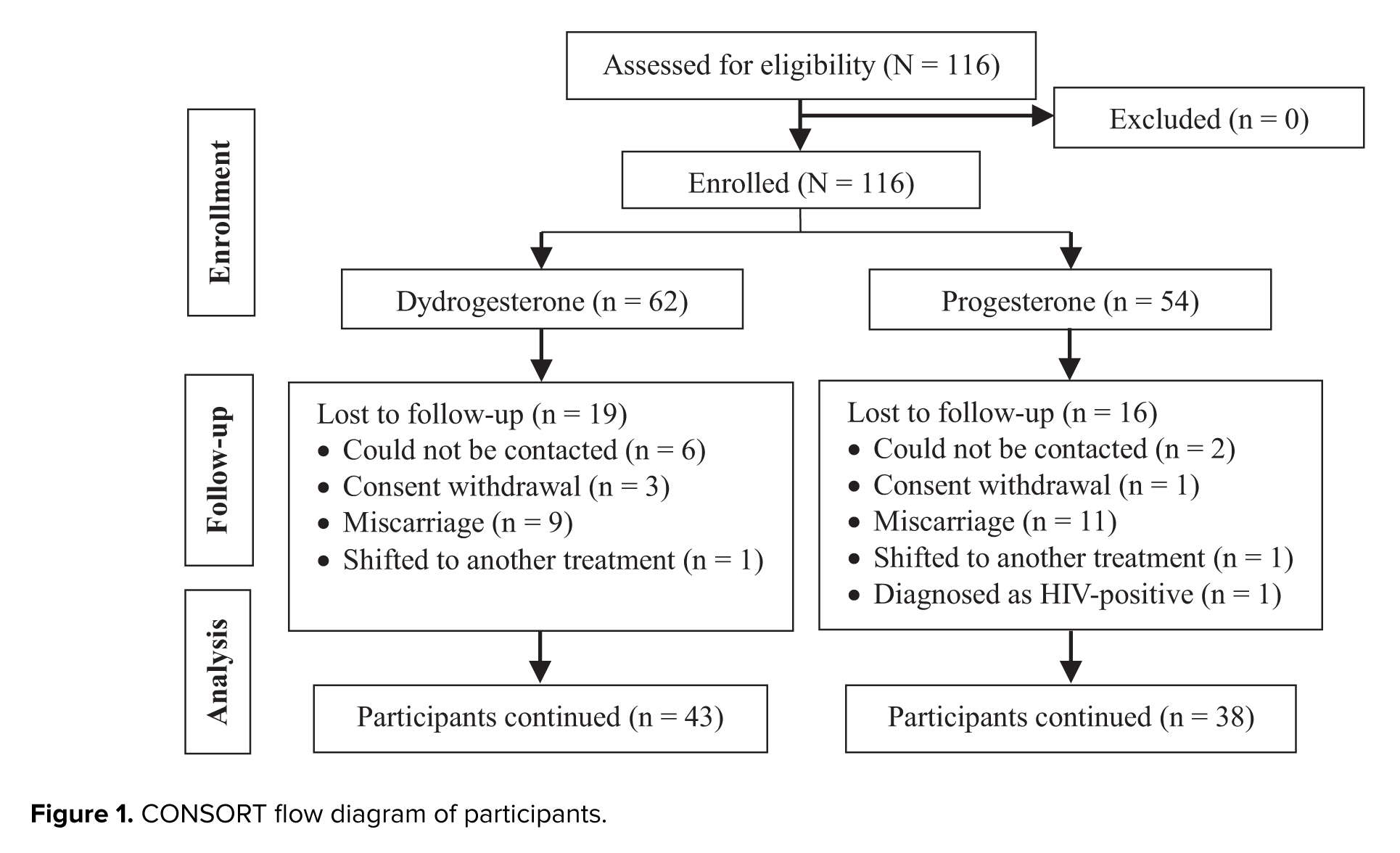
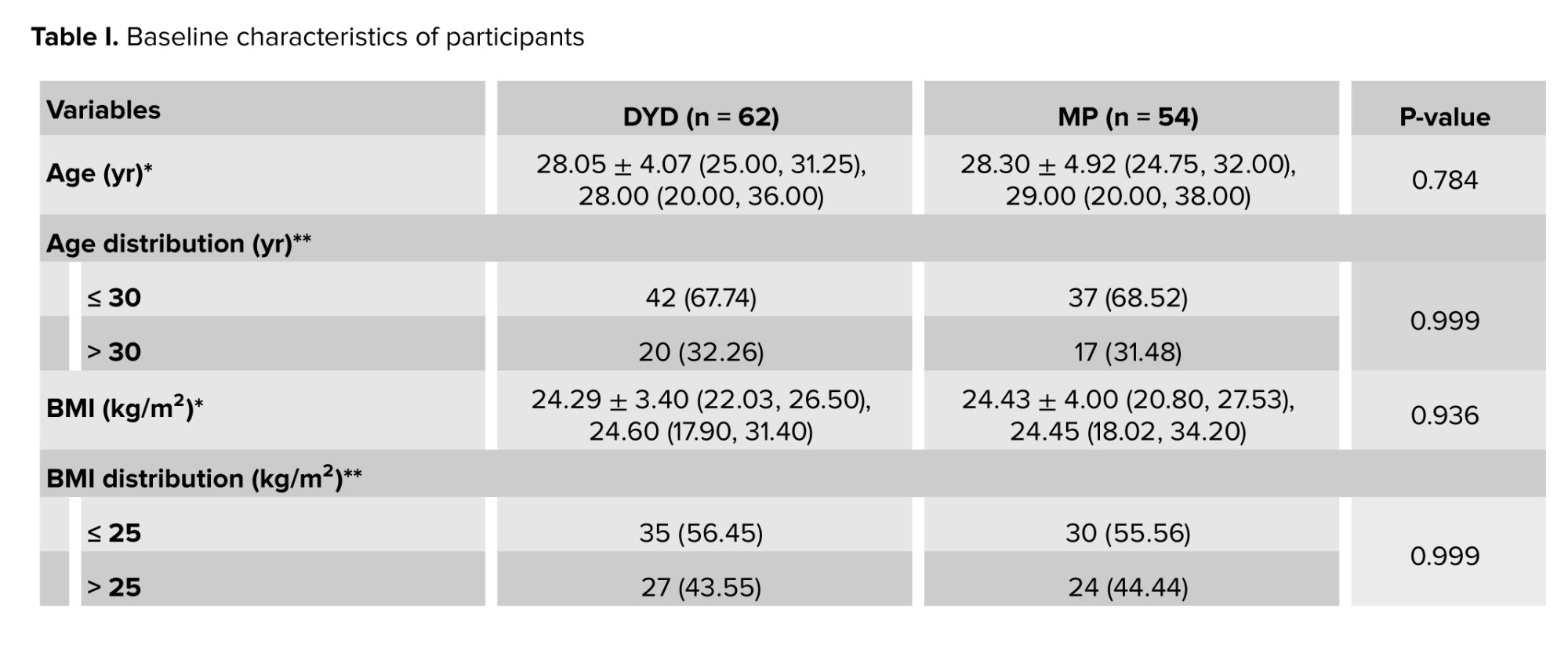
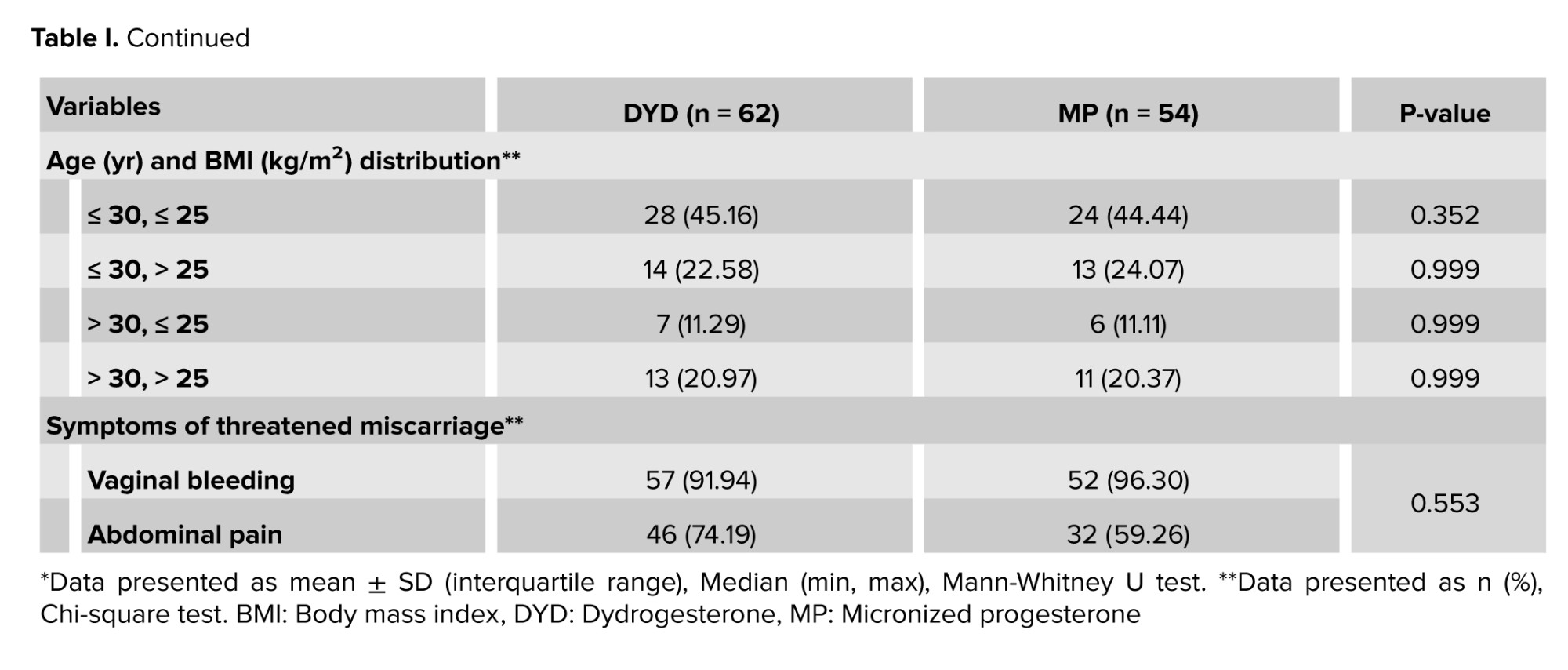
A total of 116 participants were screened, enrolled, and randomly assigned to receive oral DYD (62 participants) or oral MP (54 participants) between May 04, 2024 and February 28, 2025. The mean age was 28.05 yr in the DYD arm and 28.30 yr in the MP arm. Majority of the participants were ≤ 30 yr of age and had BMI ≤ 25 kg/m2. These and other baseline characteristics were comparable among participants from both treatment arms, as shown in table I. During the study, 19 participants from the DYD arm and 16 from the MP arm were lost to follow-up. Therefore, a total of 81 participants (DYD, 43; MP, 38) continued in the study (Figure 1).
A total of 116 participants were enrolled and randomized to 2 treatment arms: oral DYD (62 participants) and oral MP (54 participants). A total of 35 participants were lost to follow-up (DYD, 19; MP, 16). Therefore, 81 participants (DYD, 43; MP, 38) continued in the study.
3.2. Miscarriage rate
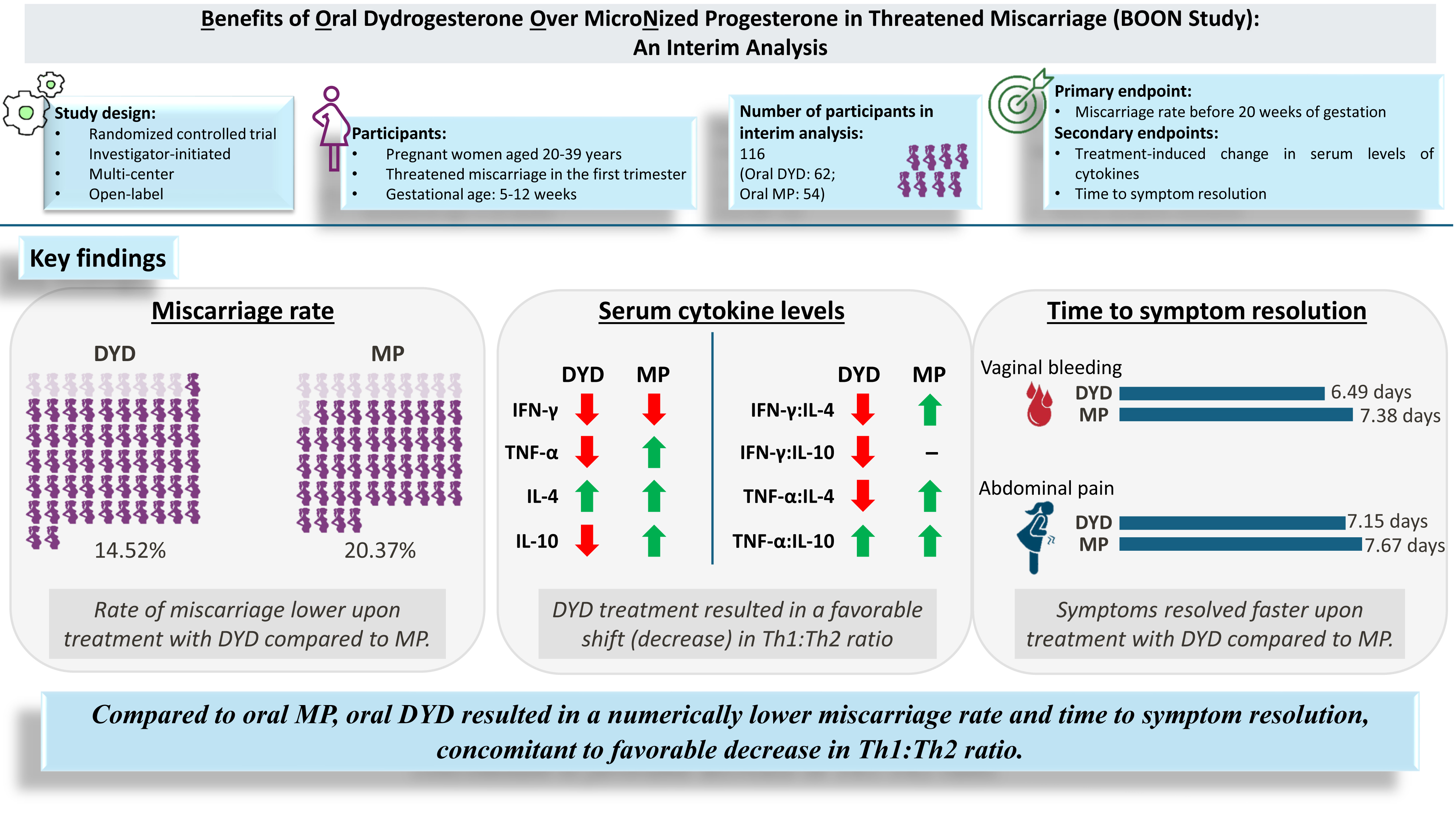
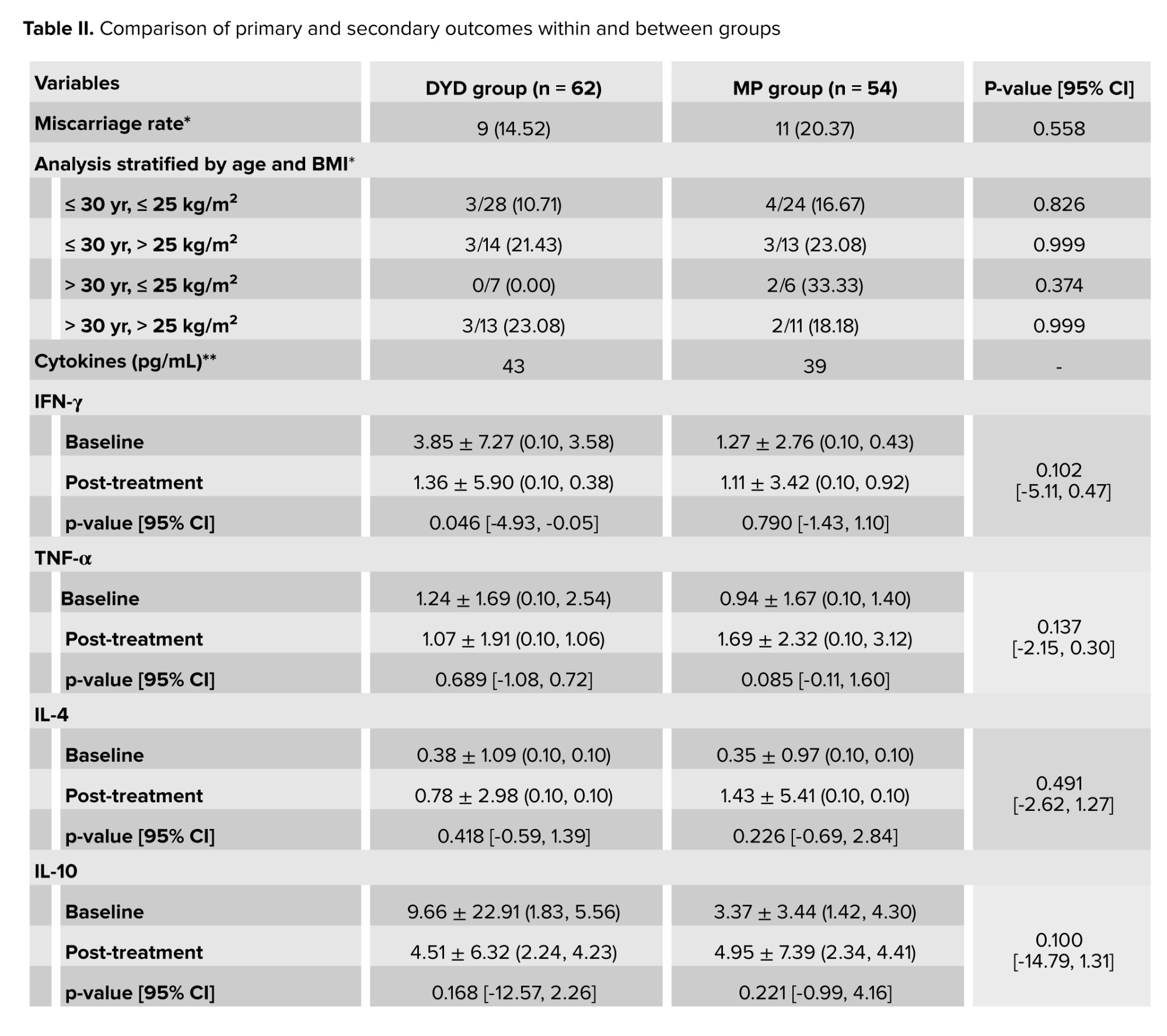
For the purpose of compiling the complete status of all participants, information on miscarriage/pregnancy continuation was obtained over a call for those who were lost to follow-up (DYD, 19; MP, 16). Data from participants who continued in the study and those who were lost to follow-up showed that 9 (14.52%) participants in the DYD arm and 11 (20.37%) in the MP arm miscarried before 20 wk of gestation. The miscarriage rate was statistically comparable between the treatment arms; however, the DYD arm had a lesser proportion of participants who miscarried. Analysis stratified by age and BMI of participants yielded comparable results between the treatment arms (Table II).
3.3. Serum levels of cytokines
It was noted that, on average, cytokine levels were very low in approximately 65% of participants for IFN-γ, 55% for TNF-α, 81% for IL-4, and 2% for IL-10. Nevertheless, for practical purposes, these participants were included in analysis along with others who continued in the study till the end of 14 wk (DYD, 43; MP, 39). In both treatment arms, the mean serum levels of IFN-γ decreased while IL-4 increased from baseline levels. The mean serum levels of TNF-α and IL-10 decreased in the DYD arm but increased in the MP arm. Although treatment-induced effects and inter-arm differences were not significant for any of the cytokines, a numerical decrease in the levels of pro-inflammatory cytokines IFN-γ and TNF-α and a numerical increase in the level of anti-inflammatory cytokine IL-4 was observed in the DYD arm. In contrast, the MP arm showed an overall numerical decrease in pro-inflammatory IFN-γ and a numerical increase in anti-inflammatory IL-4 and IL-10 levels (Table II).
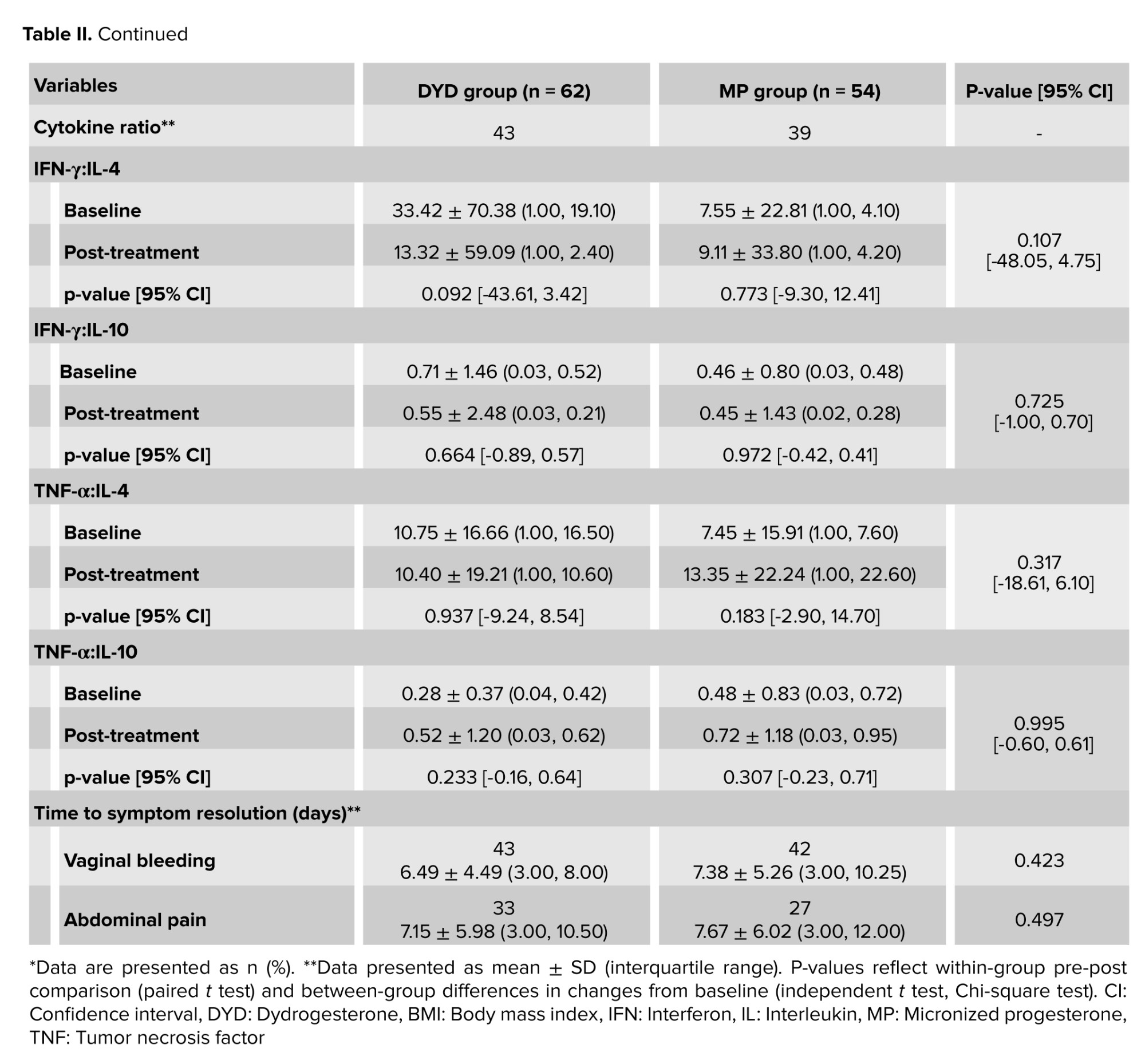
Since Th1:Th2 ratio is an important indicator of cytokine balance, the ratio of pro-inflammatory to anti-inflammatory cytokines was evaluated in both the possible pairs of cytokines. It was observed that there was a decrease in IFN-γ:IL-4, IFN-γ:IL-10, and TNF-α:IL-4 ratios but not in TNF-α:IL-10 in the DYD arm. In the MP arm, an increase was observed in IFN-γ:IL-4, TNF-α:IL-4, and TNF-α:IL-10 ratios (Table II). Although these outcomes were not statistically significant, participants in the DYD arm showed a favorable shift (decrease) in Th1:Th2 ratio upon treatment, while the same was not true for participants in the MP arm.
3.4. Time to symptom resolution
All participants who continued in the study reported resolution of symptoms of threatened miscarriage. For the evaluation of time to resolution, outliers with higher time to symptom resolution were removed from analysis. Accordingly, the mean time to resolution of vaginal bleeding was 6.49 days in the DYD arm and 7.38 days in the MP arm. Similarly, the mean time to resolution of abdominal pain was 7.15 days in the DYD arm and 7.67 days in the MP arm. Although not statistically significant, the mean time to symptom resolution was lower upon DYD treatment compared to MP (Table II).
4. Discussion
The current study is underway to test the efficacy and safety of DYD vs. MP, both administered orally. The study aims to enroll a total of 304 participants, of which 116 participants are included in the current interim report. Results from the interim analysis demonstrated that the miscarriage rate as well as the mean times to resolution of vaginal bleeding and abdominal pain were numerically lower when treated with DYD than with MP. Cytokine analysis showed that DYD treatment resulted in decrease of IFN-γ and TNF-α with a concomitant increase in IL-4 levels. On the contrary, MP treatment resulted in decrease of IFN-γ decreased and increase of IL-4 and IL-10. Considering Th1:Th2 ratio, numerical decreases in IFN-γ:IL-4, IFN-γ:IL-10, and TNF-α:IL-4 were evident with DYD but not with MP. This study also revealed that the study medications had good safety profile.
DYD has been shown to have beneficial effects over placebo/conventional treatment and comparable or better effects with respect to oral/vaginal MP (2, 10-13). Its role in immunomodulation during pregnancy has also been elucidated (7, 8, 7). Despite these reports, its use as a treatment modality in threatened miscarriage awaits approval and hence, requires further evidence (13). Treatment with oral DYD in the current study showed a miscarriage rate of 14.52% before 20 wk of gestation, which was statistically comparable to that with MP (20.37%), similar to an earlier report (14). Other studies on oral DYD reported miscarriage rates of 15.2% (10), 6.30% (8), and 7.29% (14). The success rate of miscarriage prevention till 20 wk of gestation in the current study was 85.48% upon treatment with oral DYD and 79.63% with oral MP. Corresponding rates reported earlier for ≥ 28 wk of gestation were 87.22% with oral DYD and 86.13% with oral MP (11). Success rates achieved with oral DYD have been reported as 93.1% for 20 wk of gestation (15) and 90.0% for ≥ 20 wk (16). Continued pregnancy rates reported with oral DYD were 93.8% (8) and 92.71% (14).
Although not significant, it was noteworthy that pro-inflammatory cytokines IFN-γ and TNF-α decreased and anti-inflammatory cytokine IL-4 increased upon treatment with DYD till 14 wk of gestation, with resultant decreases in IFN-γ:IL-4, TNF-α:IL-4 as well as IFN-γ:IL-10 ratios, that were not observed in the MP arm (7). Since the total duration of treatment among participants varied based on the time of enrollment, it could be one of the possible reasons why the current results did not reach statistical significance. The final analysis from this study is awaited to gain further insights into the immunological role of the study medications.
Studies by other researchers have shown that bleeding settled in at least 79% participants while pain settled in at least 82% participants (12). Another group reported bleeding resolution in at least 57% participants (13). Similar, less, or complete resolution of bleeding in at least 89% participants by day 4-10 was also reported (10). In the current study, all participants who continued beyond 20 wk of gestation reported complete resolution of symptoms. In a retrospective study, a median duration of 4.37 days for hemostasis establishment and 3.9 days for abdominal pain resolution were reported upon oral DYD treatment (14). In the current study, the median time to resolution in the DYD arm was 6.49 days for vaginal bleeding and 7.15 days for abdominal pain. Similar to an earlier study comparing oral DYD vs. oral MP (11), the current study reports no significant difference in the time to symptom resolution between the treatment arms, although participants treated with oral DYD reported resolution of vaginal bleeding earlier than those treated with oral MP. The mean time to resolution of abdominal pain was comparable between the treatment arms (17-20). Taken together, resolution of symptoms required a shorter duration of treatment with oral DYD compared to that with oral MP. This might have important clinical implications toward better patient management and relief.
4.1. Strengths and limitations
Overall, findings obtained from this study so far provides evidence toward beneficial effects of the test medication, oral DYD. To the best of our knowledge, this is the first randomized controlled trial aimed at analyzing key cytokines, IFN-γ, TNF-α, Il-4, and IL-10, in threatened miscarriage. This, being an interim analysis, is limited by a small number of participants in each treatment arm, based on which conclusions are drawn. This, along with heterogeneity in the small patient population, is perhaps a possible reason for the skewed distribution of data leading to high standard deviations. However, it does suggest that the treatment modalities being compared are effective and safe to prevent miscarriage within 20 wk of gestation. Furthermore, oral DYD favorably shifts the maternal cytokines toward an anti-inflammatory bias. Multiple factors that contribute to miscarriage prevention and immunomodulation might be just one of them. Therefore, a non-significant cytokine shift might not completely explain the numerical advantage in miscarriage prevention rate; however, it does provide convincing evidence in favor of oral DYD. Every effort will be made to complete the study as planned so that required analysis of all endpoints are done to enable deduction of appropriate conclusions.
5. Conclusion
Results from this interim analysis support the use of oral DYD in patients with threatened miscarriage. A numerical advantage in miscarriage prevention before 20 wk of gestation and time to symptom resolution were evident when treated with oral DYD vs. oral MP. Concomitant decrease in the ratio of pro-inflammatory to anti-inflammatory cytokine levels is indicative of a favorable shift in cytokine bias upon treatment with oral DYD. The final analysis is expected to validate the current findings and aid analysis of other endpoints such as continued pregnancy rate and delivery outcomes in the planned sample size of the study.
Data Availability
Data supporting the findings of this study are available upon reasonable request from the corresponding author.
Author Contributions
A. Kriplani is the principal investigator of this investigator-initiated study. G. Shankar Kamilya, T. Ramani Devi, A. Taneja, A. Pawar, G. Karthik Nagesh, and T. Pattanaik are co-investigators who, along with A. Kriplani, were involved in protocol preparation. A. Kriplani, G. Shankar Kamilya, T. Ramani Devi, A. Taneja, A. Pawar, G. Karthik Nagesh, T. Pattanaik, T. Gupta, S. Choudhary and T. Gupta participated in patient recruitment, treatment, and data collection. M. Mitra was involved in protocol preparation, study conduct, data analysis, and manuscript preparation. The manuscript has been read and approved by all authors. The order of authors is independent of individual contributions to the study.
Acknowledgments
The authors acknowledge the participating physicians and the patients. The authors also acknowledge Medclin Research Pvt. Ltd., West Bengal, India for study conduct, data analysis, and manuscript preparation. Artificial intelligence has not been used in any way for the preparation of this manuscript.
Conflict of Interest
The authors declare that there is no conflict of interest.
Miscarriage or spontaneous loss of pregnancy before 24 wk of gestation might be experienced by one-fourth of women. In the absence of proper and timely intervention, about 15-20% of pregnancies might be terminated due to miscarriage (1). Symptoms of threatened abortion include vaginal bleeding with or without abdominal pain. Medical management of threatened miscarriage often includes supplementation with progestogens/progestins; however, the type and route of administration remain a subject of discussion (1, 2). A few progestogens/progestins studied in early pregnancy include micronized progesterone (MP; vaginal or oral), and oral dydrogesterone (DYD).
DYD (6-dehydro-9β, 10α-progesterone), a progestin, has unique structural features that facilitate high oral bioavailability and high selectivity, facilitating its use at comparatively lower doses than oral MP. Absence of androgenic or estrogenic effects on the fetus and lack of hindrance to endometrial secretions or placental progesterone formation are other salient attributes (3).
As discussed below, multiple systematic reviews and meta-analyses have provided comparative results to aid the choice of treatment for threatened miscarriage. It was shown that DYD resulted in a lower risk of miscarriage than natural progesterone (4). That the benefit of progestogens might be restricted to those with prior miscarriages has also been demonstrated (5). Comparative analysis among progestogens/progestins revealed that oral DYD had the lowest risk of miscarriage, followed by vaginal and oral MP (2). "In alignment with international guidelines, the Federation of Obstetric and Gynecological Societies of India stated that oral DYD is effective in reducing the incidence of miscarriages (3). Despite the above evidences, uncertainty prevails over the effectiveness and safety of alternative progestogens for threatened miscarriage (1). Earlier studies support vaginal MP or progestogens in women with a history of miscarriage (1, 5); however, there is a dearth of convincing results in primiparous women. A recent network meta-analysis concluded that ‘oral DYD was safe and better at reducing miscarriage than vaginal progesterone and placebo for women with first threatened miscarriage (6)". Our study aims to explore clinical outcomes, including immunomodulatory effects, upon treatment with oral DYD vs. oral MP in women with no history of recurrent miscarriage. To our knowledge, differences in immunomodulation between these treatment modalities have not been reported, although existing evidence supports a shift in maternal cytokine balance by these immunomodulators from pro-inflammatory toward anti-inflammatory bias to aid healthy pregnancy with successful parturition (7, 8).
The primary objective of our ongoing study is to compare miscarriage rate between oral DYD vs. oral MP in threatened miscarriage. Other objectives include comparison of ongoing pregnancy rate at 24 wk, live birth rate, incidence of treatment-emergent adverse events (TEAEs), treatment-induced change in levels of immunomodulation markers, time to symptom resolution, and delivery outcomes. A few of these have been addressed in this interim report.
2. Materials and Methods
2.1. Study design and settings
This investigator-initiated study is an open-label, randomized controlled trial that is being conducted from May 04, 2024, at 9 sites across India, namely, Paras hospitals (Gurugram, Haryana), IPGME&R and SSKM hospital (Kolkata, West Bengal), Ramakrishna Medical Center (Tiruchirappalli, Tamil Nadu), Dayanand Medical College & hospital (Ludhiana, Punjab), Nowrosjee Wadia Maternity hospital (Mumbai, Maharashtra), Manipal hospital (Bengaluru, Karnataka), Sum Ultimate Medicare hospital (Bhubaneswar, Odisha), Udyan Health Care Pvt. Ltd. (Lucknow, Uttar Pradesh), and Lifeline Medicare hospital (Mumbai, Maharashtra).
2.2. Participants
Pregnant women aged 20-39 yr with gestational age between 5 and 12 wk were eligible to participate if they were diagnosed with threatened miscarriage (vaginal bleeding and/or abdominal pain) in the first trimester, if viable pregnancy was confirmed, if body mass index (BMI) was ≥ 18 kg/m2 and ≤ 30 kg/m2, if medical history revealed euthyroidism or controlled hypothyroidism, and if presence of intrauterine gestational sac was evident on ultrasonography in case urine pregnancy test was first positive within 2 wk preceding enrollment.
Participants were excluded if they met any of the following criteria: an inevitable abortion; a history of recurrent pregnancy loss, defined as 2 or more consecutive spontaneous miscarriages; significant vaginal bleeding or severe abdominal pain requiring surgical management; ultrasonographic evidence of an intrauterine pregnancy with a crown-rump length inconsistent with the expected gestational age; absence of detectable fetal cardiac activity; a mean gestational sac diameter of 25 mm or greater without a visible fetal pole on ultrasound; or confirmation of an ectopic pregnancy or multiple pregnancy identified by the investigator, or the fetus was conceived with gonadotrophins or assisted reproductive technologies.
Other exclusion criteria, as mentioned in the published protocol of this study (9), are as follows:
Women were excluded if they had congenital or acquired abnormalities of the uterus, previous cervical amputation, or other clinically important anomalies of the reproductive tract. Participants with clinically significant submucosal uterine fibroids, as determined by the investigator, were also considered ineligible. Cases in which prior pregnancy loss was attributable to established fetal causes, including anembryonic pregnancy or confirmed fetal structural abnormalities, were excluded. In addition, women with recognized medical conditions associated with miscarriage, such as pre-existing diabetes mellitus, inadequately controlled thyroid disease before conception, current or previous malignancy, or significant psychiatric disorders, were not eligible for enrolment.
Further exclusion criteria included diagnosed sexually transmitted infections, treatment with enzyme-inducing medications (including selected anticonvulsants, antipsychotics, antidepressants, and anxiolytics), or the use of psychoactive substances before or during pregnancy. Women with endocervical polyps, active systemic infections (e.g., pneumonia, pyelonephritis, or septicemia), autoimmune disorders such as systemic lupus erythematosus, systemic sclerosis, or rheumatoid arthritis, coagulation disorders, or severe dysfunction of major organs including the heart, liver, lungs, or kidneys were also excluded. Additional reasons for exclusion comprised ongoing alcohol, tobacco, or other substance misuse, a previous history of chemotherapy or radiotherapy, hypersensitivity to DYD or oral MP, and the use of human chorionic gonadotropin, DYD, or MP within one month before study enrolment. Women who had participated in another clinical trial within the preceding 30 days or intended to enrol in another study during the trial period were also considered ineligible. Participants unwilling or unable to adhere to study procedures, including scheduled clinic visits and laboratory assessments, were excluded. Finally, the investigator could exclude or withdraw any participant whose clinical condition was considered incompatible with the study eligibility criteria, likely to compromise participant safety, interfere with protocol compliance, or hinder accurate interpretation of the study findings.
2.3. Treatment
Participants in the test arm are treated with oral DYD (Dydroboon® from Mankind Pharma Ltd., India) at an initial dose of 40 mg (stat) and subsequent doses of 10 mg 3 times a day. Participants in the reference arm are treated with oral MP at a dose of 200 mg 2 times a day. Participants who experienced miscarriage before 14 wk of gestation discontinued the treatment at the time of pregnancy loss. All other participants continued therapy until 1 wk after vaginal bleeding had completely resolved. If bleeding persisted, treatment was maintained until a maximum gestational age of 14 wk. In cases where bleeding recurred after treatment had been stopped, the attending physician could resume or extend therapy based on clinical judgment, with all treatment decisions and relevant clinical information documented accordingly.
2.4. Endpoints
The primary outcome of the study was the incidence of miscarriage < 20 weeks of gestation. Secondary outcomes included the ongoing pregnancy rate at 24 wk, changes in serum concentrations of cytokines (interferon gamma [IFN-γ], tumor necrosis factor alpha [TNF-α], interleukin-4 [IL-4], and interleukin-10 [IL-10]) measured from baseline to 14 wk using enzyme-linked immunosorbent assay according to the manufacturer's protocol, and the time required for complete resolution of clinical symptoms, including vaginal bleeding and/or abdominal pain.
Safety endpoints include assessment of TEAEs to be monitored throughout study participation, and changes in complete blood count, liver function, and kidney function evaluated at the end of 14 wk and 24-26 wk of gestation. Exploratory endpoints to be analyzed post-parturition include the following: additional maternal and neonatal outcomes evaluated included the live birth rate, mode of delivery, gestational age at delivery, neonatal birth weight, the need for resuscitation immediately after birth, the presence of congenital anomalies, and the occurrence of pre-eclampsia during pregnancy.
As part of this interim analysis, the primary endpoint was analyzed along with change in cytokine levels, time to symptom resolution, and incidence of TEAEs. Details of endpoints, clinical evaluations, and schedule of visits are available in the published protocol of this study (9). All investigations, including cytokine evaluations, are performed in a central laboratory. Anonymous data of participants (up to a maximum of 20 wk of gestation) collected in case report forms were analyzed by a qualified and trained biostatistician and included in this interim report.
2.5. Sample size
Sample size was calculated using the formula:
Where πs and πe are the true percent ‘success’ in the standard and experimental treatment group respectively, and
Φ-1 is the cumulative distribution function of a standardized normal deviate.
The calculation yielded a total of 304 participants (152 participants in each treatment arm) required in the entire study to detect a difference of 5% (10) in miscarriage rate between oral DYD vs. oral MP with a 5% level of significance, power of 80%, and non-inferiority margin of 15%, taking into account an anticipated dropout rate of 8% and stratified randomization. O'Brien Fleming approach was used to deduce the sample size for the interim report. Accordingly, a total of 116 participants (DYD, 62; MP, 54), who completed 20 wk of gestation, were included in this interim report. P < 0.001 was considered as significant.
2.6. Ethical Considerations
This ongoing study is being conducted in accordance with the Declaration of Helsinki, Good Clinical Practice guidelines as per the International Council for Harmonization (ICH) of technical requirements for pharmaceuticals for human use, and guidelines for clinical trials on pharmaceutical products in India as specified in the new drugs and clinical trials rules, 2019. The study was approved by the institutional ethics committees at all sites. The trial has been registered in the clinical trials registry-India (Code: CTRI/2024/02/063174; registered on February 26, 2024 and updated on April 27, 2026). All participants provided written informed consent prior to enrollment. The data identifying each study participant by name was kept confidential and was accessible only to the concerned study personnel and, if necessary, to the ethics committees. The participants were identified throughout and after the completion of the study by allotted unique numbers and were informed that their identity will not be revealed to anyone except to the abovementioned authorities.
2.7. Statistical Analysis
All data analyses were based on the ICH E9 document ‘Statistical Principles for Clinical Trials’ and done using Statistical Package for the Social Sciences (SPSS; IBM Corp., Armonk, NY, USA). Continuous variables were checked for normality using Shapiro-Wilk test. Comparisons of continuous variables were done using paired t test for within-group analysis and independent t test for between-group analysis. For skewed distribution, between-group comparisons were performed using Mann-Whitney U test. Categorical variables or proportions were compared using Chi-square test. P < 0.001 was considered statistically significant based on O'Brien Fleming approach.
3. Results
3.1. Baseline characteristics of participants
A total of 116 participants were screened, enrolled, and randomly assigned to receive oral DYD (62 participants) or oral MP (54 participants) between May 04, 2024 and February 28, 2025. The mean age was 28.05 yr in the DYD arm and 28.30 yr in the MP arm. Majority of the participants were ≤ 30 yr of age and had BMI ≤ 25 kg/m2. These and other baseline characteristics were comparable among participants from both treatment arms, as shown in table I. During the study, 19 participants from the DYD arm and 16 from the MP arm were lost to follow-up. Therefore, a total of 81 participants (DYD, 43; MP, 38) continued in the study (Figure 1).
A total of 116 participants were enrolled and randomized to 2 treatment arms: oral DYD (62 participants) and oral MP (54 participants). A total of 35 participants were lost to follow-up (DYD, 19; MP, 16). Therefore, 81 participants (DYD, 43; MP, 38) continued in the study.
3.2. Miscarriage rate
For the purpose of compiling the complete status of all participants, information on miscarriage/pregnancy continuation was obtained over a call for those who were lost to follow-up (DYD, 19; MP, 16). Data from participants who continued in the study and those who were lost to follow-up showed that 9 (14.52%) participants in the DYD arm and 11 (20.37%) in the MP arm miscarried before 20 wk of gestation. The miscarriage rate was statistically comparable between the treatment arms; however, the DYD arm had a lesser proportion of participants who miscarried. Analysis stratified by age and BMI of participants yielded comparable results between the treatment arms (Table II).
3.3. Serum levels of cytokines
It was noted that, on average, cytokine levels were very low in approximately 65% of participants for IFN-γ, 55% for TNF-α, 81% for IL-4, and 2% for IL-10. Nevertheless, for practical purposes, these participants were included in analysis along with others who continued in the study till the end of 14 wk (DYD, 43; MP, 39). In both treatment arms, the mean serum levels of IFN-γ decreased while IL-4 increased from baseline levels. The mean serum levels of TNF-α and IL-10 decreased in the DYD arm but increased in the MP arm. Although treatment-induced effects and inter-arm differences were not significant for any of the cytokines, a numerical decrease in the levels of pro-inflammatory cytokines IFN-γ and TNF-α and a numerical increase in the level of anti-inflammatory cytokine IL-4 was observed in the DYD arm. In contrast, the MP arm showed an overall numerical decrease in pro-inflammatory IFN-γ and a numerical increase in anti-inflammatory IL-4 and IL-10 levels (Table II).
Since Th1:Th2 ratio is an important indicator of cytokine balance, the ratio of pro-inflammatory to anti-inflammatory cytokines was evaluated in both the possible pairs of cytokines. It was observed that there was a decrease in IFN-γ:IL-4, IFN-γ:IL-10, and TNF-α:IL-4 ratios but not in TNF-α:IL-10 in the DYD arm. In the MP arm, an increase was observed in IFN-γ:IL-4, TNF-α:IL-4, and TNF-α:IL-10 ratios (Table II). Although these outcomes were not statistically significant, participants in the DYD arm showed a favorable shift (decrease) in Th1:Th2 ratio upon treatment, while the same was not true for participants in the MP arm.
3.4. Time to symptom resolution
All participants who continued in the study reported resolution of symptoms of threatened miscarriage. For the evaluation of time to resolution, outliers with higher time to symptom resolution were removed from analysis. Accordingly, the mean time to resolution of vaginal bleeding was 6.49 days in the DYD arm and 7.38 days in the MP arm. Similarly, the mean time to resolution of abdominal pain was 7.15 days in the DYD arm and 7.67 days in the MP arm. Although not statistically significant, the mean time to symptom resolution was lower upon DYD treatment compared to MP (Table II).
4. Discussion
The current study is underway to test the efficacy and safety of DYD vs. MP, both administered orally. The study aims to enroll a total of 304 participants, of which 116 participants are included in the current interim report. Results from the interim analysis demonstrated that the miscarriage rate as well as the mean times to resolution of vaginal bleeding and abdominal pain were numerically lower when treated with DYD than with MP. Cytokine analysis showed that DYD treatment resulted in decrease of IFN-γ and TNF-α with a concomitant increase in IL-4 levels. On the contrary, MP treatment resulted in decrease of IFN-γ decreased and increase of IL-4 and IL-10. Considering Th1:Th2 ratio, numerical decreases in IFN-γ:IL-4, IFN-γ:IL-10, and TNF-α:IL-4 were evident with DYD but not with MP. This study also revealed that the study medications had good safety profile.
DYD has been shown to have beneficial effects over placebo/conventional treatment and comparable or better effects with respect to oral/vaginal MP (2, 10-13). Its role in immunomodulation during pregnancy has also been elucidated (7, 8, 7). Despite these reports, its use as a treatment modality in threatened miscarriage awaits approval and hence, requires further evidence (13). Treatment with oral DYD in the current study showed a miscarriage rate of 14.52% before 20 wk of gestation, which was statistically comparable to that with MP (20.37%), similar to an earlier report (14). Other studies on oral DYD reported miscarriage rates of 15.2% (10), 6.30% (8), and 7.29% (14). The success rate of miscarriage prevention till 20 wk of gestation in the current study was 85.48% upon treatment with oral DYD and 79.63% with oral MP. Corresponding rates reported earlier for ≥ 28 wk of gestation were 87.22% with oral DYD and 86.13% with oral MP (11). Success rates achieved with oral DYD have been reported as 93.1% for 20 wk of gestation (15) and 90.0% for ≥ 20 wk (16). Continued pregnancy rates reported with oral DYD were 93.8% (8) and 92.71% (14).
Although not significant, it was noteworthy that pro-inflammatory cytokines IFN-γ and TNF-α decreased and anti-inflammatory cytokine IL-4 increased upon treatment with DYD till 14 wk of gestation, with resultant decreases in IFN-γ:IL-4, TNF-α:IL-4 as well as IFN-γ:IL-10 ratios, that were not observed in the MP arm (7). Since the total duration of treatment among participants varied based on the time of enrollment, it could be one of the possible reasons why the current results did not reach statistical significance. The final analysis from this study is awaited to gain further insights into the immunological role of the study medications.
Studies by other researchers have shown that bleeding settled in at least 79% participants while pain settled in at least 82% participants (12). Another group reported bleeding resolution in at least 57% participants (13). Similar, less, or complete resolution of bleeding in at least 89% participants by day 4-10 was also reported (10). In the current study, all participants who continued beyond 20 wk of gestation reported complete resolution of symptoms. In a retrospective study, a median duration of 4.37 days for hemostasis establishment and 3.9 days for abdominal pain resolution were reported upon oral DYD treatment (14). In the current study, the median time to resolution in the DYD arm was 6.49 days for vaginal bleeding and 7.15 days for abdominal pain. Similar to an earlier study comparing oral DYD vs. oral MP (11), the current study reports no significant difference in the time to symptom resolution between the treatment arms, although participants treated with oral DYD reported resolution of vaginal bleeding earlier than those treated with oral MP. The mean time to resolution of abdominal pain was comparable between the treatment arms (17-20). Taken together, resolution of symptoms required a shorter duration of treatment with oral DYD compared to that with oral MP. This might have important clinical implications toward better patient management and relief.
4.1. Strengths and limitations
Overall, findings obtained from this study so far provides evidence toward beneficial effects of the test medication, oral DYD. To the best of our knowledge, this is the first randomized controlled trial aimed at analyzing key cytokines, IFN-γ, TNF-α, Il-4, and IL-10, in threatened miscarriage. This, being an interim analysis, is limited by a small number of participants in each treatment arm, based on which conclusions are drawn. This, along with heterogeneity in the small patient population, is perhaps a possible reason for the skewed distribution of data leading to high standard deviations. However, it does suggest that the treatment modalities being compared are effective and safe to prevent miscarriage within 20 wk of gestation. Furthermore, oral DYD favorably shifts the maternal cytokines toward an anti-inflammatory bias. Multiple factors that contribute to miscarriage prevention and immunomodulation might be just one of them. Therefore, a non-significant cytokine shift might not completely explain the numerical advantage in miscarriage prevention rate; however, it does provide convincing evidence in favor of oral DYD. Every effort will be made to complete the study as planned so that required analysis of all endpoints are done to enable deduction of appropriate conclusions.
5. Conclusion
Results from this interim analysis support the use of oral DYD in patients with threatened miscarriage. A numerical advantage in miscarriage prevention before 20 wk of gestation and time to symptom resolution were evident when treated with oral DYD vs. oral MP. Concomitant decrease in the ratio of pro-inflammatory to anti-inflammatory cytokine levels is indicative of a favorable shift in cytokine bias upon treatment with oral DYD. The final analysis is expected to validate the current findings and aid analysis of other endpoints such as continued pregnancy rate and delivery outcomes in the planned sample size of the study.
Data Availability
Data supporting the findings of this study are available upon reasonable request from the corresponding author.
Author Contributions
A. Kriplani is the principal investigator of this investigator-initiated study. G. Shankar Kamilya, T. Ramani Devi, A. Taneja, A. Pawar, G. Karthik Nagesh, and T. Pattanaik are co-investigators who, along with A. Kriplani, were involved in protocol preparation. A. Kriplani, G. Shankar Kamilya, T. Ramani Devi, A. Taneja, A. Pawar, G. Karthik Nagesh, T. Pattanaik, T. Gupta, S. Choudhary and T. Gupta participated in patient recruitment, treatment, and data collection. M. Mitra was involved in protocol preparation, study conduct, data analysis, and manuscript preparation. The manuscript has been read and approved by all authors. The order of authors is independent of individual contributions to the study.
Acknowledgments
The authors acknowledge the participating physicians and the patients. The authors also acknowledge Medclin Research Pvt. Ltd., West Bengal, India for study conduct, data analysis, and manuscript preparation. Artificial intelligence has not been used in any way for the preparation of this manuscript.
Conflict of Interest
The authors declare that there is no conflict of interest.
Type of Study: Original Article |
Subject:
Reproductive Biology
Send email to the article author
| Rights and permissions | |
 |
This work is licensed under a Creative Commons Attribution-NonCommercial 4.0 International License. |