International Journal of
Reproductive Biomedicine
Mon, Oct 19, 2026
[Archive]
Volume 24, Issue 8 (August 2026)
IJRM 2026, 24(8): 675-686 |
Back to browse issues page



Ethics code: IR.MUBABOL.HRI.REC.1402.087


Download citation:
BibTeX | RIS | EndNote | Medlars | ProCite | Reference Manager | RefWorks
Send citation to:


BibTeX | RIS | EndNote | Medlars | ProCite | Reference Manager | RefWorks
Send citation to:
Esmaeilzadeh S, Agajani Delavar M, Mirabi P. Assessing fertility-related quality of life and psychological distress among infertile women: A cross-sectional study. IJRM 2026; 24 (8) :675-686
URL: http://ijrm.ir/article-1-3792-en.html
URL: http://ijrm.ir/article-1-3792-en.html


1- Infertility and Reproductive Health Research Center, Health Research Institute, Babol University of Medical Sciences, Babol, Iran.
2- Infertility and Reproductive Health Research Center, Health Research Institute, Babol University of Medical Sciences, Babol, Iran. ,parvaneh_mirabi@yahoo.com; P.mirabi@mubabol.ac.ir
2- Infertility and Reproductive Health Research Center, Health Research Institute, Babol University of Medical Sciences, Babol, Iran. ,
Keywords: Infertility, Quality of life, Adaptation, Psychological distress, Resilience, Mental health.
Full-Text [PDF 407 kb]
(209 Downloads)
| Abstract (HTML) (272 Views)
2.5. Outcome measurement and study variables
Primary outcome: the primary outcome of this study was FertiQoL, measured by the total FertiQoL score. This served as the dependent variable for the predictive model.
Secondary outcomes included psychological distress, assessed via the GHQ-28, and other FertiQoL domain scores (emotional, mind-body, relational, social, environment, and tolerability).
Full-Text: (37 Views)
1. Introduction
Infertility is defined as the inability to achieve pregnancy after 12 months or more of regular, unprotected sexual intercourse, or after 6 months in women over the age of 35. The World Health Organization recognizes infertility as a disease of the reproductive system (1). Globally, infertility affects millions of couples, including an estimated 18.3% of the Iranian population, with nearly one-fourth experiencing primary infertility (2, 3). For many, especially women, the experience of infertility brings profound emotional, psychological, and social burdens (4).
Quality of life (QOL) is a broad concept encompassing physical, psychological, and social dimensions of an individual's well-being and daily functioning (5). In the context of infertility, however, general QOL instruments often fail to capture the specific stressors and emotional challenges associated with reproductive failure (6). This limitation led to the development of fertility-related quality of life (FertiQoL) measures, which assess how infertility affects emotional health, relational dynamics, physical well-being, and social functioning in a nuanced and relevant manner (7). While tools like FertiQoL offer a tailored assessment of infertility’s impact, they primarily focus on domain-specific outcomes and may not fully capture broader psychological distress, such as clinical symptoms of anxiety, depression, or somatization. In contrast, general psychological screening tools like the general health questionnaire (GHQ-28) assess a broader spectrum of mental health indicators and are widely used in both clinical and community populations (7, 8). Assessing both FertiQoL and general psychological well-being offers a more comprehensive understanding of infertile women’s health, particularly in cultures where fertility holds significant personal and societal value.
Despite a growing number of studies using either FertiQoL or GHQ tools, there is limited research examining their combined use to identify how broader psychological symptoms relate to fertility-specific QOL. Most studies have focused either on intervention outcomes or assisted reproductive technology-specific populations such as in vitro fertilization recipients, with fewer addressing infertile women at the pre-treatment stage, who may face uncertainty, distress, and social stigma (8-10).
In many settings where reproductive health is a public policy priority and cultural expectations strongly emphasize motherhood, understanding the psychosocial challenges faced by women initiating infertility treatment is crucial. This study addresses a gap in the literature by exploring the relationship between FertiQoL and psychological distress among infertile women prior to initiating assisted reproductive technology. By using both the FertiQoL and GHQ-28 tools, we aim to identify key predictors of impaired well-being to inform supportive interventions early in the care process.
A previous version of this work has been uploaded to the preprint server ResearchSquare and will be referenced upon official publication (DOI: 10.21203/rs.3.rs-6873951/v).
2. Materials and Methods
2.1. Study design and participants
In this cross-sectional study, 350 infertile women who referred to Fateme Zahra Infertility Center, Babol, Iran from October 2023-June 2024 were selected by convenience sampling. Participants completed 2 questionnaires (FertiQoL and GHQ-28) before receiving any form of infertility treatment. (e.g., ovulation induction, intrauterine insemination, or in vitro fertilization) were invited to participate.
2.2. Eligibility criteria
The inclusion criteria were a diagnosis of infertility established by a gynecologist at the center; being in the initial evaluation stage and enrolled for potential infertility treatment at the center; and the ability to read and write in Persian and provide voluntary informed consent.
Participants were excluded if they had a clinician-documented history in their medical record of a severe psychiatric condition such as a psychotic disorder (e.g., schizophrenia), bipolar disorder, or active substance use disorder; reported experiencing a major stressful life event within the 3 months prior to study enrollment, as it was considered a potential confounder. This could confound the assessment of infertility-related distress; or presented with any condition (e.g., acute illness, cognitive impairment, or language barrier) that, in the judgment of the research team, would impede their ability to understand or complete the study questionnaires.
2.3. Sample size
A total of 425 infertile women were approached, of whom 350 consented to participate and completed the study questionnaires. This sample size was determined based on the primary analytical objectives of the study, namely correlation and multivariable regression analyses. According to Cohen's recommendations, detection of a small-to-moderate correlation (r = 0.20) with a 2-sided α level of 0.05 and 80% power requires approximately 194 participants. In addition, for multiple linear regression, Green's guideline (N ≥ 50 + 8 m, where m is the number of predictor variables) indicates that a substantially smaller sample would be sufficient for the number of predictors included in the model. Therefore, the final sample of 350 participants exceeded the minimum required sample size, ensuring adequate statistical power, stable parameter estimation, and increased precision of the study findings.
2.4. Data collection
Data were collected by trained researchers during the participants' initial clinic visits at the Fateme Zahra Infertility Center, Babol, Iran. After explaining the study objectives and ensuring confidentiality, researchers provided guidance to standardize questionnaire completion.
The following information including Sociodemographic and clinical information (age, body mass index [BMI], occupation, family income, education level [both participant and partner], and smoking/alcohol use) and infertility-related clinical data (duration, type [primary/secondary], and cause of infertility) were recorded from medical files was obtained.
Participants completed 2 validated self-report questionnaires:
Infertility is defined as the inability to achieve pregnancy after 12 months or more of regular, unprotected sexual intercourse, or after 6 months in women over the age of 35. The World Health Organization recognizes infertility as a disease of the reproductive system (1). Globally, infertility affects millions of couples, including an estimated 18.3% of the Iranian population, with nearly one-fourth experiencing primary infertility (2, 3). For many, especially women, the experience of infertility brings profound emotional, psychological, and social burdens (4).
Quality of life (QOL) is a broad concept encompassing physical, psychological, and social dimensions of an individual's well-being and daily functioning (5). In the context of infertility, however, general QOL instruments often fail to capture the specific stressors and emotional challenges associated with reproductive failure (6). This limitation led to the development of fertility-related quality of life (FertiQoL) measures, which assess how infertility affects emotional health, relational dynamics, physical well-being, and social functioning in a nuanced and relevant manner (7). While tools like FertiQoL offer a tailored assessment of infertility’s impact, they primarily focus on domain-specific outcomes and may not fully capture broader psychological distress, such as clinical symptoms of anxiety, depression, or somatization. In contrast, general psychological screening tools like the general health questionnaire (GHQ-28) assess a broader spectrum of mental health indicators and are widely used in both clinical and community populations (7, 8). Assessing both FertiQoL and general psychological well-being offers a more comprehensive understanding of infertile women’s health, particularly in cultures where fertility holds significant personal and societal value.
Despite a growing number of studies using either FertiQoL or GHQ tools, there is limited research examining their combined use to identify how broader psychological symptoms relate to fertility-specific QOL. Most studies have focused either on intervention outcomes or assisted reproductive technology-specific populations such as in vitro fertilization recipients, with fewer addressing infertile women at the pre-treatment stage, who may face uncertainty, distress, and social stigma (8-10).
In many settings where reproductive health is a public policy priority and cultural expectations strongly emphasize motherhood, understanding the psychosocial challenges faced by women initiating infertility treatment is crucial. This study addresses a gap in the literature by exploring the relationship between FertiQoL and psychological distress among infertile women prior to initiating assisted reproductive technology. By using both the FertiQoL and GHQ-28 tools, we aim to identify key predictors of impaired well-being to inform supportive interventions early in the care process.
A previous version of this work has been uploaded to the preprint server ResearchSquare and will be referenced upon official publication (DOI: 10.21203/rs.3.rs-6873951/v).
2. Materials and Methods
2.1. Study design and participants
In this cross-sectional study, 350 infertile women who referred to Fateme Zahra Infertility Center, Babol, Iran from October 2023-June 2024 were selected by convenience sampling. Participants completed 2 questionnaires (FertiQoL and GHQ-28) before receiving any form of infertility treatment. (e.g., ovulation induction, intrauterine insemination, or in vitro fertilization) were invited to participate.
2.2. Eligibility criteria
The inclusion criteria were a diagnosis of infertility established by a gynecologist at the center; being in the initial evaluation stage and enrolled for potential infertility treatment at the center; and the ability to read and write in Persian and provide voluntary informed consent.
Participants were excluded if they had a clinician-documented history in their medical record of a severe psychiatric condition such as a psychotic disorder (e.g., schizophrenia), bipolar disorder, or active substance use disorder; reported experiencing a major stressful life event within the 3 months prior to study enrollment, as it was considered a potential confounder. This could confound the assessment of infertility-related distress; or presented with any condition (e.g., acute illness, cognitive impairment, or language barrier) that, in the judgment of the research team, would impede their ability to understand or complete the study questionnaires.
2.3. Sample size
A total of 425 infertile women were approached, of whom 350 consented to participate and completed the study questionnaires. This sample size was determined based on the primary analytical objectives of the study, namely correlation and multivariable regression analyses. According to Cohen's recommendations, detection of a small-to-moderate correlation (r = 0.20) with a 2-sided α level of 0.05 and 80% power requires approximately 194 participants. In addition, for multiple linear regression, Green's guideline (N ≥ 50 + 8 m, where m is the number of predictor variables) indicates that a substantially smaller sample would be sufficient for the number of predictors included in the model. Therefore, the final sample of 350 participants exceeded the minimum required sample size, ensuring adequate statistical power, stable parameter estimation, and increased precision of the study findings.
2.4. Data collection
Data were collected by trained researchers during the participants' initial clinic visits at the Fateme Zahra Infertility Center, Babol, Iran. After explaining the study objectives and ensuring confidentiality, researchers provided guidance to standardize questionnaire completion.
The following information including Sociodemographic and clinical information (age, body mass index [BMI], occupation, family income, education level [both participant and partner], and smoking/alcohol use) and infertility-related clinical data (duration, type [primary/secondary], and cause of infertility) were recorded from medical files was obtained.
Participants completed 2 validated self-report questionnaires:
- The FertiQoL questionnaire, from which scores were derived for the 4 core domains (emotional, mind-body, relational, and social), the 2 optional treatment domains (environment and tolerability), and the Total FertiQoL score.
- The GHQ-28 questionnaire, from which scores were obtained for the 4 subscales (somatic symptoms, anxiety/insomnia, social dysfunction, severe depression) and the total GHQ score.
2.5. Outcome measurement and study variables
Primary outcome: the primary outcome of this study was FertiQoL, measured by the total FertiQoL score. This served as the dependent variable for the predictive model.
Secondary outcomes included psychological distress, assessed via the GHQ-28, and other FertiQoL domain scores (emotional, mind-body, relational, social, environment, and tolerability).
- Predictor variables: sociodemographic (age, BMI, education, occupation, income), clinical (duration and type of infertility), and psychological (GHQ-28 total and subscale scores).
- Outcome variable: total FertiQoL score.
The following sections detail the instruments used for measurement.
2.5.1. FertiQoL questionnaire
This is a validated tool designed to assess the QOL of individuals experiencing infertility. It was developed by researchers and clinicians from the European Society of Human Reproduction and Embryology and the American Society for Reproductive Medicine and has been translated into over 20 languages, including Persian. In this study, the Persian-translated version of FertiQoL, validated in the Iranian population, was utilized (11, 12).
FertiQoL consists of 2 modules: the core module and an optional treatment module. The Core module includes 24 items across 4 domains: emotional, mind-body, relational, and social. The emotional domain assesses the psychological impact of infertility, while the mind-body domain evaluates physical and cognitive effects. The relational domain examines how infertility affects relationships, and the social domain focuses on social interactions, including stigma. The optional treatment module contains 10 items divided into 2 domains: treatment environment and treatment tolerability. The treatment environment domain evaluates the accessibility and quality of fertility treatments and their influence on QOL. The treatment tolerability domain assesses the physical and mental symptoms experienced due to treatment and their impact on daily life. Together, the core and treatment modules provide a total FertiQoL score, which represents the average QOL across all domains. All items in the FertiQoL are rated on a scale from 0-4, which is then transformed to a range of 0-100, where higher scores indicate better QOL. This tool provides a comprehensive assessment of how infertility and its treatments affect individuals’ emotional, physical, relational, and social well-being.
2.5.2. GHQ-28 questionnaire
The GHQ-28 is a widely used self-report instrument designed to screen for psychological distress and potential psychiatric disorders (13). It consists of 28 items divided into 4 subscales: somatic symptoms, anxiety/insomnia, social dysfunction, and severe depression. Responses are rated on a 4-point Likert scale (0-3), yielding total scores from 0-84, where higher scores indicate greater distress. In this study, a cut-off score of 60 (75th percentile) was used to identify clinically significant psychological distress, as this threshold was deemed appropriate for the study population based on prior validation studies in similar contexts. The GHQ-28 has demonstrated good reliability and validity across diverse populations and is widely accepted for assessing current mental health status in clinical and research settings (14).
2.6. Ethical Considerations
The study approved by the ethics committee of Babol University of Medical Sciences, Babol, Iran (Code: IR.MUBABOL.HRI.REC.1402.087). All procedures performed in this study involving human participants were in accordance with the ethical standards of the institutional and/or national research committee and with the 2013 revision of the Declaration of Helsinki. Written informed consent was obtained from all participants prior to their inclusion in the study.
2.7. Statistical Analysis
Data were analyzed using SPSS version 20. Descriptive statistics are presented as mean ± standard deviation, median (interquartile range) or frequency (%). Internal consistency was assessed using Cronbach’s alpha. Group comparisons were performed using independent-samples t tests, and associations between variables were examined using Pearson’s correlation coefficient. Factors associated with total FertiQoL were evaluated using multiple linear regression analysis. Variables entered into the model included age, BMI, type and cause of infertility, women's educational level, income sufficiency, and total GHQ-28 score. Multicollinearity was assessed using variance inflation factors. Model stability and predictive performance were evaluated using 10-fold cross-validation, and a post hoc power analysis was conducted. Statistical significance was set at p < 0.05.
3. Results
3.1. Participant characteristics
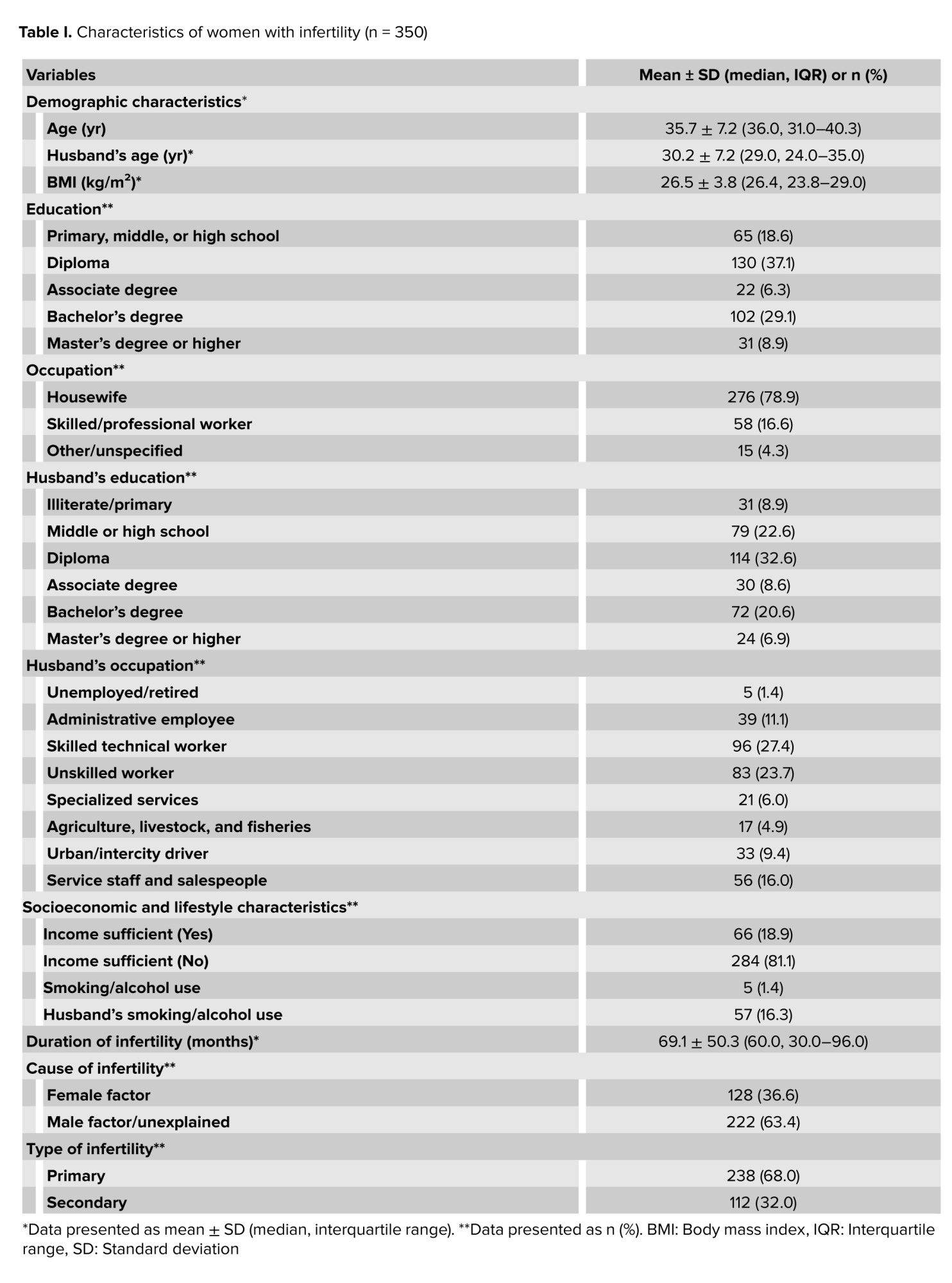
A total of 350 women with infertility were included in the analysis. The participants demonstrated a heterogeneous demographic profile, with variation in educational attainment and occupational status. Most participants were housewives and reported insufficient household income. Primary infertility was more common than secondary infertility, and male-factor or unexplained infertility constituted the predominant infertility etiology. The detailed demographic, socioeconomic, lifestyle, and clinical characteristics of the participants, including the corresponding descriptive statistics, are presented in table I.
3.2. Psychological well-being and QOL scores
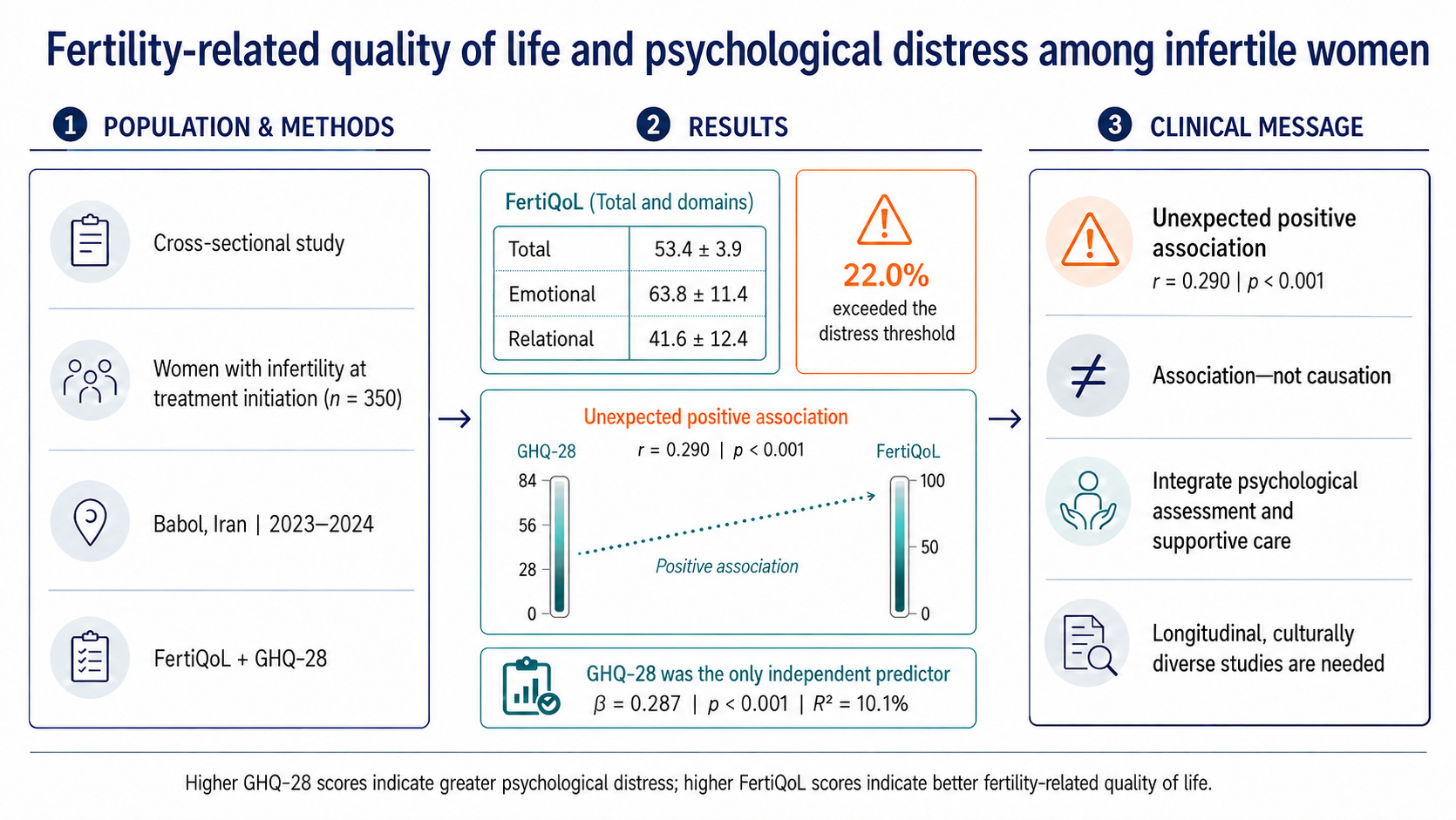
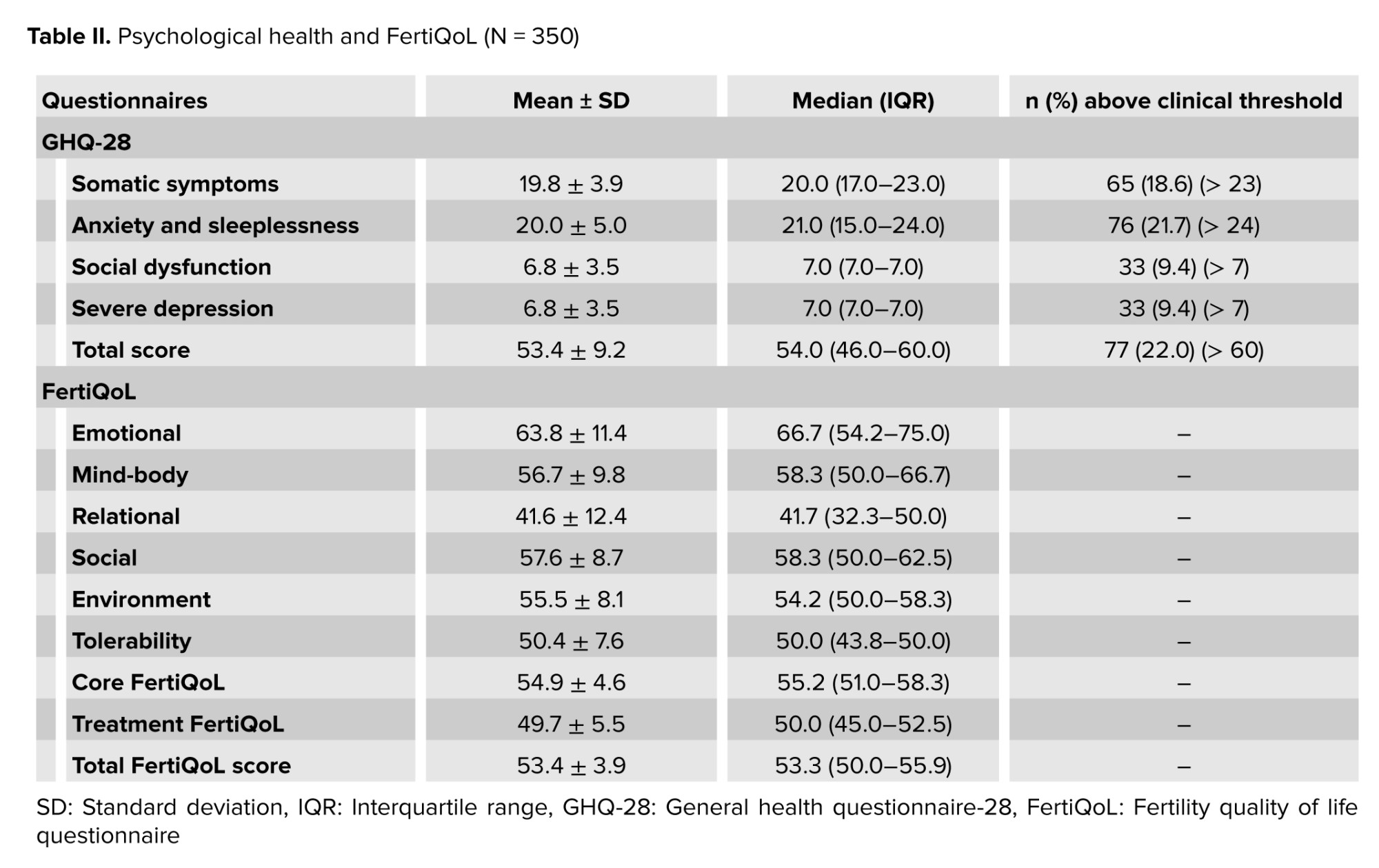
Overall, participants demonstrated a moderate level of FertiQoL. Among the FertiQoL domains, emotional functioning showed the highest scores, whereas the relational domain had the lowest scores, indicating that interpersonal relationships were the most adversely affected. Approximately one-fifth of participants exceeded the threshold for overall psychological distress, with anxiety/sleeplessness representing the most frequently elevated GHQ-28 domain. Detailed questionnaire scores and the proportions exceeding the predefined thresholds are presented in table II.
3.3. Bivariate correlation analysis
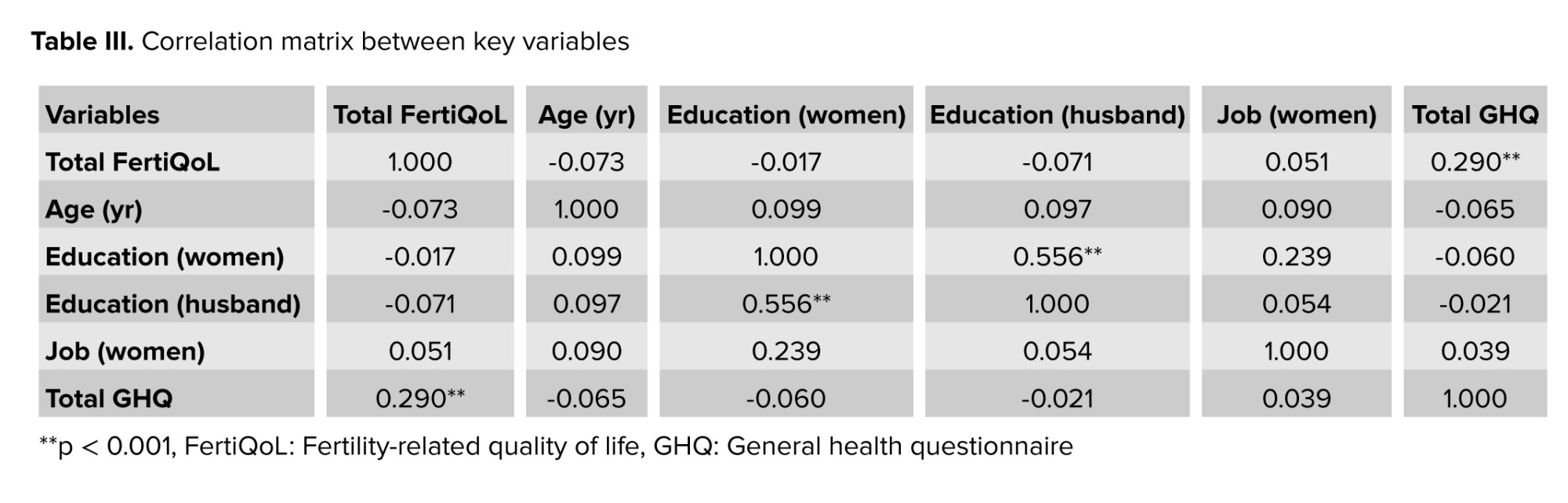
Pearson correlation analysis demonstrated a statistically significant positive correlation between total GHQ-28 score and total FertiQoL score. This finding indicates that higher psychological distress was associated with higher FertiQoL in this study, an unexpected direction of association compared with previous reports (Table III).
3.4. Adjusted regression analysis
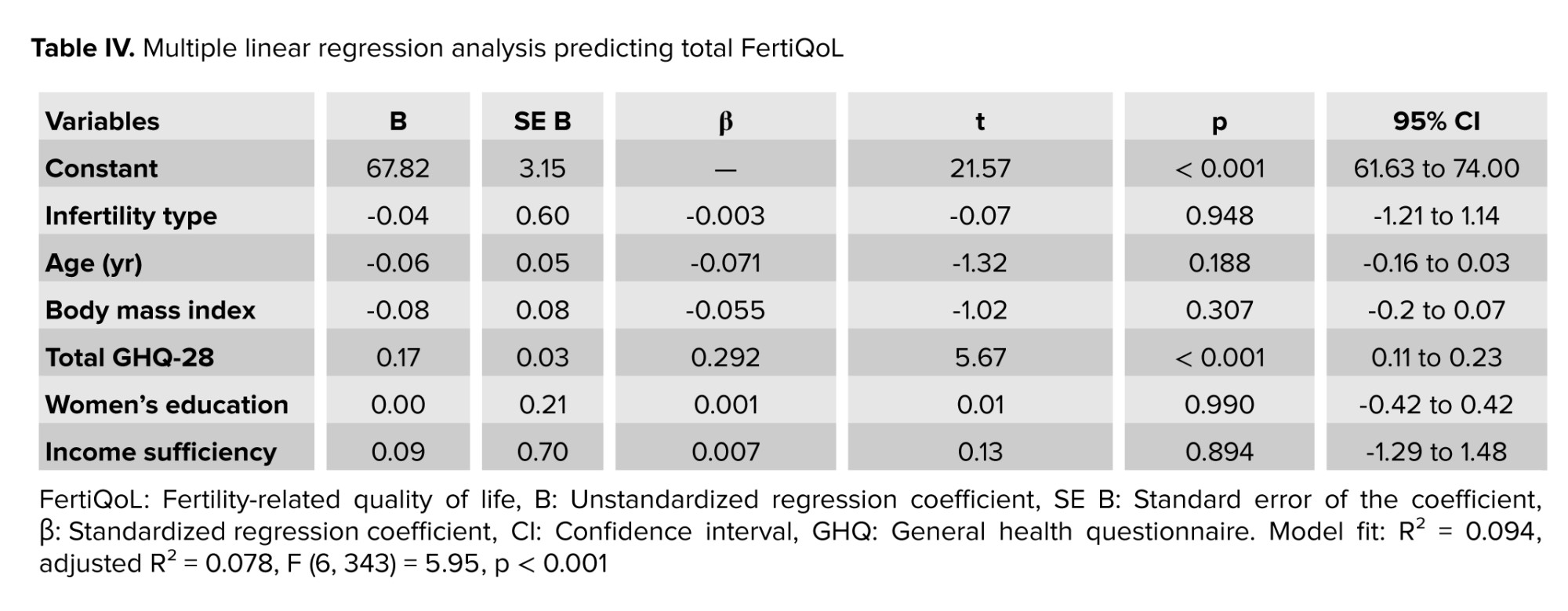
In the adjusted regression model, infertility type was not significantly associated with total FertiQoL, suggesting no meaningful difference in FertiQoL between women with primary and secondary infertility after controlling for age, BMI, GHQ-28 score, women's education, and sufficiency. Total GHQ-28 score remained the only significant predictor of FertiQoL. A multiple linear regression analysis was conducted to examine whether infertility type was independently associated with total FertiQoL score after adjusting for age, BMI, total GHQ-28 score, women’s educational level, and income status. The overall regression model was statistically significant (p < 0.001), explaining 9.4% of the variance in total FertiQoL scores (R2 = 0.094, adjusted R2 = 0.078). After adjustment for covariates, infertility type was not significantly associated with total FertiQoL score. This indicates that women with primary and secondary infertility did not differ significantly in FertiQoL after controlling for demographic and psychological variables. Among the included predictors, total GHQ-28 score was the only significant predictor of total FertiQoL score (B = 0.170, p < 0.001). Specifically, each one-point increase in GHQ-28 score was associated with a 0.170-point increase in total FertiQoL score. Age, BMI, women’s education, income status, and infertility type were not statistically significant predictors of total FertiQoL (Table IV).
3.5. Regression analysis and cross-validation
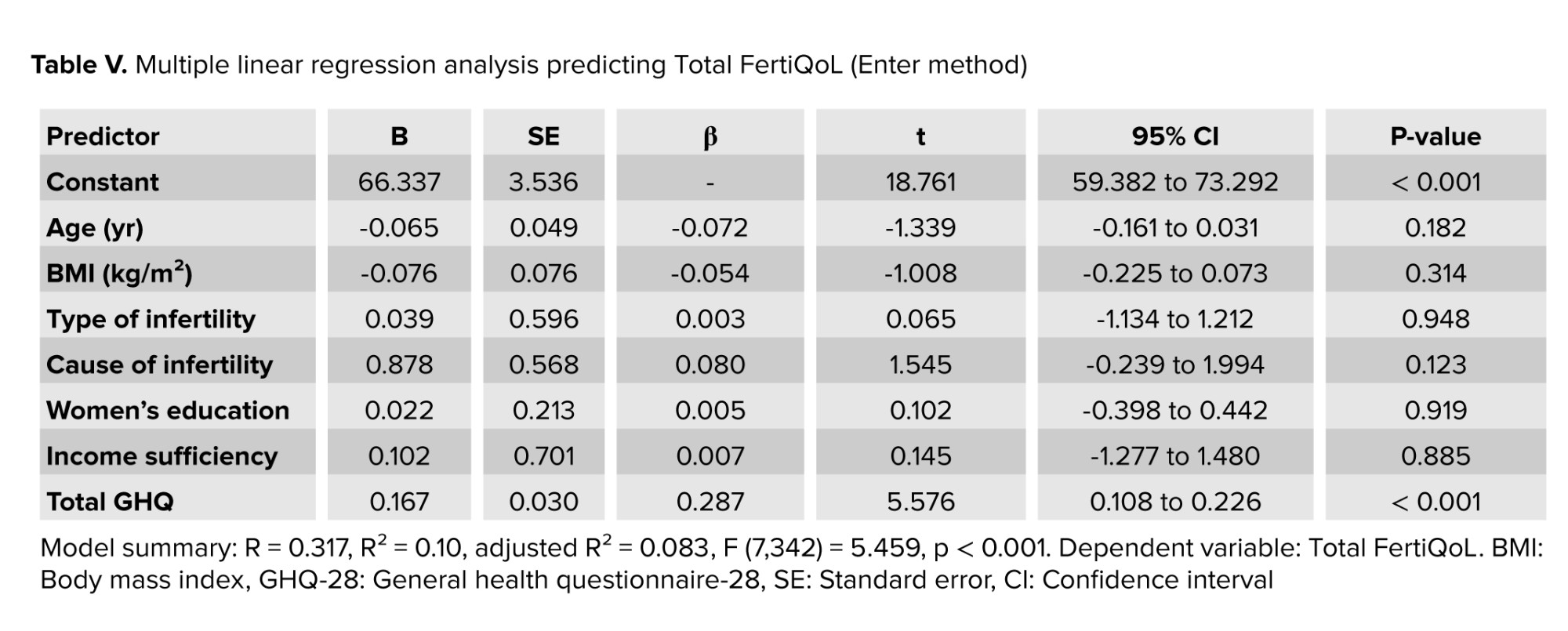
A theory-driven multiple linear regression analysis using the Enter method was conducted to examine factors associated with total FertiQoL. Predictor variables included age, BMI, type of infertility, cause of infertility, women's educational level, income sufficiency, and total GHQ score. The overall regression model was statistically significant (F = 5.459, p < 0.001), explaining 10.1% of the variance in total FertiQoL scores (R² = 0.101; adjusted R² = 0.083). Among all variables entered into the model, only total GHQ score was independently associated with total FertiQoL (B = 0.167, β = 0.287, t = 5.576, p < 0.001). Specifically, each one-point increase in GHQ score was associated with a 0.167-point increase in total FertiQoL score (95% CI: 0.108-0.226).
Age (p = 0.182), BMI (p = 0.314), type of infertility (p = 0.948), cause of infertility (p = 0.123), women's educational level (p = 0.919), and income sufficiency (p = 0.885) were not significantly associated with total FertiQoL after adjustment for other variables. No evidence of problematic multicollinearity was observed, with all variance inflation factor values ranging from 1.007-1.099 (Table V).
4. Discussion
This study examined FertiQoL and psychological distress among women with infertility before initiating assisted reproductive technologies in Babol, Iran. The main findings were that participants experienced moderate FertiQoL and considerable psychological distress. Psychological distress was significantly associated with FertiQoL and remained the only significant predictor after adjustment for demographic and infertility-related characteristics. In contrast, infertility type was not significantly associated with either FertiQoL or psychological distress.
The observed psychological burden is consistent with previous research showing that infertility is associated with anxiety, depression, and impaired social functioning (6, 15). The moderate FertiQoL observed in our study is also comparable with findings from other infertile populations, in which women may maintain aspects of emotional and social functioning despite difficulties in interpersonal and marital relationships (16). These findings emphasize that infertility affects well-being beyond its direct reproductive consequences.
The psychosocial experience of infertility should also be interpreted within its sociocultural context. Compared with Western settings, infertility among Iranian women may be strongly influenced by cultural expectations and socioeconomic conditions (17). Motherhood is often closely associated with female identity and marital fulfillment in Iranian society, potentially increasing the emotional and social consequences of infertility (18). In the present study, the high proportions of housewives (78.9%) and women reporting insufficient household income (81.1%) may represent additional socioeconomic vulnerabilities associated with dependency and reduced social participation (19-21). Cultural perceptions and normalization of infertility-related distress may also influence how women experience and report their QOL (22-24).
An unexpected finding was the positive association between GHQ-28 and total FertiQoL scores. This finding differs from previous studies generally reporting poorer QOL in association with greater psychological distress among individuals experiencing infertility (25, 26). One possible explanation is that the 2 instruments assess related but distinct constructs. The GHQ-28 measures general psychological distress, whereas FertiQoL assesses the perceived impact of infertility across emotional, relational, social, environmental, and treatment-related domains. Thus, psychological distress may coexist with relatively preserved perceptions of fertility-specific functioning.
Sociocultural and behavioral factors may also contribute to this unexpected association. Family cohesion, social support, and community networks may buffer the effects of infertility-related distress, while women experiencing greater distress may be more likely to seek support or engage in coping strategies that help preserve perceived QOL (9, 27). Emotional intelligence and effective emotion-regulation strategies may similarly facilitate adaptation to infertility-related stress (28). However, several potentially relevant factors, including perceived social support, coping style, infertility stigma, marital relationship quality, treatment engagement, and religious or spiritual beliefs, were not assessed in this study and may have influenced the observed association.
Importantly, the positive association should not be interpreted as evidence that psychological distress improves FertiQoL. Data coding, scoring procedures, and statistical analyses were reviewed and did not identify methodological errors that could explain the finding. Moreover, total GHQ-28 score was the only significant predictor of total FertiQoL in both correlation and multivariable regression analyses. Nevertheless, the cross-sectional design prevents determination of temporal or causal relationships. The finding should therefore be considered hypothesis-generating and requires confirmation in longitudinal studies that incorporate psychosocial, relational, cultural, and coping-related factors.
Infertility type was not significantly associated with total FertiQoL after adjustment for age, BMI, psychological distress, educational level, income status, and other covariates. Similarly, subgroup analyses showed no significant differences in FertiQoL or GHQ-28 scores between women with primary and secondary infertility. These findings suggest that the psychosocial burden of infertility may be shaped more strongly by shared experiences, including involuntary childlessness, uncertainty regarding treatment outcomes, and social pressures, than by infertility type alone. Nevertheless, primary and secondary infertility may involve different personal experiences, identities, and coping processes that may not be fully captured by global questionnaire scores. Qualitative and mixed-method studies could provide further insight into these differences.
Although psychological distress was significantly associated with FertiQoL, the regression model explained only a modest proportion of its variance. This finding supports the multidimensional nature of FertiQoL and indicates that additional determinants were not captured by the current model. Marital relationship quality, social support, infertility stigma, coping strategies, treatment expectations, cultural beliefs, and socioeconomic conditions may contribute to FertiQoL and should be considered in future research. Accordingly, the present model should be interpreted as identifying an important association rather than providing a comprehensive explanation of FertiQoL.
This study has several strengths. It specifically evaluated women with infertility before the initiation of assisted reproductive treatment, thereby assessing their psychological and FertiQoL at an important stage of the treatment pathway. The use of validated FertiQoL and GHQ-28 instruments and multivariable analyses also strengthens the assessment of the relationship between psychological distress and FertiQoL.
Several limitations should be considered. First, participants were recruited using convenience sampling from a single infertility center in Babol, Iran, which may limit the generalizability of the findings. Second, the cross-sectional design precludes causal inference. Third, reliance on self-reported questionnaires may have introduced reporting bias. Finally, potentially important psychosocial variables, including social support, coping strategies, infertility stigma, and marital relationship quality, were not assessed. Future multicenter longitudinal studies incorporating these factors are warranted to clarify the determinants and temporal relationships of FertiQoL among women experiencing infertility.
5. Conclusion
Women with infertility seeking assisted reproductive treatment experienced moderate FertiQoL and considerable psychological distress. Psychological distress was independently associated with FertiQoL after adjustment for demographic and infertility-related characteristics. These findings support the integration of psychological assessment and supportive care into infertility services. However, the cross-sectional design and unexpected direction of the association preclude causal interpretation. Longitudinal studies are needed to confirm these findings and clarify the factors underlying the relationship between psychological distress and FertiQoL.
Data Availability
The datasets generated and analyzed during the current study are available from the corresponding author on reasonable request.
Author Contributions
M. Agajani Delavar and P. Mirabi conceived the study, participated in the conception, design of the study, contributed to data acquisition, and writing original draft. S. Esmaeilzadeh contributed to study design, data acquisition, and confirmed infertility. M. Agajani Delavar and S. Esmaeilzadeh are both co-first author due to equal participation in all stages of work. M. Agajani Delavar contributed to statistical analysis. All authors read and approved the final manuscript.
Acknowledgments
We would like to express our gratitude to all the women who participated in this study, as well as the staff at Fatemeh Zahra Infertility Center, Babol, Iran for their assistance in data collection. This research is funded by Vice Chancellery of Research and Technology of Babol University of Medical Sciences (Grant no.: 724135263). The authors also acknowledge the use of DeepSeek, an artificial intelligence (AI)-based language model developed by DeepSeek Co., for assistance with grammar and language editing. The authors take full responsibility for the manuscript's content, data analysis, interpretation of the results, and conclusions.
Conflict of Interest
The authors declare that there is no conflict of interest.
2.5.1. FertiQoL questionnaire
This is a validated tool designed to assess the QOL of individuals experiencing infertility. It was developed by researchers and clinicians from the European Society of Human Reproduction and Embryology and the American Society for Reproductive Medicine and has been translated into over 20 languages, including Persian. In this study, the Persian-translated version of FertiQoL, validated in the Iranian population, was utilized (11, 12).
FertiQoL consists of 2 modules: the core module and an optional treatment module. The Core module includes 24 items across 4 domains: emotional, mind-body, relational, and social. The emotional domain assesses the psychological impact of infertility, while the mind-body domain evaluates physical and cognitive effects. The relational domain examines how infertility affects relationships, and the social domain focuses on social interactions, including stigma. The optional treatment module contains 10 items divided into 2 domains: treatment environment and treatment tolerability. The treatment environment domain evaluates the accessibility and quality of fertility treatments and their influence on QOL. The treatment tolerability domain assesses the physical and mental symptoms experienced due to treatment and their impact on daily life. Together, the core and treatment modules provide a total FertiQoL score, which represents the average QOL across all domains. All items in the FertiQoL are rated on a scale from 0-4, which is then transformed to a range of 0-100, where higher scores indicate better QOL. This tool provides a comprehensive assessment of how infertility and its treatments affect individuals’ emotional, physical, relational, and social well-being.
2.5.2. GHQ-28 questionnaire
The GHQ-28 is a widely used self-report instrument designed to screen for psychological distress and potential psychiatric disorders (13). It consists of 28 items divided into 4 subscales: somatic symptoms, anxiety/insomnia, social dysfunction, and severe depression. Responses are rated on a 4-point Likert scale (0-3), yielding total scores from 0-84, where higher scores indicate greater distress. In this study, a cut-off score of 60 (75th percentile) was used to identify clinically significant psychological distress, as this threshold was deemed appropriate for the study population based on prior validation studies in similar contexts. The GHQ-28 has demonstrated good reliability and validity across diverse populations and is widely accepted for assessing current mental health status in clinical and research settings (14).
2.6. Ethical Considerations
The study approved by the ethics committee of Babol University of Medical Sciences, Babol, Iran (Code: IR.MUBABOL.HRI.REC.1402.087). All procedures performed in this study involving human participants were in accordance with the ethical standards of the institutional and/or national research committee and with the 2013 revision of the Declaration of Helsinki. Written informed consent was obtained from all participants prior to their inclusion in the study.
2.7. Statistical Analysis
Data were analyzed using SPSS version 20. Descriptive statistics are presented as mean ± standard deviation, median (interquartile range) or frequency (%). Internal consistency was assessed using Cronbach’s alpha. Group comparisons were performed using independent-samples t tests, and associations between variables were examined using Pearson’s correlation coefficient. Factors associated with total FertiQoL were evaluated using multiple linear regression analysis. Variables entered into the model included age, BMI, type and cause of infertility, women's educational level, income sufficiency, and total GHQ-28 score. Multicollinearity was assessed using variance inflation factors. Model stability and predictive performance were evaluated using 10-fold cross-validation, and a post hoc power analysis was conducted. Statistical significance was set at p < 0.05.
3. Results
3.1. Participant characteristics
A total of 350 women with infertility were included in the analysis. The participants demonstrated a heterogeneous demographic profile, with variation in educational attainment and occupational status. Most participants were housewives and reported insufficient household income. Primary infertility was more common than secondary infertility, and male-factor or unexplained infertility constituted the predominant infertility etiology. The detailed demographic, socioeconomic, lifestyle, and clinical characteristics of the participants, including the corresponding descriptive statistics, are presented in table I.
3.2. Psychological well-being and QOL scores
Overall, participants demonstrated a moderate level of FertiQoL. Among the FertiQoL domains, emotional functioning showed the highest scores, whereas the relational domain had the lowest scores, indicating that interpersonal relationships were the most adversely affected. Approximately one-fifth of participants exceeded the threshold for overall psychological distress, with anxiety/sleeplessness representing the most frequently elevated GHQ-28 domain. Detailed questionnaire scores and the proportions exceeding the predefined thresholds are presented in table II.
3.3. Bivariate correlation analysis
Pearson correlation analysis demonstrated a statistically significant positive correlation between total GHQ-28 score and total FertiQoL score. This finding indicates that higher psychological distress was associated with higher FertiQoL in this study, an unexpected direction of association compared with previous reports (Table III).
3.4. Adjusted regression analysis
In the adjusted regression model, infertility type was not significantly associated with total FertiQoL, suggesting no meaningful difference in FertiQoL between women with primary and secondary infertility after controlling for age, BMI, GHQ-28 score, women's education, and sufficiency. Total GHQ-28 score remained the only significant predictor of FertiQoL. A multiple linear regression analysis was conducted to examine whether infertility type was independently associated with total FertiQoL score after adjusting for age, BMI, total GHQ-28 score, women’s educational level, and income status. The overall regression model was statistically significant (p < 0.001), explaining 9.4% of the variance in total FertiQoL scores (R2 = 0.094, adjusted R2 = 0.078). After adjustment for covariates, infertility type was not significantly associated with total FertiQoL score. This indicates that women with primary and secondary infertility did not differ significantly in FertiQoL after controlling for demographic and psychological variables. Among the included predictors, total GHQ-28 score was the only significant predictor of total FertiQoL score (B = 0.170, p < 0.001). Specifically, each one-point increase in GHQ-28 score was associated with a 0.170-point increase in total FertiQoL score. Age, BMI, women’s education, income status, and infertility type were not statistically significant predictors of total FertiQoL (Table IV).
3.5. Regression analysis and cross-validation
A theory-driven multiple linear regression analysis using the Enter method was conducted to examine factors associated with total FertiQoL. Predictor variables included age, BMI, type of infertility, cause of infertility, women's educational level, income sufficiency, and total GHQ score. The overall regression model was statistically significant (F = 5.459, p < 0.001), explaining 10.1% of the variance in total FertiQoL scores (R² = 0.101; adjusted R² = 0.083). Among all variables entered into the model, only total GHQ score was independently associated with total FertiQoL (B = 0.167, β = 0.287, t = 5.576, p < 0.001). Specifically, each one-point increase in GHQ score was associated with a 0.167-point increase in total FertiQoL score (95% CI: 0.108-0.226).
Age (p = 0.182), BMI (p = 0.314), type of infertility (p = 0.948), cause of infertility (p = 0.123), women's educational level (p = 0.919), and income sufficiency (p = 0.885) were not significantly associated with total FertiQoL after adjustment for other variables. No evidence of problematic multicollinearity was observed, with all variance inflation factor values ranging from 1.007-1.099 (Table V).
4. Discussion
This study examined FertiQoL and psychological distress among women with infertility before initiating assisted reproductive technologies in Babol, Iran. The main findings were that participants experienced moderate FertiQoL and considerable psychological distress. Psychological distress was significantly associated with FertiQoL and remained the only significant predictor after adjustment for demographic and infertility-related characteristics. In contrast, infertility type was not significantly associated with either FertiQoL or psychological distress.
The observed psychological burden is consistent with previous research showing that infertility is associated with anxiety, depression, and impaired social functioning (6, 15). The moderate FertiQoL observed in our study is also comparable with findings from other infertile populations, in which women may maintain aspects of emotional and social functioning despite difficulties in interpersonal and marital relationships (16). These findings emphasize that infertility affects well-being beyond its direct reproductive consequences.
The psychosocial experience of infertility should also be interpreted within its sociocultural context. Compared with Western settings, infertility among Iranian women may be strongly influenced by cultural expectations and socioeconomic conditions (17). Motherhood is often closely associated with female identity and marital fulfillment in Iranian society, potentially increasing the emotional and social consequences of infertility (18). In the present study, the high proportions of housewives (78.9%) and women reporting insufficient household income (81.1%) may represent additional socioeconomic vulnerabilities associated with dependency and reduced social participation (19-21). Cultural perceptions and normalization of infertility-related distress may also influence how women experience and report their QOL (22-24).
An unexpected finding was the positive association between GHQ-28 and total FertiQoL scores. This finding differs from previous studies generally reporting poorer QOL in association with greater psychological distress among individuals experiencing infertility (25, 26). One possible explanation is that the 2 instruments assess related but distinct constructs. The GHQ-28 measures general psychological distress, whereas FertiQoL assesses the perceived impact of infertility across emotional, relational, social, environmental, and treatment-related domains. Thus, psychological distress may coexist with relatively preserved perceptions of fertility-specific functioning.
Sociocultural and behavioral factors may also contribute to this unexpected association. Family cohesion, social support, and community networks may buffer the effects of infertility-related distress, while women experiencing greater distress may be more likely to seek support or engage in coping strategies that help preserve perceived QOL (9, 27). Emotional intelligence and effective emotion-regulation strategies may similarly facilitate adaptation to infertility-related stress (28). However, several potentially relevant factors, including perceived social support, coping style, infertility stigma, marital relationship quality, treatment engagement, and religious or spiritual beliefs, were not assessed in this study and may have influenced the observed association.
Importantly, the positive association should not be interpreted as evidence that psychological distress improves FertiQoL. Data coding, scoring procedures, and statistical analyses were reviewed and did not identify methodological errors that could explain the finding. Moreover, total GHQ-28 score was the only significant predictor of total FertiQoL in both correlation and multivariable regression analyses. Nevertheless, the cross-sectional design prevents determination of temporal or causal relationships. The finding should therefore be considered hypothesis-generating and requires confirmation in longitudinal studies that incorporate psychosocial, relational, cultural, and coping-related factors.
Infertility type was not significantly associated with total FertiQoL after adjustment for age, BMI, psychological distress, educational level, income status, and other covariates. Similarly, subgroup analyses showed no significant differences in FertiQoL or GHQ-28 scores between women with primary and secondary infertility. These findings suggest that the psychosocial burden of infertility may be shaped more strongly by shared experiences, including involuntary childlessness, uncertainty regarding treatment outcomes, and social pressures, than by infertility type alone. Nevertheless, primary and secondary infertility may involve different personal experiences, identities, and coping processes that may not be fully captured by global questionnaire scores. Qualitative and mixed-method studies could provide further insight into these differences.
Although psychological distress was significantly associated with FertiQoL, the regression model explained only a modest proportion of its variance. This finding supports the multidimensional nature of FertiQoL and indicates that additional determinants were not captured by the current model. Marital relationship quality, social support, infertility stigma, coping strategies, treatment expectations, cultural beliefs, and socioeconomic conditions may contribute to FertiQoL and should be considered in future research. Accordingly, the present model should be interpreted as identifying an important association rather than providing a comprehensive explanation of FertiQoL.
This study has several strengths. It specifically evaluated women with infertility before the initiation of assisted reproductive treatment, thereby assessing their psychological and FertiQoL at an important stage of the treatment pathway. The use of validated FertiQoL and GHQ-28 instruments and multivariable analyses also strengthens the assessment of the relationship between psychological distress and FertiQoL.
Several limitations should be considered. First, participants were recruited using convenience sampling from a single infertility center in Babol, Iran, which may limit the generalizability of the findings. Second, the cross-sectional design precludes causal inference. Third, reliance on self-reported questionnaires may have introduced reporting bias. Finally, potentially important psychosocial variables, including social support, coping strategies, infertility stigma, and marital relationship quality, were not assessed. Future multicenter longitudinal studies incorporating these factors are warranted to clarify the determinants and temporal relationships of FertiQoL among women experiencing infertility.
5. Conclusion
Women with infertility seeking assisted reproductive treatment experienced moderate FertiQoL and considerable psychological distress. Psychological distress was independently associated with FertiQoL after adjustment for demographic and infertility-related characteristics. These findings support the integration of psychological assessment and supportive care into infertility services. However, the cross-sectional design and unexpected direction of the association preclude causal interpretation. Longitudinal studies are needed to confirm these findings and clarify the factors underlying the relationship between psychological distress and FertiQoL.
Data Availability
The datasets generated and analyzed during the current study are available from the corresponding author on reasonable request.
Author Contributions
M. Agajani Delavar and P. Mirabi conceived the study, participated in the conception, design of the study, contributed to data acquisition, and writing original draft. S. Esmaeilzadeh contributed to study design, data acquisition, and confirmed infertility. M. Agajani Delavar and S. Esmaeilzadeh are both co-first author due to equal participation in all stages of work. M. Agajani Delavar contributed to statistical analysis. All authors read and approved the final manuscript.
Acknowledgments
We would like to express our gratitude to all the women who participated in this study, as well as the staff at Fatemeh Zahra Infertility Center, Babol, Iran for their assistance in data collection. This research is funded by Vice Chancellery of Research and Technology of Babol University of Medical Sciences (Grant no.: 724135263). The authors also acknowledge the use of DeepSeek, an artificial intelligence (AI)-based language model developed by DeepSeek Co., for assistance with grammar and language editing. The authors take full responsibility for the manuscript's content, data analysis, interpretation of the results, and conclusions.
Conflict of Interest
The authors declare that there is no conflict of interest.
Type of Study: Original Article |
Subject:
Reproductive Psycology
Send email to the article author
| Rights and permissions | |
 |
This work is licensed under a Creative Commons Attribution-NonCommercial 4.0 International License. |