
International Journal of
Reproductive Biomedicine
Thu, Oct 22, 2026
[Archive]
Volume 24, Issue 7 (July 2026)
IJRM 2026, 24(7): 627-636 |
Back to browse issues page



Ethics code: IR.SSU.RSI.REC.1399.049


Download citation:
BibTeX | RIS | EndNote | Medlars | ProCite | Reference Manager | RefWorks
Send citation to:


BibTeX | RIS | EndNote | Medlars | ProCite | Reference Manager | RefWorks
Send citation to:
Dashti S, Davar R, Emami F, Shamsi F, Mangoli E. Stop gonadotropin-releasing hormone-agonist protocol not superior to antagonist protocol on the outcomes of assisted reproductive techniques in poor responders: A randomized clinical trial. IJRM 2026; 24 (7) :627-636
URL: http://ijrm.ir/article-1-3854-en.html
URL: http://ijrm.ir/article-1-3854-en.html


1- Research and Clinical Center for Infertility, Yazd Reproductive Sciences Institute, Shahid Sadoughi University of Medical Sciences, Yazd, Iran.
2- Department of Biostatistics and Epidemiology, Center for Health Data Modeling, School of Public Health, Shahid Sadoughi University of Medical Sciences, Yazd, Iran.
3- Research and Clinical Center for Infertility, Yazd Reproductive Sciences Institute, Shahid Sadoughi University of Medical Sciences, Yazd, Iran. ,es.mangoli@gmail.com; e.mangoli@ssu.ac.ir
2- Department of Biostatistics and Epidemiology, Center for Health Data Modeling, School of Public Health, Shahid Sadoughi University of Medical Sciences, Yazd, Iran.
3- Research and Clinical Center for Infertility, Yazd Reproductive Sciences Institute, Shahid Sadoughi University of Medical Sciences, Yazd, Iran. ,
Keywords: Poor ovarian responders, Controlled ovarian hyperstimulation, Bologna criteria, Stop GnRH-agonist protocol, GnRH-antagonist.
Full-Text [PDF 425 kb]
(300 Downloads)
| Abstract (HTML) (382 Views)
Full-Text: (28 Views)
1. Introduction
One of the important steps of assisted reproductive technology (ART) is controlled ovarian hyperstimulation, which is essential for the success of in vitro fertilization (IVF)-embryo transfer (ET), assisting in the retrieval of multiple oocytes and subsequently vitrification of excess embryos (1). However, due to the extreme heterogeneity in ovarian response to controlled ovarian hyperstimulation in some cases, poor responder cases may produce only a few follicles (2, 3).
Poor ovarian responders (POR) constitute a majority of the cases engaging to IVF/ART (3, 4). The prevalence of this group of women seems to be increasing, due to many individuals postponing conceptions to the late 30 or even later. In the above half of these cases, no etiology can be found. There are so many reasons for poor ovarian reserve, like old age, chromosomal and genetic etiology, metabolic and enzymatic, iatrogenic, toxic, autoimmune, and infections (1, 5).
According to the Bologna criteria, in order to define POR, “at least 2 of the following 3 criteria must be present: 1) age ≥ 40 yr; 2) ovarian biomarkers; antral follicle count < 5-7 and Anti-Müllerian hormone < 0.5-1.1 ng/ml; and 3) retrieved oocyte < 4 in previous ART cycle” (6). When there is no evidence of advanced maternal age or abnormal ovarian reserve tests, 2 previous stimulation cycles with POR are sufficient to define a case as a poor responder (3, 6).
Oocyte donation is a method with an acceptable success rate for cases with POR. However, before using donor eggs, most cases with POR prefer to enter one or more cycles of assisted reproduction with their own eggs (1).
Different controlled ovarian stimulation protocols have been developed to improve outcomes in this group of patients. The gonadotropin‑releasing hormone antagonist (GnRH) protocol is widely used because of its shorter duration, lower risk of ovarian hyperstimulation, and greater patient convenience. Alternatively, modified GnRH antagonist protocols, including the stop GnRH agonist protocol, have been proposed to enhance ovarian response by downregulation of hypothalamic pituitary axis while minimizing prolonged pituitary suppression (7-10).
Triptorelin is a synthetic gonadotropin‑releasing hormone (GnRH) agonist widely used in ARTs. By initially stimulating and subsequently downregulating pituitary GnRH receptors, it suppresses the secretion of luteinizing hormone (LH) and follicle‑stimulating hormone. This effect allows better control of the hypothalamic-pituitary-ovarian axis and helps prevent premature LH surge during controlled ovarian stimulation in IVF cycles.
One of the modified approaches using GnRH agonists is the stop GnRH agonist protocol, in which the agonist is administered from the mid-luteal phase of previous cycle and discontinued prior to gonadotropin stimulation. This strategy aims to benefit from the initial-suppressive effect of it. However, the effectiveness of this protocol compared with the GnRH antagonist protocol in poor responder patients remains controversial. Some studies have suggested that the stop GnRH agonist protocol may improve follicular recruitment and ovarian response, whereas others have reported comparable outcomes (11). Therefore, further evidence from randomized clinical trials is required to clarify whether the stop GnRH agonist protocol provides any advantage over the conventional GnRH antagonist protocol in this population. The present randomized clinical trial was designed to compare the effectiveness of the stop GnRH agonist protocol with the GnRH antagonist protocol on ART outcomes in poor responder patients according to the Bologna criteria.
2. Materials and Methods
Poor ovarian responders (POR) constitute a majority of the cases engaging to IVF/ART (3, 4). The prevalence of this group of women seems to be increasing, due to many individuals postponing conceptions to the late 30 or even later. In the above half of these cases, no etiology can be found. There are so many reasons for poor ovarian reserve, like old age, chromosomal and genetic etiology, metabolic and enzymatic, iatrogenic, toxic, autoimmune, and infections (1, 5).
According to the Bologna criteria, in order to define POR, “at least 2 of the following 3 criteria must be present: 1) age ≥ 40 yr; 2) ovarian biomarkers; antral follicle count < 5-7 and Anti-Müllerian hormone < 0.5-1.1 ng/ml; and 3) retrieved oocyte < 4 in previous ART cycle” (6). When there is no evidence of advanced maternal age or abnormal ovarian reserve tests, 2 previous stimulation cycles with POR are sufficient to define a case as a poor responder (3, 6).
Oocyte donation is a method with an acceptable success rate for cases with POR. However, before using donor eggs, most cases with POR prefer to enter one or more cycles of assisted reproduction with their own eggs (1).
Different controlled ovarian stimulation protocols have been developed to improve outcomes in this group of patients. The gonadotropin‑releasing hormone antagonist (GnRH) protocol is widely used because of its shorter duration, lower risk of ovarian hyperstimulation, and greater patient convenience. Alternatively, modified GnRH antagonist protocols, including the stop GnRH agonist protocol, have been proposed to enhance ovarian response by downregulation of hypothalamic pituitary axis while minimizing prolonged pituitary suppression (7-10).
Triptorelin is a synthetic gonadotropin‑releasing hormone (GnRH) agonist widely used in ARTs. By initially stimulating and subsequently downregulating pituitary GnRH receptors, it suppresses the secretion of luteinizing hormone (LH) and follicle‑stimulating hormone. This effect allows better control of the hypothalamic-pituitary-ovarian axis and helps prevent premature LH surge during controlled ovarian stimulation in IVF cycles.
One of the modified approaches using GnRH agonists is the stop GnRH agonist protocol, in which the agonist is administered from the mid-luteal phase of previous cycle and discontinued prior to gonadotropin stimulation. This strategy aims to benefit from the initial
2. Materials and Methods
2.1. Participants and trial design
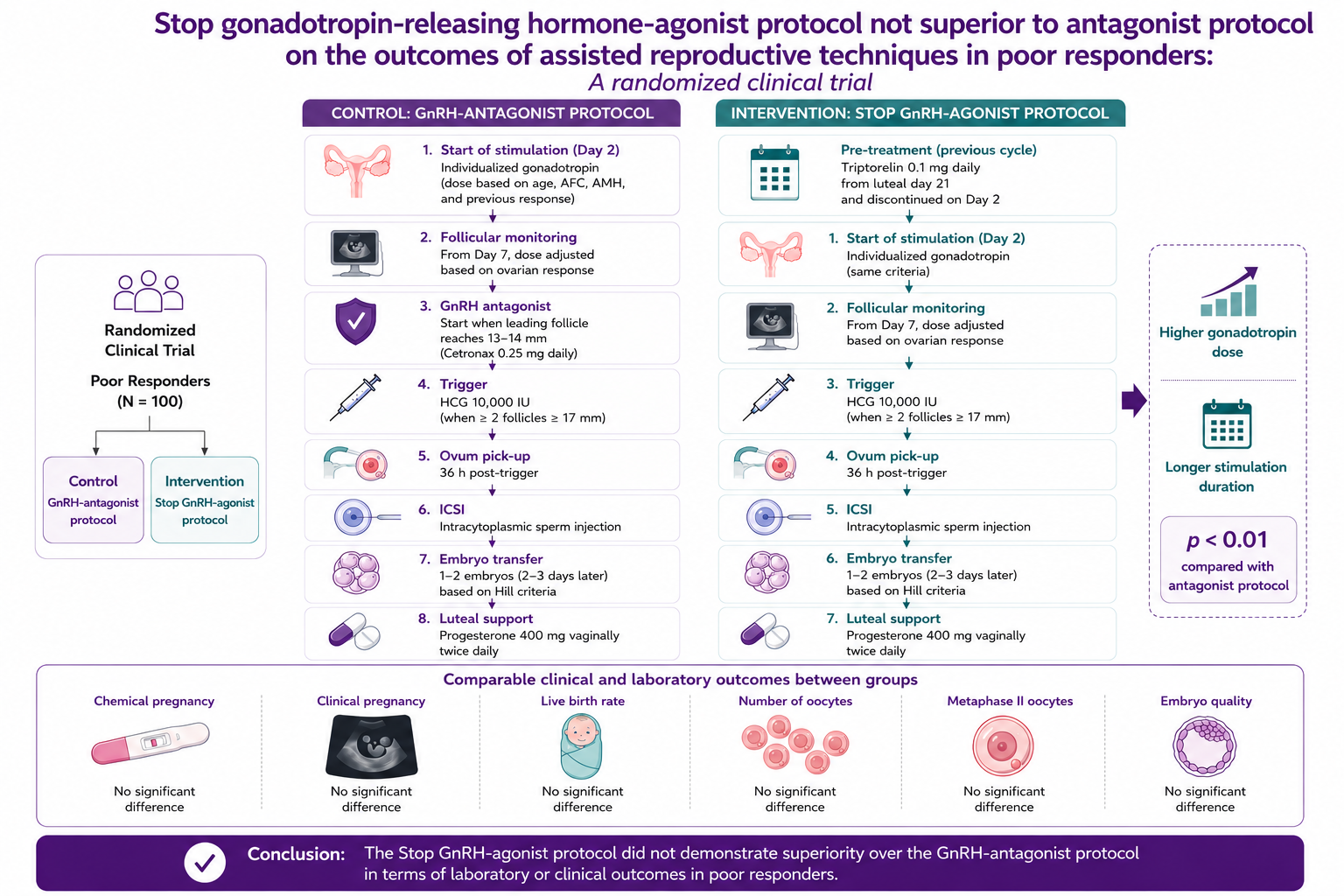
This randomized clinical trial compared 2 methods of ovarian stimulation in cases with poor responders at the Yazd Reproductive Sciences Institute, Yazd, Iran. The study methods were explained to participants, and informed consent was obtained. This study was done from October 2021-December 2024. Participants were 100 women aged between 18 and 44 yr old and were defined as poor responders according to the Bologna criteria (3). They were randomly divided into 2 groups, control and intervention. Severe male factor infertility (surgical sperm extraction), endometriosis, uterine abnormality, hysteroscopic surgery, and women with systemic disease were excluded from the study.
2.2. Treatment protocol
Antagonist protocol was used in the control group. Briefly, ovarian stimulation was started on the 2nd day of the menstrual cycle by gonadotropin (Cinnal-f, CinnaGen, Iran) and PD HoMoG (Pooyesh Darou, Iran). The gonadotropin dose was individualized based on age, antral follicle count, AMH, and response in previous cycles. Follicular monitoring was done from the 7th cycle day, and the gonadotropin dose was adjusted based on ovarian response. When the leading follicle reached 13-14 mm, GnRH antagonist 0.25 mg (Cetronax, Ronak Pharmaceutical Co., Iran) was started and continued until the day of human chorionic gonadotropin (HCG). The final maturation of the oocyte was induced when at least 2 follicles ≥ 17 mm were induced by HCG 10000 units (PD Preg, Pooyesh Darou, Iran) (12).
For the intervention group, 0.1 mg triptorelin was given daily from the 21st day of the previous cycle and discontinued on the 2nd day of the treatment cycle. Gonadotropin was started from 2nd day of the cycle and continued as the control group (13). Ovum pick-up was done by vaginal ultrasound 36 hr post-trigger. ICSI was done, and the 2 embryos were selected according to Hill criteria (14) and transferred 2-3 days later. Luteal phase support was done by 400 mg progesterone suppositories (Actogest, AtiPharmed, Iran) twice daily (15).
2.3. Measurement variables and outcomes
Clinical and laboratory characteristics of the patients were assessed by the research team. The primary outcome was clinical pregnancy, while the secondary outcomes included the number of oocytes, embryo quality, chemical pregnancy, and live birth rate. Chemical pregnancy was determined by the laboratory specialist through measurement of serum β‑hCG levels 2 wk after ET; a value > 50 IU/L was considered positive. Clinical pregnancy was confirmed by a gynecologist using transvaginal ultrasound with detection of fetal cardiac activity 4-5 wk after ET. The live birth rate per ET was determined by the clinical team and was defined as the delivery of a live infant at ≥ 24 wk of gestation (14, 16).
2.4. Sample size
The sample size was calculated to compare 2 proportions between the study groups using the following formula:

wheren Z 1- α 2 Z 1- β P 1 P 2 d d = P 1 - P 2
This randomized clinical trial compared 2 methods of ovarian stimulation in cases with poor responders at the Yazd Reproductive Sciences Institute, Yazd, Iran. The study methods were explained to participants, and informed consent was obtained. This study was done from October 2021-December 2024. Participants were 100 women aged between 18 and 44 yr old and were defined as poor responders according to the Bologna criteria (3). They were randomly divided into 2 groups, control and intervention. Severe male factor infertility (surgical sperm extraction), endometriosis, uterine abnormality, hysteroscopic surgery, and women with systemic disease were excluded from the study.
2.2. Treatment protocol
Antagonist protocol was used in the control group. Briefly, ovarian stimulation was started on the 2nd day of the menstrual cycle by gonadotropin (Cinnal-f, CinnaGen, Iran) and PD HoMoG (Pooyesh Darou, Iran). The gonadotropin dose was individualized based on age, antral follicle count, AMH, and response in previous cycles. Follicular monitoring was done from the 7th cycle day, and the gonadotropin dose was adjusted based on ovarian response. When the leading follicle reached 13-14 mm, GnRH antagonist 0.25 mg (Cetronax, Ronak Pharmaceutical Co., Iran) was started and continued until the day of human chorionic gonadotropin (HCG). The final maturation of the oocyte was induced when at least 2 follicles ≥ 17 mm were induced by HCG 10000 units (PD Preg, Pooyesh Darou, Iran) (12).
For the intervention group, 0.1 mg triptorelin was given daily from the 21st day of the previous cycle and discontinued on the 2nd day of the treatment cycle. Gonadotropin was started from 2nd day of the cycle and continued as the control group (13). Ovum pick-up was done by vaginal ultrasound 36 hr post-trigger. ICSI was done, and the 2 embryos were selected according to Hill criteria (14) and transferred 2-3 days later. Luteal phase support was done by 400 mg progesterone suppositories (Actogest, AtiPharmed, Iran) twice daily (15).
2.3. Measurement variables and outcomes
Clinical and laboratory characteristics of the patients were assessed by the research team. The primary outcome was clinical pregnancy, while the secondary outcomes included the number of oocytes, embryo quality, chemical pregnancy, and live birth rate. Chemical pregnancy was determined by the laboratory specialist through measurement of serum β‑hCG levels 2 wk after ET; a value > 50 IU/L was considered positive. Clinical pregnancy was confirmed by a gynecologist using transvaginal ultrasound with detection of fetal cardiac activity 4-5 wk after ET. The live birth rate per ET was determined by the clinical team and was defined as the delivery of a live infant at ≥ 24 wk of gestation (14, 16).
2.4. Sample size
The sample size was calculated to compare 2 proportions between the study groups using the following formula:
where
Based on a similar previous study, the minimum required sample size was calculated using a formula for comparing 2 proportions. Considering a 95% confidence interval (α = 0.05), a statistical power of 80%, and an expected difference of 16% between the 2 groups, the minimum sample size was estimated to be 50 participants in each group (13).
2.5. Randomization
The randomization was performed based on permutation blocks. Next, according to the case’s conditions and inclusion criteria, the statistical consultant informs the researcher about the assignment based on the participant’s entry number from the list. Each sample was allocated to the intervention or the control group according to its assigned study group.
2.6. Ethical Considerations
The present study was approved by the ethics committee of Research and Clinical Center for Infertility, Shahid Sadoughi University of Medical Sciences, Yazd, Iran (Code: IR.SSU.RSI.REC.1399.049). Also, registered in Iranian Registry of Clinical Trials (IRCT20200615047779N1, registered: 2021-09-27, updated: 2024-12-28). All of the methods were explained to participants, and informed consent was obtained.
2.7. Statistical Analysis
The statistical analysis was performed using SPSS software (Statistical Package for the Social Sciences, version 26.0, Chicago, IL, USA). Parametric data were presented as means ± standard deviation, while non-parametric data were presented as median ± interquartile range, and categorical variables were expressed as frequencies (%). The Mann-Whitney test and t test were used to determine the difference between groups, and categorical variables were assessed using the Chi-square test. P < 0.05 was considered statistically significant.
3. Results
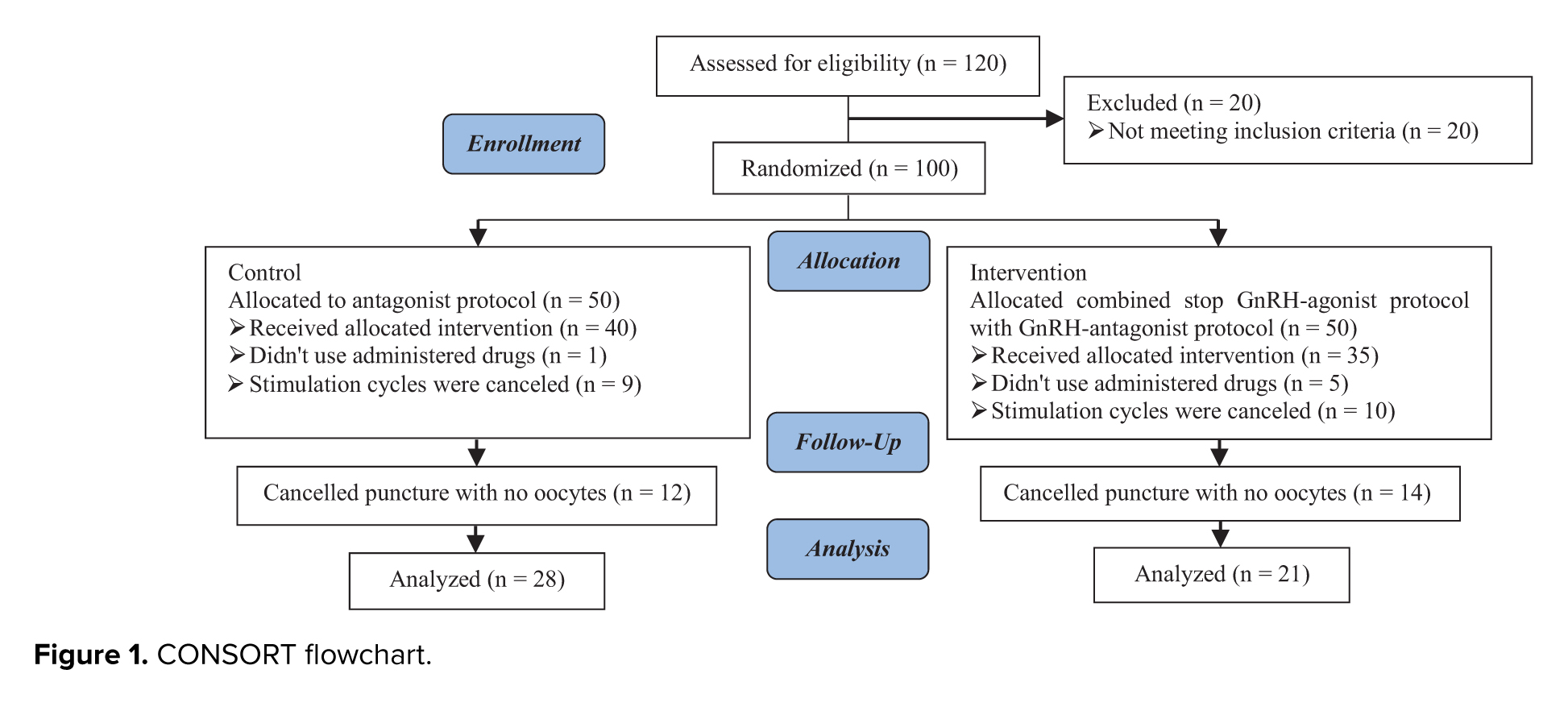
A total of 120 women were assessed for eligibility, of which 20 women were excluded because they did not meet the inclusion criteria. The remaining 100 eligible participants were randomized equally into intervention and control groups. 5 participants in the intervention group and one participant in the control group did not initiate treatment. Cycle cancellation due to absent ovarian response occurred in 10 and 9 women in the intervention and control groups, respectively. Ovum pick-up was performed in 75 participants, including intervention (n = 35) and control (n = 40). 12 women in the control group (30%) and 14 women in the intervention group (40%) had no oocyte on ovum pick-up. Finally, ET was done for 21 women in the intervention group and 28 women in the control group. Participant flow is presented in the CONSORT diagram (Figure 1). The relatively high cancellation rate reflects the expected clinical characteristics of POR.
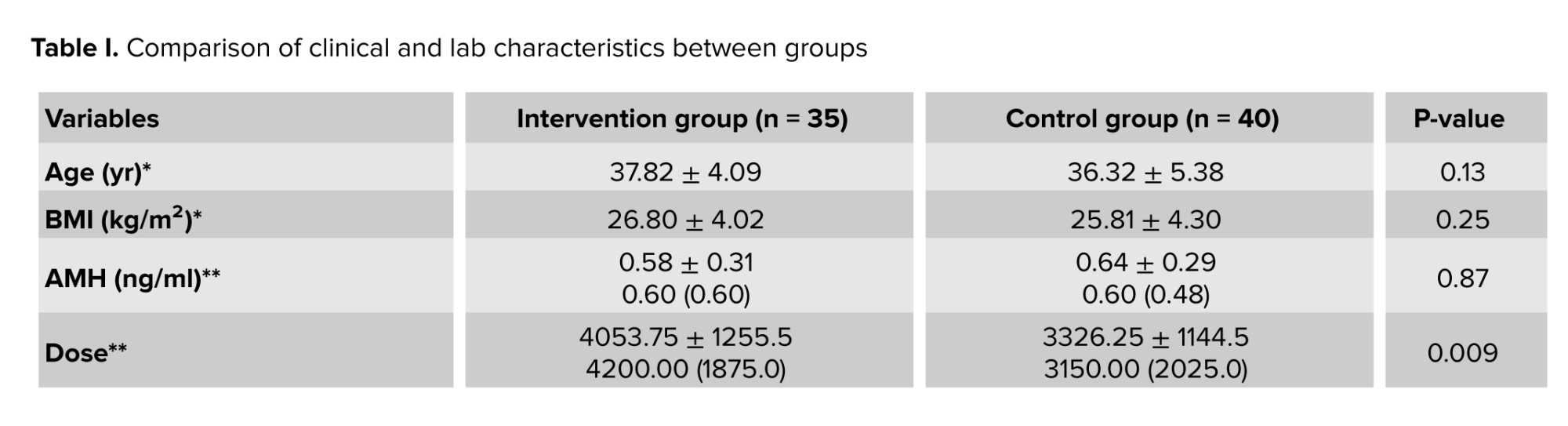
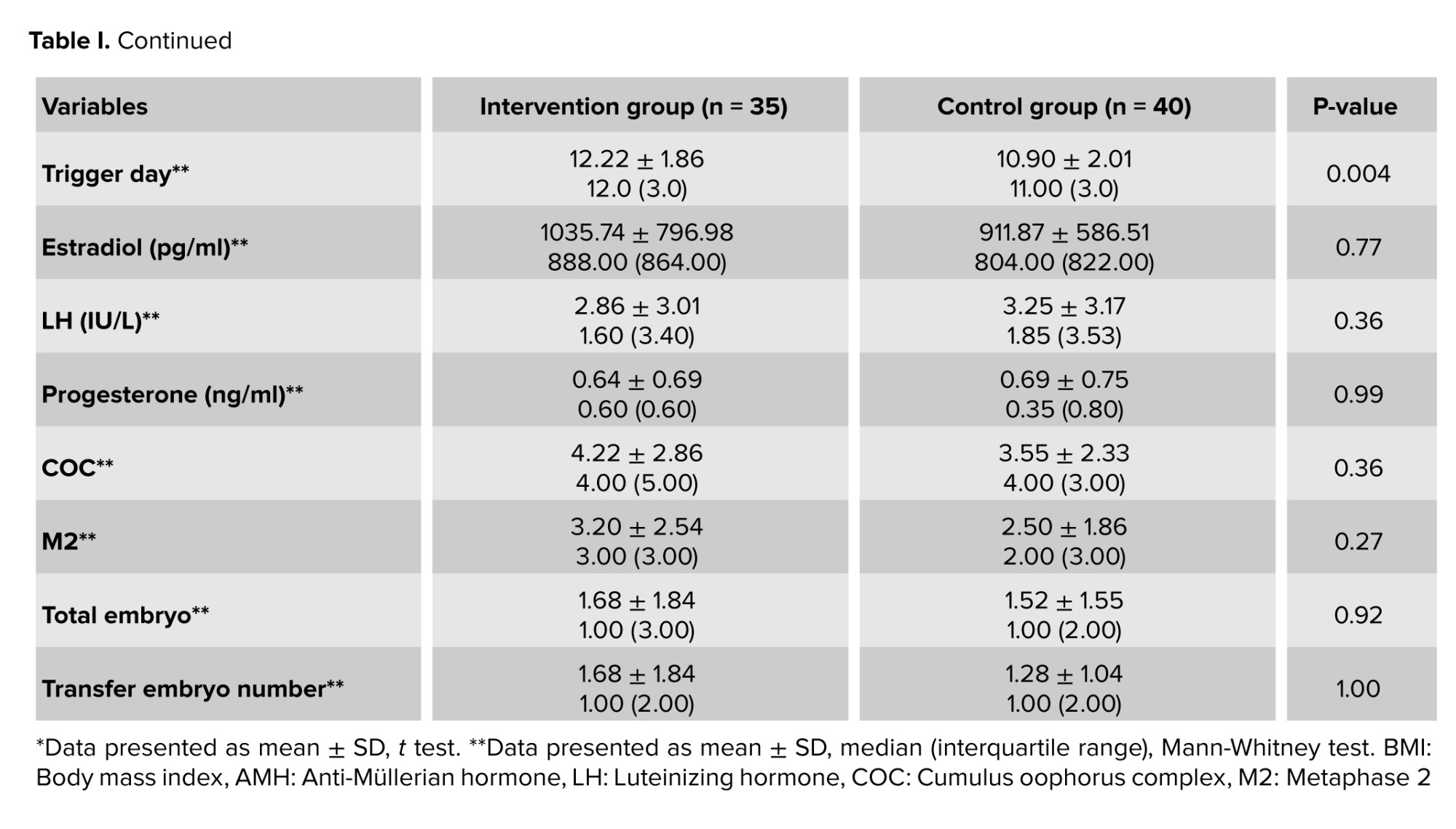
Table I showed the clinical characteristics of the ovarian stimulation cycles between groups. As expected, women in the intervention group used a higher dose of gonadotropin and had longer cycles; the difference was significant (p < 0.001).
Other clinical and laboratory parameters were not statistically significant between groups (p > 0.05). LH and progesterone levels on trigger day were lower in the intervention group, but the difference was not statistically significant. As with the number of retrieved oocytes, metaphase 2 oocytes and embryos tended to be higher in the intervention group, but the difference was not significant.
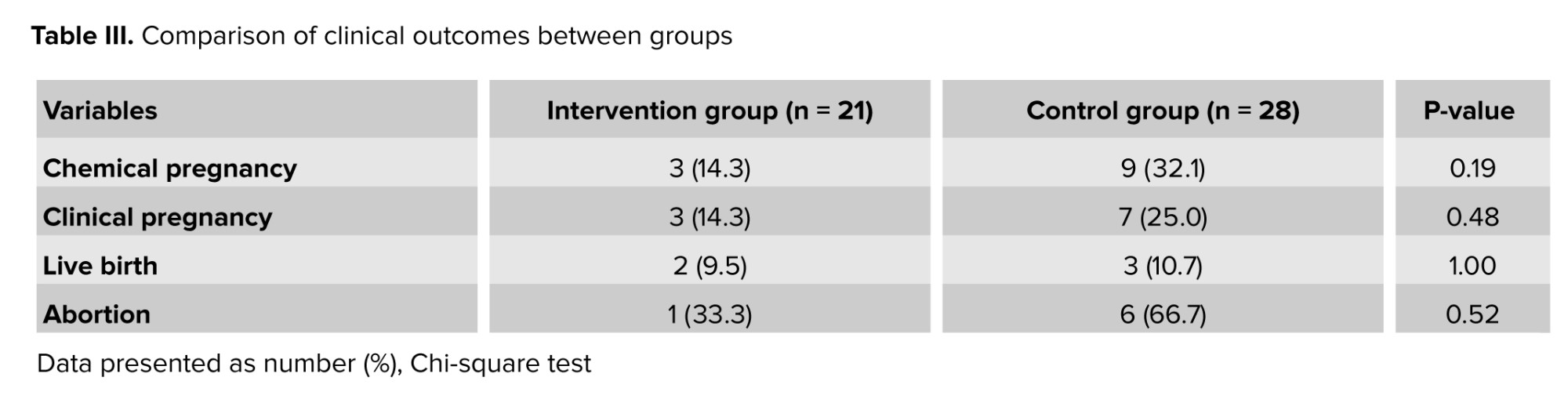
About embryo quality, the data showed no differences between groups. The rate of good quality embryos in the intervention group compared with the control group was 81% vs. 85% (p = 0.40) (Table II). In comparison of clinical outcomes between 2 groups, although their rate of chemical pregnancy (14.3% vs. 32.1, p = 0.19), clinical pregnancy (14.3% vs. 25%, p = 0.48), and live birth (9.5% vs. 10.7%, p = 1.00) were higher in the antagonist group, no statistically significant differences were observed. The rate of abortion was also insignificantly higher in the antagonist group (66.7% vs. 33.3%, p = 0.52) (Table III).

4.. Discussion
Table I showed the clinical characteristics of the ovarian stimulation cycles between groups. As expected, women in the intervention group used a higher dose of gonadotropin and had longer cycles; the difference was significant (p < 0.001).
Other clinical and laboratory parameters were not statistically significant between groups (p > 0.05). LH and progesterone levels on trigger day were lower in the intervention group, but the difference was not statistically significant. As with the number of retrieved oocytes, metaphase 2 oocytes and embryos tended to be higher in the intervention group, but the difference was not significant.
About embryo quality, the data showed no differences between groups. The rate of good quality embryos in the intervention group compared with the control group was 81% vs. 85% (p = 0.40) (Table II). In comparison of clinical outcomes between 2 groups, although their rate of chemical pregnancy (14.3% vs. 32.1, p = 0.19), clinical pregnancy (14.3% vs. 25%, p = 0.48), and live birth (9.5% vs. 10.7%, p = 1.00) were higher in the antagonist group, no statistically significant differences were observed. The rate of abortion was also insignificantly higher in the antagonist group (66.7% vs. 33.3%, p = 0.52) (Table III).
4.. Discussion
POR represent a heterogeneous and therapeutically challenging population in ART. Despite extensive investigation, an optimal ovarian stimulation strategy for these cases has not yet been clearly established. In the present randomized clinical trial, we found that the stop GnRH-agonist protocol combined with a GnRH-antagonist did not improve ovarian response parameters or reproductive outcomes compared with a conventional GnRH-antagonist protocol in cases classified as poor responders according to the Bologna criteria.
Our findings are consistent with previous studies suggesting that modifications in pituitary suppression strategies alone may not be sufficient to overcome the intrinsic biological limitations associated with diminished ovarian reserve. Although the intervention group demonstrated a trend toward higher numbers of retrieved oocytes, metaphase II oocytes, and embryos, these differences were not statistically significant. Moreover, these modest numerical increases were achieved at the cost of significantly higher gonadotropin consumption and a longer duration of ovarian stimulation. These observations raise important considerations regarding treatment cost and patient burden, particularly in a population already characterized by a poor reproductive prognosis.
In contrast, retrospective studies by Orvieto et al. reported improved laboratory outcomes and acceptable pregnancy rates using stop GnRH-agonist-based protocols (13). However, these studies differed substantially in their design, case selection, and comparison methods. Most notably, they relied on retrospective analyses or self-controlled comparisons with cases from previous cycles, which are inherently prone to selection bias and regression to the mean. In addition, several of those studies focused on specific subgroups such as cases with elevated progesterone levels, poor embryo quality, or POSEIDON group 4 cases, rather than the broader Bologna-defined population examined in our trial (17-19). The heterogeneity inherent in the Bologna criteria represents an important limitation not only of our study but also of much of the existing literature on poor ovarian response cases fulfilling the criteria. They may differ substantially in age, ovarian reserve markers, and the underlying etiology of diminished ovarian response, all of which may influence treatment outcomes. Such heterogeneity may dilute the potential benefit of specific stimulation strategies in more responsive subpopulations. Emerging classification systems such as the POSEIDON criteria aim to provide a more refined stratification of low‑prognosis patients and may facilitate more individualized therapeutic approaches in future clinical trials.
Differences between our findings and those of earlier reports may also be explained by variations in study design and case selection. Many previous investigations were retrospective and involved relatively small sample sizes, often examining selected subgroups of poor responders. In contrast, our study was conducted as a prospective randomized clinical trial with predefined inclusion and exclusion criteria. Women who fulfilled at least 2 of the Bologna criteria were randomly allocated to the study groups and compared with a concurrent control group rather than with their own previous cycles. Additionally, the relatively high cycle cancellation rate observed in our study reflects the severe prognosis of this population.
Evidence from a recent meta‑analysis suggests that the addition of letrozole to a conventional GnRH antagonist protocol may improve clinical pregnancy rates in poor responders while simultaneously reducing gonadotropin requirements and the overall economic burden of treatment (11). Also, more recently, a randomized clinical trial reported that a stop GnRH agonist protocol combined with letrozole, as a short and novel stimulation strategy, may lead to improved clinical outcomes, particularly in POSEIDON group 4 patients with previous failed IVF cycles (20). Differences in outcomes between studies may partly be explained by the use of different adjunctive medications aimed at improving ovarian response. Triptorelin, a GnRH agonist, suppresses the hypothalamic-pituitary-ovarian axis and prevents premature LH surge (21). In contrast, letrozole, an aromatase inhibitor, suppresses estrogen synthesis and subsequently increases endogenous follicle-stimulating hormone secretion, thereby promoting follicular development while potentially reducing gonadotropin requirements (20). Although both agents have been proposed to improve ovarian stimulation outcomes in poor responders, their mechanisms of action differ substantially, and evidence comparing their effectiveness within stop GnRH agonist-based protocols remains limited.
Another noteworthy observation in our study was the higher, though not statistically significant, abortion rate observed in the antagonist group. Interpretation of this finding is limited by the relatively small number of pregnancies achieved. Moreover, it is well-established that poor ovarian reserve and advanced maternal age are strongly associated with increased rates of embryo aneuploidy and pregnancy loss. Current evidence suggests that miscarriage in poor responders is more closely related to oocyte and embryo quality rather than the stimulation protocol itself (22-25). Therefore, this observation should be interpreted cautiously and should not be directly attributed to the stimulation strategy.
Our study has several strengths, including its prospective randomized design, the use of predefined inclusion criteria, and the evaluation of clinically relevant reproductive outcomes. However, several limitations should also be acknowledged. The relatively high cancellation rate and the limited number of ETs reduced the statistical power to detect differences in pregnancy outcomes. Furthermore, the analysis was performed per protocol rather than according to an intention‑to‑treat approach, which may limit the generalizability of the findings. Finally, the single‑center design may introduce additional sources of bias that should be considered when interpreting the results.
5. Conclusion
The findings of this study indicate that the stop GnRH‑agonist protocol does not provide a significant clinical advantage over the conventional GnRH antagonist protocol in unselected POR defined according to the Bologna criteria. Although some ovarian response parameters showed a numerical increase, these differences were not statistically significant and were accompanied by higher gonadotropin consumption. Given the heterogeneity of patients classified under the Bologna criteria, future well‑designed, adequately powered, multicenter randomized clinical trials are needed. The use of more refined patient stratification systems, such as the POSEIDON classification, may help identify specific subgroups of poor responders who could benefit from individualized ovarian stimulation strategies.
Data Availability
Data supporting the findings of this study are available upon reasonable request from the corresponding author.
Author Contributions
Conception and design of study: R. Davar, S. Dashti. Acquisition of data: F. Emami, S. Dashti. Analysis and interpretation of data: F. Shamsi, E. Mangoli, S. Dashti. Drafting the manuscript: S. Dashti, E. Mangoli. Revising the manuscript: E. Mangoli. Approval of the version of the manuscript to be published: S. Dashti, R. Davar, F. Emami, F. Shamsi, E. Mangoli.
Acknowledgments
The authors extend their appreciation to the Yazd Reproductive Sciences Institute and its staff. Additionally, they would like to express their sincere gratitude to the cases who participated in this study. This research received financial support from the Research and Clinical Center for Infertility at the Yazd Reproductive Sciences Institute, Shahid Sadoughi University of Medical Sciences, Yazd, Iran (code: 10132). Artificial intelligence tools, including ChatGPT were employed for grammar checking in specific sections.
Conflict of Interest
The authors declare that there is no conflict of interest.
Type of Study: Original Article |
Subject:
Assisted Reproductive Technologies
Send email to the article author
| Rights and permissions | |
 |
This work is licensed under a Creative Commons Attribution-NonCommercial 4.0 International License. |