International Journal of
Reproductive Biomedicine
Thu, Oct 22, 2026
[Archive]
Volume 24, Issue 7 (July 2026)
IJRM 2026, 24(7): 617-626 |
Back to browse issues page



Ethics code: IR.SSU.MEDICINE.REC.1402.124


Download citation:
BibTeX | RIS | EndNote | Medlars | ProCite | Reference Manager | RefWorks
Send citation to:


BibTeX | RIS | EndNote | Medlars | ProCite | Reference Manager | RefWorks
Send citation to:
Ebrahimi Askari R, Malcher A, Sadeghzadeh S, Ibrahim R, Pastuszak K, Srivastava A, et al . Whole-genome sequencing identifies a potentially causative homozygous splicing variant in RAD54 like in non-obstructive azoospermia. IJRM 2026; 24 (7) :617-626
URL: http://ijrm.ir/article-1-3856-en.html
URL: http://ijrm.ir/article-1-3856-en.html
Razieh Ebrahimi Askari1 

 , Agnieszka Malcher2 , Sara Sadeghzadeh3 , Rim Ibrahim2 , Krzysztof Pastuszak4 , Aashish Srivastava5 , Seyed Mehdi Kalantar6 , Serajoddin Vahidi7 , Nasrin Ghasemi8 , Maciej Kurpisz *9
1- Department of Medical Genetics, Faculty of Medicine, Shahid Sadoughi University of Medical Sciences, Yazd, Iran.
2- Institute of Human Genetics, Polish Academy of Sciences, Poznan, Poland.
3- Department of Molecular Medicine, Faculty of Medicine, Shahid Sadoughi University of Medical Sciences, Yazd, Iran.
4- Department of Algorithms and System Modelling, Gdansk University of Technology, Gdansk, Poland. & Department of Translational Oncology, Medical University of Gdansk, Gdansk, Poland. Centre of Biostatistics and Bioinformatics, Medical University of Gdansk, Gdansk, Poland.
5- Genome Core Facility, Clinical Laboratory, Haukeland University Hospital, Bergen, Norway.
6- Department of Medical Genetics, Faculty of Medicine, Shahid Sadoughi University of Medical Sciences, Yazd, Iran. & Abortion Research Center, Yazd Reproductive Sciences Institute, Shahid Sadoughi University of Medical Sciences, Yazd, Iran.
7- Andrology Research Center, Yazd Reproductive Sciences Institute, Shahid Sadoughi University of Medical Sciences, Yazd, Iran.
8- Abortion Research Center, Yazd Reproductive Sciences Institute, Shahid Sadoughi University of Medical Sciences, Yazd, Iran.
9- Institute of Human Genetics, Polish Academy of Sciences, Poznan, Poland. ,maciej.kurpisz@igcz.poznan.pl
2- Institute of Human Genetics, Polish Academy of Sciences, Poznan, Poland.
3- Department of Molecular Medicine, Faculty of Medicine, Shahid Sadoughi University of Medical Sciences, Yazd, Iran.
4- Department of Algorithms and System Modelling, Gdansk University of Technology, Gdansk, Poland. & Department of Translational Oncology, Medical University of Gdansk, Gdansk, Poland. Centre of Biostatistics and Bioinformatics, Medical University of Gdansk, Gdansk, Poland.
5- Genome Core Facility, Clinical Laboratory, Haukeland University Hospital, Bergen, Norway.
6- Department of Medical Genetics, Faculty of Medicine, Shahid Sadoughi University of Medical Sciences, Yazd, Iran. & Abortion Research Center, Yazd Reproductive Sciences Institute, Shahid Sadoughi University of Medical Sciences, Yazd, Iran.
7- Andrology Research Center, Yazd Reproductive Sciences Institute, Shahid Sadoughi University of Medical Sciences, Yazd, Iran.
8- Abortion Research Center, Yazd Reproductive Sciences Institute, Shahid Sadoughi University of Medical Sciences, Yazd, Iran.
9- Institute of Human Genetics, Polish Academy of Sciences, Poznan, Poland. ,
Keywords: Infertility, Azoospermia, RAD54L, Spermatogenesis, Whole genome sequencing, Splice-site variant.
Full-Text [PDF 1049 kb]
(299 Downloads)
| Abstract (HTML) (421 Views)
Full-Text: (24 Views)
1. Introduction
Infertility is the inability to conceive after 1 yr of regular unprotected intercourse. It affects about 186 million people worldwide (1). Male infertility accounts for nearly 50% of infertility cases (2). Non-obstructive azoospermia (NOA), which is characterized by the absence of sperm in ejaculate despite no obstruction, affects about 1% of men and represents 15% of infertility cases (3, 4). More than 70% of NOA cases are idiopathic. Most NOA cases have primary testicular failure. The 3 most common histological classifications of NOA are Sertoli cell-only syndrome, hypospermatogenesis, and maturation arrest (5).
While chromosomal abnormalities and Y-chromosome microdeletions are well-established genetic causes, a significant proportion of NOA cases remain idiopathic, indicating a complex genetic heterogeneity. Many cases of NOA still lack a clear genetic explanation, highlighting the need for continued research into novel genes and regulatory mechanisms (6). A percentage of NOA cases are caused by monogenic mutations. More than 30 potential genes linked to NOA have been found using whole-exome sequencing (7). Whole-genome sequencing (WGS) provides a more comprehensive approach by detecting variations in both coding and non-coding regions, such as single nucleotide variants, insertions/deletions, and structural variants (8).
The spermatogenesisinvolves approximately 4000 genes. However, monogenic causes of NOA remain poorly understood. This is largely due to the high genetic heterogeneity associated with the complex processes of spermatogenesis and testicular function, along with the limited availability of analysis of consanguineous familial cases and validation studies (9). Consanguineous families could be especially appropriate for genetic research aimed at identifying genetic variants. Offspring of consanguineous marriages are more likely to inherit 2 copies of a rare deleterious allele, which can result in homozygous recessive disorders (10).
Future research will continue to leverage whole-exome sequencing and WGS to uncover more monogenic causes, potentially identifying new biomarkers for diagnostic and prognostic purposes (11, 12). In this study, we used WGS to identify potential genetic etiology of NOA in 10 males.
2. Materials and Methods
2.1. Patient selection and sample preparation
For this experimental study in 2023, 10 men from consanguineous families were referred to the Infertility Center of the Yazd Reproductive Sciences Institute, Yazd, Iran. They had normal karyotypes, no Y-chromosome microdeletions, and no history of drug abuse, varicocele, testicular torsion, orchitis, or cryptorchidism. A 10 ml whole-blood sample was collected in sterile, single-use ethylenediaminetetraacetic acid-containing tubes for genomic DNA extraction from each participant. DNA was isolated using the High Pure Polymerase Chain Reaction Template Preparation kit (Roche Diagnostics GmbH, Mannheim, Germany) in accordance with the manufacturer’s instructions. DNA concentration and purity were evaluated using a NanoDrop 1000 spectrophotometer (Thermo Scientific, Waltham, MA, USA) and a Quantus fluorometer (Promega, Madison, WI, USA). The purified DNA samples were stored at -20°C until further analysis.
2.2. WGS and variant prioritization
The genomic DNA samples were sequenced on the Illumina NovaSeq X platform, with an average depth of ×30 (~120 Gbp). Sequencing quality was checked with FastQC (v0.12.0). Raw FASTQ files were processed using cgpmap. Reads were aligned to the GRCh38 reference genome using Burrows-Wheeler Aligner-Maximal Exact Matches. Duplicate reads were marked with biobambam2, and post-processing was performed using SAMtools (13-15). Variants were called using DeepVariant (v1.6.0), and only variants that passed the internal quality filters were retained (16). VCFtools (v0.1.16) was used to filter variants by applying a minimum quality score ≥ 30, a mean read depth (DP) ≥ 10×, and a genotype call rate of ≥ 90% (17).
Variants were annotated using Ensembl Variant Effect Predictor (release 112) (18). Pathogenicity scores from dbNSFP (version 4.4a) were added using SnpSift (v5.2) (19, 20). Variants with a genome allele frequency of 1% or higher in gnomAD were excluded. Variants without gnomAD frequency data were kept to detect potentially novel rare variants. Further analyses focused on variant type, inheritance pattern, and pathogenicity predictions from MutationTaster. Gene expression data were evaluated using the genotype-tissue expression (v7) database.
We reviewed the literature using PubMed to see how candidate genes might affect fertility. Gene IDs combined with keywords such as “spermatogenesis”, “infertility”, “azoospermia”, and “reproductive biology” were searched. Additionally, copy-number variants were detected using ClinSV (v1.0) and assessed for a comprehensive analysis of genomic alterations associated with male infertility (20).
2.3. Splicing prediction
To evaluate the potential impact of the variant on canonical 5′ donor and 3′ acceptor splice sites, as well as to predict the creation or activation of cryptic splice sites, in silico analyses were performed using SpliceAI, a deep learning-based splicing prediction tool, and human splicing finder (HSF) (21, 22).
2.4. Sanger sequencing
To validate the candidate variants identified through WGS, Sanger sequencing was performed using an ABI 3500XL genetic analyzer. Analyses were performed with Finch TV software (v1.4.0). The following RAD54L primer sequences (5′-3′) were used: forward, [F: TCCTGTTTTCTCTAGATGCCT]; reverse, [R: TGCCCAACATTGTATATGAGC].
2.5. Ethical Considerations
Written informed consent was obtained from the NOA cases for genome sequencing and other described studies. Sample collection was conducted under protocols approved by the working group of the ethics committee in research of Shahid Sadoughi University of Medical Sciences, Yazd, Iran (Code: IR.SSU.MEDICINE.REC.1402.124).
3. Result
3.1. Identified potential causative variant
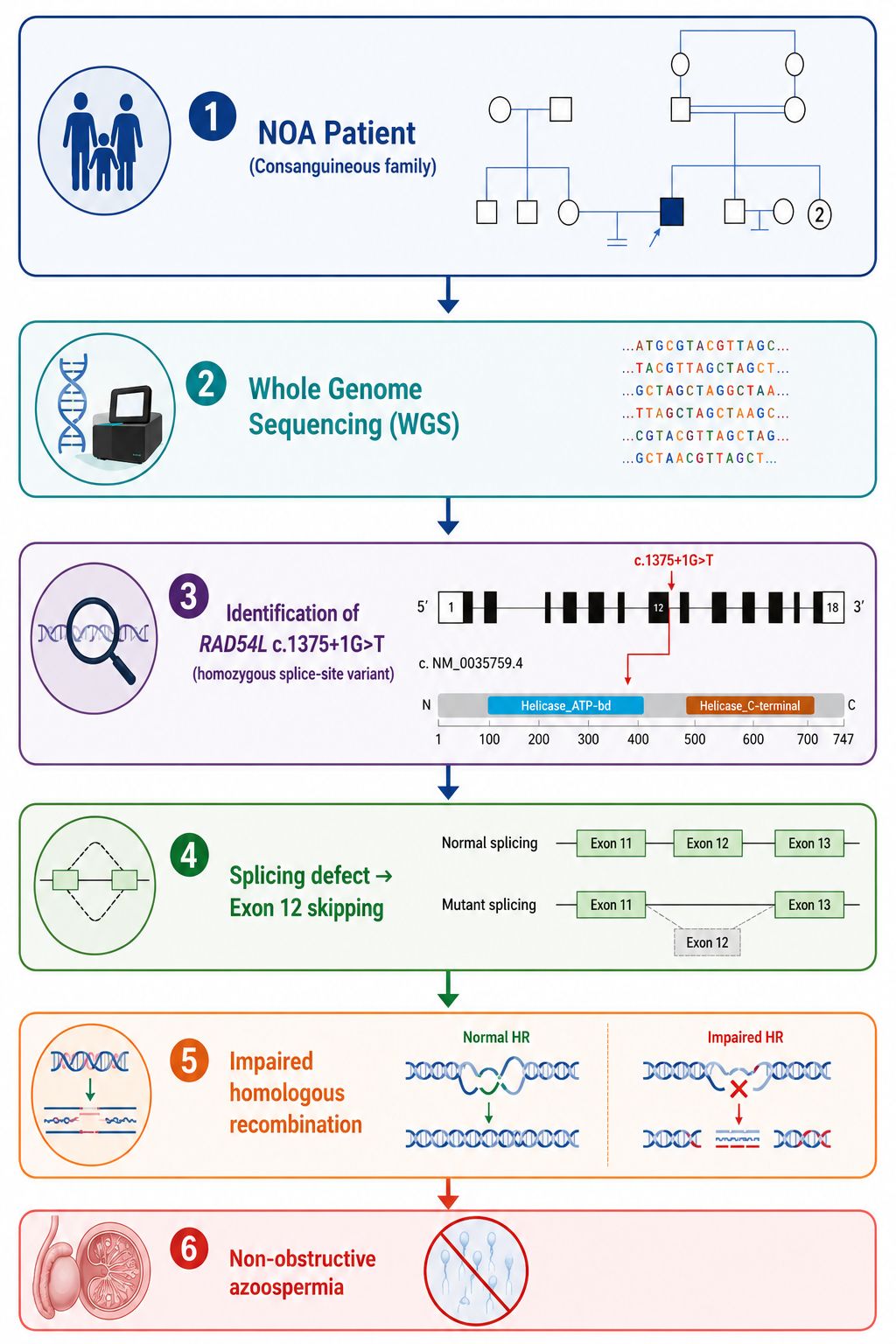
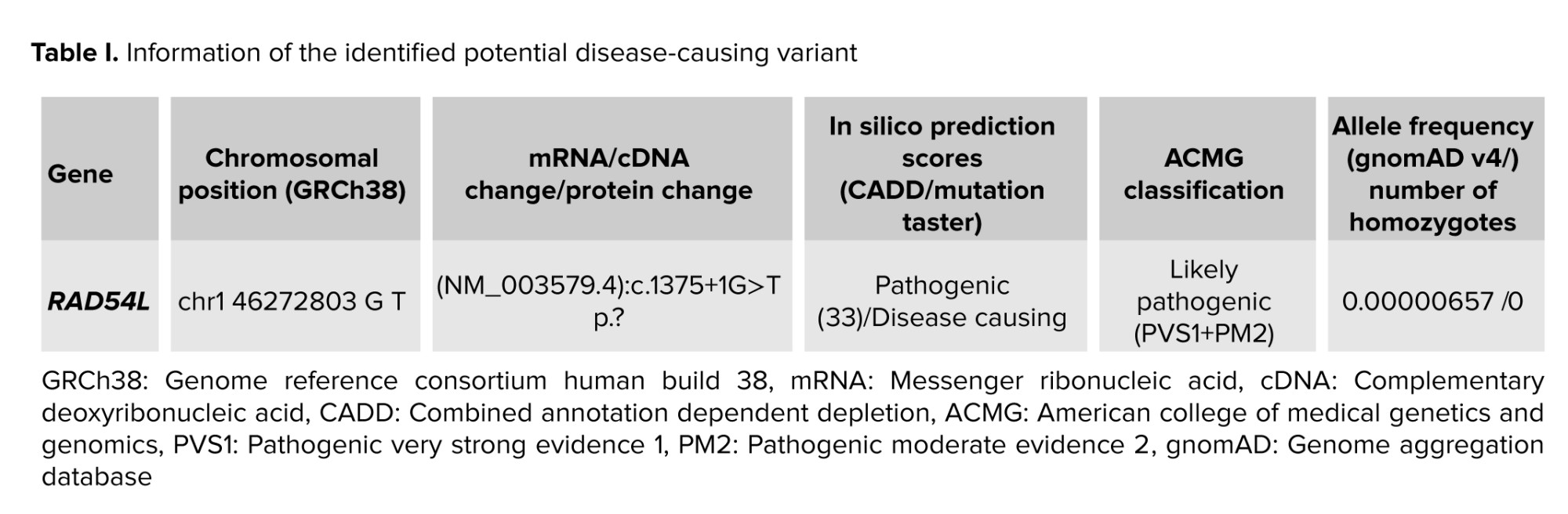
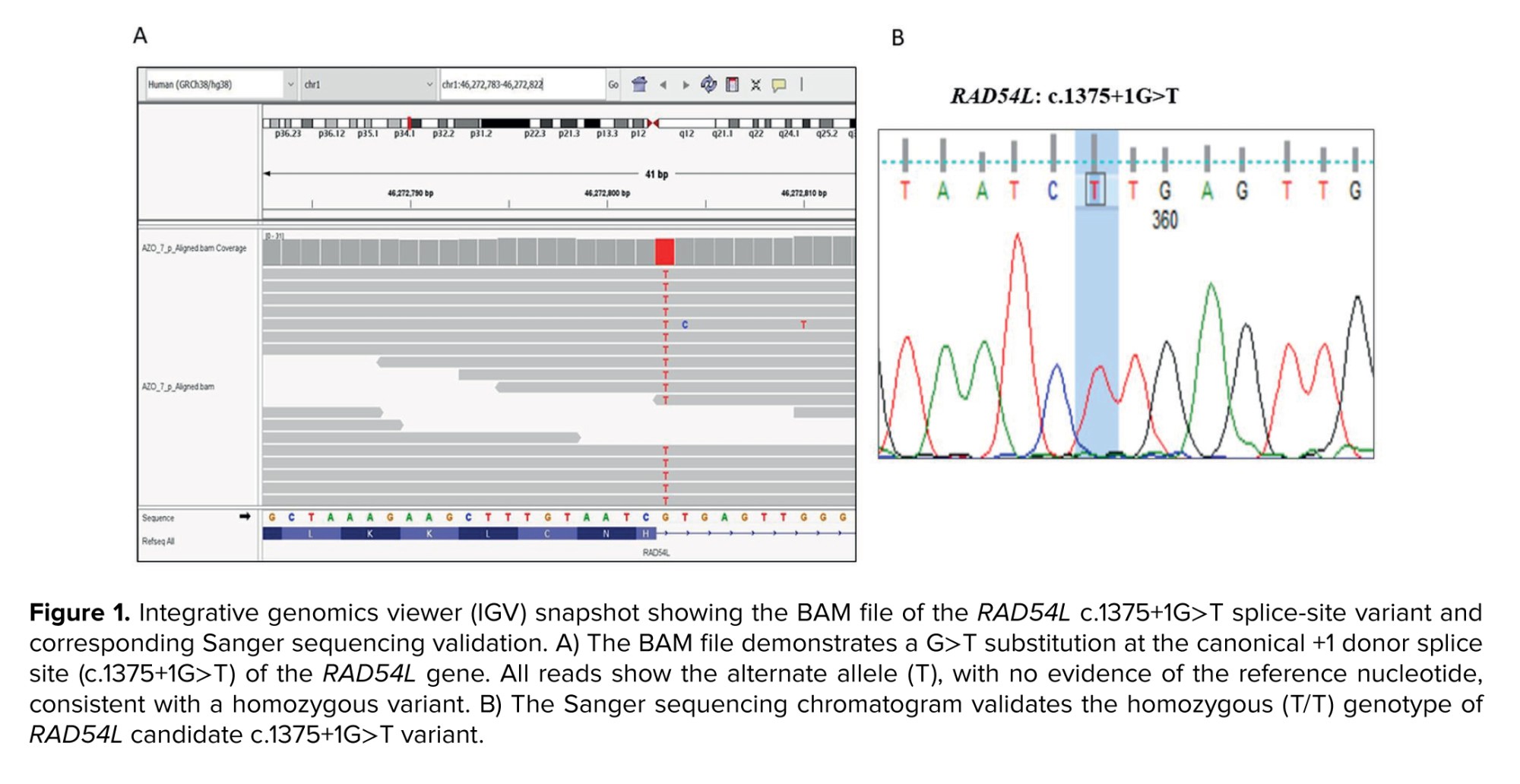
We performed WGS to find potential causative single nucleotide variants or copy number variants. We identified an ultrarare homozygous splicing variant c.1375+1G>T, in the RAD54 like (RAD54L) gene, in one ofthe analyzed cases. This variant lies within the consensus donor splice sequence of intron 12 (Table I). The BAM file and Sanger sequencing result confirm homozygosity of this variant (Figures 1A and 1B). Among human tissues, RAD54L displays the highest expression level in the testis, with 17.35 transcripts per million value (https://gtexportal.org/home/gene/RAD54L).
3.2. Splicing prediction
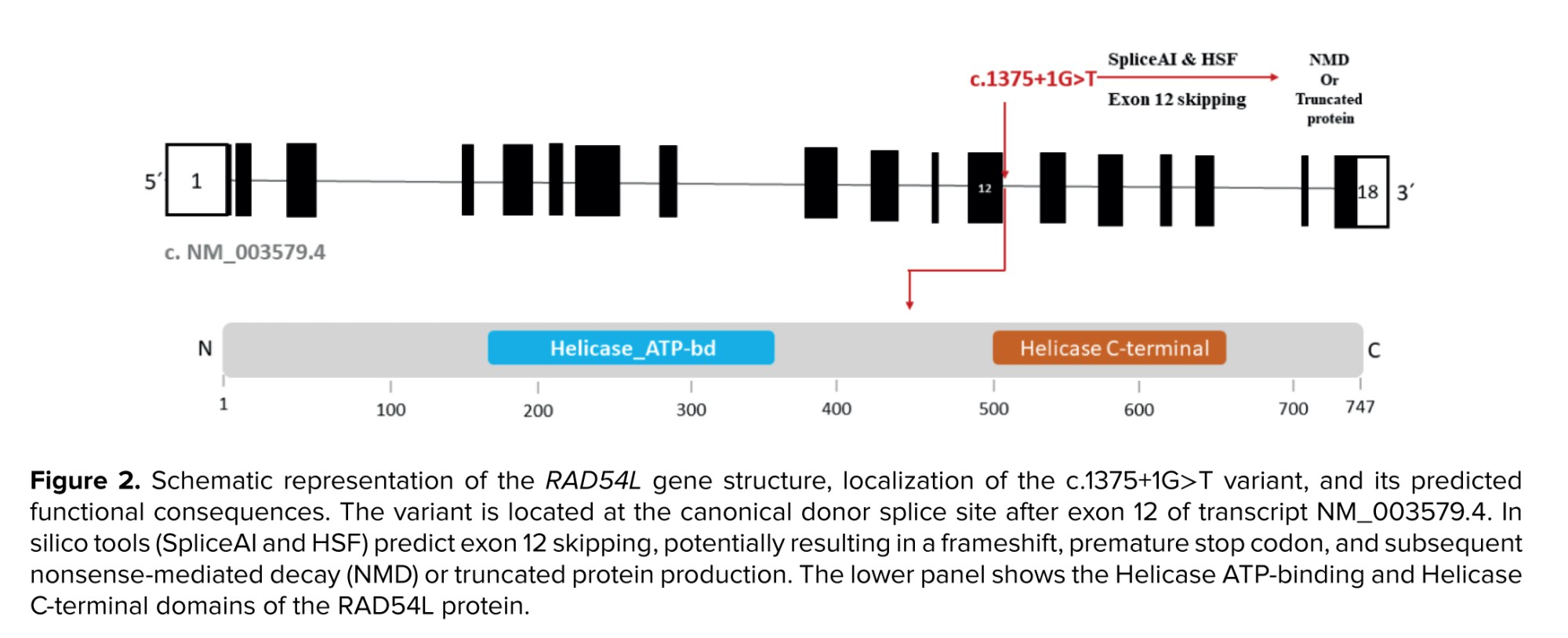
In silico splicing analysis using SpliceAI (donor loss score = 0.96) and HSFpredicted a high-confidence loss of the canonical donor splice site downstream of exon 12, with no evidence for compensatory cryptic splice site activation. The most likely consequence is exon 12 skipping (131 bp), causing a frameshift and premature termination codon, potentially leading to nonsense-mediated decay, or yielding a truncated protein (Figure 2).
3.3. Clinical characteristics
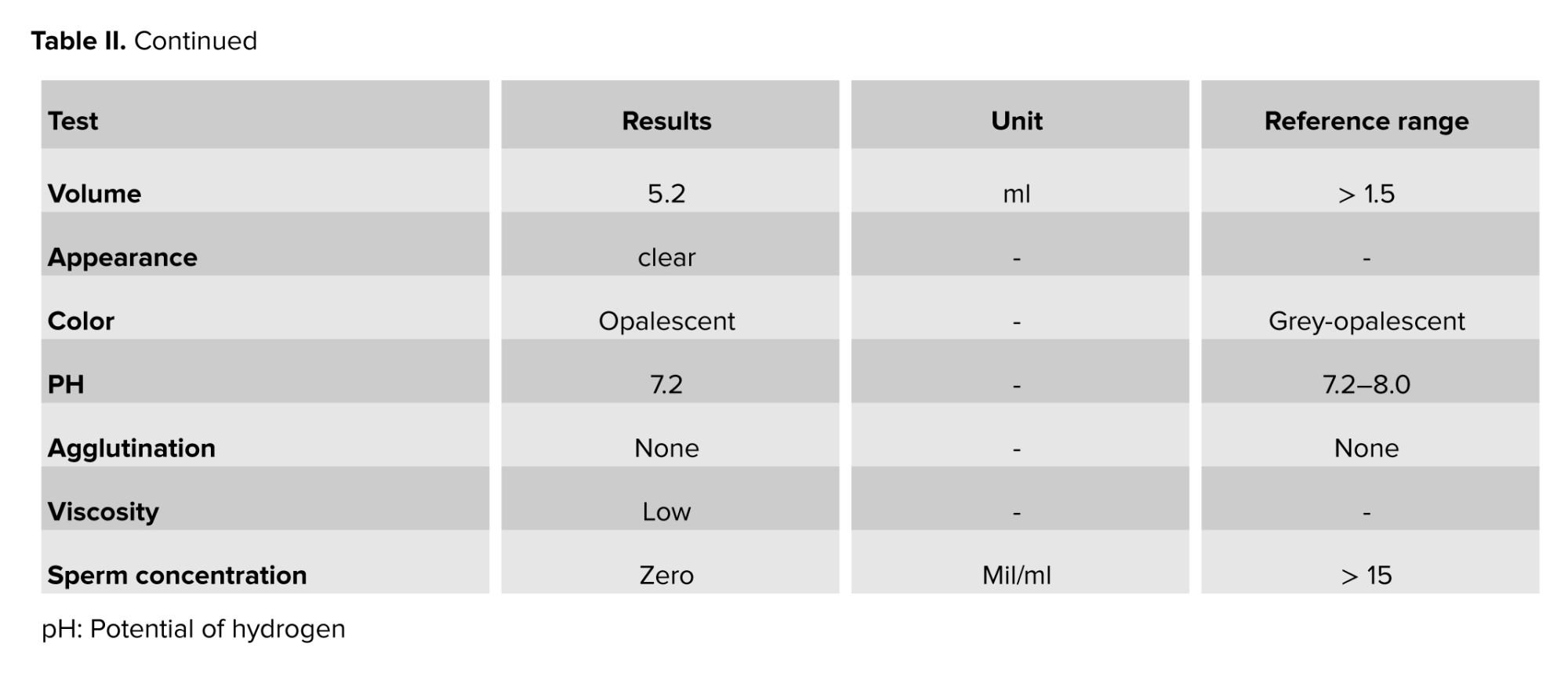
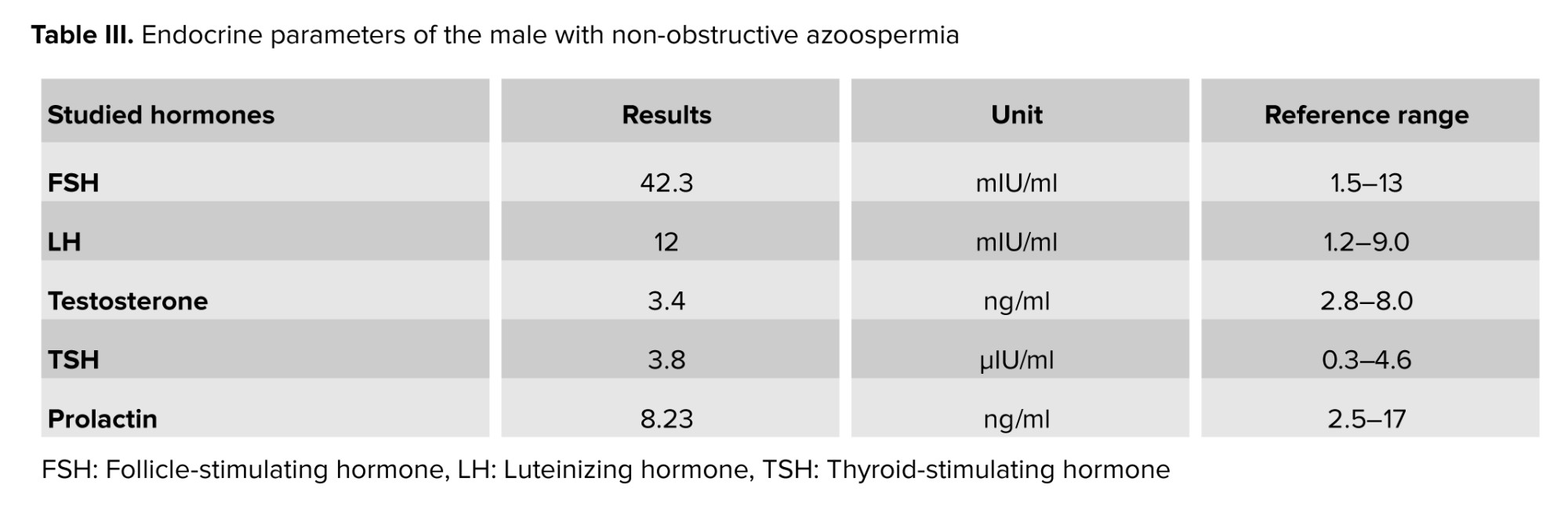
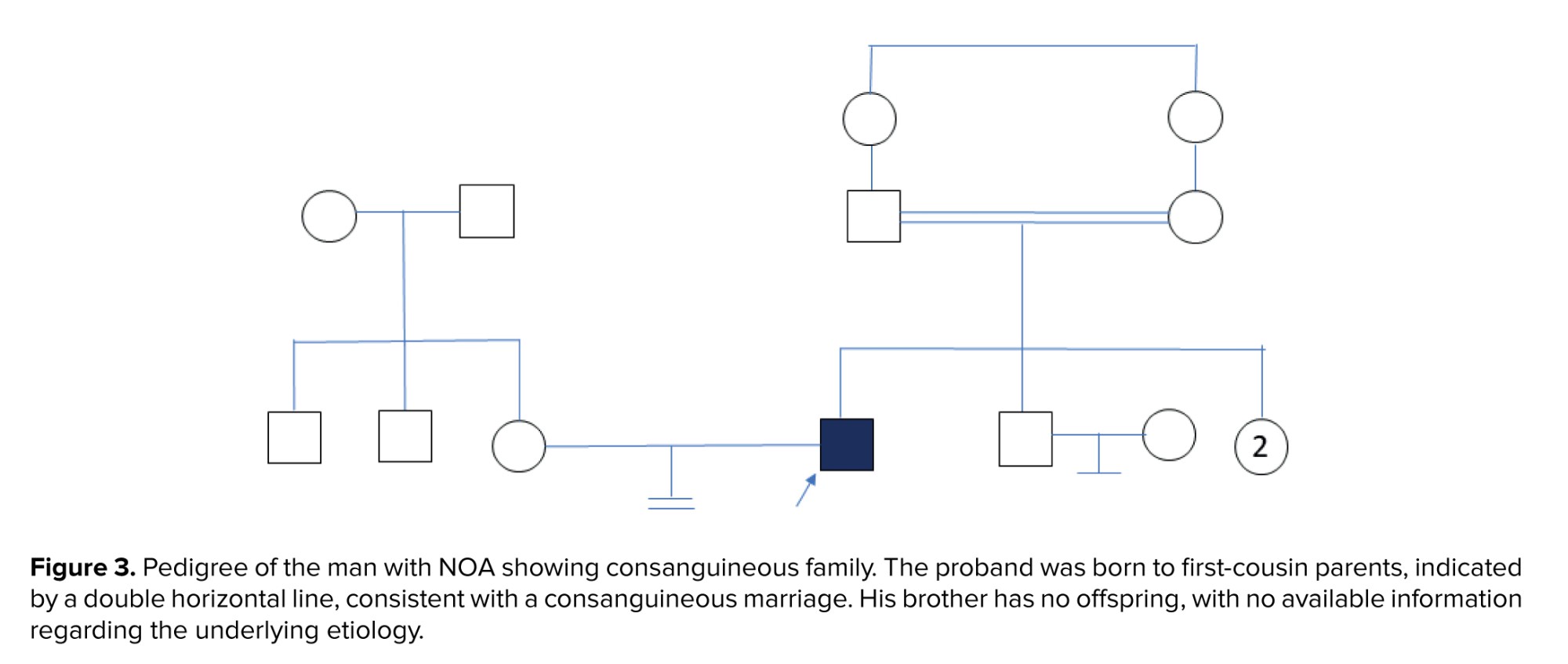
This splicing variant (c.1375+1G>T) in RAD54L was detected in a 36-yr-old man with NOA. He originated from a consanguineous family with first-cousin parents (Figure 3). Semen analysis was consistent with NOA (Table II). His physical examination and karyotype (46, XY) were normal with no Y-chromosomal microdeletions. Hormonal evaluation revealed a significant elevation of serum follicle-stimulating hormone (FSH) and a mild increase in luteinizing hormone. The testosterone level was within the normal reference range but close to its lower limit. Thyroid-stimulating hormone and prolactin concentrations were within the normal limits (Table III).

4. Discussion
In this study, we found a homozygous splicing variant (c.1375+1G>T) in RAD54L in a man diagnosed with NOA from a consanguineous family. Splicing prediction tools indicated that this substitution disrupts normal splicing at the exon 12-intron boundary. Due to the absence of a strong alternative donor site, exon 12 skipping is the most likely outcome, which probably results in a frameshift and introduces a premature termination codon.
RAD54L is a crucial DNA motor protein involved in the homologous recombination (HR) pathway of DNA double-strand break (DSB) repair. The ATPase RAD54L is required for the deposition and stabilization of RAD51 foci at DSBs. It also contributes to chromatin remodeling during HR and promotes dissociation of RAD51 (23, 24). This process is fundamental for maintaining genomic integrity and successful meiosis (25). RAD54L and RAD54B both interact with RAD51 in mammalian cells but have non-overlapping functions. RAD54L is required for proper RAD51 recruitment to meiotic DSBs, whereas RAD54B primarily interacts with DMC1. Therefore, despite their homology, these proteins are not functionally interchangeable (26-29).
RAD54L is essential for normal germ cell development in both male and female mice. Its deficiency leads to impaired primordial germ cell development and increased apoptosis. Although partial germ cell depletion does not markedly affect fertility, RAD54l-deficient males exposed to prenatal genotoxic stress develop complete sterility. These findings highlight the critical role of RAD54L in preserving premeiotic germ cell viability following DNA damage, while Sertoli cell survival appears to be RAD54L-independent (30).
Dysregulation of DNA repair mechanisms, including HR, is increasingly linked to male infertility in both mouse models and humans (30, 31). RAD51 mediates HR repair in mitosis and meiosis. Aconditional knockout mouse model showed that RAD51 was highly expressed in germ cells of the mouse testis. Conditional disruption of RAD51 in germ cells led to a Sertoli cell-only phenotype (32).
RAD54L works downstream of the recombinase RAD51 in HR and is known to regulate replication fork progression and nascent strand degradation, especially in cells deficient in BRCA1/2, another HR pathway component (25). Given that HR is essential for successful meiotic recombination and accurate chromosome segregation during spermatogenesis (31, 33), any deficiency in RAD54L would likely lead to meiotic arrest and spermatogenic failure, mirroring findings for other HR genes. For instance, bi-allelic variants in SHOC1, a gene that plays a key role in HR and crossing over in meiotic prophase I in male and female germ cells, cause NOA with meiotic arrest in both humans and mice (31). Similarly, mutations in genes like FANCM and TEX11, also involved in DNA repair and meiotic processes, have been linked to Sertoli cell-only syndrome and NOA in humans (34, 35).
Research indicates that RAD54L is frequently overexpressed in various cancer types, and this overexpression is often associated with poorer prognosis. For instance, high RAD54L expression has been linked to bladder cancer progression, affecting cell cycle regulation and senescence (36). Similarly, in hepatocellular carcinoma, elevated RAD54L expression promotes disease progression, and has been identified as a prognostic biomarker (37). Some studies have identifiedsomatic and germline mutations in one allele of RAD54L in non-Hodgkin’s lymphoma, breast, and colorectal cancers (38).
In Rad54−/− male mice, mild reproductive effects, including a reduced number of spermatogonia in adult testes and decreased recombination efficiency, have been detected (30). Furthermore, during meiotic prophase I, abnormal RAD51 distribution has been observed. Impaired RAD54L function also leads to a marked increase in chromosomal aberrations, some of which persist through meiosis and may result in the generation of unbalanced gametes (39). Although RAD54L has the highest expression in the human testis and has been implicated in HR pathways relevant to male infertility, germline variants associated with NOA in humans have not yet been reported. Cancer-associated phenotypes linked to RAD54L are typically related to heterozygous or somatic variants, whereas our case has a germline homozygous splice-site variant presenting with an early-onset reproductive phenotype.
The hormonal profile is consistent with primary testicular failure. The main limitation of this study was the unavailability of other family members for segregation analysis, the lack of micro-TESE results, and the absence of RNA-based functional validation to confirm exon 12 skipping due to the unavailability of fresh samples for RNA extraction.
5. Conclusion
In summary, we identified an ultrarare homozygous splice-site variant (c.1375+1G>T) in the RAD54L gene in a man with NOA from a consanguineous family. In silico analysis strongly predicted disruption of the canonical donor splice site, most likely resulting in exon skipping, frameshift, and premature protein truncation or nonsense-mediated mRNA decay. Since RAD54L is important for HR and DNA DSB repair during meiosis, a defect inthis gene could disrupt spermatogenesis and lead to testicular failure.
This is the first study that suggests a germline RAD54L variant as a cause of human NOA. The result of this study expands the range of genes involved in male infertility. These results further emphasize the importance of WGS in identifying rare genetic causes of idiopathic NOA, particularly in individuals from with consanguineous backgrounds. Functional studies and validation in larger patient cohorts are necessary to confirm the pathogenic role of RAD54L variants in male infertility and to clarify their clinical implications.
Data Availability
The findings of this study are available upon reasonable request from the corresponding author.
Author Contributions
R. Ebrahimi Askari designed the study, prepared the samples, performed variant filtering and interpretation, and drafted the manuscript. A. Malcher coordinated the study, contributed to data interpretation and assisted in editing and finalizing the manuscript. S. Sadeghzadeh assisted with sample preparation and data interpretation. R. Ibrahim contributed to variant filtering and data interpretation and assisted in editing the manuscript. A. Srivastava and K. Pastuszak conducted the bioinformatics analysis. SM. Kalantar contributed to patient selection. S. Vahidi recruited the patients and reviewed their medical histories. N. Ghasemi coordinated the study, supervised the project, and contributed to patient selection. M. Kurpisz coordinated and supervised the project and participated in manuscript editing and finalization. All authors read and approved the final version of the manuscript.
The data presented in this manuscript originate from an international collaborative project involving two research centers. Therefore, we have designated two corresponding authors, one from each center.
Acknowledgments
This work was supported by the National Science Center of Poland (grant no. 2020/37/B/NZ5/00549 [to MK]). Kite-AI was used to assist with language editing.
Conflict of Interest
The authors declare that there is no conflict of interest.
Infertility is the inability to conceive after 1 yr of regular unprotected intercourse. It affects about 186 million people worldwide (1). Male infertility accounts for nearly 50% of infertility cases (2). Non-obstructive azoospermia (NOA), which is characterized by the absence of sperm in ejaculate despite no obstruction, affects about 1% of men and represents 15% of infertility cases (3, 4). More than 70% of NOA cases are idiopathic. Most NOA cases have primary testicular failure. The 3 most common histological classifications of NOA are Sertoli cell-only syndrome, hypospermatogenesis, and maturation arrest (5).
While chromosomal abnormalities and Y-chromosome microdeletions are well-established genetic causes, a significant proportion of NOA cases remain idiopathic, indicating a complex genetic heterogeneity. Many cases of NOA still lack a clear genetic explanation, highlighting the need for continued research into novel genes and regulatory mechanisms (6). A percentage of NOA cases are caused by monogenic mutations. More than 30 potential genes linked to NOA have been found using whole-exome sequencing (7). Whole-genome sequencing (WGS) provides a more comprehensive approach by detecting variations in both coding and non-coding regions, such as single nucleotide variants, insertions/deletions, and structural variants (8).
The spermatogenesisinvolves approximately 4000 genes. However, monogenic causes of NOA remain poorly understood. This is largely due to the high genetic heterogeneity associated with the complex processes of spermatogenesis and testicular function, along with the limited availability of analysis of consanguineous familial cases and validation studies (9). Consanguineous families could be especially appropriate for genetic research aimed at identifying genetic variants. Offspring of consanguineous marriages are more likely to inherit 2 copies of a rare deleterious allele, which can result in homozygous recessive disorders (10).
Future research will continue to leverage whole-exome sequencing and WGS to uncover more monogenic causes, potentially identifying new biomarkers for diagnostic and prognostic purposes (11, 12). In this study, we used WGS to identify potential genetic etiology of NOA in 10 males.
2. Materials and Methods
2.1. Patient selection and sample preparation
For this experimental study in 2023, 10 men from consanguineous families were referred to the Infertility Center of the Yazd Reproductive Sciences Institute, Yazd, Iran. They had normal karyotypes, no Y-chromosome microdeletions, and no history of drug abuse, varicocele, testicular torsion, orchitis, or cryptorchidism. A 10 ml whole-blood sample was collected in sterile, single-use ethylenediaminetetraacetic acid-containing tubes for genomic DNA extraction from each participant. DNA was isolated using the High Pure Polymerase Chain Reaction Template Preparation kit (Roche Diagnostics GmbH, Mannheim, Germany) in accordance with the manufacturer’s instructions. DNA concentration and purity were evaluated using a NanoDrop 1000 spectrophotometer (Thermo Scientific, Waltham, MA, USA) and a Quantus fluorometer (Promega, Madison, WI, USA). The purified DNA samples were stored at -20°C until further analysis.
2.2. WGS and variant prioritization
The genomic DNA samples were sequenced on the Illumina NovaSeq X platform, with an average depth of ×30 (~120 Gbp). Sequencing quality was checked with FastQC (v0.12.0). Raw FASTQ files were processed using cgpmap. Reads were aligned to the GRCh38 reference genome using Burrows-Wheeler Aligner-Maximal Exact Matches. Duplicate reads were marked with biobambam2, and post-processing was performed using SAMtools (13-15). Variants were called using DeepVariant (v1.6.0), and only variants that passed the internal quality filters were retained (16). VCFtools (v0.1.16) was used to filter variants by applying a minimum quality score ≥ 30, a mean read depth (DP) ≥ 10×, and a genotype call rate of ≥ 90% (17).
Variants were annotated using Ensembl Variant Effect Predictor (release 112) (18). Pathogenicity scores from dbNSFP (version 4.4a) were added using SnpSift (v5.2) (19, 20). Variants with a genome allele frequency of 1% or higher in gnomAD were excluded. Variants without gnomAD frequency data were kept to detect potentially novel rare variants. Further analyses focused on variant type, inheritance pattern, and pathogenicity predictions from MutationTaster. Gene expression data were evaluated using the genotype-tissue expression (v7) database.
We reviewed the literature using PubMed to see how candidate genes might affect fertility. Gene IDs combined with keywords such as “spermatogenesis”, “infertility”, “azoospermia”, and “reproductive biology” were searched. Additionally, copy-number variants were detected using ClinSV (v1.0) and assessed for a comprehensive analysis of genomic alterations associated with male infertility (20).
2.3. Splicing prediction
To evaluate the potential impact of the variant on canonical 5′ donor and 3′ acceptor splice sites, as well as to predict the creation or activation of cryptic splice sites, in silico analyses were performed using SpliceAI, a deep learning-based splicing prediction tool, and human splicing finder (HSF) (21, 22).
2.4. Sanger sequencing
To validate the candidate variants identified through WGS, Sanger sequencing was performed using an ABI 3500XL genetic analyzer. Analyses were performed with Finch TV software (v1.4.0). The following RAD54L primer sequences (5′-3′) were used: forward, [F: TCCTGTTTTCTCTAGATGCCT]; reverse, [R: TGCCCAACATTGTATATGAGC].
2.5. Ethical Considerations
Written informed consent was obtained from the NOA cases for genome sequencing and other described studies. Sample collection was conducted under protocols approved by the working group of the ethics committee in research of Shahid Sadoughi University of Medical Sciences, Yazd, Iran (Code: IR.SSU.MEDICINE.REC.1402.124).
3. Result
3.1. Identified potential causative variant
We performed WGS to find potential causative single nucleotide variants or copy number variants. We identified an ultrarare homozygous splicing variant c.1375+1G>T, in the RAD54 like (RAD54L) gene, in one ofthe analyzed cases. This variant lies within the consensus donor splice sequence of intron 12 (Table I). The BAM file and Sanger sequencing result confirm homozygosity of this variant (Figures 1A and 1B). Among human tissues, RAD54L displays the highest expression level in the testis, with 17.35 transcripts per million value (https://gtexportal.org/home/gene/RAD54L).
3.2. Splicing prediction
In silico splicing analysis using SpliceAI (donor loss score = 0.96) and HSFpredicted a high-confidence loss of the canonical donor splice site downstream of exon 12, with no evidence for compensatory cryptic splice site activation. The most likely consequence is exon 12 skipping (131 bp), causing a frameshift and premature termination codon, potentially leading to nonsense-mediated decay, or yielding a truncated protein (Figure 2).
3.3. Clinical characteristics
This splicing variant (c.1375+1G>T) in RAD54L was detected in a 36-yr-old man with NOA. He originated from a consanguineous family with first-cousin parents (Figure 3). Semen analysis was consistent with NOA (Table II). His physical examination and karyotype (46, XY) were normal with no Y-chromosomal microdeletions. Hormonal evaluation revealed a significant elevation of serum follicle-stimulating hormone (FSH) and a mild increase in luteinizing hormone. The testosterone level was within the normal reference range but close to its lower limit. Thyroid-stimulating hormone and prolactin concentrations were within the normal limits (Table III).
4. Discussion
In this study, we found a homozygous splicing variant (c.1375+1G>T) in RAD54L in a man diagnosed with NOA from a consanguineous family. Splicing prediction tools indicated that this substitution disrupts normal splicing at the exon 12-intron boundary. Due to the absence of a strong alternative donor site, exon 12 skipping is the most likely outcome, which probably results in a frameshift and introduces a premature termination codon.
RAD54L is a crucial DNA motor protein involved in the homologous recombination (HR) pathway of DNA double-strand break (DSB) repair. The ATPase RAD54L is required for the deposition and stabilization of RAD51 foci at DSBs. It also contributes to chromatin remodeling during HR and promotes dissociation of RAD51 (23, 24). This process is fundamental for maintaining genomic integrity and successful meiosis (25). RAD54L and RAD54B both interact with RAD51 in mammalian cells but have non-overlapping functions. RAD54L is required for proper RAD51 recruitment to meiotic DSBs, whereas RAD54B primarily interacts with DMC1. Therefore, despite their homology, these proteins are not functionally interchangeable (26-29).
RAD54L is essential for normal germ cell development in both male and female mice. Its deficiency leads to impaired primordial germ cell development and increased apoptosis. Although partial germ cell depletion does not markedly affect fertility, RAD54l-deficient males exposed to prenatal genotoxic stress develop complete sterility. These findings highlight the critical role of RAD54L in preserving premeiotic germ cell viability following DNA damage, while Sertoli cell survival appears to be RAD54L-independent (30).
Dysregulation of DNA repair mechanisms, including HR, is increasingly linked to male infertility in both mouse models and humans (30, 31). RAD51 mediates HR repair in mitosis and meiosis. Aconditional knockout mouse model showed that RAD51 was highly expressed in germ cells of the mouse testis. Conditional disruption of RAD51 in germ cells led to a Sertoli cell-only phenotype (32).
RAD54L works downstream of the recombinase RAD51 in HR and is known to regulate replication fork progression and nascent strand degradation, especially in cells deficient in BRCA1/2, another HR pathway component (25). Given that HR is essential for successful meiotic recombination and accurate chromosome segregation during spermatogenesis (31, 33), any deficiency in RAD54L would likely lead to meiotic arrest and spermatogenic failure, mirroring findings for other HR genes. For instance, bi-allelic variants in SHOC1, a gene that plays a key role in HR and crossing over in meiotic prophase I in male and female germ cells, cause NOA with meiotic arrest in both humans and mice (31). Similarly, mutations in genes like FANCM and TEX11, also involved in DNA repair and meiotic processes, have been linked to Sertoli cell-only syndrome and NOA in humans (34, 35).
Research indicates that RAD54L is frequently overexpressed in various cancer types, and this overexpression is often associated with poorer prognosis. For instance, high RAD54L expression has been linked to bladder cancer progression, affecting cell cycle regulation and senescence (36). Similarly, in hepatocellular carcinoma, elevated RAD54L expression promotes disease progression, and has been identified as a prognostic biomarker (37). Some studies have identifiedsomatic and germline mutations in one allele of RAD54L in non-Hodgkin’s lymphoma, breast, and colorectal cancers (38).
In Rad54−/− male mice, mild reproductive effects, including a reduced number of spermatogonia in adult testes and decreased recombination efficiency, have been detected (30). Furthermore, during meiotic prophase I, abnormal RAD51 distribution has been observed. Impaired RAD54L function also leads to a marked increase in chromosomal aberrations, some of which persist through meiosis and may result in the generation of unbalanced gametes (39). Although RAD54L has the highest expression in the human testis and has been implicated in HR pathways relevant to male infertility, germline variants associated with NOA in humans have not yet been reported. Cancer-associated phenotypes linked to RAD54L are typically related to heterozygous or somatic variants, whereas our case has a germline homozygous splice-site variant presenting with an early-onset reproductive phenotype.
The hormonal profile is consistent with primary testicular failure. The main limitation of this study was the unavailability of other family members for segregation analysis, the lack of micro-TESE results, and the absence of RNA-based functional validation to confirm exon 12 skipping due to the unavailability of fresh samples for RNA extraction.
5. Conclusion
In summary, we identified an ultrarare homozygous splice-site variant (c.1375+1G>T) in the RAD54L gene in a man with NOA from a consanguineous family. In silico analysis strongly predicted disruption of the canonical donor splice site, most likely resulting in exon skipping, frameshift, and premature protein truncation or nonsense-mediated mRNA decay. Since RAD54L is important for HR and DNA DSB repair during meiosis, a defect inthis gene could disrupt spermatogenesis and lead to testicular failure.
This is the first study that suggests a germline RAD54L variant as a cause of human NOA. The result of this study expands the range of genes involved in male infertility. These results further emphasize the importance of WGS in identifying rare genetic causes of idiopathic NOA, particularly in individuals from with consanguineous backgrounds. Functional studies and validation in larger patient cohorts are necessary to confirm the pathogenic role of RAD54L variants in male infertility and to clarify their clinical implications.
Data Availability
The findings of this study are available upon reasonable request from the corresponding author.
Author Contributions
R. Ebrahimi Askari designed the study, prepared the samples, performed variant filtering and interpretation, and drafted the manuscript. A. Malcher coordinated the study, contributed to data interpretation and assisted in editing and finalizing the manuscript. S. Sadeghzadeh assisted with sample preparation and data interpretation. R. Ibrahim contributed to variant filtering and data interpretation and assisted in editing the manuscript. A. Srivastava and K. Pastuszak conducted the bioinformatics analysis. SM. Kalantar contributed to patient selection. S. Vahidi recruited the patients and reviewed their medical histories. N. Ghasemi coordinated the study, supervised the project, and contributed to patient selection. M. Kurpisz coordinated and supervised the project and participated in manuscript editing and finalization. All authors read and approved the final version of the manuscript.
The data presented in this manuscript originate from an international collaborative project involving two research centers. Therefore, we have designated two corresponding authors, one from each center.
Acknowledgments
This work was supported by the National Science Center of Poland (grant no. 2020/37/B/NZ5/00549 [to MK]). Kite-AI was used to assist with language editing.
Conflict of Interest
The authors declare that there is no conflict of interest.
Type of Study: Original Article |
Subject:
Reproductive Genetics
Send email to the article author
| Rights and permissions | |
 |
This work is licensed under a Creative Commons Attribution-NonCommercial 4.0 International License. |