
International Journal of
Reproductive Biomedicine
Tue, Oct 13, 2026
[Archive]
Volume 24, Issue 6 (June 2026)
IJRM 2026, 24(6): 517-526 |
Back to browse issues page



Ethics code: IR.ACECR.AVICENNA.REC.1402.022


Download citation:
BibTeX | RIS | EndNote | Medlars | ProCite | Reference Manager | RefWorks
Send citation to:


BibTeX | RIS | EndNote | Medlars | ProCite | Reference Manager | RefWorks
Send citation to:
Karimi A, Dadgar A, Saffari H, Vahedi N, Saket S, Arefi S. Evaluation of intralipid effect on pregnancy outcomes in women with recurrent implantation failure: A retrospective cohort study. IJRM 2026; 24 (6) :517-526
URL: http://ijrm.ir/article-1-3857-en.html
URL: http://ijrm.ir/article-1-3857-en.html
Atoosa Karimi1 

 , Aniseh Dadgar2 , Haniyeh Saffari1 , Nazanin Vahedi1 , Sasan Saket3 , Soheila Arefi *4
, Aniseh Dadgar2 , Haniyeh Saffari1 , Nazanin Vahedi1 , Sasan Saket3 , Soheila Arefi *4
1- Reproductive Biotechnology Research Center, Avicenna Research Institute, ACECR, Tehran, Iran.
2- Department of Epidemiology and Biostatistics, School of Public Health, Tehran University of Medical Sciences, Tehran, Iran.
3- Department of Pediatric Neurology, School of Medicine, Mofid Children's Hospital, Iranian Child Neurology Center of Excellence (ICNCE), Pediatric Neurology Research Center, Shahid Beheshti University of Medical Sciences, Tehran, Iran.
4- Reproductive Biotechnology Research Center, Avicenna Research Institute, ACECR, Tehran, Iran. ,s.arefi@avicenna.ac.ir
2- Department of Epidemiology and Biostatistics, School of Public Health, Tehran University of Medical Sciences, Tehran, Iran.
3- Department of Pediatric Neurology, School of Medicine, Mofid Children's Hospital, Iranian Child Neurology Center of Excellence (ICNCE), Pediatric Neurology Research Center, Shahid Beheshti University of Medical Sciences, Tehran, Iran.
4- Reproductive Biotechnology Research Center, Avicenna Research Institute, ACECR, Tehran, Iran. ,
Keywords: Fat emulsions, Intravenous, Embryo implantation failure, Fertilization in vitro, Pregnancy outcome, Immunomodulation.
Full-Text [PDF 399 kb]
(386 Downloads)
| Abstract (HTML) (482 Views)
2. Materials and Methods
2.1. Study design and population
3. Results
Full-Text: (54 Views)
1. Introduction
Infertility affects approximately 8-12% of couples worldwide, with recurrent implantation failure (RIF) representing a major barrier to success in assisted reproductive technology (ART) (1). Despite advancements in ART, pregnancy rates per embryo transfer (ET) remain suboptimal, and RIF (defined as the failure to achieve clinical pregnancy after at least 2 transfers of good-quality embryos) continues to be a distressing condition for both clinicians and infertile couples (2).
The etiology of RIF is multifactorial; however, immunological dysregulation, particularly aberrant natural killer (NK) cell activity, has emerged as a key postulated mechanism underlying implantation failure (3). Intralipid, an intravenous fat emulsion composed of soybean oil and egg phospholipids, has been proposed as an immunomodulatory intervention capable of suppressing uterine NK cell cytotoxicity, modulating the Th1/Th2 cytokine balance toward a tolerogenic profile, and thereby enhancing endometrial receptivity (4). Nevertheless, clinical evidence regarding its efficacy remains inconsistent.
Although intravenous intralipid is not recommended as a routine treatment for recurrent miscarriage (RM) or implantation failure, sufficient data to suggest its consideration in cases who have failed standard therapies and who have immunological risk factors require further study (5). Recent systematic reviews and emerging clinical studies have suggested that intralipid infusion may primarily influence early implantation processes in women with RIF. Coulam previously examined intralipid treatment for women experiencing reproductive failures, providing foundational data in this area (6). A 2021 meta-analysis demonstrated significant improvements in implantation and clinical pregnancy rates following intravenous intralipid administration, although evidence regarding later-stage outcomes remains inconsistent (7). Similarly, more recent retrospective data have reported higher clinical pregnancy rates in RIF cases receiving intralipid, supporting its potential role as an adjunct therapy mainly affecting early embryo-endometrium interaction rather than subsequent gestational progression (8). While some studies report improved pregnancy rates (9), others have found no significant benefit (10). Its mechanism of action, such as effects on regulatory T-cells is not fully elucidated (11).
Given the ongoing controversy, the relative affordability and accessibility of intralipid compared to other immunotherapies, and the paucity of data from historical cohort studies in this population, this study aimed to evaluate the effect of intralipid infusion on pregnancy outcomes in women with a history of RIF.
The etiology of RIF is multifactorial; however, immunological dysregulation, particularly aberrant natural killer (NK) cell activity, has emerged as a key postulated mechanism underlying implantation failure (3). Intralipid, an intravenous fat emulsion composed of soybean oil and egg phospholipids, has been proposed as an immunomodulatory intervention capable of suppressing uterine NK cell cytotoxicity, modulating the Th1/Th2 cytokine balance toward a tolerogenic profile, and thereby enhancing endometrial receptivity (4). Nevertheless, clinical evidence regarding its efficacy remains inconsistent.
Although intravenous intralipid is not recommended as a routine treatment for recurrent miscarriage (RM) or implantation failure, sufficient data to suggest its consideration in cases who have failed standard therapies and who have immunological risk factors require further study (5). Recent systematic reviews and emerging clinical studies have suggested that intralipid infusion may primarily influence early implantation processes in women with RIF. Coulam previously examined intralipid treatment for women experiencing reproductive failures, providing foundational data in this area (6). A 2021 meta-analysis demonstrated significant improvements in implantation and clinical pregnancy rates following intravenous intralipid administration, although evidence regarding later-stage outcomes remains inconsistent (7). Similarly, more recent retrospective data have reported higher clinical pregnancy rates in RIF cases receiving intralipid, supporting its potential role as an adjunct therapy mainly affecting early embryo-endometrium interaction rather than subsequent gestational progression (8). While some studies report improved pregnancy rates (9), others have found no significant benefit (10). Its mechanism of action, such as effects on regulatory T-cells is not fully elucidated (11).
Given the ongoing controversy, the relative affordability and accessibility of intralipid compared to other immunotherapies, and the paucity of data from historical cohort studies in this population, this study aimed to evaluate the effect of intralipid infusion on pregnancy outcomes in women with a history of RIF.
2. Materials and Methods
2.1. Study design and population
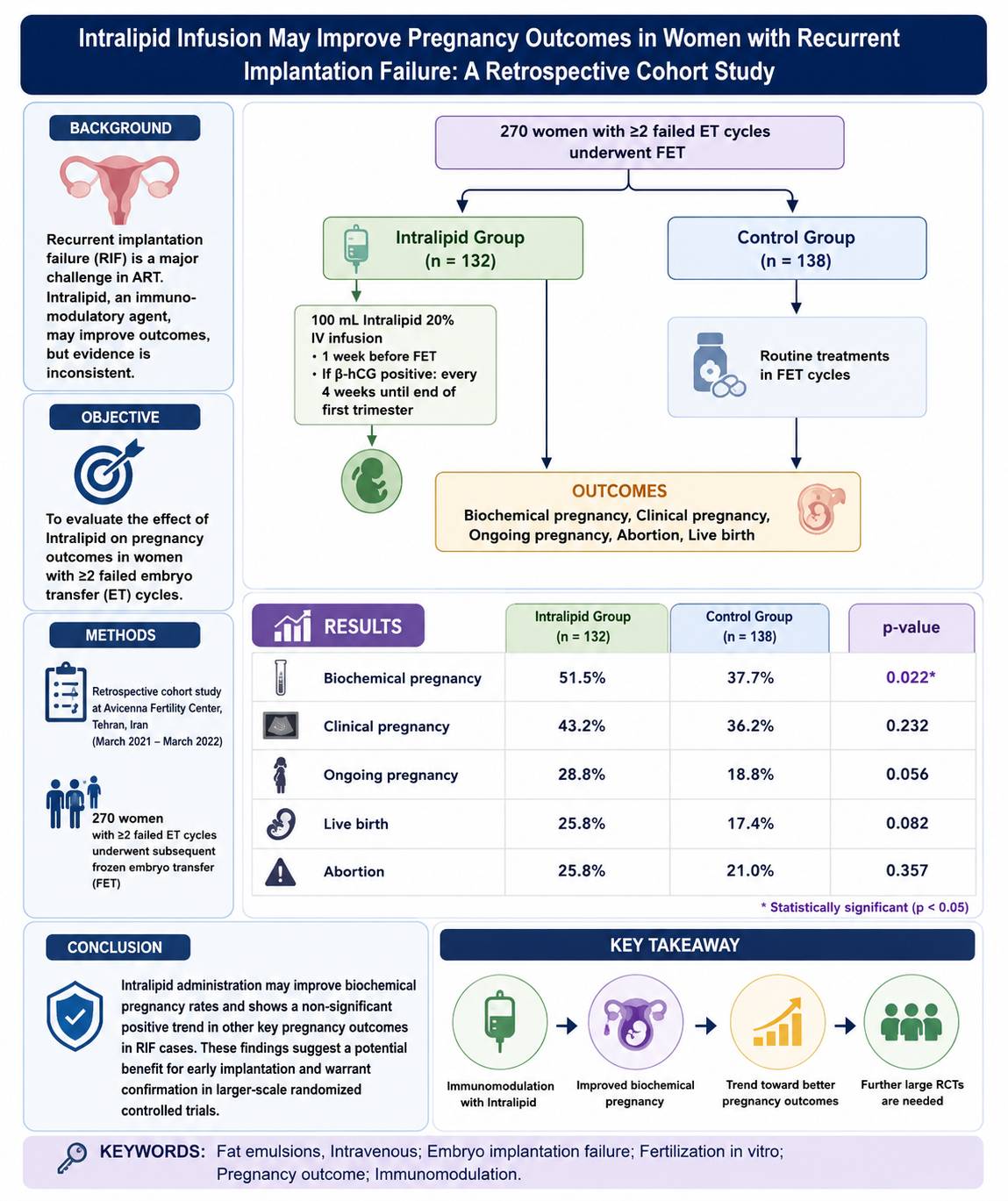
In this retrospective cohort study, data of 270 women with at least 2 previous failed ET cycles who underwent a subsequent frozen embryo transfer (FET) at the Avicenna Fertility Center, Tehran, Iran, from March 2021 and March 2022 were extracted from their medical records.
Extracted data included group assignment, age, body mass index (BMI), gravidity, parity, anti-Müllerian hormone (AMH) level, number of embryos transferred in the last cycle, beta-human chorionic gonadotropin (β-hCG) results, fetal heart rate detection, abortion, ongoing pregnancy, and live birth outcomes.
The groups were:
Extracted data included group assignment, age, body mass index (BMI), gravidity, parity, anti-Müllerian hormone (AMH) level, number of embryos transferred in the last cycle, beta-human chorionic gonadotropin (β-hCG) results, fetal heart rate detection, abortion, ongoing pregnancy, and live birth outcomes.
The groups were:
- Intralipid group (n = 132): received 100 mL intravenous infusion of intralipid 20% (SMOFLIPID 20%, Fresenius Kabi) 1 wk before FET, if β-hCG was positive, the same dose of intralipid was infused every 4 wk until the end of the first trimester.
- Control group (n = 138): received standard routine treatment for the FET cycle.
Based on the statistical calculations performed for the study proposal, a sample size of 130 participants per group (intralipid and control) was determined, accounting for potential attrition due to missing records or incomplete data.
The sample size was determined based on the standard formula for comparing 2 independent proportions.
Assuming an expected implantation success rate of p1 = 0.57 in the intervention group (intralipid administration) and p2 = 0.40 in the control group, with a significance level of α = 0.05 and a statistical power of 80%, the following formula was applied:

Where:
The sample size was determined based on the standard formula for comparing 2 independent proportions.
Assuming an expected implantation success rate of p1 = 0.57 in the intervention group (intralipid administration) and p2 = 0.40 in the control group, with a significance level of α = 0.05 and a statistical power of 80%, the following formula was applied:
Where:
2.2. Inclusion and exclusion criteria
Women aged 25-45 yr with a history of at least 2 failed ET cycles using good-quality embryos (grade A or AB based on morphological characteristics) and a normal uterine cavity confirmed by hysterosalpingography or 3-dimensional transvaginal sonography were eligible for inclusion. Women were excluded if they had severe male factor infertility requiring surgical sperm retrieval, untreated thyroid dysfunction or any uncontrolled systemic disease (including diabetes, hypertension, or renal/hepatic insufficiency), diagnosed autoimmune disorders such as lupus or rheumatoid arthritis, endometriosis, or an endometrial thickness < 7 mm on transvaginal ultrasound performed between days 8 and 12 of the FET cycle.
The treatment process of both groups was carried out according to the usual routine of FET cycle at the Avicenna Fertility Center, Tehran, Iran as follows:
A vaginal ultrasound was performed on the 2nd or 3rd day of menstruation cycle to ensure the ovaries are normal and the endometrium is thin (≤ 4 mm); estradiol valerate 6 mg per day (estradiol valerate ABURAYHAN Co. tablets [2 mg, 3 times daily]) was prescribed for the participants. In both groups, at the time of estradiol initiation, participants received medications such as folic acid tablets (1 mg daily), aspirin tablets (80 mg daily), and subcutaneous enoxaparin = 100 mg/ml, 0.4 ml per day. The second transvaginal ultrasound was done on the 8th-12th day of cycle to confirm the endometrial thickness was ≥ 7 mm; then progesterone (IRANHORMONE 50 mg/1 mL Amp) was injected daily for 5 days. After that, the 5-day blastocyst was transferred to the uterus. Embryos were not biopsied for euploidy assessment, and only good-quality embryos (grade A or AB based on morphological characteristics) were selected by the embryologist for transfer. Following ET, both groups received luteal phase support including intramuscular progesterone injections (50 mg daily) and progesterone suppositories (400 mg twice daily). β-hCG titration was checked 14 days after ET.
Women in the intralipid group received 100 mL intravenous infusion of intralipid 20% (SMOFLIPID 20%, Fresenius Kabi Co.) 1 wk before the scheduled FET. 100 mL of SMOFLIPID 20% was diluted in 200 mL of normal saline and intravenous infusion administered over approximately 90 min. If β-hCG was positive, the same dose of intravenous intralipid infusion was administered every 4 wk until the end of the first trimester.
The treatment process of both groups was carried out according to the usual routine of FET cycle at the Avicenna Fertility Center, Tehran, Iran as follows:
A vaginal ultrasound was performed on the 2nd or 3rd day of menstruation cycle to ensure the ovaries are normal and the endometrium is thin (≤ 4 mm); estradiol valerate 6 mg per day (estradiol valerate ABURAYHAN Co. tablets [2 mg, 3 times daily]) was prescribed for the participants. In both groups, at the time of estradiol initiation, participants received medications such as folic acid tablets (1 mg daily), aspirin tablets (80 mg daily), and subcutaneous enoxaparin = 100 mg/ml, 0.4 ml per day. The second transvaginal ultrasound was done on the 8th-12th day of cycle to confirm the endometrial thickness was ≥ 7 mm; then progesterone (IRANHORMONE 50 mg/1 mL Amp) was injected daily for 5 days. After that, the 5-day blastocyst was transferred to the uterus. Embryos were not biopsied for euploidy assessment, and only good-quality embryos (grade A or AB based on morphological characteristics) were selected by the embryologist for transfer. Following ET, both groups received luteal phase support including intramuscular progesterone injections (50 mg daily) and progesterone suppositories (400 mg twice daily). β-hCG titration was checked 14 days after ET.
Women in the intralipid group received 100 mL intravenous infusion of intralipid 20% (SMOFLIPID 20%, Fresenius Kabi Co.) 1 wk before the scheduled FET. 100 mL of SMOFLIPID 20% was diluted in 200 mL of normal saline and intravenous infusion administered over approximately 90 min. If β-hCG was positive, the same dose of intravenous intralipid infusion was administered every 4 wk until the end of the first trimester.
2.3. Outcome definitions and measures
The primary outcomes were biochemical pregnancy, defined as a positive serum β-hCG test (> 25 mIU/mL) 14 days after ET; clinical pregnancy, defined as visualization of an intrauterine gestational sac with fetal cardiac activity on transvaginal ultrasound at 6-7 weeks of gestation; ongoing pregnancy, defined as a viable pregnancy confirmed by ultrasound before 12 weeks of gestation; live birth, defined as the delivery of one or more living infants; and abortion, defined as spontaneous pregnancy loss before 20 weeks of gestation.
2.4. Ethical Considerations
This study was approved by the ethics committee of Avicenna Research Institute, Tehran, Iran (Code: IR.ACECR.AVICENNA.REC.1402.022). At the time of initial medical record establishment at the Avicenna Fertility Center, Tehran, Iran a written informed consent was obtained from all participants, so that their clinical data could be used for research purposes, with strict protection of confidentiality and safeguarding of all personal identifiers.
2.5. Statistical Analysis
Data were analyzed using Statistical Package for the Social Sciences (SPSS) for Windows, Version 22.0. Continuous variables were demonstrated as mean ± standard deviation and Independent t tests were used for their comparisons. Chi-square or Fisher’s exact tests were used for assessment of categorical variables, such as frequencies and percentages. For the primary pregnancy outcomes, Chi-square tests were used. If the calculated p < 0.05, the difference was considered statistically significant.
2.5. Statistical Analysis
Data were analyzed using Statistical Package for the Social Sciences (SPSS) for Windows, Version 22.0. Continuous variables were demonstrated as mean ± standard deviation and Independent t tests were used for their comparisons. Chi-square or Fisher’s exact tests were used for assessment of categorical variables, such as frequencies and percentages. For the primary pregnancy outcomes, Chi-square tests were used. If the calculated p < 0.05, the difference was considered statistically significant.
3. Results
This study enrolled 270 women with RIF who underwent FET, divided into 2 groups: the intralipid group (n = 132) and the control group (n = 138). The baseline characteristics and pregnancy outcomes of both groups were analyzed and compared. All participants completed the study protocol, and no dropouts were recorded.
3.1. Baseline characteristics
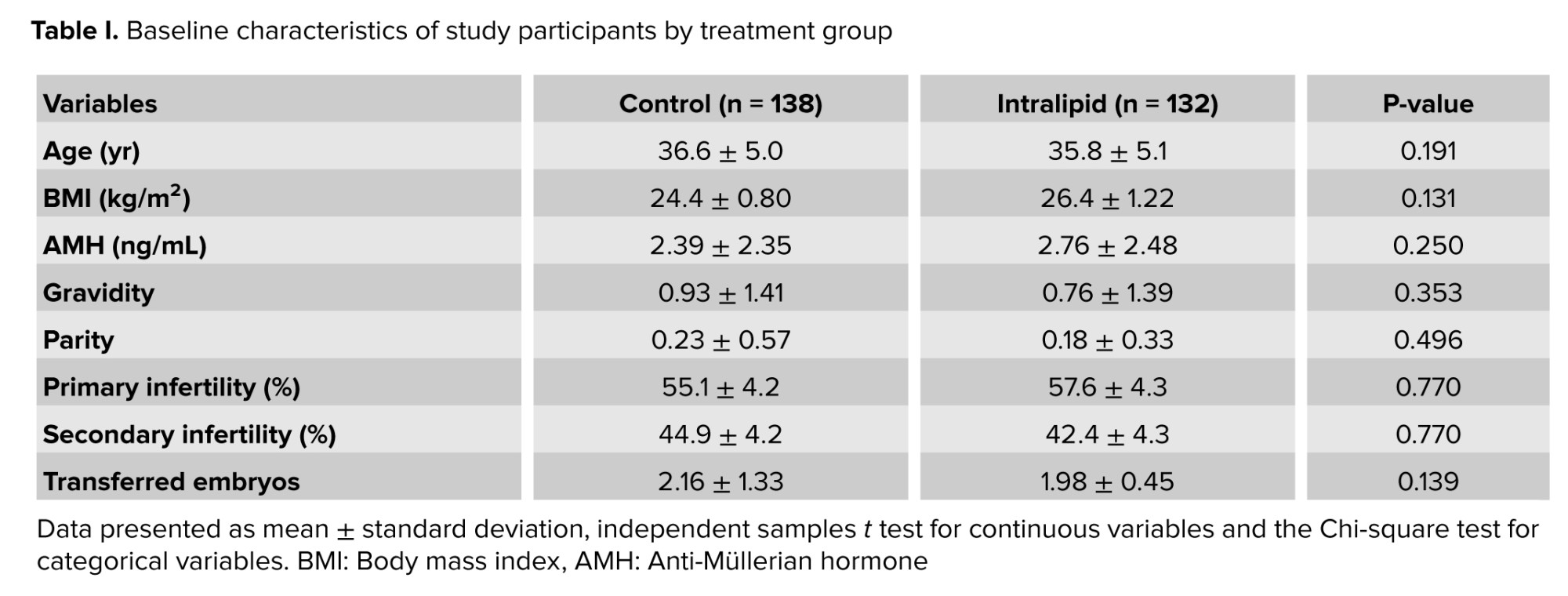
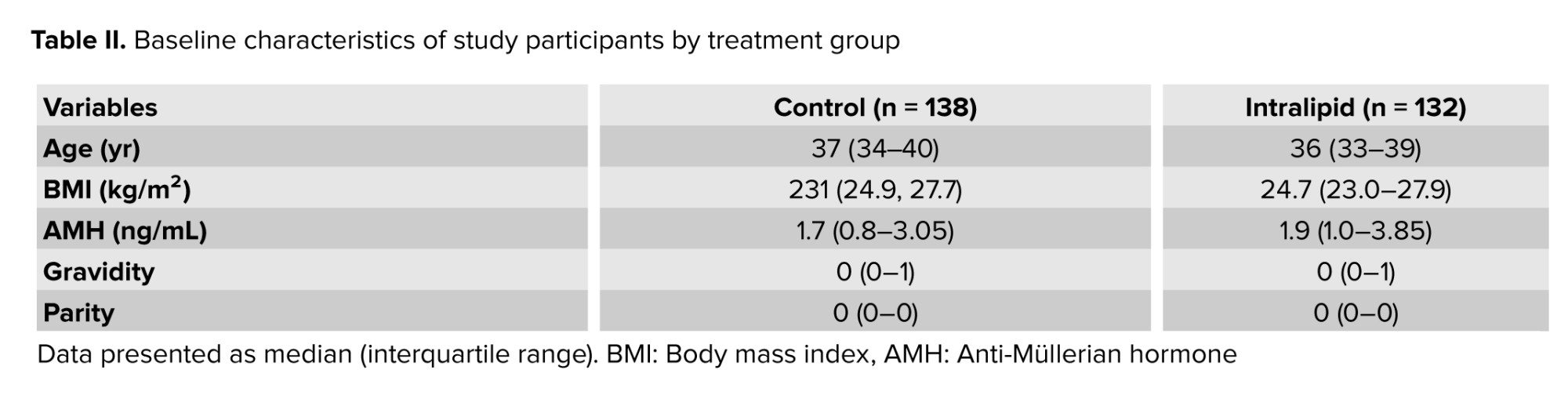
The baseline demographic and clinical characteristics of the study participants, including age, BMI, AMH level, type of infertility, number of transferred embryos, gravidity, and parity, are presented in table I. No statistically significant differences were observed between the intralipid and control groups in any of these variables (p > 0.05 for all comparisons), indicating that the 2 groups were well-matched at baseline. The mean ± SD values for age, BMI, and AMH were comparable between groups, as detailed in table I. The proportion of primary infertility was 55.1% in the control group and 57.6% in the intralipid group, while secondary infertility accounted for 44.9% and 42.4%, respectively (p = 0.770). For variables exhibiting skewed distributions or high variance, particularly AMH and other relevant parameters, median (interquartile range) values are presented in table II.
3.2. Pregnancy outcomes
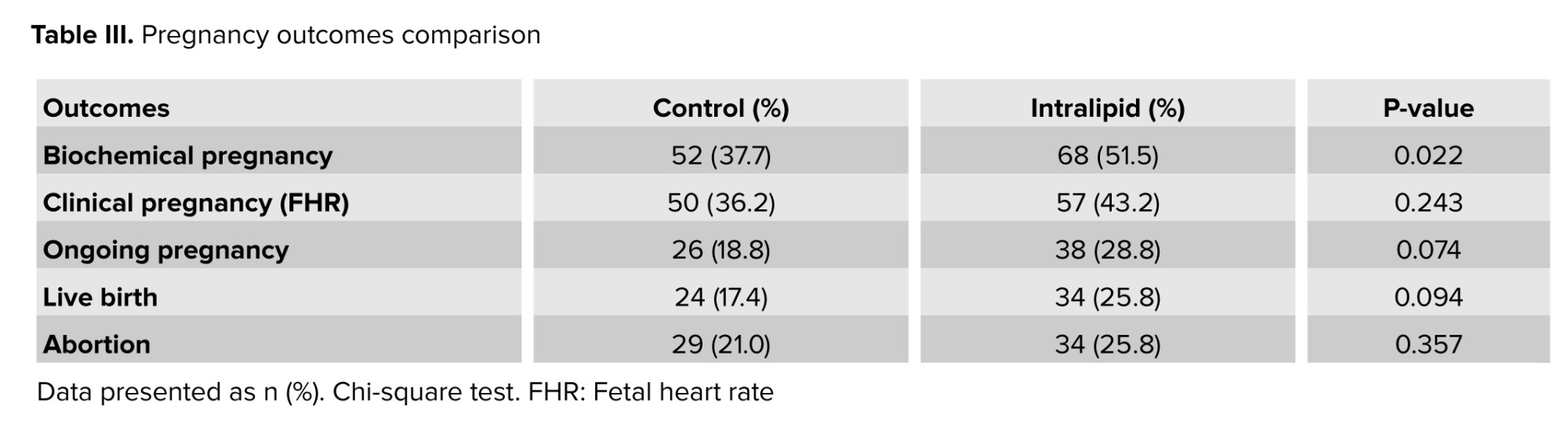
The pregnancy outcomes in the intralipid and control groups are summarized in table III, including the percentages of biochemical pregnancy, clinical pregnancy (fetal heart rate), ongoing pregnancy, live birth, and abortion in both groups. The percentages in the 2 groups were compared using the Chi-square test, and the results were as follows.
The biochemical pregnancy rate was significantly higher in the intralipid group (51.5% vs. 37.7%, p = 0.022). Rates of ongoing pregnancy (28.8% vs. 18.8%, p = 0.074) and live birth (25.8% vs. 17.4%, p = 0.094) were notably higher in the intralipid group, showing favorable trends that did not reach statistical significance. Clinical pregnancy and abortion rates did not differ significantly between the groups (Table III).
The biochemical pregnancy rate was significantly higher in the intralipid group (51.5% vs. 37.7%, p = 0.022). Rates of ongoing pregnancy (28.8% vs. 18.8%, p = 0.074) and live birth (25.8% vs. 17.4%, p = 0.094) were notably higher in the intralipid group, showing favorable trends that did not reach statistical significance. Clinical pregnancy and abortion rates did not differ significantly between the groups (Table III).
4. Discussion
This retrospective cohort study was conducted to evaluate the effect of intralipid on pregnancy outcomes in women with unexplained RIF at Avicenna Fertility Center, Tehran, Iran, from March 2021 and March 2022. No statistically significant differences were observed in baseline demographic and clinical characteristics (including age, BMI, AMH level, type of infertility, number of transferred embryos, gravidity, and parity) between the 2 groups. Only good-quality embryos (grade A or AB based on morphological characteristics) were selected by the embryologist for transfer; therefore, women without good-quality embryos were excluded. A statistically significant improvement in biochemical pregnancy rate was observed in the intralipid group, along with favorable but non-significant trends toward higher ongoing pregnancy and live birth rates. The significant increase in biochemical pregnancy was consistent with the proposed mechanism whereby intralipid may enhance early implantation, potentially by suppressing peripheral NK cell activity and promoting a more receptive endometrial environment (12, 13).
A case series and literature review in France reported that intralipid infusion was a safe and potentially effective therapy in women with unexplained implantation failure and unexplained RM. In that study, among 180 included women, 26 (16 cases with unexplained RIF and 10 cases with unexplained RM) received intralipid. Clinical pregnancy occurred in 9 of 16 RIF women (56%) who received intralipid after ET, and 5 of those pregnancies (55%) resulted in a live birth. Live birth occurred in 7 of 10 women (70%) with unexplained RM who received intralipid and was significantly more frequent than in those who did not receive intralipid (n = 20, p = 0.02) (14). In our study, 132 women with unexplained RIF who received intralipid were compared with 138 women with unexplained RIF in the control group. Biochemical pregnancy rate was significantly higher in the intralipid group (51.5% vs. 37.7%, p = 0.022). Clinical pregnancy (43.2% vs. 36.2%), ongoing pregnancy (28.8% vs. 18.8%), and live birth rates (25.8% vs. 17.4%) were higher in the intralipid group but did not reach statistical significance (p > 0.05). Although both studies focused on unexplained RIF, our study included a larger overall sample size (270 vs. 180) and a substantially higher number of RIF women receiving intralipid (132 vs. 16), which may improve the precision of estimates; however, additional well-designed studies are still required to confirm these findings. Notably, neither our study nor that French case series reported intralipid-related adverse effects (including urticaria, allergic reactions, or hemodynamic instability) or fetal anomalies.
Peivandi and colleagues assessed the effect of intralipid infusion on pregnancy outcomes among infertile women with a history of implantation failure in a single-blind randomized clinical trial in Iran. 80 women with a history of at least 2 failed ETs were randomized to intralipid or normal saline. Peripheral blood NK cell levels were measured 2 wk before the intervention. Clinical pregnancy rate was higher in the intralipid group compared with the saline group (30% vs. 10%, p = 0.025). No significant differences were observed between groups in peripheral NK cells or peripheral blood lymphocytes. In that trial, women with unexplained RIF were included, and no adverse effects related to intralipid were observed (15). Similarly, our study included women with unexplained RIF; however, although clinical pregnancy, ongoing pregnancy, and live birth rates were higher in the intralipid group, these differences were not statistically significant. Additionally, ongoing pregnancy and live birth were not evaluated in that randomized clinical trial. A systematic review and network meta-analysis by Li et al. reported no significant benefit for intralipid among women with RIF (16). Differences in eligibility criteria may partly explain the discrepancy with our findings, as that review included women with at least 3 failed ETs, whereas our study included women with at least 2 failed ETs.
By contrast, 2 recent systematic reviews have reported mixed but generally favorable findings for intralipid. A systematic review and meta-analysis of 5 randomized clinical trials found that 20% intravenous fat emulsion therapy significantly improved clinical pregnancy, ongoing pregnancy, and live birth rates, although the certainty of evidence was only moderate because of the risk of bias in the included trials (17). Similarly, in another meta-analysis involving 840 women with RIF or recurrent spontaneous abortion, reported improved clinical pregnancy, ongoing pregnancy, and live birth rates with intralipid, while miscarriage rates were not significantly reduced (18). However, the included trials were heterogeneous in case selection and eligibility criteria, which may limit the comparability of their findings. In contrast, our study population was more homogeneous with respect to baseline characteristics and inclusion criteria.
This pattern supports the hypothesis that intralipid may primarily exert its effects at the implantation and early pregnancy stage. The absence of statistically significant differences in later outcomes (clinical pregnancy, ongoing pregnancy, live birth) may be explained by several factors, including limited statistical power and the retrospective, non-randomized design with inherent susceptibility to confounding. Overall, our findings were consistent with some prior studies reporting benefits in RIF patients (9) but differ from others that did not observe improvement in live birth (10). Such discrepancies likely reflect variation in study design, patient selection, definitions of RIF, and differences in intralipid protocols (timing and dosage). Furthermore, a prospective observational pilot study suggested that intralipid may not significantly modulate peripheral regulatory T-cell responses (11), indicating that its in vivo immunologic effects may be more complex, indirect, or locally mediated within the endometrium rather than detectable in peripheral blood. The European Society of Human Reproduction and Embryology Working Group on RIF stated that intravenous intralipid infusion may have a role in immune modulation by reducing platelet aggregation and decreasing levels of interleukin-2, tumor necrosis factor-α, and interleukin-1β, and may also suppress NK cell activity. However, adverse effects have been reported with intravenous lipid infusions, including hepatomegaly, jaundice, cholestasis, splenomegaly, thrombocytopenia, leukopenia, and fat overload syndrome; therefore, routine use is not recommended (19). In our study, none of these adverse events were observed. Similarly, an exploratory retrospective cohort study found no significant difference in clinical pregnancy vs. controls, while reporting no major safety concerns apart from one case of flushing, and likewise emphasized the need for large randomized trials (20). Ma et al. also believed that routine administration of intralipid is not recommended due to insufficient evidence regarding its safety and efficacy (21). Nevertheless, the present study has important limitations: its historical cohort design, lack of randomization, and absence of blinding prevent causal inference. Larger, well-designed randomized, double-blind, placebo-controlled trials are needed to determine the efficacy of intralipid more definitively and to identify the subgroups of patients most likely to benefit from this adjunctive therapy.
A case series and literature review in France reported that intralipid infusion was a safe and potentially effective therapy in women with unexplained implantation failure and unexplained RM. In that study, among 180 included women, 26 (16 cases with unexplained RIF and 10 cases with unexplained RM) received intralipid. Clinical pregnancy occurred in 9 of 16 RIF women (56%) who received intralipid after ET, and 5 of those pregnancies (55%) resulted in a live birth. Live birth occurred in 7 of 10 women (70%) with unexplained RM who received intralipid and was significantly more frequent than in those who did not receive intralipid (n = 20, p = 0.02) (14). In our study, 132 women with unexplained RIF who received intralipid were compared with 138 women with unexplained RIF in the control group. Biochemical pregnancy rate was significantly higher in the intralipid group (51.5% vs. 37.7%, p = 0.022). Clinical pregnancy (43.2% vs. 36.2%), ongoing pregnancy (28.8% vs. 18.8%), and live birth rates (25.8% vs. 17.4%) were higher in the intralipid group but did not reach statistical significance (p > 0.05). Although both studies focused on unexplained RIF, our study included a larger overall sample size (270 vs. 180) and a substantially higher number of RIF women receiving intralipid (132 vs. 16), which may improve the precision of estimates; however, additional well-designed studies are still required to confirm these findings. Notably, neither our study nor that French case series reported intralipid-related adverse effects (including urticaria, allergic reactions, or hemodynamic instability) or fetal anomalies.
Peivandi and colleagues assessed the effect of intralipid infusion on pregnancy outcomes among infertile women with a history of implantation failure in a single-blind randomized clinical trial in Iran. 80 women with a history of at least 2 failed ETs were randomized to intralipid or normal saline. Peripheral blood NK cell levels were measured 2 wk before the intervention. Clinical pregnancy rate was higher in the intralipid group compared with the saline group (30% vs. 10%, p = 0.025). No significant differences were observed between groups in peripheral NK cells or peripheral blood lymphocytes. In that trial, women with unexplained RIF were included, and no adverse effects related to intralipid were observed (15). Similarly, our study included women with unexplained RIF; however, although clinical pregnancy, ongoing pregnancy, and live birth rates were higher in the intralipid group, these differences were not statistically significant. Additionally, ongoing pregnancy and live birth were not evaluated in that randomized clinical trial. A systematic review and network meta-analysis by Li et al. reported no significant benefit for intralipid among women with RIF (16). Differences in eligibility criteria may partly explain the discrepancy with our findings, as that review included women with at least 3 failed ETs, whereas our study included women with at least 2 failed ETs.
By contrast, 2 recent systematic reviews have reported mixed but generally favorable findings for intralipid. A systematic review and meta-analysis of 5 randomized clinical trials found that 20% intravenous fat emulsion therapy significantly improved clinical pregnancy, ongoing pregnancy, and live birth rates, although the certainty of evidence was only moderate because of the risk of bias in the included trials (17). Similarly, in another meta-analysis involving 840 women with RIF or recurrent spontaneous abortion, reported improved clinical pregnancy, ongoing pregnancy, and live birth rates with intralipid, while miscarriage rates were not significantly reduced (18). However, the included trials were heterogeneous in case selection and eligibility criteria, which may limit the comparability of their findings. In contrast, our study population was more homogeneous with respect to baseline characteristics and inclusion criteria.
This pattern supports the hypothesis that intralipid may primarily exert its effects at the implantation and early pregnancy stage. The absence of statistically significant differences in later outcomes (clinical pregnancy, ongoing pregnancy, live birth) may be explained by several factors, including limited statistical power and the retrospective, non-randomized design with inherent susceptibility to confounding. Overall, our findings were consistent with some prior studies reporting benefits in RIF patients (9) but differ from others that did not observe improvement in live birth (10). Such discrepancies likely reflect variation in study design, patient selection, definitions of RIF, and differences in intralipid protocols (timing and dosage). Furthermore, a prospective observational pilot study suggested that intralipid may not significantly modulate peripheral regulatory T-cell responses (11), indicating that its in vivo immunologic effects may be more complex, indirect, or locally mediated within the endometrium rather than detectable in peripheral blood. The European Society of Human Reproduction and Embryology Working Group on RIF stated that intravenous intralipid infusion may have a role in immune modulation by reducing platelet aggregation and decreasing levels of interleukin-2, tumor necrosis factor-α, and interleukin-1β, and may also suppress NK cell activity. However, adverse effects have been reported with intravenous lipid infusions, including hepatomegaly, jaundice, cholestasis, splenomegaly, thrombocytopenia, leukopenia, and fat overload syndrome; therefore, routine use is not recommended (19). In our study, none of these adverse events were observed. Similarly, an exploratory retrospective cohort study found no significant difference in clinical pregnancy vs. controls, while reporting no major safety concerns apart from one case of flushing, and likewise emphasized the need for large randomized trials (20). Ma et al. also believed that routine administration of intralipid is not recommended due to insufficient evidence regarding its safety and efficacy (21). Nevertheless, the present study has important limitations: its historical cohort design, lack of randomization, and absence of blinding prevent causal inference. Larger, well-designed randomized, double-blind, placebo-controlled trials are needed to determine the efficacy of intralipid more definitively and to identify the subgroups of patients most likely to benefit from this adjunctive therapy.
4.1. Strengths and Limitations
This study has several limitations inherent to its retrospective design. The inability to access records with missing data necessitated the exclusion of such cases, which may introduce selection bias.
5. Conclusion
This study evaluated the effect of intralipid administration on pregnancy outcomes in women with RIF. Although the biochemical pregnancy rate was significantly higher in the intralipid group, the observed improvements in clinical pregnancy, ongoing pregnancy, and live birth rates did not reach statistical significance. Taken together with recent evidence, these findings suggest that intralipid may have a potential role in improving early pregnancy outcomes, but the current evidence remains insufficient to support its routine clinical use. Larger randomized controlled trials are needed to confirm its efficacy and to identify the women subgroups most likely to benefit.
Data Availability
The data used in this study were obtained from the medical records of women treated at the Avicenna Fertility Center, Tehran, Iran. Due to privacy and confidentiality restrictions, these datasets are not publicly available. The data are part of the proprietary records of the Avicenna Research Institute, Tehran, Iran. However, they may be made available to editors or reviewers upon reasonable request for evaluation purposes.
Author Contributions
A. Karimi: Designed the study and was responsible for implementation, data collection, and manuscript writing. A. Dadgar: Performed data cleaning, conducted the analysis, interpreted the results, and contributed to manuscript writing. H. Saffari and N. Vahedi: Collected and reviewed the patient records and entered the data into the data table. S. Saket: Contributed to manuscript writing and performed language editing. S. Arefi: Corresponding author, supervisor, and principal investigator of the project. All authors approved the final version of the manuscript.
Acknowledgments
This research received no specific grant from any funding agency in the public, commercial, or not-for-profit sectors. We thank the staff of Avicenna Fertility Treatment Center, Tehran, Iran for their support in data collection and patient care. We have utilized artificial intelligence tools (ChatGPT) to assist in the creation of the graphical abstract, ensuring high visual quality and clarity.
Conflict of Interest
The authors declare that there is no conflict of interest.
5. Conclusion
This study evaluated the effect of intralipid administration on pregnancy outcomes in women with RIF. Although the biochemical pregnancy rate was significantly higher in the intralipid group, the observed improvements in clinical pregnancy, ongoing pregnancy, and live birth rates did not reach statistical significance. Taken together with recent evidence, these findings suggest that intralipid may have a potential role in improving early pregnancy outcomes, but the current evidence remains insufficient to support its routine clinical use. Larger randomized controlled trials are needed to confirm its efficacy and to identify the women subgroups most likely to benefit.
Data Availability
The data used in this study were obtained from the medical records of women treated at the Avicenna Fertility Center, Tehran, Iran. Due to privacy and confidentiality restrictions, these datasets are not publicly available. The data are part of the proprietary records of the Avicenna Research Institute, Tehran, Iran. However, they may be made available to editors or reviewers upon reasonable request for evaluation purposes.
Author Contributions
A. Karimi: Designed the study and was responsible for implementation, data collection, and manuscript writing. A. Dadgar: Performed data cleaning, conducted the analysis, interpreted the results, and contributed to manuscript writing. H. Saffari and N. Vahedi: Collected and reviewed the patient records and entered the data into the data table. S. Saket: Contributed to manuscript writing and performed language editing. S. Arefi: Corresponding author, supervisor, and principal investigator of the project. All authors approved the final version of the manuscript.
Acknowledgments
This research received no specific grant from any funding agency in the public, commercial, or not-for-profit sectors. We thank the staff of Avicenna Fertility Treatment Center, Tehran, Iran for their support in data collection and patient care. We have utilized artificial intelligence tools (ChatGPT) to assist in the creation of the graphical abstract, ensuring high visual quality and clarity.
Conflict of Interest
The authors declare that there is no conflict of interest.
Type of Study: Original Article |
Subject:
Assisted Reproductive Technologies
Send email to the article author
| Rights and permissions | |
 |
This work is licensed under a Creative Commons Attribution-NonCommercial 4.0 International License. |